

Introduction
Rice buyers and sellers often need to agree not only on price, grade and packaging, but also on where delivery happens and who arranges the journey. Those details can become especially important when bagged rice is loaded into containers, moves by truck to a port, and continues by sea. FCA, short for Free Carrier, is one Incoterms® rule that can define the handover point for this kind of movement.
Under FCA Incoterms® 2020, the named place determines where the seller delivers the goods and risk passes to the buyer. The rule can be used for any mode of transport, including multimodal shipments. This guide explains FCA for rice trade, contrasts it with FOB, CFR and CIF, and uses an illustrative container shipment to show which points buyers and sellers should settle in their sales contract.
Key Takeaways
- FCA can be used for rice transported by one or multiple modes, including container shipments.
- The named place is crucial: at the seller’s premises, delivery occurs after loading onto the buyer-arranged vehicle; at another named place, delivery occurs with the goods ready for unloading from the seller’s vehicle.
- Under FCA, the seller handles export clearance, while the buyer generally arranges and pays for main carriage and import formalities.
- FCA risk transfers at the agreed delivery point; it does not automatically transfer when the rice arrives at the destination.
- Write the exact named place, applicable Incoterms® edition, loading and handover arrangements, insurance expectations and document requirements into the contract.
1. What Does FCA Mean in Rice Trade?
FCA means Free Carrier. Under Incoterms® 2020, the seller delivers the goods to the carrier or another person nominated by the buyer at the agreed named place. The seller completes export clearance. The buyer arranges the main carriage from the delivery point onward and handles import clearance. FCA can be used when rice travels by road, rail, air or sea, including a journey combining several modes.
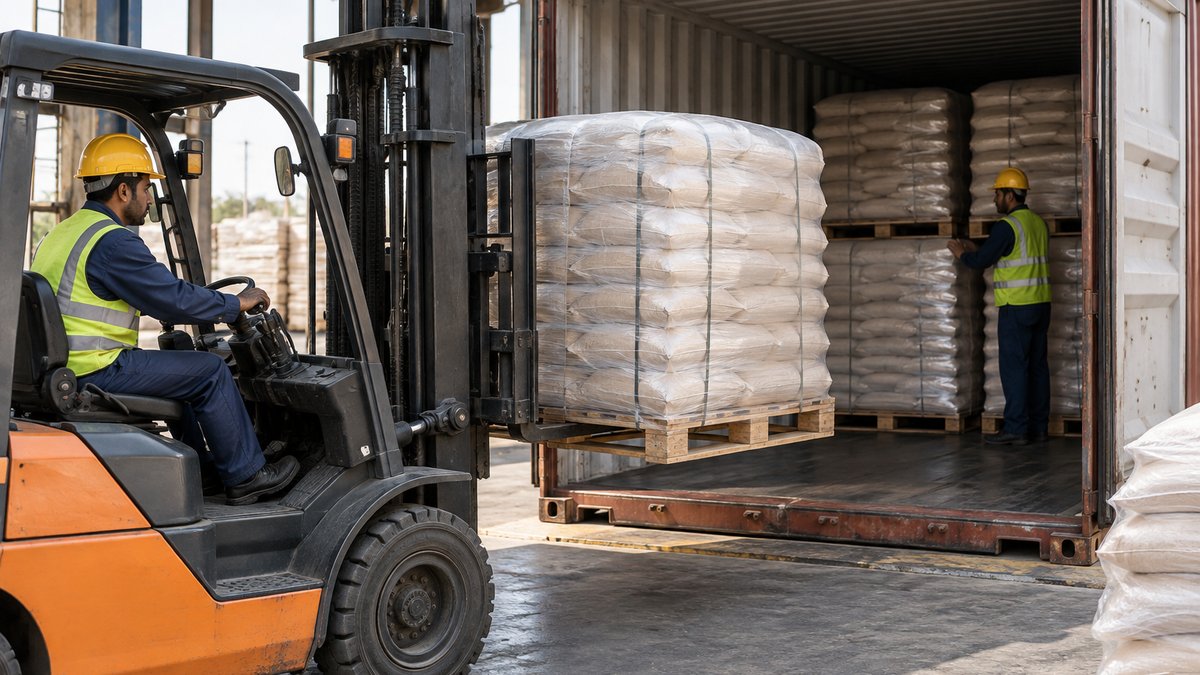
For a rice shipment, the named place might be the seller’s mill or warehouse, a freight terminal, or another specifically agreed location. These options are not interchangeable. If the named place is the seller’s premises, the seller delivers when the goods are loaded onto the collecting vehicle arranged by the buyer. If the named place is elsewhere, the seller transports the goods there and makes them available to the buyer’s nominated carrier, ready for unloading from the seller’s vehicle. Risk passes at that FCA delivery point.
The ICC’s Incoterms® 2020 guidance emphasizes that the named place is central to identifying delivery, risk transfer and the allocation of many costs. FCA is a shipment rule: the seller’s delivery obligation can be fulfilled before the rice reaches the buyer’s destination. FCA does not, by itself, define product quality, payment timing, transfer of ownership, remedies for non-conformity or every detail of the sale contract.
The table summarizes the central delivery and carriage distinctions, not every obligation in each rule. CFR and CIF are for sea and inland-waterway transport. FCA applies to any mode or combination of modes. Under the ICC’s Incoterms® 2020 rules, a named destination after CFR or CIF identifies where the seller contracts for carriage—not where risk transfers. CIF’s insurance obligation is limited to the cover specified by the rule; buyers should not assume it provides every coverage they may want.
For bagged rice in containers, FCA can align the contractual handover with delivery to a carrier or terminal before the container is loaded aboard the vessel. ICC guidance identifies FCA as a rule to consider for container or multimodal transport; FOB instead ties delivery and risk transfer to loading on board the vessel. The most suitable rule depends on the actual transport arrangement and the parties’ agreed allocation of responsibilities.
Once the handover point is clear, buyers comparing rice offers can review relevant buying requests and supplier profiles.
View Latest Rice Buying Requests →View Potential Rice Suppliers →
Buying consideration: When reviewing an FCA offer, ask the seller to state the precise delivery address or terminal and the applicable edition—for example, “FCA [full named place], Incoterms® 2020.” Avoid using only a city or “port” if the parties have not agreed which facility or point within it applies.
2. How Are Delivery, Risk and Costs Allocated Under FCA?
FCA separates the point of delivery and risk transfer from the destination to which the rice may eventually travel. The point named in the sales contract sets the handover. The seller’s and buyer’s transport and cost responsibilities follow the FCA rule and any additional contractual arrangements. A freight quotation that reaches a distant port does not, on its own, change the FCA delivery point.

This allocation is a guide to the rule, not a substitute for reading the agreed contract and the applicable Incoterms® text. Some costs depend on the precise named place, the delivery arrangement and the parties’ other terms. For instance, the contract should be clear about who pays for loading at the seller’s premises, vehicle waiting time, terminal services, weighing or inspections, and how exceptional charges are handled.
Insurance deserves separate attention. FCA does not generally make cargo insurance a compulsory obligation for either party. Since risk passes to the buyer at the FCA delivery point, the buyer should consider whether and when to insure the rice for the onward journey. The parties can agree other arrangements, but should record them expressly rather than assume that the seller has arranged cover.
Buying consideration: Before accepting an FCA quotation, compare the seller’s price with the buyer’s expected costs after handover: inland or terminal transport, ocean freight if applicable, insurance, import clearance, duties and destination handling. Confirm which charges are included in the quoted price and which are outside it.
3. When Is FCA a Practical Choice for Containerized Rice?
FCA can be practical when a buyer wants to select or control the main carrier, or when rice moves through a container terminal before vessel loading. It can also suit a multimodal route—for example, truck from a rice mill to a port, followed by sea freight and further inland transport. The buyer and seller should choose a delivery point that matches the point at which the buyer’s nominated carrier takes responsibility under the agreed arrangement.
Consider an illustrative transaction: a seller offers bagged Basmati rice packed into containers at its facility, and an overseas buyer appoints a freight forwarder. If the parties agree on FCA at the seller’s premises, delivery takes place when the seller loads the rice onto the collecting vehicle arranged by the buyer, subject to the rule and the contract. The buyer then arranges onward carriage. If instead they name a terminal, the contract needs to specify the precise terminal and delivery point; the seller’s delivery is not simply “when the container reaches the port.”
Container movement can involve several handovers before vessel loading. The buyer and seller should identify the carrier nominated by the buyer, how the seller will know it has received the goods, and what evidence of handover will be available. A bill of lading, terminal receipt, transport document or other record may be relevant depending on the route and transaction, but the parties should confirm document availability with the carrier and any bank involved rather than assume a particular document is guaranteed.
The ICC revised FCA in Incoterms® 2020 to address a situation in which parties may need an on-board bill of lading for a sale involving sea carriage. Under the rule, the parties can agree that the buyer instructs its carrier to issue that document to the seller after loading. This option can be relevant where a documentary credit or other payment arrangement requires an on-board notation. It should be agreed in advance with the buyer’s carrier and bank; it does not mean that FCA delivery or risk automatically shifts to the moment of vessel loading.
Buyers assessing whether a containerized rice offer suits their route can compare current rice buying requests with supplier profiles.
View Latest Rice Buying Requests →View Potential Rice Suppliers →
Buying consideration: Use FCA only when the planned handover can be described and performed clearly. If the buyer expects the seller to contract and pay for main carriage to a destination port, compare FCA with a suitable C rule such as CFR or CIF, and carefully distinguish the seller-paid destination from the earlier risk-transfer point.
4. How Does FCA Differ From FOB, CFR and CIF for Rice?
FCA and FOB can both leave the buyer responsible for arranging the main sea carriage, but they do not set delivery at the same point. Under FCA, delivery and risk transfer occur at the agreed place when the goods are handed over according to the rule. Under FOB, they occur when the goods are loaded on board the buyer-nominated vessel at the named port of shipment. ICC guidance advises considering FCA for containerized goods and FOB for goods delivered directly on board a vessel, including bulk cargo.
That distinction matters when containerized rice is delivered to a terminal before vessel loading. Under FCA, the named handover can occur at the seller’s facility or another agreed place. With FOB, the contractual delivery point is on board the vessel, so it may not match a container handover that occurs earlier in the terminal process. The parties should not choose FOB solely because the rice will travel by sea; they should check whether the rule fits the actual delivery and handling arrangement.
CFR and CIF add seller-arranged carriage to a named destination port, but the seller’s payment of that carriage does not mean the seller retains risk until arrival. Under both rules, delivery and risk transfer occur when the goods are on board at the port of shipment. CIF also requires the seller to obtain insurance meeting the rule’s specified minimum level. If the buyer needs broader cover, the parties should agree appropriate arrangements rather than assume that standard CIF cover is sufficient.
No rule is automatically the cheapest or safest. A buyer comparing an FCA price with a CIF price should build a comparable landed-cost picture and examine the risk points, transport scope, insurance and included charges. Likewise, a seller’s offer under one rule cannot be compared reliably with another without checking what each price includes.
Buying consideration: Ask the counterparty to identify both the delivery point and the destination point, where applicable. Under FCA and FOB, the named place or port identifies the delivery point; under CFR and CIF, the destination port is where the seller contracts for carriage, while delivery and risk transfer happen earlier.
5. What Should Buyers and Sellers Put in an FCA Rice Contract?
The three-letter term alone is not a complete rice purchase specification. Use the exact rule and edition, then write the agreed delivery place in enough detail for both sides and the carrier to identify it. Separately document the rice requirements, shipment schedule, transport coordination and evidence needed to show that delivery occurred.
- Rule and place: State FCA, the full named place or precise point, and Incoterms® 2020.
- Product identity: Specify the rice type or variety, processing form, origin if required, and any agreed product description.
- Quality specification: Set measurable limits or agreed methods for parameters such as broken kernels, moisture, foreign matter, damaged kernels or grain dimensions where relevant to the transaction.
- Quantity and packaging: State quantity, tolerance if agreed, bag or bulk format, unit weights, pallet requirements if any, and container-loading expectations.
- Delivery arrangements: Identify the buyer’s nominated carrier, the delivery window, required notice, loading arrangements, and how handover will be recorded.
- Export and transport documents: List documents the seller must provide and confirm which documents the carrier can issue and when.
- Payment and risk provisions: State payment timing and method separately; clarify insurance expectations and any agreed procedure for claims or inspection.
Incoterms® rules allocate certain tasks, costs and risks between the parties, but they do not replace the full sales contract. They do not determine payment terms, ownership transfer or the remedies for a rice lot that fails its agreed specification. Avoid relying on an Incoterm to fill gaps in those subjects.
Illustrative FCA inquiry format:
Product: Basmati rice, with variety and processing form stated
Quality: Agreed limits and test or inspection method to be specified
Quantity: Buyer’s required volume and any agreed tolerance
Packaging: Bag type, unit weight and container-loading requirements
Trade term: FCA [full named place], Incoterms® 2020
Handover: Buyer-nominated carrier, delivery window and receipt evidence
Documents: List required export and transport documents; confirm availability
Payment and insurance: State separately in the sales contract
This is an illustrative inquiry format, not a universal specification. Adjust it to the rice, route, destination requirements and contract.
With the rice specification and FCA handover details prepared, buyers can look for suppliers whose offers can be assessed against those requirements.
View Related Suppliers for This Product →
6. How Can Parties Avoid FCA Handover Disputes?
Many disagreements arise because the parties use “delivery” to mean different things. A seller may understand delivery as arrival at a port, while the buyer may treat it as the point at which the buyer’s carrier takes the rice. Under FCA, the agreed named place and delivery conditions should resolve that ambiguity. Confirm them with the freight forwarder or carrier before the contract is finalized.
The parties should also use the same terminology in the purchase contract, quotation, booking instructions and shipping-document instructions. If the agreed named place changes, record the change in writing and check whether it affects the delivery point, costs, risk or document flow. For container shipments, confirm the practical sequence from packing and collection through terminal handover and vessel loading.
For a first transaction, a clear written specification, agreed inspection process and reliable handover record can make the responsibilities easier to evaluate. Buyers sourcing Basmati or other rice products can use Freshdi to find relevant suppliers or review buying requests, then compare each commercial offer against the product and delivery requirements set out in their contract.
Businesses preparing to source or supply rice can register on Freshdi as a next step after defining their product and delivery requirements.
Buying consideration: Before goods are dispatched, have both parties confirm the exact FCA named place, the buyer’s carrier nomination, export-clearance arrangements, loading or terminal procedures, required documents and evidence of handover. If any of these remain unclear, resolve them in writing before shipment.
Frequently Asked Questions
What does FCA mean in Incoterms® 2020?
FCA means Free Carrier. The seller delivers the goods to the buyer’s nominated carrier or another nominated person at the agreed named place and completes export clearance. The buyer generally arranges main carriage and import clearance.
When does risk transfer under FCA?
Risk transfers at the FCA delivery point defined by the named place and delivery arrangement. At the seller’s premises, delivery occurs when the goods are loaded onto the buyer-arranged collecting vehicle. At another named place, delivery occurs when the goods are at the buyer’s nominated carrier’s disposal, ready for unloading from the seller’s vehicle.
Is FCA suitable for containerized rice?
FCA can be used for any mode or combination of modes, and ICC guidance identifies it as a rule to consider for container or multimodal shipments. The parties should select and state a precise handover point that matches the actual transport arrangement.
What is the difference between FCA and FOB for rice?
Under FCA, delivery and risk transfer occur at the agreed named place when the goods are handed over as the rule requires. Under FOB, delivery and risk transfer occur when the goods are loaded on board the vessel at the named shipment port. FCA may fit a container handover before vessel loading; FOB is intended for sea or inland-waterway transport.
Does the seller pay freight under FCA?
The seller is not generally required under FCA to arrange or pay for the buyer’s main carriage. The buyer generally arranges and pays for transport from the agreed delivery point onward. The contract should clarify any additional services or charges the parties agree.
Does FCA require the seller to insure the rice shipment?
FCA does not generally require either party to obtain cargo insurance. Because risk passes to the buyer at the FCA delivery point, the buyer should assess its insurance needs and record any agreed insurance arrangement separately.
Does FCA define rice quality or transfer of ownership?
No. FCA addresses specified delivery, risk, cost and obligation matters under the rule. Rice quality, payment, ownership transfer, inspection and remedies should be addressed separately in the sales contract.
References
1. International Chamber of Commerce – Incoterms® Rules, Incoterms® 2020.
2. International Chamber of Commerce – Incoterms® 2020 Checklist and Flowcharts, 2024 update.
3. International Chamber of Commerce – FCA | Free Carrier, Incoterms® 2020 Rules, 2020.
4. International Chamber of Commerce – FCA & FOB Incoterms® 2020 Explained: Key Differences, 2024.
5. International Chamber of Commerce – Incoterms® and Commercial Contracts: Questions and Answers, 2020.