
Introduction
FOB and CIF are commonly compared when buyers and sellers negotiate international rice shipments. Both are Incoterms® rules for sea and inland-waterway transport, and under both, the seller delivers the goods on board the vessel at the named port of shipment. The important difference is what the seller arranges and pays for after loading: under FOB, the buyer generally arranges the main carriage; under CIF, the seller arranges and pays for carriage to the named destination port and obtains insurance for the buyer’s benefit.
A CIF quotation may therefore include ocean freight and insurance in the price, but that does not mean the seller bears transit risk until the rice arrives. Under both rules, risk generally transfers when the goods are on board the vessel at the port of shipment. Understanding the difference helps rice buyers compare offers on a like-for-like basis and clarify who is responsible if cargo is damaged in transit.
Key Takeaways
- FOB and CIF are intended for sea or inland-waterway transport; for containerized or multimodal shipments, the ICC advises considering an appropriate rule such as FCA or CIP instead.
- Under both FOB and CIF, delivery and risk transfer when the rice is loaded on board the vessel at the named port of shipment.
- Under FOB, the buyer generally contracts and pays for the main carriage; under CIF, the seller does so and must also obtain the rule’s required minimum insurance cover.
- CIF’s named destination port is the destination for which the seller arranges carriage, not the point where risk transfers.
- Compare the full cost, insurance scope, loading point and named ports—not just the quoted price—and state the chosen Incoterms® version in the sales contract.
1. What Do FOB and CIF Mean in Rice Trade?
FOB means Free On Board. Under FOB, the seller delivers the goods on board the vessel nominated by the buyer at the named port of shipment, or procures goods already delivered that way. The buyer generally arranges and pays for the main carriage. The rule is intended for sea or inland-waterway transport where delivery is made on board a vessel.
CIF means Cost, Insurance and Freight. Like FOB, it requires delivery on board the vessel at the named port of shipment. But under CIF, the seller contracts and pays for carriage to the named port of destination and obtains cargo insurance for the buyer’s benefit, as required by the rule. The ICC’s Incoterms® 2020 materials identify FOB and CIF among the rules for sea and inland-waterway transport.
For rice, the distinction can matter whether the shipment is bulk cargo or bagged product. The trade term does not define the rice itself: variety, crop year, processing method, broken percentage, moisture limit, packaging and inspection criteria must be agreed separately. Nor does FOB or CIF, by itself, settle payment timing, transfer of ownership or the detailed product-quality acceptance process.
These allocations come from the Incoterms® rule, but the parties should also make the sale contract clear about any additional arrangements. A rice seller and buyer can agree on extra services or broader insurance, for example, but should document those terms rather than assume the three-letter rule provides them.
If you are comparing rice specifications as well as delivery terms, it can help to see the kinds of buying requirements and supplier options available for the product group.
View Latest Rice Buying Requests →View Potential Rice Suppliers →
2. How Do FOB and CIF Allocate Cost, Risk and Insurance?
The key to comparing FOB and CIF is to separate who pays for transport from when risk transfers. Under both rules, delivery occurs when the goods are on board the vessel at the named port of shipment. For CIF, the seller pays the freight to the named destination port, but the risk does not wait until that port: it generally passes to the buyer at loading. The ICC explains this as a distinction between the delivery point and the destination to which the seller must arrange carriage.

The insurance obligation under CIF is not a promise that every possible loss is covered. The ICC states that Incoterms® 2020 CIF requires minimum cover, while parties may agree to broader protection. A buyer should review the actual insurance terms, insured amount, exclusions and claim process instead of treating “CIF” as equivalent to comprehensive coverage. Under FOB, the buyer should not assume the seller has arranged cargo insurance.
This allocation affects how a buyer handles a damage claim. If a loss occurs after the rice has been loaded, the fact that the seller paid freight under CIF does not by itself mean the seller still bears the transit risk. The buyer should check the contract, shipping documents and insurance evidence, and arrange suitable insurance protection for its exposure.
Buying consideration: When comparing offers, ask the seller to identify the shipment port and, for CIF, the destination port, then confirm the delivery/risk point and insurance scope in writing. A lower FOB quote and a higher CIF quote are not directly comparable until the buyer adds the relevant freight, insurance and handling costs to the FOB option.
3. What Does the Difference Look Like in a Rice Shipment?
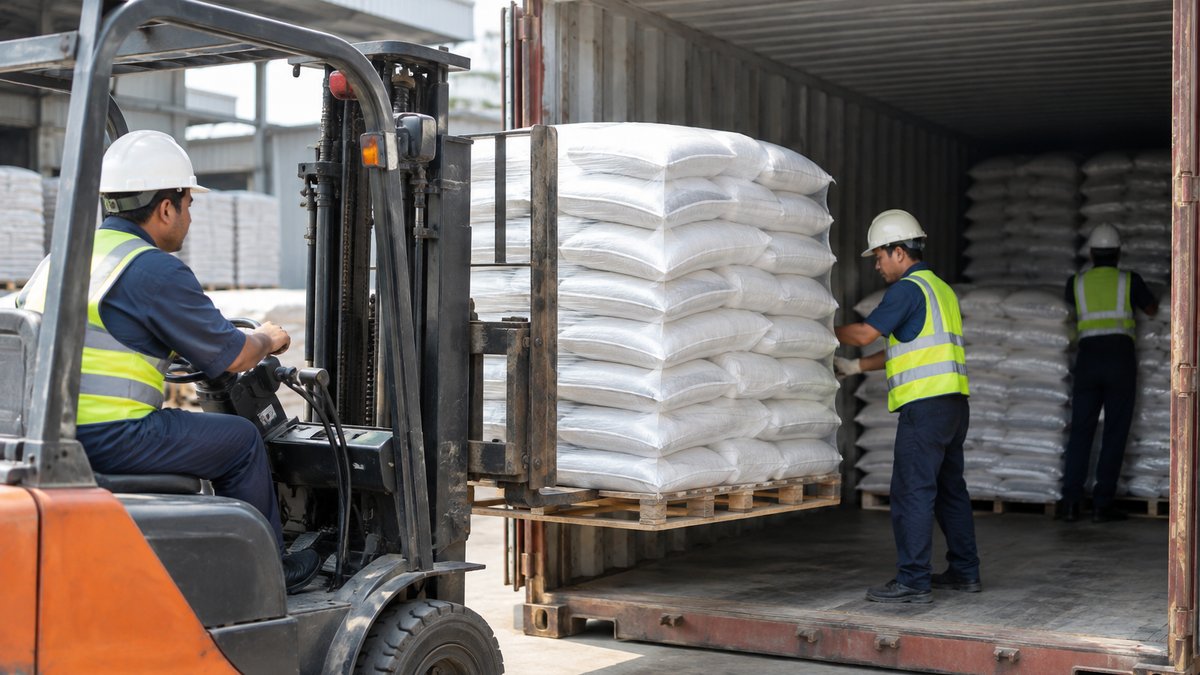
Consider an illustrative shipment of bagged basmati rice from a seller’s loading port to a buyer’s destination port. The example shows how the rules allocate responsibilities; it does not set a universal route, price, packing format or insurance requirement. Exact shipment points and all product specifications should be agreed in the contract.
The example highlights why “freight paid by seller” and “risk borne by seller” are not interchangeable. CIF places more transport-arranging work with the seller, but the buyer should still understand the early risk-transfer point and the limitations of the required minimum insurance cover.
Rice shipments may be sold in containers, breakbulk or bulk vessels. The selected transport setup matters: the ICC’s Incoterms® 2020 checklist recommends considering FCA for goods traveling in containers or by multimodal transport, while noting FOB as an option for general cargo or bulk commodities loaded directly on board. The appropriate rule depends on how and where delivery actually takes place; do not select FOB or CIF just because it appears on a previous quotation.
Once you know whether you need to control freight booking or prefer the seller to arrange it, you can compare relevant rice buying requests and supplier listings against that requirement.
View Latest Rice Buying Requests →View Potential Rice Suppliers →
4. When Should a Rice Buyer Consider FOB or CIF?
FOB may suit a buyer that wants to choose the carrier, manage the main freight booking or coordinate a broader logistics arrangement. It can also make freight costs more visible to a buyer that has its own shipping arrangements. The buyer must account for its responsibilities after delivery on board, including arranging appropriate insurance if desired.
CIF may suit a buyer that wants the seller to arrange and pay for carriage to a named destination port and to procure the minimum insurance required by the rule. This can simplify the seller’s transport coordination for the buyer, but it does not remove the buyer’s need to review insurance terms, understand risk transfer or budget for costs not included in the CIF price.
Neither rule is automatically cheaper or safer. A fair comparison considers the full commercial package: product specification, price, freight, insurance, origin-side costs, destination-side costs, timing, inspection arrangements and the buyer’s own logistics capability. A CIF offer can look simpler while leaving insurance or destination charges that still require review; an FOB offer can provide freight control but requires the buyer to coordinate more of the transport.
Buying consideration: Before choosing, write down who will book the vessel, which party will arrange insurance, where delivery occurs, what cargo cover applies, and which costs are included in each quotation. If the goods are containerized or use multiple transport modes, confirm that the selected Incoterms® rule matches the actual handover point.
5. What Should the Contract Specify Alongside FOB or CIF?
The Incoterms® rule is only one part of a rice sale. Specify the rule, precise named port or place, and version so the parties know which allocation they intend to use. The ICC recommends identifying the rule and version explicitly—for example, “CIF [named port] Incoterms® 2020”—rather than leaving the applicable version uncertain.
For rice, a useful contract or purchase specification should also state the exact product and measurable acceptance terms. Avoid relying on a broad label such as “basmati rice” or “white rice” alone. The buyer and seller should align on the product identity, quality parameters, packaging, shipment quantity and method of inspection before shipment.
- Product identity: Rice variety or agreed description, processing form, crop year where relevant, and country or region of origin.
- Quality and inspection: Agreed limits and test or inspection methods for parameters such as moisture, broken kernels, foreign matter, damaged kernels or other buyer-defined characteristics.
- Quantity and packaging: Contract quantity, tolerance if agreed, bag or bulk format, unit weights and marking requirements, as applicable.
- Delivery term: FOB or CIF, exact named port, and “Incoterms® 2020” or the version expressly agreed.
- Freight and destination charges: What the seller’s freight contract covers, any handling or unloading costs, and which charges remain for the buyer under the contract and rule.
- Insurance: For CIF, request the policy or certificate and check insured value, coverage conditions, exclusions and claims process; agree broader cover if needed. For FOB, decide whether and how the buyer will insure the shipment.
- Documents and timing: Shipping documents, required certificates if applicable to the destination and product, shipment window, notice deadlines and the process for handling discrepancies.
Incoterms® rules allocate certain responsibilities, costs and risks, but they do not determine every contractual issue. They do not by themselves settle the sale price, payment method, ownership transfer, consequences of breach or the detailed quality remedy. Address those topics separately in the sales contract and check destination-country import requirements with the appropriate authorities.
Illustrative contract term and inquiry details:
Product: Basmati rice; specify variety and processing form
Delivery term: CIF [named destination port] Incoterms® 2020, or FOB [named shipment port] Incoterms® 2020
Quality: List agreed measurable limits and the applicable inspection method
Quantity and packaging: State contract quantity, packaging format and unit weights
Insurance: For CIF, request the cover details; state any agreed additional coverage
Shipment: State shipment window, documents and any agreed inspection arrangements
This is an illustrative checklist, not a universal rice specification or contract. Adapt it to the product, shipment method, destination requirements and negotiated agreement.
With the product specification, delivery point and insurance expectations set out, buyers can look for suppliers whose offers can be assessed against the same requirements.
View Related Suppliers for This Product →
6. How Can Buyers Compare FOB and CIF Offers Before Ordering?
Start by checking that both offers describe the same rice and shipment plan. Compare the product specification, quantity, packaging, loading port, destination port, shipment period and inspection conditions. Then separate the seller’s price from costs and responsibilities that remain with the buyer.
For an FOB offer, estimate the buyer-arranged carriage and insurance needed for the intended shipment, then account for other buyer-side costs. For a CIF offer, confirm the seller’s freight booking reaches the named destination port and inspect the required insurance documentation. Ask which charges are included and which destination or handling costs remain payable by the buyer. Do not assume that an Incoterms® label includes every service associated with unloading or delivery beyond the named port.
Keep the comparison in writing. If an offer says only “FOB” or “CIF” without a precise port and version, request clarification before evaluating it. If the shipment is containerized, ask whether the seller’s delivery point is actually on board the vessel or at an earlier terminal handover; the term should match the real delivery arrangement.
Freshdi can be a next step for exploring rice suppliers and relevant buying requests after the commercial requirements are clear. Buyers can review rice suppliers and use the same specification and delivery-term checklist when comparing offers.
If you are ready to take the next step in sourcing, you can register on Freshdi.
Frequently Asked Questions
Do FOB and CIF both transfer risk when the rice arrives at the destination port?
No. Under both FOB and CIF, delivery and risk generally transfer when the goods are loaded on board the vessel at the named port of shipment. CIF requires the seller to arrange and pay for carriage to the named destination port, but that does not defer the risk-transfer point until arrival.
Does CIF mean the seller is responsible for rice damaged during the entire voyage?
Not necessarily. Under CIF, the seller arranges and pays for carriage and obtains the required minimum insurance, but risk generally transfers to the buyer when the rice is on board at the shipment port. The buyer should review the insurance terms and the contract’s claims process.
Does CIF include comprehensive insurance?
No. CIF requires the seller to obtain minimum cover under Incoterms® 2020. The buyer should review the actual policy or certificate and agree or arrange additional cover if the minimum is insufficient for the cargo, route or commercial exposure.
Who books the vessel under FOB?
Under FOB, the buyer generally contracts and pays for the main carriage after the seller delivers the goods on board the vessel at the named shipment port. The precise booking arrangements should be confirmed in the contract and coordinated with the seller.
Which is cheaper for importing rice, FOB or CIF?
Neither is inherently cheaper. Compare an FOB price plus the buyer’s expected freight, insurance and other relevant costs against a CIF price, while checking what the seller’s freight and insurance cover and what charges remain payable by the buyer.
Can I use FOB or CIF for containerized rice?
FOB and CIF are rules for sea and inland-waterway transport. However, where containerized goods are handed to a carrier or terminal before they are placed on board the vessel, the delivery point may not fit the intended FOB or CIF structure. The ICC advises considering a rule such as FCA for containerized or multimodal shipments; confirm the rule against the actual handover arrangement.
What wording should a rice sales contract use for FOB or CIF?
State the rule, the precise named port and the agreed version, such as “FOB [named port of shipment] Incoterms® 2020” or “CIF [named port of destination] Incoterms® 2020.” Also specify the rice quality, quantity, packaging, inspection, shipment timing and insurance arrangements as applicable.
References
1. International Chamber of Commerce (ICC) – Incoterms® 2020, 2020.
2. International Chamber of Commerce (ICC) – Incoterms® 2020 Checklist and Flowcharts, 2024 update.
3. International Chamber of Commerce (ICC) – Incoterms® 2020 Questions and Answers, 2020.
4. International Chamber of Commerce (ICC) – Incoterms® Rules for Sea and Inland Waterway Transport, 2020.