
Introduction
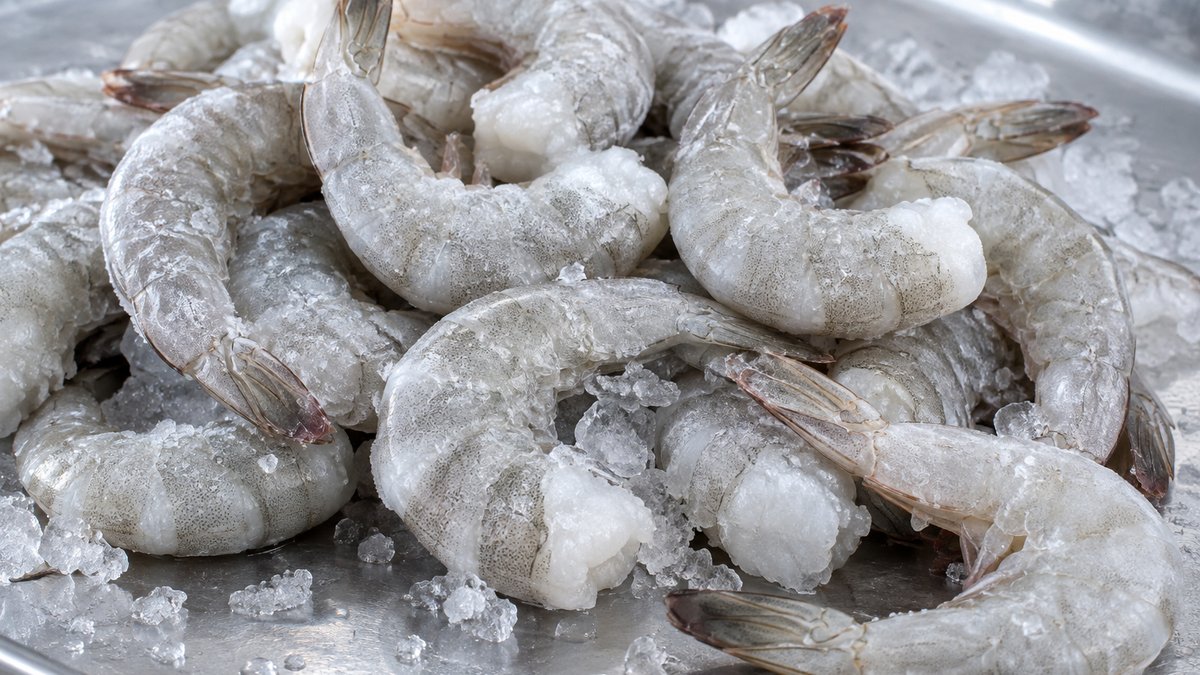
Tridge reported South Korean wholesale prices of US$8.96 to US$11.34 per kilogram for frozen raw Vannamei shrimp on 1 November 2026. The five listed observations average about US$10.43/kg, but the source does not state a size count, processing specification or delivery basis, so this is an indicative market signal rather than a comparable export quotation.
This update covers South Korea and the latest price observations available through 14 November 2026. It separates the Vannamei-specific wholesale benchmark from broader customs data for frozen shrimp, which includes products beyond Vannamei and cannot establish an equivalent price by origin.
Key Takeaways
- Tridge’s five South Korean wholesale observations dated 1 November 2026 ranged from US$8.96 to US$11.34/kg; its reported 2026 average was US$9.70/kg, down 5.4% from the 2025 average.
- The wholesale price series does not specify shrimp size, processing form or delivery basis. Buyers should treat it as a directional benchmark, not a supplier offer.
- South Korea imported 70,234.5 tonnes of frozen shrimp under HS 030613 in 2025, worth US$557.8 million, according to World Bank WITS data. The classification is broader than frozen Vannamei.
- Vietnam, China and Peru were the leading reported origins for South Korea’s 2025 imports under that frozen-shrimp classification. The customs data does not provide a matched Vannamei grade comparison by origin.
- Buyers should compare written quotations for the same count, form, net weight, packaging, shipment window and Incoterm, then calculate landed cost for their Korean destination.
1. South Korea’s frozen Vannamei market depends on imported supply
South Korea is a substantial import market for frozen shrimp, but the available trade statistics and price signals cover different product scopes. Tridge’s latest South Korea page gives a frozen raw Vannamei wholesale benchmark, while World Bank WITS reports customs trade under HS 030613, a broader frozen-shrimp category. Those sources help describe price direction and sourcing routes, but they do not establish one uniform price for every Vannamei specification.
WITS reports that South Korea imported 70,234.5 tonnes of frozen shrimp under HS 030613 in 2025, with a customs trade value of US$557.8 million. Vietnam supplied 23,256.8 tonnes, China 19,451 tonnes and Peru 7,656.9 tonnes. These figures describe imports under that customs heading, not Vannamei-only volumes or the whole Korean seafood market.
A broader monthly shrimp-import dashboard reports 82,169.92 tonnes worth US$587.1 million for January to September 2026 across its covered classifications. September alone was 10,018.02 tonnes and US$74.1 million, an average unit value of US$7.39/kg. That is a broad import unit value, not a Vannamei wholesale quote; it should not be compared directly with Tridge’s Vannamei benchmark.
The figures indicate active import demand and multiple supplier origins, but they do not show how much South Korean buyers will purchase next. Import totals are recorded trade, while forecasts, tenders and individual buying requests are separate evidence. Exporters should confirm current buyer requirements and import conditions before planning a shipment around aggregate trade statistics.
Looking to Source Frozen Vannamei Shrimp?
Connect with verified suppliers, discover matching products, and explore sourcing opportunities from global markets.
2. Latest frozen Vannamei shrimp prices in South Korea
2.1 Current wholesale price benchmark
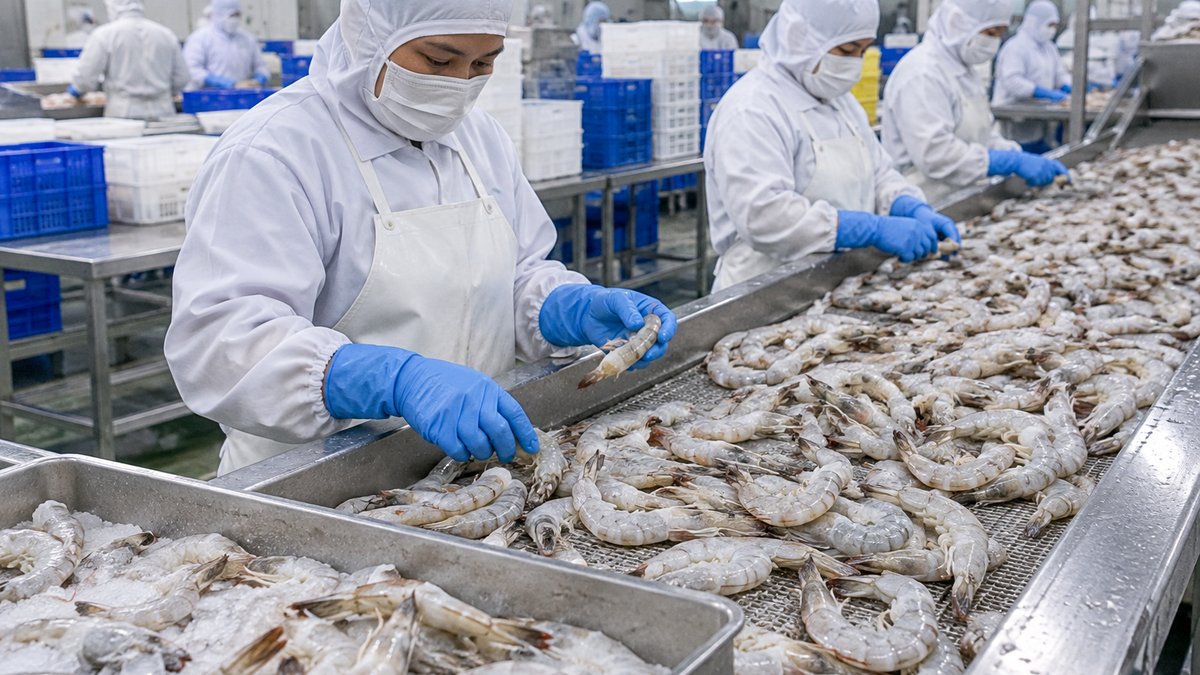
Tridge’s South Korea market overview listed five wholesale price observations for frozen raw Vannamei shrimp dated 1 November 2026: US$8.96, US$10.04, US$10.64, US$11.16 and US$11.34/kg. Their simple average is approximately US$10.43/kg. Tridge also reported a 2026 average of US$9.70/kg and a 2025 average of US$10.25/kg, a reported year-on-year decline of 5.4%.
These observations have a wholesale label, but the source does not give a matched count size, processing form, package weight, net-weight or glaze convention, delivery location, or Incoterm for each price. The spread may therefore include differences in the lots or transactions represented. The figures are useful as a dated reference point, not as an offer for a particular shipment.
The annual averages suggest that Tridge’s reported 2026 benchmark was below its 2025 average. They do not prove that every grade, origin or Korean buyer paid less. The page does not explain whether the 2026 annual figure covers a complete calendar year or which transaction weights contribute to the average, so buyers should keep the comparison within Tridge’s own series.
2.2 Price comparison by exporting origin
Public trade data identifies South Korea’s main frozen-shrimp origins but does not supply matched Vannamei offers by origin, size and delivery basis. The origin comparison below is therefore about import volume, not price competitiveness.
The import value divided by quantity for each origin would be a broad customs unit value, not a current offer for frozen Vannamei. Product mix, size, processing, shipment timing and customs valuation can differ. A buyer should request current origin-specific quotations against one written specification before deciding that one origin is cheaper.
2.3 Price trend and reporting limits
Tridge’s same-product page reports a 2026 average of US$9.70/kg against US$10.25/kg for 2025, a 5.4% decrease. It also lists five observations from 1 November, but those are a cross-section for one date rather than a weekly or monthly time series. No week-on-week change can be derived from those five prices.
A separate South Korea series for frozen common shrimp and prawns reported a September 2026 import unit price of US$7.44/kg, with a range of US$1.60 to US$14.76/kg. That classification and price basis differ from the Vannamei wholesale benchmark. The range reinforces why buyers should not treat a broad customs or product-group average as a quote for raw Vannamei of a particular count.
3. What is changing frozen Vannamei shrimp prices?
The available South Korea price page does not attribute the November benchmark to a specific harvest, policy change, currency move or freight event. Without a source tying a factor to the observed price movement, those causes should not be presented as established explanations. Buyers can still check the cost and supply variables that determine whether a quoted price fits their order.
Origin and product form affect comparability. Raw head-on, headless shell-on and peeled shrimp require different processing and yield assumptions. Count size, glazing, net weight, packaging and quality tolerances also shape the commercial specification. A lower price per gross kilogram may not be lower per kilogram of shrimp if the quotations use different glaze or net-weight conventions.
Shipment timing and freight can change the landed cost between origins. Buyers should compare the same destination port and shipment window, then add freight, insurance, handling and any applicable import charges to the quoted price. A price without an Incoterm and named place does not tell the buyer which party pays those transport costs.
Import policies and border controls also need checking for the specific product and exporting establishment. The sources used for this price snapshot do not establish a current Korean duty rate or a shipment-specific regulatory approval. Importers should verify current Korean requirements and tariff treatment for the product’s customs classification and origin before signing a contract.
4. Which countries import the most frozen Vannamei shrimp?
4.1 Major global importing markets
The sources reviewed for this update do not provide a recent, comparable global ranking limited to frozen Vannamei shrimp. South Korea’s figures show the scale of its own imports under a broader frozen-shrimp classification, but they cannot establish its place in a global Vannamei ranking. Buyers evaluating other destination markets should use the same period, customs code and product scope for each country.
The distinction matters because a ranking for all frozen shrimp can include species and product forms beyond Vannamei. Forecasts also differ from completed customs records. A forecast should be labelled with its publisher, publication date, season and assumptions; it should not be described as a confirmed order or final import total.
4.2 South Korea’s main import origins
For 2025, Vietnam, China and Peru were the three largest origins listed in WITS for South Korean imports of frozen shrimp under HS 030613. Their combined reported volume was 50,364.7 tonnes. The statistic indicates where frozen shrimp entered South Korea under that heading; it does not establish that the same ranking applies to Vannamei alone or that those suppliers have available stock for a current order.
The 2026 monthly dashboard provides a more recent view of total shrimp imports through September, but its coverage is broader than the Vannamei-specific wholesale price page. Use it to monitor aggregate import activity, not to infer a change in Vannamei demand, a buyer’s requirement or an origin-specific price.
4.3 How exporters can assess market opportunities
Import totals can help exporters identify established routes, but they do not confirm a buyer’s current order. A supplier considering South Korea should verify the buyer’s requested count, processing form, packaging, quantity, delivery date and documentation requirements. A current request or tender is evidence of a stated need; an annual customs total is not.
For a commercial comparison, ask for quotations from origins that can meet the same specification and shipment window. Record the quote date and validity period, currency, Incoterm and named place. That lets a procurement team compare offers without mixing a wholesale market signal, a customs unit value and an export quotation.
5. How buyers can source frozen Vannamei shrimp at a competitive cost
A competitive purchase starts with a defined product and delivery basis. The South Korean benchmark of US$8.96 to US$11.34/kg on 1 November 2026 is a wholesale range with limited specification detail. It cannot replace a supplier’s current quotation for the buyer’s required size, form and destination.
- Specify the product form, count size, head-on or headless presentation, shell status and whether the shrimp is raw or cooked.
- State net weight, glaze percentage or net-weight convention, package size, carton configuration and required quality tolerances.
- Set the order quantity, shipment window, destination port and any required inspection or sample-approval process.
- Request the quote currency, Incoterm, named place, validity date and whether freight and insurance are included.
- Check the supplier’s available quantity and shipment schedule against the order before comparing prices.
- Verify current Korean import conditions and the documentation required for the product and origin.
FOB, CFR and CIF quotes allocate transport costs differently. Under FOB, the buyer arranges the main carriage; CFR includes carriage to the named destination port but not insurance; CIF includes carriage and insurance to that port. The parties should confirm the named port and the applicable Incoterms version in the contract. A buyer comparing these terms should convert the offers to the same destination-cost basis and account for destination charges not included in the seller’s quote.
Illustrative quotation comparison fields:
Product: Frozen raw Vannamei, agreed count and presentation
Quantity and pack: Net weight, glaze convention and carton configuration
Delivery: Named Korean port, Incoterm and shipment window
Commercial terms: Currency, quote validity, payment and inspection terms
Illustrative checklist only. Confirm the specification, documentation and contract terms required for the actual shipment.
Keep the Tridge range in a separate reference column if using it in procurement discussions. Record it as a dated South Korean wholesale benchmark, with grade and delivery basis not stated. Do not subtract it from or add it to a supplier’s FOB, CFR or CIF quote as if both figures described the same shipment.
6. What does the latest demand look like on Freshdi?
A current Freshdi buying request can show a buyer’s stated product, quantity, destination and trade terms. Those details are more useful for judging whether a particular offer fits than a national import total. Review each request on its own terms and confirm whether its specifications match the shrimp available.
The public trade figures cited in this article are not Freshdi platform statistics. They describe customs imports or third-party market-price observations and should not be used to claim how many Korean buyers are currently seeking Vannamei shrimp. Suppliers can review Frozen Vannamei Shrimp buying requests and compare each stated requirement with their available product before responding.
7. What buyers and suppliers should do next
7.1 For buyers and importers
- Use the 1 November wholesale range only as a dated reference. Obtain current offers for the exact product specification and delivery basis.
- Send the same written specification to suppliers from different origins so the quotations can be compared on equal terms.
- Calculate landed cost to the Korean destination, including freight, insurance, handling and applicable import charges.
- Check lot availability, shipment timing, sample or inspection arrangements and required import documents before confirming the order.
- Keep the price date, quote validity and delivery basis in the purchasing record.
7.2 For exporters and suppliers
- State count size, presentation, net weight, glaze convention, packaging and available quantity in the offer.
- Name the loading port, destination basis, currency, shipment window and quotation validity.
- Separate confirmed product and documentation details from capabilities that still need verification.
- Review Korean buying requests for the requested specification and destination before preparing a quotation.
- Update listings when the product, quantity or shipment availability changes.
8. How Freshdi helps buyers and suppliers connect
Freshdi’s product pages provide a place for buyers to review supplier listings and for suppliers to review buying requests. Buyers can browse Frozen Vannamei Shrimp suppliers; suppliers can use the buying-request page to check whether a stated requirement matches their offer. Listings and requests help users find relevant counterparties, but they do not verify a transaction or guarantee a commercial result.
A buyer comparing the November market benchmark with supplier offers should keep the two sources distinct. The benchmark is a broad, dated wholesale signal. A supplier quotation needs to state its own grade, quantity, destination basis and validity period before the buyer can assess it.
Buyers and suppliers comparing frozen Vannamei specifications can review relevant requests and listings on Freshdi.
View Latest Seafood & Aquatic Products Buying Requests →View Potential Seafood & Aquatic Products Suppliers →
9. South Korea frozen Vannamei shrimp outlook
Tridge’s latest listed South Korean wholesale observations for frozen raw Vannamei shrimp, dated 1 November 2026, ranged from US$8.96 to US$11.34/kg. Its reported 2026 average was US$9.70/kg, compared with US$10.25/kg for 2025. The source does not disclose a matched grade or delivery basis, so neither figure is a shipment offer.
South Korea’s 2025 customs imports show established frozen-shrimp routes from Vietnam, China and Peru, while 2026 aggregate import data provides a more recent view of shrimp trade across broader classifications. Neither dataset gives a reliable, matched-grade Vannamei price comparison by origin. Buyers should compare current quotations on the same specification and landed-cost basis; exporters should state the details Korean importers need to evaluate an offer.
Buyers sourcing frozen Vannamei shrimp can review relevant suppliers and current buying requests on Freshdi.
View Latest Seafood & Aquatic Products Buying Requests →View Potential Seafood & Aquatic Products Suppliers →
Frequently Asked Questions
What was the latest reported frozen Vannamei shrimp price in South Korea?
Tridge listed five South Korean wholesale observations for frozen raw Vannamei shrimp dated 1 November 2026, ranging from US$8.96 to US$11.34/kg. Their simple average is about US$10.43/kg. The source does not state a matched size, processing specification or delivery basis, so the range is not a shipment quotation.
Did frozen Vannamei shrimp prices fall in 2026?
Tridge reported a 2026 average of US$9.70/kg and a 2025 average of US$10.25/kg for its South Korea frozen raw Vannamei series, describing the year-on-year change as minus 5.4%. The page does not establish a matched product grade or complete-year coverage, so use the figures as a comparison within that source’s series.
Which countries supplied the most frozen shrimp to South Korea?
World Bank WITS reports that Vietnam, China and Peru were the leading listed origins for South Korea’s 2025 imports under HS 030613. The code covers frozen shrimp more broadly than Vannamei, so those figures are not a Vannamei-only ranking.
Is the US$7.39/kg September import unit value a Vannamei price?
No. The September 2026 figure is a broad shrimp import unit value from a dashboard covering its stated source classifications. It is not a Vannamei-specific wholesale quote and should not be compared directly with the Tridge frozen raw Vannamei benchmark.
How should buyers compare FOB, CFR and CIF shrimp offers?
Compare offers for the same specification, shipment window and destination. FOB, CFR and CIF assign freight and insurance costs differently, so convert each offer to a common landed-cost basis and include any charges the quotation excludes. Confirm the named place and contract terms with the supplier.
Where can buyers find frozen Vannamei shrimp suppliers or buying requests on Freshdi?
Buyers can browse the Frozen Vannamei Shrimp supplier category, and suppliers can review the related buying-request category. Check each listing or request for product specification, quantity, destination and terms before treating it as a fit.
References
1. Tridge – Frozen Vannamei Raw Shrimp South Korea Suppliers, Trade & Prices: Market Overview 2026, Updated 14 November 2026.
2. World Bank WITS – Korea, Rep. Frozen shrimps and prawns imports by country, 2025, 2025 trade data.
3. Shrimp Insights – South Korea shrimp import data, Snapshot loaded 16 November 2026; data through September 2026.
4. Tridge – South Korea Frozen Common Shrimp and Prawn Monthly Update, September 2026, September 2026.
Disclaimer: This article is compiled from platform data, public sources and information provided by third parties, for general informational purposes only. We do not guarantee its accuracy or completeness. Prices, volumes and forecasts are indicative, reflect conditions as of 2026-11-17 and may change without notice. This is not financial, investment or trading advice.