
Introduction
Thai jasmine rice export benchmarks relevant to Canadian importers differed sharply by grade in October 2026. On 28 October, Thai jasmine rice made from Pathum fragrant varieties was listed at US$759 per metric tonne FOB, while Thai Hom Mali was US$1,184 per metric tonne FOB. These are export-side reference prices, not Canadian landed prices or supplier offers to a particular buyer.
This update uses the latest dated FOB jasmine-rice benchmarks found for October, with separate, more recent Thai Rice Exporters Association figures identified where their quotation basis is not stated. The Canada market scope is the sourcing decision facing an importer: compare the rice specification, origin, delivery basis and destination costs before treating an export quote as a Canadian purchase cost.
Key Takeaways
- On 28 October 2026, Thai jasmine rice made from Pathum fragrant varieties was listed at US$759/MT FOB; Thai Hom Mali was US$1,184/MT FOB, according to rice.ag’s compilation of exporter and official price data.
- The Thai Rice Exporters Association’s 11 November list showed Thai Jasmine Rice at US$779/MT, down from US$806/MT on 4 November. The public price row does not state its delivery basis, so it should not be treated as a confirmed FOB or Canadian landed price.
- A February 2026 comparison listed Thai Hom Mali at US$1,171/MT, Cambodian Phka Malis at US$834/MT and Vietnamese jasmine rice at US$433–437/MT. These older figures are not a current, fully matched quotation set.
- USDA’s November 2026 outlook describes global rice supply and trade, not jasmine rice alone. Its long-grain export price comparisons cannot be used as direct jasmine-rice substitutes.
- Canadian buyers should compare the same jasmine variety, crop year, quality terms, pack format, quantity and delivery basis, then calculate destination landed cost.
1. Global rice supply sets context, but does not price jasmine rice
USDA’s November 2026 rice outlook said global production was nearly unchanged from the prior month and forecast lower global trade, mainly because of reduced Indian exports and lower imports by Bangladesh and West Africa. Those observations cover rice broadly; they do not establish a jasmine-specific supply balance or Canadian import demand.
The same USDA report showed November FOB quotations for ordinary long-grain white rice at about US$389/MT for India, US$411/MT for Pakistan, US$439/MT for Vietnam, US$497/MT for Thailand and US$680/MT for the United States. USDA identifies the Thai quote as 100B and the other origins as 5% broken. Those are useful indicators of wider rice-market competition, but the different grade and product type make them unsuitable as a direct jasmine price comparison.
Thailand is one source of fragrant rice relevant to Canadian buyers, but the word jasmine can cover products with different varieties and origin claims. Thai Hom Mali and Pathum fragrant rice do not have the same price point in the October benchmark. Buyers should identify the exact product before comparing an offer with another origin.
USDA’s June 2026 report described Thailand’s export program and noted that the country’s full-year rice export target was 7 million metric tonnes. That target covers rice exports generally, not jasmine alone, and is not a confirmed shipment total. The report also listed Thai export prices for several non-jasmine grades, which should not be substituted for a jasmine quotation.
Looking to Source Jasmine Rice?
Connect with verified suppliers, discover matching products, and explore sourcing opportunities from global markets.
2. Latest jasmine rice export prices and origin comparisons
2.1 October export references for Thailand
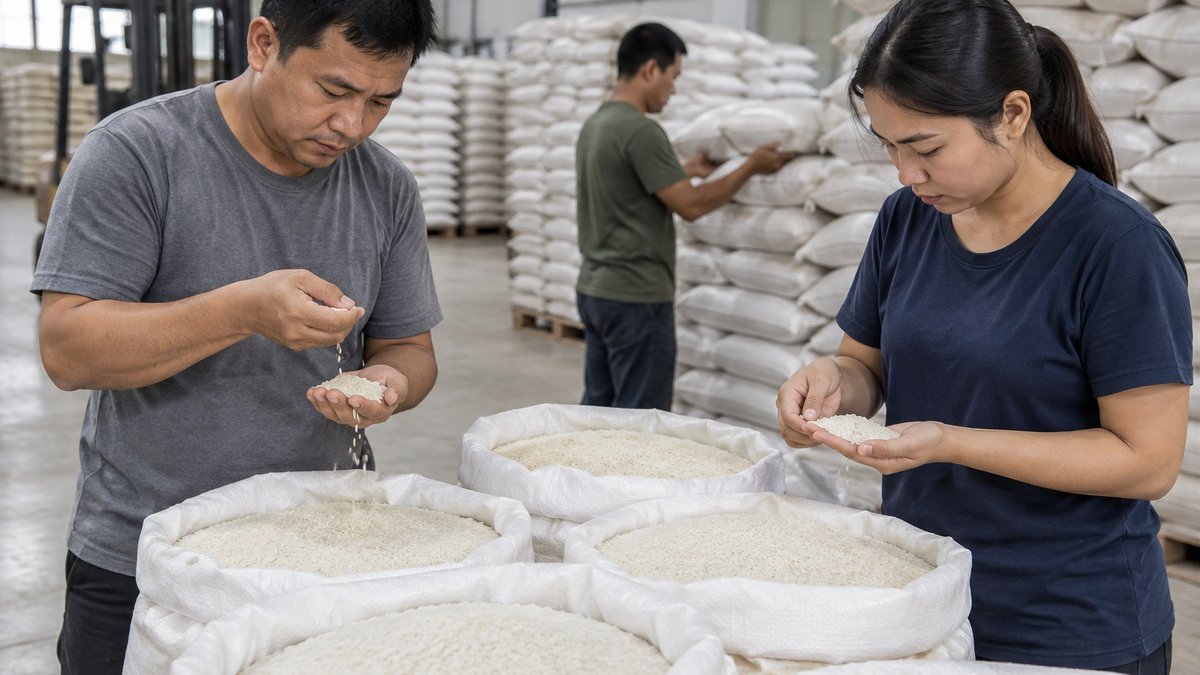
The latest dated FOB jasmine-rice benchmarks located for this update are for 28 October 2026. rice.ag lists Thai jasmine made from Pathum fragrant varieties at US$759/MT FOB and Thai Hom Mali at US$1,184/MT FOB. The source reports the Hom Mali price was 5.7% higher than a year earlier; Pathum fragrant rice was 33.2% higher year on year.
The Thai Rice Exporters Association’s 11 November 2026 table provides a more recent number for its Thai Jasmine Rice line: US$779/MT, compared with US$806/MT on 4 November. The change is US$27/MT over one week. The table’s public price row does not state whether this is FOB or another basis, so it cannot be compared directly with the 28 October FOB benchmarks or used as a Canadian landed price.
The FOB figures exclude the cost of transporting the rice from the export port, insurance and Canadian destination charges. They are reference levels rather than offers to a particular importer. The available series also separates Hom Mali from Pathum fragrant rice, so a buyer should not read their price difference as a simple premium for an otherwise identical lot.
2.2 Origin comparisons require matching product and date
A Thai government page reporting a February 2026 comparison of jasmine rice listed Thai Hom Mali at US$1,171/MT, Cambodian Phka Malis at US$834/MT and Vietnamese jasmine at US$433–437/MT. The figures are useful as a dated indication of price dispersion among named fragrant-rice products, but they are around nine months old and do not establish current November offers.
The February comparison does not provide enough detail to confirm that all three prices share identical crop year, packing, grade tolerances and delivery terms. A Canadian importer should use it as historical context only. For a purchase decision, request current quotations against one written specification and a shared delivery basis.
2.3 What the recent price movement does and does not show
The dated October FOB data shows two distinct Thai fragrant-rice reference levels and different year-on-year changes. The newer TREA line fell from US$806/MT on 4 November to US$779/MT on 11 November, but its basis is unstated. That weekly movement should be described as a change in the published association price, not as a verified drop in the FOB cost of a shipment to Canada.
No continuous, specification-matched Canadian import-price series for jasmine rice is established by these sources. The export benchmarks therefore help buyers frame inquiries, while a supplier’s current quote and the shipment’s destination costs determine the amount payable for a particular order.
3. Factors that can move jasmine rice export prices
Variety and crop are central to the price comparison. rice.ag describes Thai Hom Mali as a seasonal, northeast Thailand crop and Pathum Thani fragrant rice as a variety that can be grown year-round. Its October price series puts Hom Mali above Pathum fragrant rice, while also showing that their year-on-year movements differed.
Harvest timing can change which crop is being offered. rice.ag notes that new-crop arrivals from November may be priced separately from old crop. Importers should ask for the crop year and available shipment window rather than assuming a price update applies equally to old-crop inventory and newly harvested rice.
Competition from other fragrant-rice origins also affects the alternatives buyers review. The February price comparison showed a wide spread among Thai Hom Mali, Cambodian Phka Malis and Vietnamese jasmine, but it is too old and too lightly specified to establish present-day substitution economics. A current tender or supplier inquiry should specify whether an alternative origin is acceptable.
Currency and freight change the buyer’s cost even when the export price is unchanged. USDA’s June 2026 Thailand report included the exchange rate alongside Thai rice price data, while its November report presented exporter prices in US dollars per metric tonne. A Canadian importer should confirm quote currency and validity, then obtain freight and insurance costs for the intended shipment.
USDA’s November outlook links broader rice-market price movements to changes in exportable supply and sales. That context does not prove a specific cause for jasmine prices. Buyers should distinguish a documented market factor from a forecast or a supplier’s explanation for an individual offer.
4. Which countries import the most jasmine rice?
4.1 Global importing markets
The sources used for this update do not provide a recent, ranked table of jasmine-rice imports by country. USDA’s November rice outlook covers rice trade overall, so its import projections should not be presented as a jasmine-specific ranking. For Canadian purchasing, an all-rice import ranking would not identify demand for Thai Hom Mali, Pathum fragrant rice or other fragrant varieties.
USDA reports that its 2026 global rice trade outlook was reduced mainly because of lower import forecasts for Bangladesh and West Africa, alongside a reduction in India’s exports. This describes overall rice trade, not confirmed jasmine orders or Canadian buying activity.
4.2 Thailand’s export destinations
rice.ag identifies the United States, China, Hong Kong and West Africa as major buyers of Thai jasmine. The page does not provide a dated destination-share table, so these markets should be treated as reported destination context rather than a current ranking or a measure of Canadian demand.
Thailand’s June 2026 USDA report describes government and commercial efforts to develop markets in Africa, Latin America, South Korea, Malaysia and China. It also discusses possible additional sales to China. Those initiatives and proposed volumes are not evidence of completed purchases of jasmine rice, and they do not establish demand in Canada.
4.3 How Canadian exporters and importers should read demand signals
A forecast, an export target and a buyer order describe different things. USDA’s country-level trade outlook covers rice categories broadly; Thailand’s export target covers all rice; a confirmed buying request applies to the product and conditions stated by the buyer. Buyers should ask suppliers about current availability for the required variety and shipment period before relying on broader demand signals.
5. How Canadian buyers can compare sourcing prices
A competitive export price is only one input to the landed cost in Canada. FOB means the seller’s price covers delivery of the goods on board the vessel at the named port; the buyer must account for onward freight, insurance where applicable and destination charges under the agreed contract. Compare offers on the same delivery basis before deciding which origin is cheaper.
- Specify the variety and origin, including whether the requirement is Thai Hom Mali, Pathum fragrant or another jasmine rice.
- Set measurable quality terms, such as broken percentage, moisture, foreign matter, crop year and any agreed inspection method.
- State the order quantity, bag size, packaging material and shipment window. A price for one pack format or volume may not apply to another.
- Ask each supplier to quote in the same currency and on the same Incoterm basis, with the named port or destination stated.
- Add freight, insurance, customs-related charges, inland transport and any other destination costs to compare estimated landed cost.
- Check Canadian import requirements for the specific rice product and shipment before finalizing the contract. Requirements can depend on product details and import circumstances.
A price gap between Thai Hom Mali and Pathum fragrant rice does not by itself establish which offer suits a Canadian buyer. The intended use, label and origin requirements may differ. Request samples and agree on the specification and inspection procedure in the contract when sensory or physical characteristics affect acceptance.
Buying consideration: For a defensible comparison, ask suppliers to quote the same variety, crop year, quality limits, pack size, quantity, shipment window and delivery basis, then calculate the total cost to the Canadian destination.
6. What current demand looks like on Freshdi
This market update does not quantify Freshdi buying requests or supplier activity. A request count would describe platform activity for a stated period, not total Canadian jasmine-rice imports or global demand.
Buyers can review current rice and jasmine-rice buying requests to see the product requirements buyers have posted. Suppliers should check each request’s stated product, quantity, destination and delivery terms before deciding whether to respond. A request is not a confirmed purchase order.
7. Practical next steps for buyers and suppliers
7.1 For Canadian buyers and importers
- Use the October FOB prices as a dated reference point, not a current Canadian landed-cost quote.
- Ask for current quotations and confirm the price basis, named port, currency and validity period in writing.
- Match varieties and quality specifications before comparing origins. Treat February 2026 origin prices as historical context only.
- Calculate landed cost using freight, insurance and destination charges for the shipment under consideration.
- Confirm applicable Canadian import requirements and the documents needed for the specific product and shipment.
7.2 For exporters and suppliers
- State whether the offer is Hom Mali, Pathum fragrant rice or another variety, and identify origin and crop year.
- Give the quality parameters, pack format, available quantity, loading port and shipment window.
- Name the Incoterm and place, quote currency and offer validity so buyers can compare costs on a consistent basis.
- Keep product information and available quantities current, and respond to buying requests only when the offer matches the stated needs.
8. How Freshdi connects rice buyers and suppliers
Freshdi’s rice category pages let buyers review supplier listings and let suppliers review buying requests. Buyers comparing fragrant-rice options can use the category pages to identify listings and inquiry opportunities; suppliers can check requests and assess whether their product and shipment terms fit.
A listing or request is a starting point for a business discussion, not a verification of a shipment, a guarantee of a transaction or proof that a supplier meets a buyer’s requirements. Each party should verify specifications, commercial terms and documentation directly through its due-diligence process.
Buyers and suppliers comparing rice requirements can review the relevant category listings and requests.
View Latest Rice Buying Requests →View Potential Rice Suppliers →
9. Canada jasmine rice market outlook
The latest fully specified FOB benchmarks located for this update are dated 28 October 2026: US$759/MT for Thai Pathum fragrant rice and US$1,184/MT for Thai Hom Mali. TREA’s 11 November Thai Jasmine Rice figure was US$779/MT, but its public row does not state the quotation basis.
Canadian buyers should obtain current offers against one specification and compare full landed cost. Exporters should identify variety, crop year, quality, quantity, port and Incoterm clearly when quoting. Freshdi is one place to review relevant rice suppliers and buying requests.
Buyers ready to compare product listings can review suppliers related to jasmine rice.
View Related Suppliers for This Product →
Frequently Asked Questions
What was the latest fully specified Thai jasmine rice export price in this update?
On 28 October 2026, rice.ag listed Thai jasmine rice made from Pathum fragrant varieties at US$759 per metric tonne FOB. The same source listed Thai Hom Mali at US$1,184/MT FOB. These are export-side references, not quotations for a particular Canadian shipment.
Did Thai jasmine rice prices change in November 2026?
The Thai Rice Exporters Association’s published Thai Jasmine Rice figure fell from US$806/MT on 4 November to US$779/MT on 11 November. The public row does not state its quotation basis, so that change should not be read as a confirmed FOB change or a Canadian landed-price movement.
Why are Thai Hom Mali and Pathum fragrant rice priced differently?
They are different fragrant-rice products with different production and market characteristics. The 28 October 2026 FOB references were US$1,184/MT for Hom Mali and US$759/MT for Pathum fragrant rice. Buyers should confirm variety, crop year and quality terms before comparing offers.
Which country has the lowest jasmine rice export price?
The sources do not establish a current, like-for-like ranking. A February 2026 comparison listed Vietnamese jasmine at US$433–437/MT, Cambodian Phka Malis at US$834/MT and Thai Hom Mali at US$1,171/MT, but those historical figures lack enough matched specification detail to rank current offers.
How should Canadian buyers compare FOB and delivered rice prices?
FOB covers the seller’s delivery of goods on board at the named export port. Buyers should add applicable freight, insurance and destination costs, and compare offers with the same variety, quality, quantity, packaging and shipment window. The resulting landed-cost estimate is more useful than comparing unmatched export prices.
Where can buyers find jasmine rice suppliers or buying requests on Freshdi?
Buyers can review rice supplier listings and buying requests on Freshdi’s relevant category pages. Check each listing or request for its stated product, quantity, origin, destination and trade terms; platform activity is not a confirmed order or a guarantee of a transaction.
References
1. Thai Rice Exporters Association – Rice price table, 11 November 2026.
2. United States Department of Agriculture, Foreign Agricultural Service – Grain: World Markets and Trade, November 2026, November 2026.
3. United States Department of Agriculture, Foreign Agricultural Service – Grain and Feed Monthly, Thailand, June 2026.
4. Thailand Ministry of Agriculture and Cooperatives – Thai rice exports face headwinds from a strong baht and high prices, 2026.
5. rice.ag – Jasmine rice prices: Thai Hom Mali and fragrant rice, Updated 11 November 2026.
Disclaimer: This article is compiled from platform data, public sources and information provided by third parties, for general informational purposes only. We do not guarantee its accuracy or completeness. Prices, volumes and forecasts are indicative, reflect conditions as of 2026-11-15 and may change without notice. This is not financial, investment or trading advice.