
Introduction
The latest public export benchmark relevant to Philippine jasmine rice buyers is Thailand’s quote for Thai Jasmine Rice, also described as Thai Fragrant Rice. The Thai Rice Exporters Association listed it at US$779 per metric ton, FOB, on 11 November 2026. That is an origin-side export quote, not a Philippine wholesale or retail price and not a confirmed sale to a Philippine buyer.
The quote was down from US$806/MT on 4 November, after rising from US$717/MT on 21 October. This update covers those Thai export quotations and the broader Philippines rice-import context available through November 2026. The trade statistics cited below cover rice generally, not jasmine rice alone.
Key Takeaways
- TREA quoted Thai Jasmine Rice (Thai Fragrant Rice) at US$779/MT FOB on 11 November 2026, down 3.3% from US$806/MT on 4 November.
- The same TREA price series put Thai Hom Mali premium rice at US$1,055/MT for crop year 2026/27 and US$1,192/MT for crop year 2025/26 on 11 November. These are separate product and crop-year quotations, not interchangeable jasmine grades.
- World Bank WITS data for 2025 show that the Philippines imported 3.399 million tonnes of semi-milled or wholly milled rice from all origins. Vietnam supplied the largest quantity, while Thailand was another source; these figures are not jasmine-specific.
- No equivalent, current jasmine quotation from another exporting origin was verified for this comparison. The available evidence does not support ranking origins by price.
- Buyers should compare the same jasmine type, crop year, packing, shipment period and delivery basis, then calculate landed cost for the Philippine destination.
1. Philippine jasmine rice buyers need to distinguish export quotes from local prices
A Philippine buyer comparing jasmine rice offers can use Thailand’s published FOB quote as an export-market reference, with an important limitation: the quotation is for Thai Jasmine Rice (Thai Fragrant Rice), not a Philippine-destination transaction. FOB means the seller’s quoted price covers the goods loaded at the named export port; the buyer’s freight, insurance and destination costs are outside that price.
The Philippine Statistics Authority and international trade datasets track rice under customs product categories that do not isolate every consumer variety. Likewise, the import figures used here cover semi-milled or wholly milled rice, not a separate jasmine series. They help describe the country’s import sourcing, but they cannot establish the volume or price of jasmine rice specifically.
USDA Foreign Agricultural Service reporting for the Philippines says imports are forecast to rise in marketing year 2026/27 as domestic output remains insufficient to meet demand. That outlook concerns rice overall. It does not guarantee a particular jasmine purchase, shipment or price.
Looking to Source Jasmine Rice?
Connect with verified suppliers, discover matching products, and explore sourcing opportunities from global markets.
2. Thai jasmine rice was quoted at US$779 per metric ton FOB on 11 November
2.1 Current export price in Thailand
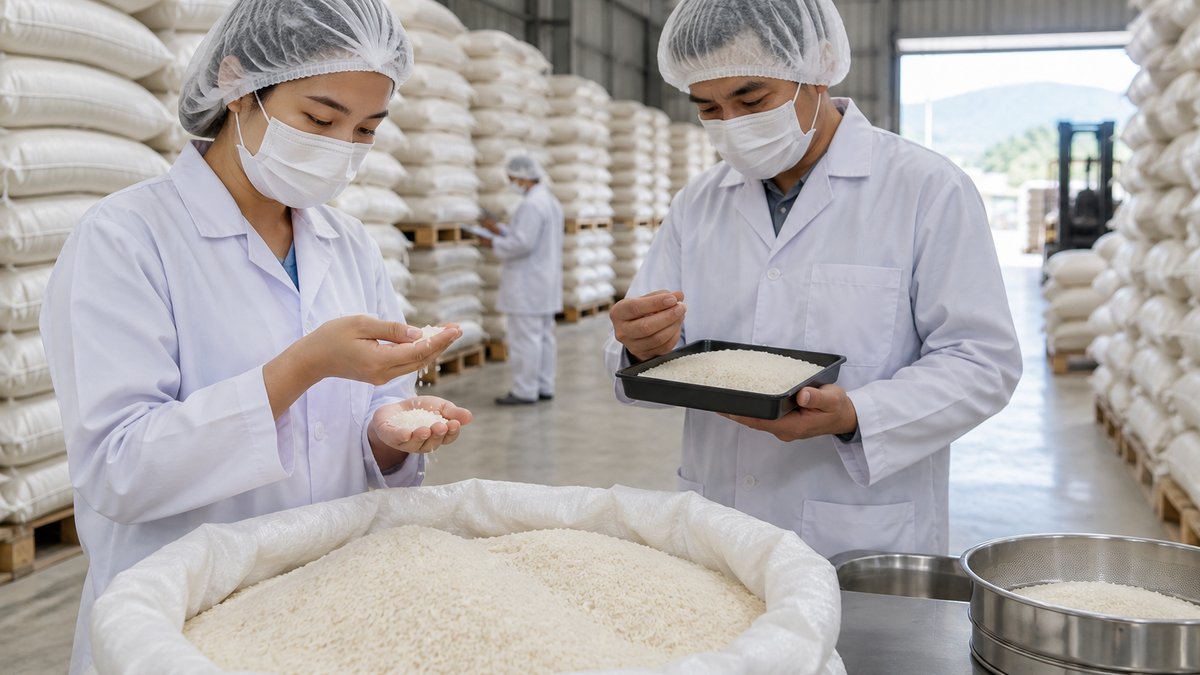
The Thai Rice Exporters Association’s 11 November 2026 schedule lists Thai Jasmine Rice (Thai Fragrant Rice) at US$779 per metric ton on a milled-rice basis, FOB. The association’s weekly series recorded US$806/MT on 4 November and US$759/MT on 28 October. The latest quote therefore fell by US$27/MT, or about 3.3%, week on week, while remaining US$20/MT above the 28 October level.
The association lists its quotations in US dollars per metric ton on a milled-rice basis and identifies them as FOB prices. Its table distinguishes Thai Fragrant Rice from Thai Hom Mali premium rice by crop year. Buyers should retain those distinctions when requesting offers: the US$779 quote is not a generic price for every rice sold as jasmine, and the premium crop-year quotes should not be compared as though they were the same specification.
2.2 Price comparison by exporting origin
A like-for-like country comparison requires quotations for the same jasmine variety or grade, crop year, quality parameters, packaging, shipment period and Incoterm. The sources verified for this update did not provide a current, comparable jasmine export quote from Vietnam, Cambodia or another competing origin. No country price ranking is therefore supported.
Philippine import records show that the country buys milled rice from several origins, but those customs totals mix varieties and grades. They cannot substitute for a jasmine quotation. Buyers seeking alternative offers should ask each exporter to quote the same written specification and delivery basis.
2.3 The recent price movement is uneven
TREA’s weekly figures show Thai Fragrant Rice moving from US$717/MT on 21 October to US$759/MT on 28 October, then US$806/MT on 4 November and US$779/MT on 11 November 2026. The latest quote is about 8.6% above the 21 October level, despite the week-on-week decline.
These are published export quotations, not a time series of completed Philippine purchases. The comparison says how the stated FOB benchmark changed; it does not establish the price a Philippine importer paid or the current cost of a particular delivered shipment.
3. Export supply and Philippine import demand affect different parts of the price
An FOB quotation reflects the exporter’s origin-side offer. A Philippine buyer’s final cost also depends on the chosen product, shipment terms, freight, insurance, applicable import charges and costs at destination. Those components can move independently, so the TREA price change alone cannot explain a delivered-price change in the Philippines.
Thailand’s September 2026 USDA FAS market update forecast MY 2026/27 rice production at 20.3 million metric tons, 2% below MY 2025/26, citing tighter water supplies and an emerging El Niño as factors affecting off-season planting. That forecast covers Thai rice production as a whole, not Thai Jasmine Rice specifically. It is a supply watchpoint, not evidence that the jasmine quote changed for that reason.
On the demand side, USDA FAS expects Philippine rice imports to rise in MY 2026/27 because domestic production is not expected to meet demand. The forecast is an outlook for rice overall; it does not identify jasmine demand or confirm orders from individual importers.
Trade policy can also affect import costs and shipment timing. The Philippine Department of Agriculture said on 4 August 2026 that rice imports would remain open that year amid concern about future supply. Importers should confirm the rules, permits and applicable charges in force for their shipment with the relevant Philippine authorities before relying on an earlier policy statement.
Currency and logistics terms make a direct quote comparison harder. A US-dollar FOB price does not include the buyer’s ocean freight or insurance, and the conversion into pesos depends on the exchange rate used for budgeting or payment. Keep the quote currency, date, port, Incoterm and cost components visible in every comparison.
4. Philippine rice imports are led by origins supplying the broader market
4.1 Major global importing markets
The sources verified for this update support a current outlook for Philippine rice imports, but not a reliable, jasmine-specific ranking of the world’s largest importing markets. National import rankings for rice as a whole should not be presented as rankings for jasmine, because customs totals combine product types.
For procurement planning, the relevant distinction is between a forecast and an order. USDA FAS’s 2026/27 outlook describes expected Philippine imports across rice categories. It does not represent confirmed jasmine purchase volumes or a commitment by a particular buyer.
4.2 Main origins supplying the Philippines
World Bank WITS data based on UN Comtrade records show that in calendar year 2025 the Philippines imported 3.399 million tonnes of semi-milled or wholly milled rice, worth about US$1.573 billion, from all origins. Vietnam supplied 2.938 million tonnes and Thailand supplied 198,538 tonnes. Pakistan, Myanmar and India were also listed among the main sources.
Those quantities cover the customs category for milled rice, not jasmine alone. They show that Vietnam and Thailand both supplied the broader Philippine import market in 2025; they do not show how much jasmine either origin shipped, or the prices paid for it.
4.3 What the market outlook means for jasmine suppliers
Philippine import demand for rice overall may give exporters a reason to monitor the market, but a national forecast is not a jasmine sales lead. Suppliers should confirm that an interested buyer wants the exporter’s variety and grade, then quote the required quantity, packing, shipment window and destination terms. Buyers should confirm the same details before treating an offer as comparable.
5. Compare landed cost and specification before choosing an origin
The US$779/MT Thai Fragrant Rice quote is useful for an origin-side reference, but it does not identify the least-cost offer delivered to a Philippine port. A buyer should first make sure every quotation refers to the same jasmine type and comparable quality, then add the costs required to bring each offer to the same destination.
- Confirm the variety and grade, including whether the offer is Thai Fragrant Rice, Thai Hom Mali or another jasmine type.
- Request crop year, broken percentage, moisture and other contract quality limits where applicable.
- Match quantity, bag size, packing material and shipment window across quotations.
- Compare the same delivery basis. FOB excludes the buyer’s main freight and insurance; CFR includes cost and freight to the named destination port; CIF includes cost, insurance and freight.
- Add freight, insurance, destination charges, import charges and inland transport to estimate landed cost.
- Check supplier documents, shipment availability and applicable Philippine import requirements before placing an order.
A lower FOB number can result in a higher delivered cost if freight, insurance or destination expenses differ. A quote for Thai Hom Mali premium rice also cannot be compared directly with a quote for Thai Fragrant Rice without accounting for the product and crop-year difference.
Buying consideration: Ask each supplier to quote the same written specification on the same Incoterm and destination basis, and record the quotation date and validity period.
6. Freshdi buying requests are a separate view of buyer demand
National import statistics measure recorded cross-border trade; individual buying requests describe requirements posted by businesses. A request for jasmine rice can help a supplier understand a buyer’s stated product, quantity, destination and terms, but it should not be treated as a national demand statistic or a confirmed purchase.
Suppliers can review rice buying requests on Freshdi and assess whether a stated requirement matches their product and shipment terms. Buyers can use supplier listings to compare the information sellers provide, then verify specifications and commercial details directly through their normal due-diligence process.
7. Buyers and suppliers should act on the dated quotation
7.1 For buyers and importers
- Treat US$779/MT as the Thai Fragrant Rice FOB reference published on 11 November 2026, not as a delivered Philippine price or a binding offer.
- Request current quotations and confirm validity, loading port, shipment window, quantity and payment terms.
- Separate Thai Fragrant Rice from Thai Hom Mali and other varieties in the comparison sheet.
- Calculate landed cost to the same Philippine port and verify current import requirements and charges.
- Use national import data for broad origin context, not as proof of jasmine-specific supply or demand.
7.2 For exporters and suppliers
- State the exact jasmine variety, grade, crop year and quality tolerances in the offer.
- Identify the quotation basis, loading port, currency, quantity, packing and validity date.
- Make clear whether freight and insurance are included in the offered term.
- Update prices when market conditions or shipment availability change.
- Respond to Philippine inquiries only when the product and delivery terms match the buyer’s stated requirements.
8. Freshdi connects buyers with rice suppliers and sourcing requests
Philippine buyers comparing jasmine rice can use Freshdi to browse rice supplier listings and review buying requests posted by businesses. Suppliers can use the rice category to see sourcing requests and decide whether their product, quantity and terms fit the stated need.
Freshdi listings and requests are a discovery tool. A listing does not establish that a supplier has stock for a particular shipment, and a request does not guarantee that the buyer will place an order. Confirm the product specification, price, documents and commercial terms for each transaction.
Buyers and suppliers comparing rice requirements can review relevant listings and requests on Freshdi.
View Latest Rice Buying Requests →View Potential Rice Suppliers →
Buyers can browse rice suppliers, while suppliers can review rice buying requests.
9. Philippine jasmine rice outlook depends on the offer and shipment basis
The latest verified Thai Fragrant Rice benchmark was US$779/MT FOB on 11 November 2026, 3.3% below the previous week’s quotation and about 8.6% above the 21 October level. The Philippine import outlook points to continued demand for rice overall, while 2025 trade data identify Vietnam and Thailand among the country’s suppliers.
Those figures do not establish a Philippine jasmine transaction price or a ranking of jasmine origins. Buyers should compare current offers against the same specification and calculate landed cost; exporters should state variety, crop year, quality, loading port and quotation validity clearly.
Businesses preparing a jasmine rice inquiry can use Freshdi to find relevant rice suppliers and buying requests.
View Latest Rice Buying Requests →View Potential Rice Suppliers →
Frequently Asked Questions
What was the latest Thai jasmine rice export price?
The Thai Rice Exporters Association quoted Thai Jasmine Rice (Thai Fragrant Rice) at US$779 per metric ton, FOB, on 11 November 2026. It was down from US$806/MT on 4 November. The quote is an export benchmark, not a Philippine delivered price or a confirmed transaction.
Is Thai Hom Mali the same price category as Thai Fragrant Rice?
No. TREA listed Thai Fragrant Rice separately from Thai Hom Mali premium rice, which it quoted by crop year. On 11 November 2026, the listed Hom Mali prices were US$1,055/MT for crop year 2026/27 and US$1,192/MT for crop year 2025/26. Buyers should confirm the variety, crop year and specification before comparing offers.
Did Thai jasmine rice prices rise or fall in November 2026?
The TREA quote fell from US$806/MT on 4 November to US$779/MT on 11 November, a decrease of about 3.3%. It remained above the US$717/MT quote recorded on 21 October. These are dated FOB quotations, not Philippine purchase prices.
Which countries supply the Philippines with jasmine rice?
The trade figures cited here cover semi-milled or wholly milled rice, not jasmine rice separately. In 2025, World Bank WITS data show Vietnam as the largest supplier in that broader category and Thailand as another major source. Those totals do not establish the origin or volume of jasmine imports.
How should Philippine buyers compare jasmine rice quotations?
Compare the same variety, grade, crop year, quality limits, quantity, packing, shipment period and Incoterm. Then include freight, insurance, destination and import costs to estimate the cost delivered to the same Philippine port. An FOB quotation excludes the buyer’s main freight and insurance.
Can buyers find jasmine rice suppliers or requests on Freshdi?
Freshdi’s rice category lets buyers browse supplier listings and suppliers review buying requests. Listings and requests are a starting point for sourcing; buyers and suppliers should verify specifications, availability, price and commercial terms for each transaction.
References
1. Thai Rice Exporters Association – Export Prices, 11 November 2026.
2. World Bank WITS – Philippines Semi-milled or Wholly Milled Rice Imports by Country, 2025, 2025 trade data.
3. USDA Foreign Agricultural Service – Grain and Feed Annual: Philippines, 2026.
4. USDA Foreign Agricultural Service – Thailand: Grain and Feed Monthly, September 2026.
5. Philippine Department of Agriculture – DA Keeps Rice Imports Open as El Niño Risks Mount, 4 August 2026.
Disclaimer: This article is compiled from platform data, public sources and information provided by third parties, for general informational purposes only. We do not guarantee its accuracy or completeness. Prices, volumes and forecasts are indicative, reflect conditions as of 2026-11-13 and may change without notice. This is not financial, investment or trading advice.