
Introduction
Fresh Ginger buyers describe requirements in different ways. A request may name a quantity and delivery term while leaving the product grade, packaging or price basis unclear. Exporters need to check those details before deciding whether a request fits their supply.
Freshdi’s selected 14-day feed contains four buying requests posted from 5 to 16 November 2026. The listings include requests for dried ginger as well as fresh ginger; this article covers the two listings that name fresh ginger and excludes the dried-product requests from its analysis. Freshdi shows the two fresh-product listings as not verified. The requests state destinations in Togo and Malaysia, but do not provide a complete, comparable set of specifications. The advice below focuses on what the listed buyers state and what a supplier should clarify before preparing an offer.
Key Takeaways
- The two fresh-product listings were posted on 13 and 16 November 2026 and name Togo and Malaysia as buyer countries.
- One request states 120 tons, FOB and T/T; the other states 200 Box, CIF and an “Other” payment term. The requests use different quantity units, so these figures are not directly comparable.
- The Malaysia request names land freight, a three-day lead time and a Certificate of quality. The Togo request asks for uniform size selection and fresh packing in its title.
- Neither listing gives enough information to establish a comparable price basis or a complete product specification. Confirm grade, size, packing, quantity basis, delivery point and payment details before quoting.
1. Fresh Ginger Market Overview and Trade Context
Fresh ginger competes in a wider ginger trade that includes products other than fresh rhizomes. Trade statistics therefore need a clear product-code scope before a supplier uses them to assess demand. In its 2025 Fiji ginger export guide, the United Nations Conference on Trade and Development (UNCTAD) reports that the European Union imported more than US$200 million of ginger in 2023. UNCTAD’s figure combines HS codes 091011, ginger neither crushed nor ground, and 091012, crushed or ground ginger. It is not a fresh-ginger-only import total, and it does not describe the two Freshdi buyer markets in this article.
Those code limits matter when comparing a fresh-ginger request with published market totals. A trade line for ginger neither crushed nor ground does not, by itself, identify whether a shipment was fresh or dried. Likewise, a combined import figure cannot establish the volume of fresh rhizomes that a particular buyer, country or port needs. The UNCTAD guide uses 2023 trade data, so it is a historical reference rather than a current quotation or a measure of November 2026 demand.
Production totals also need careful interpretation. FAOSTAT is FAO’s database for national and global crop statistics, but the figures must be checked for crop year, commodity definition and the units reported by each country before comparing production with trade. The sources used here do not provide a verified, fresh-only global production total or a recent, comparable fresh-ginger price series. This article therefore does not turn broad ginger data into a fresh-ginger market estimate or price benchmark.
The market context and the Freshdi records answer different questions. UNCTAD’s trade figures describe cross-border ginger trade within the codes and year stated. The Freshdi listings are buyer-posted requests from 5 to 16 November 2026. They show the requirements stated by individual buyers, not total country demand, market-wide consumption or a confirmed transaction.
Looking to Sell Fresh Ginger?
Connect with verified buyers, receive relevant buying leads, and explore sourcing opportunities from global markets.
2. Fresh Ginger Buying Requests Posted in November 2026
Two Freshdi listings name fresh ginger and fall within the 5 to 16 November 2026 posting window. One requests 120 tons for Togo on FOB terms; the other requests 200 Box for Kuala Lumpur, Malaysia, on CIF terms. The records do not use a common quantity unit or give enough detail to compare their prices or product specifications.
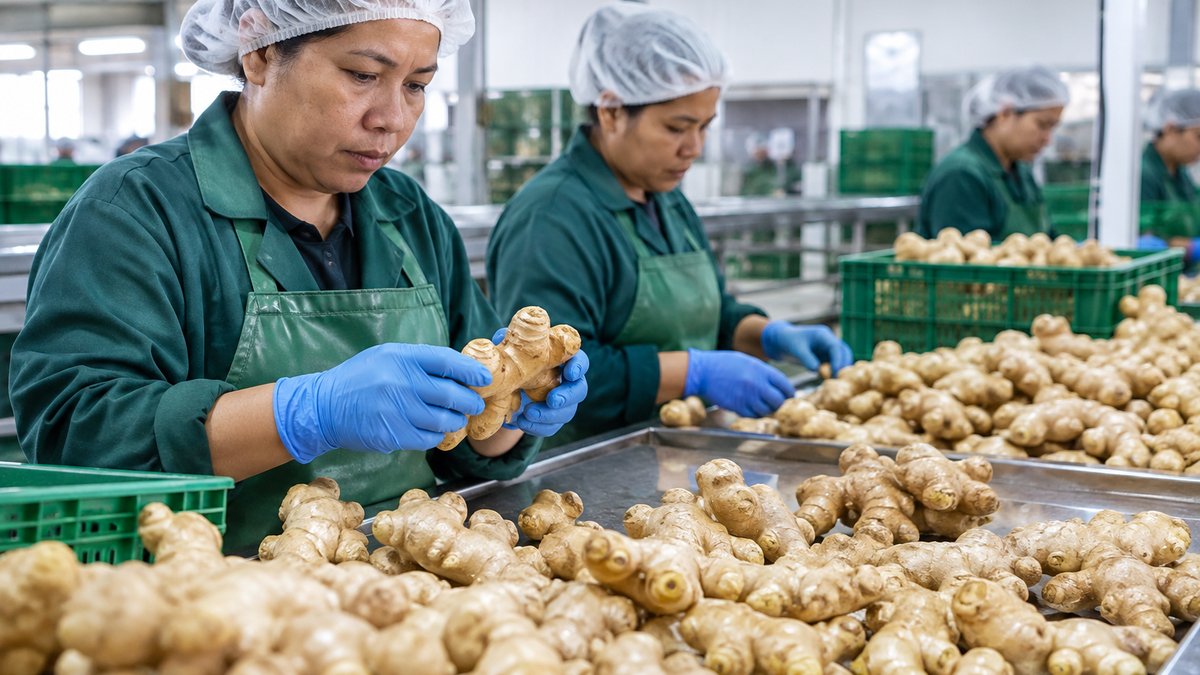
The Togo request was posted on 16 November. Its title asks for top-quality farm produce, uniform size selection and fresh packing for wholesale import buyers. The record gives a quantity of 120 tons, names Togo as both the buyer country and destination, and lists Togo as the requested origin. It states FOB and T/T. The target-price field contains “USD” without a numeric amount, so it does not provide a usable price. The request does not state a named port, ginger grade, size range, packing specification or shipment schedule.
The Malaysia request was posted on 13 November. It names fresh ginger, a quantity of 200 Box and Kuala Lumpur, Malaysia, as the destination. The record lists land freight, a three-day lead time, CIF and an “Other” payment term. It also lists a Certificate of quality. Its target-price field states 6 USD, but does not state a price unit or delivery and quality basis. The request does not specify box weight or dimensions, product grade, size range, packing material, delivery point or what the certificate must confirm.
Freshdi marks both requests as not verified. The records do not state whether the buyers have since confirmed their requirements or remain available. A supplier should check the current listing status and confirm the buyer’s details through the platform before committing inventory or calculating a firm offer.
2.1 How to compare the requests without mixing their terms
The quantities are expressed as tons and boxes, so they cannot be ranked by size without the weight per box. Ask the Malaysia buyer to confirm net ginger weight per box and whether 200 boxes is a one-time order or a recurring requirement. Ask the Togo buyer whether 120 tons is one shipment or a supply programme, and request the planned shipment dates.
FOB and CIF place different responsibilities on the seller and buyer. Under FOB, the parties need to identify the named port of shipment and agree when delivery and risk transfer occur under the contract. Under CIF, the quotation must identify the named destination port and clarify the freight and insurance basis. The Malaysia record’s land-freight field and Kuala Lumpur destination should be confirmed against the buyer’s intended delivery point before a supplier calculates a CIF quotation.
The payment entries need clarification as well. The Togo record states T/T, while the Malaysia record says “Other” without defining the method. A supplier should ask the Malaysia buyer to name the preferred payment method, timing and any documentary conditions. Neither record contains enough information to establish a comparable payment risk or an agreed transaction term.
Buying consideration: Before quoting either request, confirm the fresh ginger specification, quantity basis, packaging, exact delivery point, shipment timing, inspection method and payment details. Keep the quotation conditional on the buyer confirming missing fields.
3. What These Fresh Ginger Requests Mean for Suppliers
The listings give suppliers a starting point for qualification, not a complete specification. The Togo request emphasizes uniform size and fresh packing but does not state the size range or pack format. The Malaysia request gives a box count and certificate name but leaves the box weight, quality criteria and certificate scope unstated. A supplier who replies with assumptions risks pricing a different product or delivery arrangement from the one the buyer intends.
Start with the physical product. Confirm whether the buyer wants mature or young ginger, the acceptable rhizome size range, whether pieces may be cut or broken, and the limits for damage, sprouting, soil or visible defects. These are clarification questions, not requirements shown in the requests. If the supplier grades by size, state the measurement method and the share of the lot expected to meet each grade. Attach current lot photographs only when they represent the goods being offered.
Freshness depends on harvest, handling and transit time. Before offering a shipment, confirm the harvest or packing date, the planned dispatch date, how the ginger will be packed and whether temperature or ventilation conditions are specified by the buyer. The Malaysia record’s three-day lead time needs a reference point: the buyer should clarify whether it means dispatch after order confirmation, delivery to a named point or another milestone. The record does not state the meaning.
For the Togo request, ask the buyer to define “uniform size” and “fresh packing.” The listing does not state carton or sack type, net weight per pack, number of packs, pallet use or any label requirement. The 120-ton quantity also calls for a practical shipment plan. State the volume available, loading schedule and whether the supply can be delivered as one lot or multiple shipments only after confirming what the buyer expects.
For the Malaysia request, establish the net weight and dimensions of each box before converting the request into a weight-based offer. Confirm what “Certificate of quality” means to the buyer: who must issue it, which product characteristics it must cover and whether the buyer requires an original or a copy. The record names the certificate but does not state its issuer, test criteria or validity requirements.
A quotation should identify the product and commercial basis in terms both sides can check. State the quantity and unit, grade or agreed size range, packing, origin, availability, shipment schedule, named Incoterm place or port, payment method and offer validity. For a price, state the currency, unit and delivery basis. The two Freshdi target-price fields do not provide enough information to serve as a market reference: one has no numeric amount and the other lacks a stated price unit and basis.
Import rules depend on the destination and the product’s condition. For example, the European Commission describes plant-health requirements for plants and plant products entering the EU, and CBI’s European ginger market guide says fresh ginger entering the EU needs a phytosanitary certificate and must meet applicable plant-health and quality rules. Those EU requirements do not automatically apply to a shipment to Togo or Malaysia. Suppliers should check the importing country’s current rules for the exact product and shipment before confirming compliance.
For a possible EU sale, CBI’s guidance also points exporters to the EU’s general marketing standard for ginger and the Codex ginger standard, CXS 218-1999, as a reference for fresh rhizomes prepared and packed for consumers. These references do not replace the destination authority’s current requirements or the buyer’s contract specification. A supplier should identify whether the buyer requires a legal certificate, a voluntary quality document or a contractual inspection report, then confirm who arranges and pays for it.
The listings show different information gaps, not a single standard shared by all buyers. A supplier should respond only to requirements that match its available product and documented capability. If the buyer’s meaning is uncertain, ask a short, itemized clarification before fixing a price or reserving a shipment.
4. How Freshdi Helps Suppliers Find Fresh Ginger Buyers
Freshdi lets suppliers review buying requests by product category and inspect the requirements shown in each listing. Suppliers can open the fresh ginger requests, check the stated quantity, destination and terms, and decide whether the request fits their product and shipment capability. The article’s records were posted from 5 to 16 November 2026; listing status and details can change, so review the original request before preparing an offer.
A supplier can use a request to identify what needs to be confirmed, then prepare a quotation against the buyer’s actual answers. For the Togo request, that means clarifying size, packing, named port and whether 120 tons is one shipment or a schedule. For the Malaysia request, it means confirming box weight, price unit, delivery point, lead-time definition and the required certificate. The buyer’s “Other” payment entry also needs to be made specific before commercial terms are agreed.
The records are platform observations, not proof of a purchase order or a completed transaction. Freshdi marks the two requests covered here as not verified. Suppliers should assess the request, check the current listing and conduct their own commercial and product checks before accepting an order.
Suppliers whose Fresh Ginger stock fits the stated requirements can review relevant buyer requests on Freshdi.
View Latest Buying Requests for This Product →
5. Conclusion: Qualify the Fresh Ginger Request Before Quoting
The Freshdi listings posted on 13 and 16 November 2026 show two different fresh-ginger inquiries: 120 tons for Togo and 200 Box for Kuala Lumpur. Their units, terms and detail levels differ. Neither provides a complete basis for comparing price or confirming a shipment specification.
Suppliers should verify the current request, define the product and pack, confirm the quantity basis, and agree on the destination, delivery term, timing and payment method. Check destination-specific plant-health rules before promising compliance, and describe certificates only according to their actual scope.
After confirming product fit and the missing commercial details, suppliers can use Freshdi to review relevant Fresh Ginger buying requests.
View Latest Buying Requests for This Product →
Frequently Asked Questions
How many fresh ginger requests are covered here?
The Freshdi feed contains four buying requests posted from 5 to 16 November 2026. This article covers the two listings that name fresh ginger. Requests for dried ginger in the same feed are outside the scope of a fresh-ginger article.
What quantities do the fresh ginger requests state?
The Togo request states 120 tons. The Malaysia request states 200 Box. The Malaysia listing does not state the weight per box, so the quantities cannot be compared on a common weight basis.
What should I confirm before quoting fresh ginger?
Confirm the required product type, grade or size range, acceptable condition, packing and net quantity. Also agree the named delivery point, shipment schedule, inspection or certificate requirements, payment method, currency and price unit.
Does the Malaysia request specify a usable target price?
The record states 6 USD but does not specify a price unit or delivery and quality basis. Ask the buyer to confirm what the figure applies to before using it in a quotation comparison.
Which trade terms appear in these requests?
The Togo listing states FOB and the Malaysia listing states CIF. Confirm the named place or port and the responsibilities included in the offer. The Malaysia listing also names land freight, so clarify the intended delivery point and route before pricing.
Does a Certificate of quality mean the same thing for every buyer?
No universal scope is stated in the Malaysia request. Ask who must issue the certificate, what characteristics it must verify and which inspection or test method the buyer accepts. The listing does not provide those details.
References
1. United Nations Conference on Trade and Development – Fiji ginger export guide: Green exports to foster sustainable development, 2025.
2. European Commission – Trade in plants and plant products from non-EU countries, Accessed 2026.
3. Centre for the Promotion of Imports from developing countries – Entering the European market for ginger, 2024.
4. Freshdi – Fresh Ginger buying request posted 16 November 2026, 2026-11-16.
5. Freshdi – Fresh ginger buying request posted 13 November 2026, 2026-11-13.
Disclaimer: This article is compiled from platform data, public sources and information provided by third parties, for general informational purposes only. We do not guarantee its accuracy or completeness. Mentions and rankings of suppliers do not constitute an endorsement or guarantee, and strategies and examples are illustrative; results may vary. Please conduct your own due diligence before making business decisions.