
Introduction
Six Fresh Onion buying requests were posted on Freshdi from November 7 to 19, 2026, and checked on November 20. The requests came from five buyers and name destinations in India, Togo, Gambia, the United Arab Emirates and Iraq. Quantities range from one 20-foot container to 12,000 Tonne-Force (Metric), as entered.
The inquiries cover red and yellow onions, with different size, color, packaging and delivery details. Some fields need clarification before a supplier can quote on a comparable basis. This update separates what buyers stated from what remains open, then outlines checks suppliers can make before preparing an offer.
Key Takeaways
- The six requests were posted between November 7 and 19, 2026, and represent five buyers. All six are marked as verified requests; that flag does not establish a buyer’s ability or intention to complete a transaction.
- The displayed quantities include one 20-foot container, 200 tons, 400 MT and 12,000 Tonne-Force (Metric). Confirm the quantity unit and shipment schedule with the buyer before pricing.
- The requests distinguish red and yellow onions and mention bulb size, skin color, packing formats, shelf life and storage temperature. Requirements vary by request.
- The listed terms include CIF, CFR, CIP, DAP, DDP, EXW and FOB. Confirm the buyer’s preferred term and named place or port before calculating delivery costs.
- One request gives a numerical target price of 780 USD without stating a price unit or basis. Other target-price entries should not be treated as quotations or market benchmarks.
1. Fresh Onion production and international trade
Fresh onion sourcing takes place within a large crop market, but crop production and exportable fresh trade are different measures. FAOSTAT’s 2024 production series reports about 108.3 million tonnes for onions and shallots, dry, excluding dehydrated onions. That category is a useful production reference; it does not measure only export-grade fresh bulbs or the six Freshdi requests.
The most recent full-year trade figures verified for this article are for 2024. World Bank WITS, using UN Comtrade-reported data for HS 070310, lists the United States as the largest named-country importer of fresh or chilled onions and shallots that year, at 634,657 tonnes valued at about USD 521.1 million. Malaysia imported 590,650 tonnes, valued at about USD 324.1 million. These are national import totals for onions and shallots under the code, not demand figures for a single onion color or grade.
On the export side, WITS lists the Netherlands at 1.81 million tonnes and China at 1.28 million tonnes of reported fresh or chilled onion and shallot exports in 2024. The Netherlands’ reported trade can include re-exports, so these figures should not be read as a ranking of farm production. India also appears among the leading reported exporters by value in the same dataset.
These annual trade totals give context for cross-border sourcing, but they cannot establish current prices or immediate availability. The data are for 2024, nearly two years before this November 20, 2026 update. The Freshdi requests below are a separate, more recent platform observation; their specifications and destinations do not represent the whole onion market.
The requests point to practical supply questions that trade totals do not answer. Buyers specify bulb sizes and colors, request particular mesh-bag formats, or name a storage temperature and supply period. A supplier’s quotation therefore needs to describe the actual lot and shipment plan, rather than rely on a general export-market statistic.
Looking to Sell Fresh Onion?
Connect with verified buyers, receive relevant buying leads, and explore sourcing opportunities from global markets.
2. Recent Fresh Onion RFQs and stated requirements
The six requests posted from November 7 to 19, 2026, cover red onions, yellow onions and fresh onions without a color specified. Five buyers posted them. Buyer country is stated for three requests; destination information is present for all six. The destinations include India, the Port of Lome in Togo, Gambia, Banjul, Jebel Ali in the United Arab Emirates and Iraq.
2.1 Sizes, colors and product descriptions
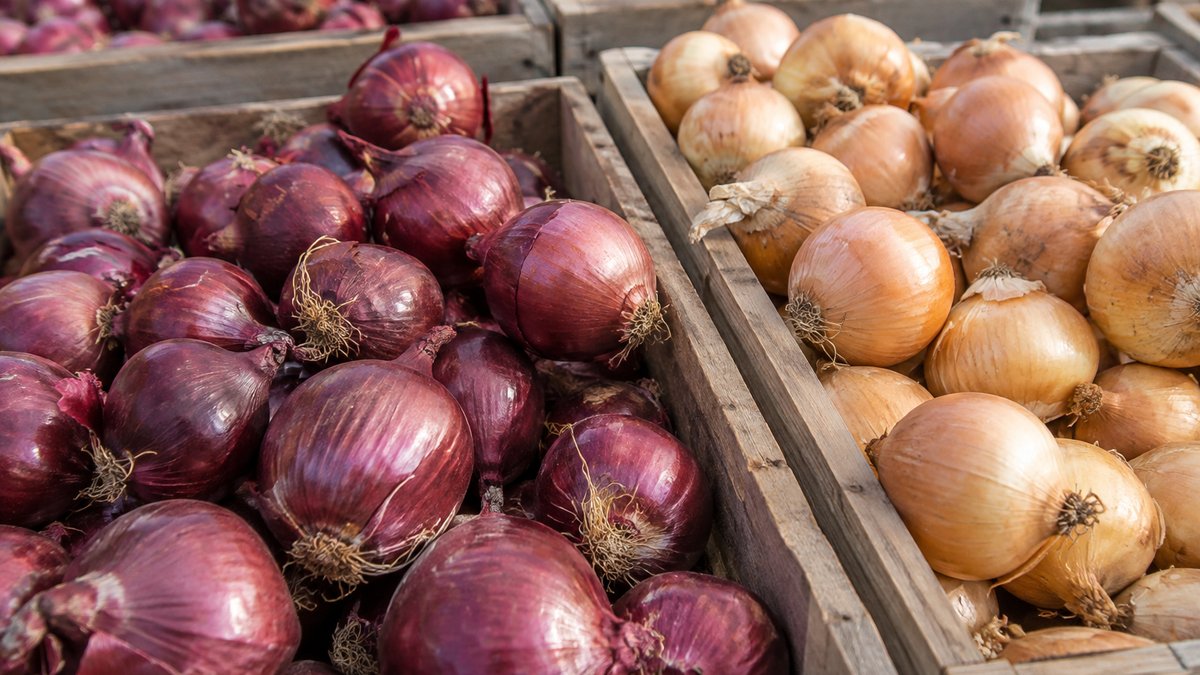
The red onion requests provide the most detail about appearance and sizing. One calls for sizes of 45 mm or 50 mm and also lists 25 mm and 35 mm options. It describes reddish-purple to burgundy outer skin and white inner layers with pink or reddish-purple color. A second red onion request asks for bright color, while the yellow onion request lists several size ranges from 35/50 mm through 90/130 mm.
Two other requests use broad product descriptions. One asks for large fresh onion bulbs and specifies a bright, uniform color. Another describes export-grade yellow onions, sorted and free of damage or sprouting. Suppliers should confirm the variety, size tolerance, sorting criteria and acceptable defects for the lot they plan to offer.
2.2 Quantity, packaging and delivery
The quantity field ranges from one 20-foot container to a stated 12,000 Tonne-Force (Metric). Other requests state 200 tons and 400 MT. These are the quantities as entered, and the differently written units should not be silently converted or treated as equivalent. Ask whether the amount is for one shipment, a recurring programme or a trial, and confirm the unit and packing weight.
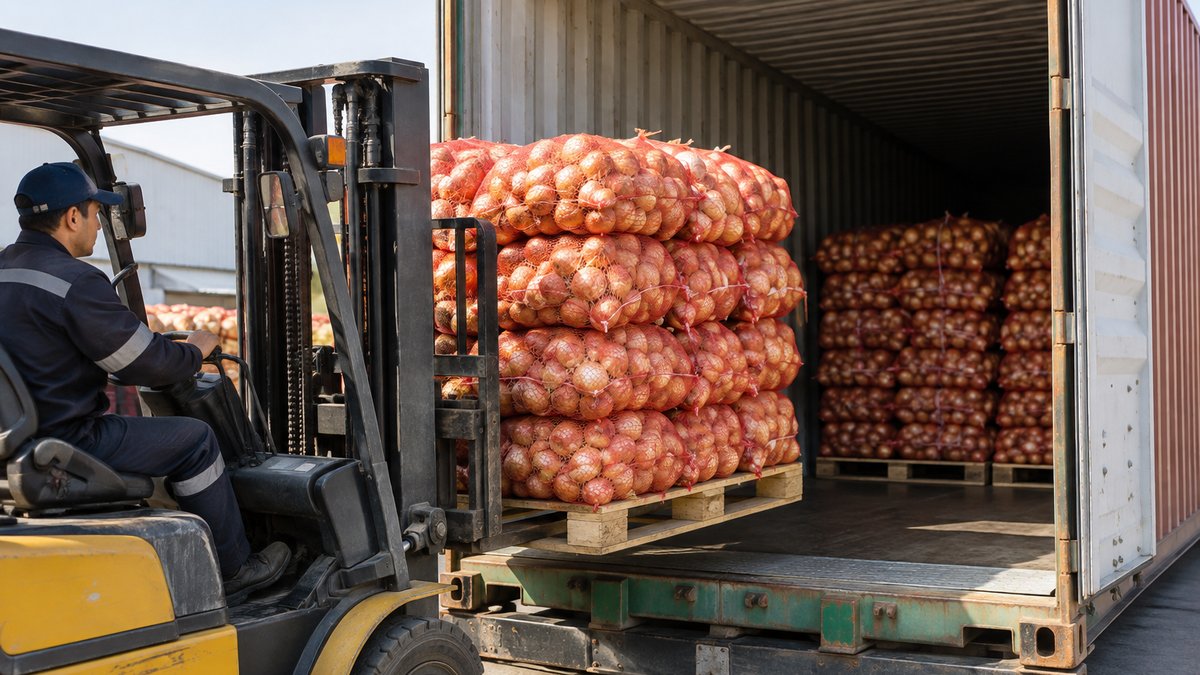
Packaging details appear in three requests. One lists mesh bags; another gives 2 kg, 5 kg, 10 kg and 20 kg mesh-bag options; a third says packaging is available or can be customized. The remaining requests do not state packaging. A quotation should specify bag material, net weight, bag count per pallet or container, and whether the buyer’s selected format changes the price.
Delivery fields vary in completeness. The requests name CIF, CFR, CIP, DAP, DDP, EXW and FOB, sometimes listing several alternatives in one request. One gives sea freight as its shipping method. Where a request offers more than one term, confirm which one the buyer wants and identify the named port or delivery place before estimating freight or other costs.
2.3 Payment and fields that need confirmation
The requests list T/T, D/P, L/C, Money Gram, W/U and Other as payment options. A supplier should confirm the intended method, currency, payment timing and documentary conditions directly in the transaction discussion. A request that lists several options does not establish that the buyer has agreed to any particular one.
Some entries need careful clarification. One request states 85% moisture content, but the basis and intended specification are not explained; suppliers should ask the buyer to confirm the figure and test basis before deciding whether their onions comply. One record gives a target price of 780 USD without a unit or delivery basis. The other target-price fields should not be read as offers. Verify any price unit, quantity basis and Incoterm with the buyer.
A yellow onion request also lists many product forms beyond fresh onion, including processed foods and unrelated commodities. Suppliers should ask which form and product specification the buyer actually requires before preparing a fresh-onion offer. The request’s field should not be treated as a confirmed specification for every listed item.
3. What these buying requests mean for onion suppliers
The requests show several different buying situations, rather than one shared specification. Suppliers with red onions can compare their bulb size and skin-color descriptions with the red onion requests. Suppliers offering yellow onions should check the size ranges and the request for sorted bulbs without damage or sprouting. A general Fresh Onion offer needs the buyer to clarify color and grade first.
Prepare a specification sheet for the actual lot. State the variety or type, size range and measurement method, color, visible defects, curing or handling details, packing format and net weight. If the buyer requests shelf life, storage temperature or moisture information, provide only figures supported by your product data and handling conditions.
The listed order quantities call for different supply plans. A container request needs container capacity, net weight and loading details. A larger recurring or single-lot quantity needs a clear shipment schedule and available volume. Avoid confirming a monthly programme unless your harvest, stock and packing capacity support it.
For an export quotation, identify the currency, price unit, quantity, package, named place or port, selected delivery term and shipment window. Make clear whether the price is per kilogram, per tonne, per package or another unit. If the buyer has not specified a shipment date or preferred delivery term, request those details instead of building an unsupported assumption into the offer.
The six requests are marked as verified requests in the platform data. That status should not be presented as a guarantee of payment, product acceptance or completed trade. Check whether the listing remains visible and review its latest details before spending time on a firm quotation.
4. How suppliers can find Fresh Onion buyers on Freshdi
Suppliers can review Fresh Onion buying requests and compare each visible inquiry with the products, packing formats and shipment volumes they can supply. The individual request page is the place to recheck the buyer’s latest stated requirements before preparing an offer.
When a request fits, prepare a quotation from the product and shipment details you can document. Identify the onion type, grade or size, package, available quantity, shipment timing, named delivery point and payment proposal. Ask focused questions where the request leaves a specification or commercial term open.
Suppliers can also review Fresh Onion supplier listings to understand how product listings are presented. Keep listing details consistent with the stock and export capacity you can support.
Suppliers ready to review current onion inquiries can use Freshdi’s Find Buyers page.
View Latest Buying Requests for This Product →
5. Conclusion
The six recent Fresh Onion requests range from red and yellow onion specifications to broad fresh-onion inquiries. They include different quantities, destinations, package options and delivery terms. The records also contain fields that require clarification, including nonstandard quantity wording, an incomplete price basis and a moisture figure whose intended meaning is unclear.
Before quoting, match the request to the actual lot, confirm the quantity and package, and settle the delivery and payment basis. Suppliers can use Freshdi to review relevant buying requests and check the original listing for changes.
Suppliers who have confirmed a suitable product and shipment plan can use Freshdi’s Find Buyers page to review relevant requests.
View Latest Buying Requests for This Product →
Frequently Asked Questions
How many recent Fresh Onion buying requests are covered here?
Six requests posted between November 7 and November 19, 2026, are included. Freshdi’s summary reports five buyers. The requests were checked on November 20, 2026.
What onion types do the requests specify?
The requests include fresh red onions, yellow onions and fresh onions with no color stated. The specifications differ by request, so suppliers should confirm the variety, color, size tolerance and grade the buyer will accept.
What quantity should I quote for the 12,000 Tonne-Force (Metric) request?
The request displays that quantity wording as entered. Confirm the intended unit, total quantity and shipment schedule with the buyer before calculating an offer. Do not convert it or assume a recurring order from the listing alone.
Which delivery terms appear in these Fresh Onion RFQs?
The requests list CIF, CFR, CIP, DAP, DDP, EXW and FOB. Some list multiple alternatives. Confirm the buyer’s preferred term and named port or delivery place before calculating freight and other costs.
Can I use the stated target price as a market quotation?
No. A target price in a buying request is not a market benchmark or supplier offer. One request states 780 USD without a price unit or delivery basis. Confirm the currency, unit, quantity basis and agreed delivery term before discussing price.
Does a verified-request flag guarantee that a buyer will complete a transaction?
No. The records are marked as verified requests, but that flag does not guarantee a buyer’s ability or intention to pay, accept goods or complete a transaction. Review the current listing and conduct your own commercial checks.
References
1. FAO – FAOSTAT, Crops and Livestock Products: Onions and Shallots, Dry (Excluding Dehydrated), 2024, 2024 data; accessed November 20, 2026.
2. World Bank WITS – Onions and Shallots, Fresh or Chilled Imports by Country, HS 070310, 2024 trade data.
3. World Bank WITS – Onions and Shallots, Fresh or Chilled Exports by Country, HS 070310, 2024 trade data.
4. Freshdi – Fresh Onion buying requests reviewed for this article, Requests posted November 7 to 19, 2026; checked November 20, 2026.
Disclaimer: This article is compiled from platform data, public sources and information provided by third parties, for general informational purposes only. We do not guarantee its accuracy or completeness. Mentions and rankings of suppliers do not constitute an endorsement or guarantee, and strategies and examples are illustrative; results may vary. Please conduct your own due diligence before making business decisions.