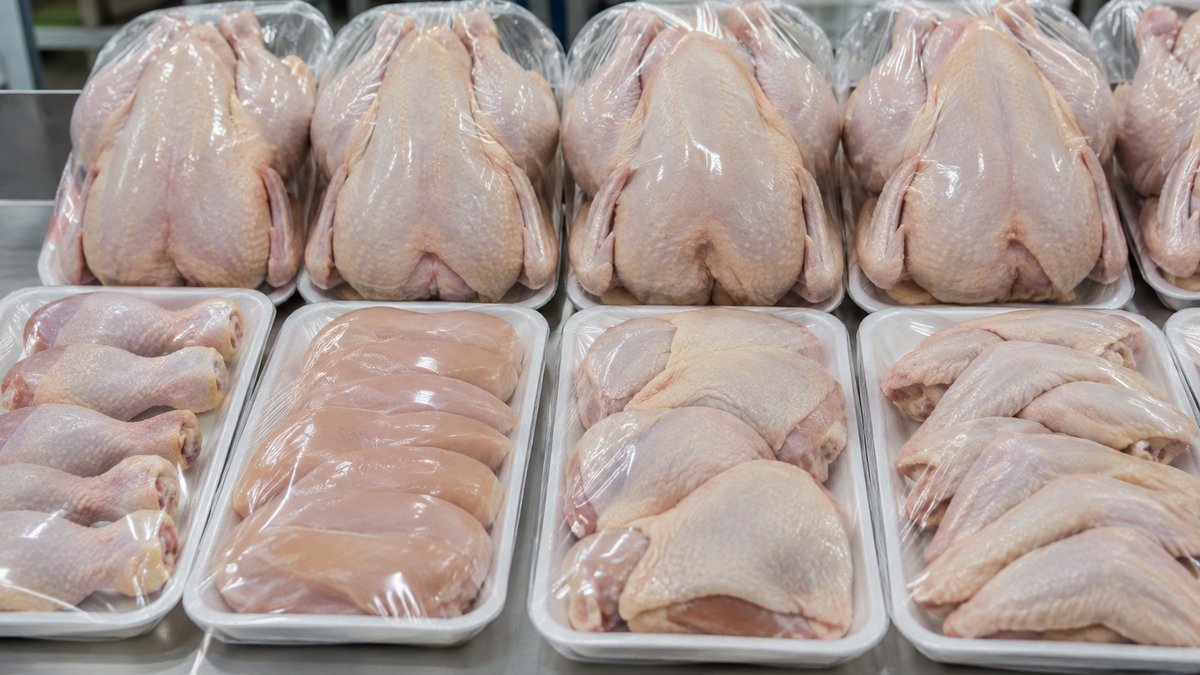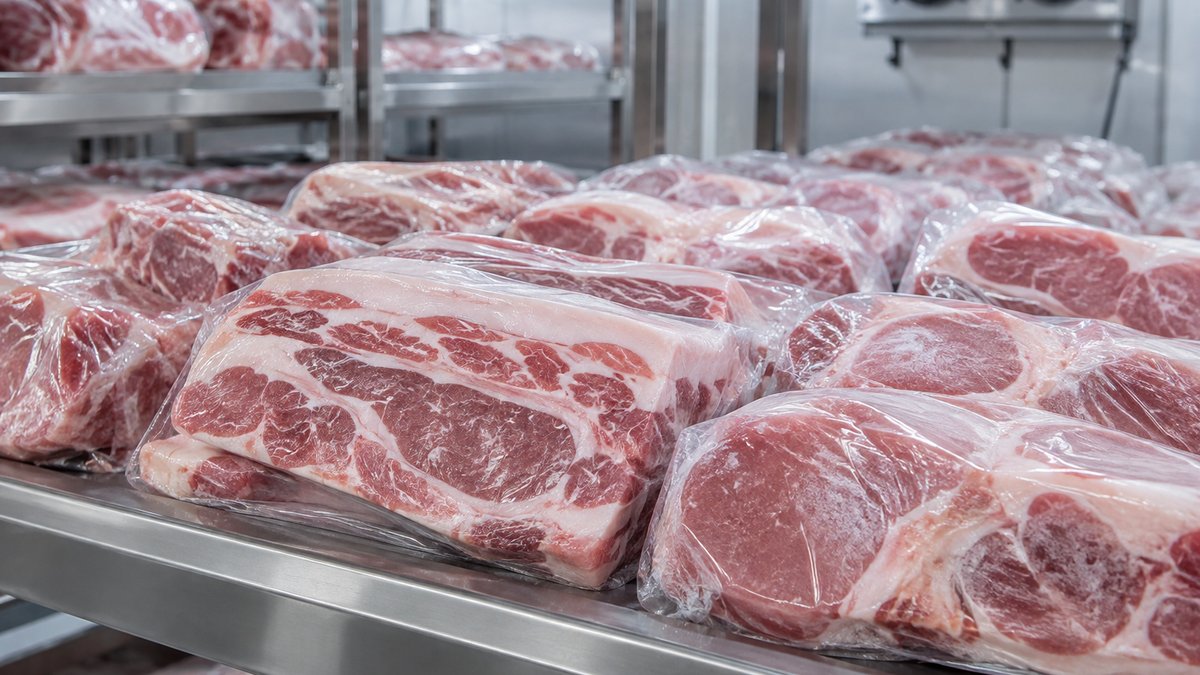

Introduction
Four Frozen Pork buying requests from four buyers were posted on Freshdi between November 8 and 13, 2026. Checked November 19, the listings state quantities, destinations and some product requirements, but leave several quotation details open.
The requests span Singapore, the United States and Malaysia as buyer countries. Suppliers can compare the stated requirements below, then clarify missing specifications and commercial terms before preparing an offer.
Key Takeaways
- The four requests state quantities of 900 cartons, 20 pieces, 5 tons and 2,000 cartons. The listings do not provide a common unit for comparison.
- Only one request states a CIF term, one states FOB and two do not specify a trade term. Three leave payment terms unstated; one lists T/T.
- Product details range from Pork Trim 80 with skin on to mechanically deboned pork and a bulk IQF request. The fourth request states a storage temperature of -20°C.
- All four records show USD in the target-price field, but no numeric target amount is stated in the records supplied for this article.
- Suppliers should clarify specifications, destination and delivery basis, shipment size, temperature controls and payment terms before quoting.
1. Frozen Pork Trade Faces Changing Supply and Import Conditions in 2026
The international pork trade is large, but global trade totals cover pork products broadly and do not measure frozen pork alone. In its April 2026 forecast, the USDA Foreign Agricultural Service projected global pork production of 120.2 million metric tons and exports of 10.4 million metric tons for 2026. The agency forecast production one percent higher than 2025 and exports virtually unchanged. These are forecasts, not final annual results, and the report measures pork in carcass-weight equivalent.
The USDA Foreign Agricultural Service’s October 9, 2026 report described softer international pork prices amid greater export availability. It connected that supply picture to African swine fever restrictions affecting Spanish exports and stronger-than-expected slaughter in China. Japan, South Korea and the Philippines had taken advantage of ample supplies in the first half of 2026; the report expected large domestic stocks to slow import demand later in 2026 and into 2027. Exporters should treat the forecast as a market outlook, not a guarantee of demand in a particular destination.
Frozen pork has its own sourcing patterns within the wider pork market. A USDA Foreign Agricultural Service report on Japan, published in October 2026, said frozen pork accounts for about half of Japan’s pork imports. Japan’s total frozen pork imports rose one percent in January to July 2026 compared with the same period in 2025. The report also described a sharp fall in imports from Spain following African swine fever restrictions and rising shipments from Brazil since 2025. Those findings apply to Japan; they do not establish the requirements or demand of the buyers in the Freshdi requests discussed here.
The Food and Agriculture Organization’s Meat Price Index provides a broad international price signal, not a quotation for a particular cut or shipment. In October 2026, the index averaged 125.5 points, down 1.2 percent from September but slightly above its level a year earlier. FAO said pig meat quotations fell, led by lower prices in the European Union amid abundant supplies and limited export opportunities. Suppliers still need a product specification, destination, delivery basis and shipment date to calculate an offer.
The four Freshdi requests provide a separate platform snapshot: four buyer-posted requests for Frozen Pork, posted November 8 to 13, 2026, and checked November 19. Their quantities and specifications describe those listings only. They are not national import statistics or a measure of total market demand.
Looking to Sell Frozen Pork?
Connect with verified buyers, receive relevant buying leads, and explore sourcing opportunities from global markets.
2. Four Frozen Pork RFQs Posted Between November 8 and 13
The four requests give suppliers a useful starting point, but their stated units and specifications differ. An RFQ, or request for quotation, communicates a buyer’s purchasing requirement; it is not a confirmed order. The request records are live on Freshdi as of November 19, 2026, and should be checked again before a supplier acts.
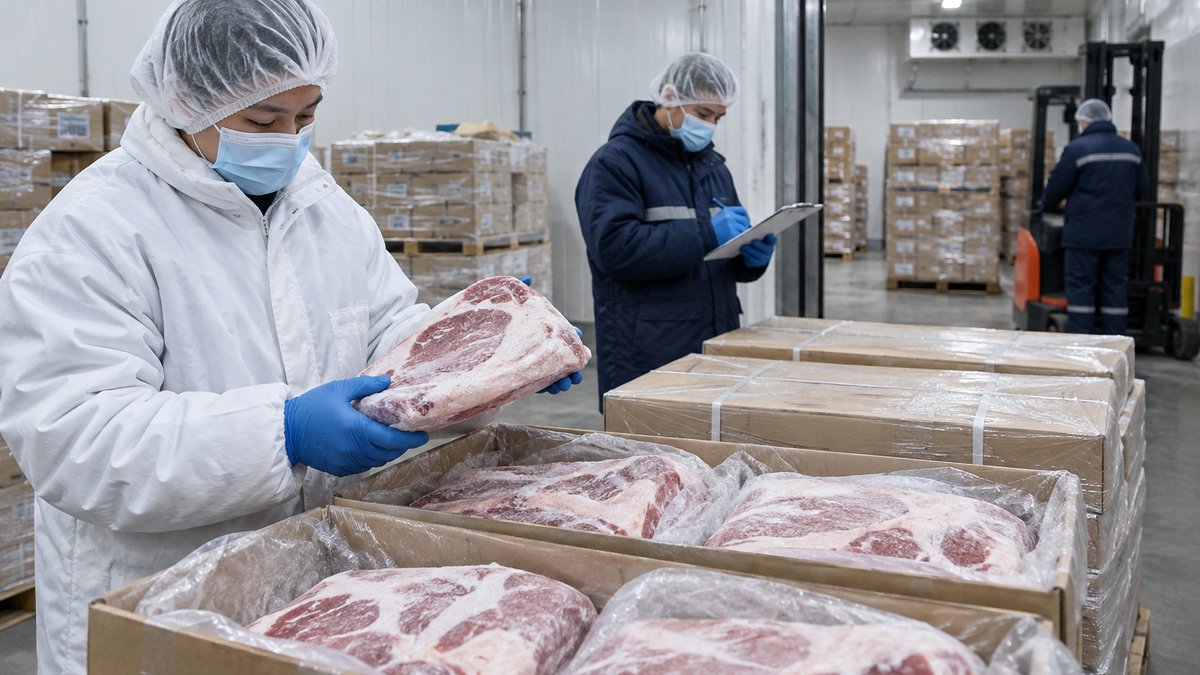
The Singapore-based buyer’s November 13 request specifies Pork Trim 80, skin on, an 80 percent lean figure, California Proposition 12 compliance and storage at -20°C. It lists 900 cartons and CIF, which stands for Cost, Insurance and Freight. Its named destination is Manila International Container Terminal. The destination is presented as the request states it; suppliers should confirm the intended delivery details directly through the current listing. The record does not specify payment terms, and its target-price field shows USD without a numeric amount.
One United States-based buyer posted a request on November 8 for 20 pieces of frozen mechanically deboned pork. The destination is recorded as the New York Newark area in Newark, New Jersey. The request lists neither a trade term nor payment terms. The stated quantity unit is pieces, so suppliers should confirm the required weight per piece, total shipment weight and product specification before costing the order.
A Malaysia-based buyer’s November 8 request seeks 5 tons of bulk frozen pork for Kuching. The listing title describes an IQF process, meaning individually quick frozen, and a 24-month shelf life. It states FOB, or Free On Board, and T/T, or telegraphic transfer. Its specifications include storage at -18°C or below, a maximum moisture figure of 2, moisture content of 2 percent, and cleaned and hygienically processed pork. The record does not give a test method or measurement basis for the moisture figures, so the supplier and buyer should agree how those requirements will be assessed.
The remaining United States-based request, also posted November 8, lists 2,000 cartons of Frozen Pork Meat and a temperature requirement of -20°C. It names New York/Newark, USA, as the destination. Trade and payment terms are not specified in the record. The request does not state a cut, carton weight or other product specification, so a supplier should ask for those details before proposing a price.
Across these four requests, the quantity field is present in all records, but the units vary. One request uses pieces, two use cartons and one uses tons. Comparing the quantities as if they were equivalent would misrepresent the listings. Suppliers should confirm gross and net weights, pack configuration and whether the stated quantity is a trial, single shipment or recurring requirement.
All four records show USD in the target-price field, but the records supplied for this article contain no numeric target price. That entry is not enough to establish a price level or calculate a quotation. Ask for any missing price basis, including the unit of sale, product cut and delivery term, and quote only against the specification and shipment details agreed with the buyer.
3. What These Frozen Pork Requests Mean for Suppliers
The requests vary more in product definition and shipment unit than in the named product category. One buyer specifies a particular trim and lean percentage, one requests mechanically deboned meat, one describes bulk IQF pork, and one gives only a temperature requirement. A supplier should match an offer to the buyer’s stated product and avoid substituting a different cut or form without agreement.
3.1 Separate product identity from handling requirements
A temperature requirement describes handling, not the full product specification. The records include requests that state -20°C or -18°C or below, but they do not all identify the same cut or presentation. Before confirming availability, suppliers should document the offered cut, whether skin or bone is present, processing and freezing method, carton or bulk presentation, net weight and the temperature maintained during storage and transport.
The request for Pork Trim 80 gives a cut name, skin-on presentation and an 80 percent lean figure. It also names California Proposition 12 compliance. The record does not define how the lean percentage is measured or specify supporting documentation. Suppliers should confirm the buyer’s intended specification and the evidence it will accept. They should not represent a product as compliant unless they can substantiate that claim for the offered lot and destination.
The mechanically deboned meat request needs more detail before suppliers can assess fit. The listing states frozen pork and the product form, but does not state a technical specification, piece weight or buyer acceptance criteria. A supplier can ask for the required composition, intended use, packaging and inspection method, then confirm whether the offered product meets those requirements.
The IQF request gives a shelf-life figure of 24 months, but the record does not state the storage or shelf-life validation basis. Suppliers should clarify whether the figure refers to unopened product held continuously at the specified temperature, and which production or expiry date format the buyer expects. The same request lists two moisture-related specifications, so both parties should agree on the applicable test and acceptance basis.
3.2 Make quantity and delivery basis comparable
Cartons and pieces do not establish shipment weight without pack details. Ask for carton net weight, units per carton, gross weight, pallet configuration and total container loading plan. For a quantity stated in tons, confirm whether the buyer means metric tons and whether the figure is net product weight. Keep the unit as stated until the buyer confirms any interpretation.
The two records naming United States destinations do not state trade terms. The Singapore-based request states CIF, while the Malaysia-based request states FOB. Suppliers should confirm the named port or place, whether the buyer expects one shipment or several, and which party is responsible for each cost under the agreed term. A quotation should use the same delivery basis the buyer accepts, rather than mixing freight-inclusive and origin-delivery prices.
Payment details are incomplete in three records. Only the Malaysia-based request lists T/T. Before accepting an order, a supplier should confirm the payment schedule, currency, bank charges, documentary conditions and the point at which payment is due. A field marked not specified is a question to resolve, not consent to a particular payment arrangement.
Buying consideration: Before quoting, send a concise clarification list covering cut and presentation, quantity unit and pack weight, temperature and shelf-life basis, destination, trade term, payment schedule and any required compliance evidence. Attach only specifications and records that apply to the offered lot.
4. How Freshdi Helps Suppliers Find Frozen Pork Buying Requests
Freshdi’s Frozen Pork buying-request listings let suppliers review buyer-posted requirements by product category. The four requests in this article are a dated snapshot, so check the current request page for changes in listing status or details before preparing an offer. Suppliers can also compare the visible requirements with their actual product range and cold-chain capacity.
For a request that fits, prepare a quotation around the buyer’s stated quantity, specification, destination and trade term. Where information is missing, ask focused questions before setting a firm price. A buyer-posted request is an opportunity to review sourcing needs; it does not guarantee a reply, negotiation or completed transaction.
Suppliers can browse Frozen Pork buying requests on Freshdi and review Frozen Pork suppliers on Freshdi. The category pages help users find relevant listings, while the individual request contains the buyer’s stated requirements.
Suppliers whose product and delivery capabilities match a listed requirement can review relevant buyer requests on Freshdi.
View Latest Buying Requests for This Product →
5. Prepare a Specification-Based Offer for the Next Inquiry
These four requests show why a Frozen Pork quotation needs more than a product name and a price. The listings differ in cut, product form, quantity unit, temperature, destination and stated delivery terms. Before committing stock or freight, suppliers should verify the current request, define the offered product and close the gaps that affect acceptance and landed cost.
Freshdi is a place to review relevant Frozen Pork buying requests and compare their stated requirements. Check the original request and clarify any missing or unusual detail before submitting a quotation.
Suppliers ready to review current Frozen Pork inquiries can use Freshdi to find relevant buying requests.
View Latest Buying Requests for This Product →

Frequently Asked Questions
How many recent Frozen Pork buying requests are covered here?
Four requests from four buyers were posted on Freshdi between November 8 and 13, 2026, and checked on November 19. They are a platform snapshot, not a count of all Frozen Pork demand or imports.
What quantities do the four buyers state?
The requests list 900 cartons, 20 pieces, 5 tons and 2,000 cartons. The units differ, so suppliers should confirm pack weight and total net shipment weight before comparing volumes or quoting.
Do the requests give numeric target prices?
The target-price field in each supplied record shows USD, but no numeric amount is stated. Suppliers should request a clear price basis and should not treat the currency field as a market price or buyer offer.
What Frozen Pork specifications should a supplier clarify?
Confirm cut, presentation, lean percentage or product form, pack size, temperature, shelf-life basis and inspection method. The records vary from Pork Trim 80 to mechanically deboned meat and IQF pork, while some omit a cut or acceptance specification.
Which trade and payment terms appear in these requests?
One request states CIF, one states FOB and two do not specify a trade term. One request lists T/T, while three do not state payment terms. Confirm the named delivery place, cost responsibilities and payment schedule before quoting.
Does a Freshdi buying request guarantee an order?
No. A buying request records a buyer’s stated requirement; it does not guarantee a response, agreement or transaction. Review the current request and conduct normal commercial checks before committing product or shipment capacity.
References
1. United States Department of Agriculture, Foreign Agricultural Service – Livestock and Poultry: World Markets and Trade, African Swine Fever and Weak China Demand to Reshape 2027 Pork Trade, October 9, 2026.
2. United States Department of Agriculture, Foreign Agricultural Service – Livestock and Poultry: World Markets and Trade, April 2026 pork production and trade forecasts, April 2026.
3. United States Department of Agriculture, Foreign Agricultural Service – Japan: Livestock and Products Annual, 2026.
4. Food and Agriculture Organization of the United Nations – FAO Meat Price Index, October 2026.
5. Freshdi – Frozen Pork buying request posted November 13, 2026, Checked November 19, 2026.
6. Freshdi – Frozen Pork buying requests posted November 8, 2026, Checked November 19, 2026.
Disclaimer: This article is compiled from platform data, public sources and information provided by third parties, for general informational purposes only. We do not guarantee its accuracy or completeness. Mentions and rankings of suppliers do not constitute an endorsement or guarantee, and strategies and examples are illustrative; results may vary. Please conduct your own due diligence before making business decisions.