
Introduction
Saudi Arabia's latest available price evidence for long grain white rice covers two different markets: retail shelf listings and export offers at origin. On 13 November 2026, listed Saudi prices for selected long grain basmati products ranged from SAR 37.99 for a 5 kg pack to SAR 79.30 for a 10 kg pack at the lowest-priced store reported for each item. Separately, indicative FOB export quotations updated on 15 November ranged from US$394 to US$687 per metric tonne for long grain milled white rice from five origins, with broken-rice specifications differing by origin.
This update covers 9 to 15 November 2026. Saudi shelf prices are packaged retail listings, including promotions where shown; they are not importer or wholesale prices. Export figures are FOB origin quotations, not offers delivered to Saudi Arabia. Buyers and exporters should compare the same rice type, broken percentage, packing and delivery basis before using either set to assess a transaction.
Key Takeaways
- On 13 November, selected 5 kg long grain basmati retail packs in Saudi Arabia had reported lowest listings from SAR 33.99 to SAR 43.95, depending on product; a 10 kg Al Aila long grain white basmati pack was listed at SAR 76.99 at BinDawood on 12 November.
- On 15 November, indicative FOB long grain milled white rice quotes were US$394/MT for Indian 5% broken, US$415/MT for Pakistani 5%, US$499/MT for Thai 5%, US$439/MT for Vietnamese 5%, and US$687/MT for U.S. 4%. These export quotations are not Saudi delivered prices.
- USDA Foreign Agricultural Service data in its 2026 Saudi Arabia Grain and Feed Annual put 2025 rice imports at 1.757 million metric tonnes. India was the largest origin in the report's table, followed by Pakistan and the United States.
- Saudi Arabia's retail shelf listings, import statistics and FOB exporter quotes measure different parts of the chain. Freight, insurance, packaging, import handling, product specification and retailer pricing separate them.
- The November figures support quote comparison and procurement planning, not a forecast. Request a current offer with a defined grade, quantity, packing, shipment window and Incoterm.
1. Saudi Arabia's rice market depends on imported supply
Saudi Arabia relies on imports for its rice supply, and long grain rice, particularly basmati, is prominent in the market. The USDA Foreign Agricultural Service's 2026 Grain and Feed Annual for Saudi Arabia says the country has no commercial rice production and projects consumption of 1.75 million metric tonnes for marketing year 2025/26, which runs from January to December 2026.
The same USDA report records 1,756,737 metric tonnes of Saudi rice imports in 2025, measured as milled rice equivalent. India supplied 1,350,925 tonnes, Pakistan 168,913 tonnes and the United States 115,848 tonnes. Those country totals describe all rice in the report's product group, not exclusively long grain white rice or basmati.
Import totals also need a defined period and product scope. The 2025 USDA table is an annual import series, while retail listings are snapshots from specific stores and the export quotes below are weekly indicative offers. They cannot be combined into a single Saudi market price.
Saudi Arabia is a substantial importing market, but the sources used for this update do not provide a current, like-for-like ranking of the world's leading rice importers for the same reporting period and product definition. Global demand rankings should not be inferred from Saudi's import total alone.
In the USDA report's 2025 import table, India ranked first among Saudi suppliers, Pakistan second and the United States third. The report identifies long grain basmati, including white and parboiled sella rice, as an important part of Saudi consumption. Its origin ranking is for rice overall, so buyers seeking a specific white rice type should verify the variety and processing method in each quotation.
The USDA report also describes private companies as the country's importers and notes that local importers maintain stocks. Its 2026 projections and stock observations are planning context, not a confirmation of current inventory or a guarantee of supply for a particular grade.
Looking to Source Long Grain White Rice?
Connect with verified suppliers, discover matching products, and explore sourcing opportunities from global markets.
2. Latest long grain white rice prices for 9 to 15 November
2.1 Saudi retail listings on 12 and 13 November
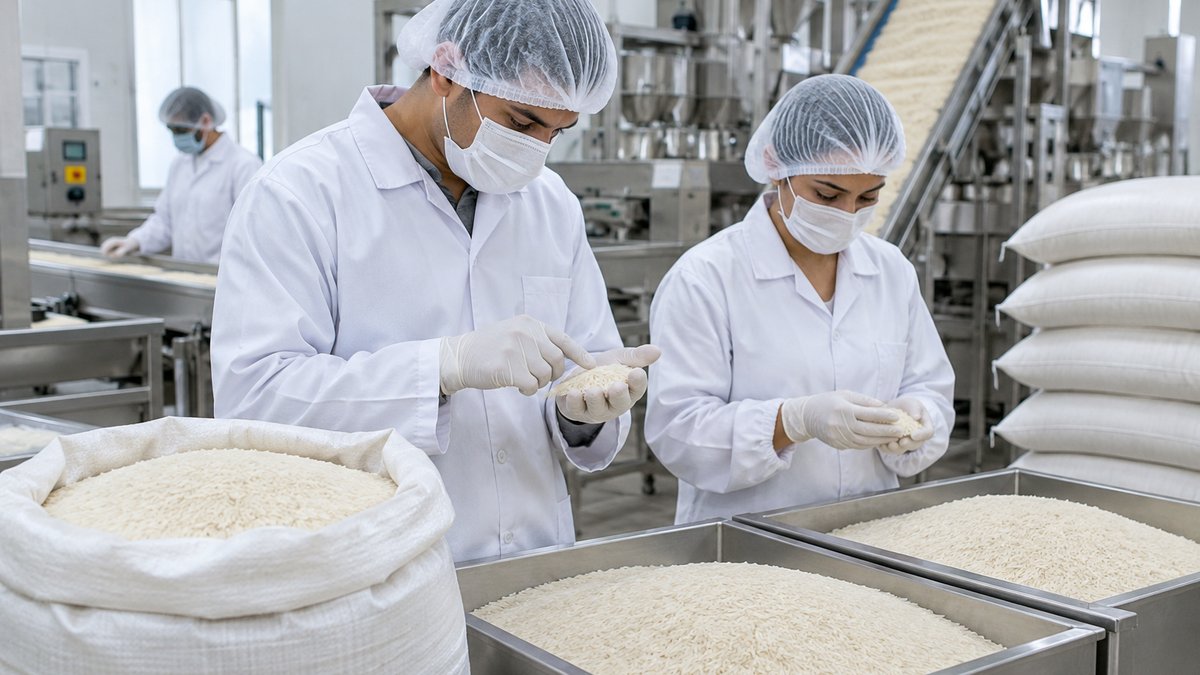
The latest Saudi price observations found for named long grain white rice products are packaged retail listings, not bulk import quotations. On 13 November 2026, HypeSave reported selected lowest store prices for long grain basmati products. The listings included Al Walimah Style Indian Basmati Longgrain at SAR 33.99 for 5 kg, Al Aila Indian White Basmati Ambar at SAR 43.95 for 5 kg, and Al Shalan Indian Sella Basmati at SAR 79.30 for 10 kg. Product, processing and pack size differ, so these prices are not direct equivalents.
For one exact product and pack, Fattuta recorded Al Aila Long-Grain White Basmati Rice, 10 kg, at SAR 76.99 at BinDawood on 12 November. Its page showed other store listings at higher prices, including SAR 82.99 at Tamimi Markets and SAR 84.99 at LuLu Hypermarket. These are retailer listings collected by a comparison service; availability and the displayed price can vary by store and branch.
These products include white basmati and sella basmati. Sella is parboiled rice, so a sella listing should not be treated as a direct price for raw-milled white basmati. Retail prices also include downstream costs and may reflect promotions. They are useful for observing shelf-level competition, not for calculating an importer's cost of rice at port.
2.2 Indicative export quotations by origin
Rice News Today reported weekly indicative FOB export quotations updated on 15 November 2026, with prices in U.S. dollars per metric tonne and rice packed in a 50 kg single woven polypropylene bag. The listed long grain milled white rice quotes were US$394 for Indian 5% broken, US$415 for Pakistani 5%, US$499 for Thai 5%, US$439 for Vietnamese 5%, and US$687 for U.S. 4% broken rice.
The U.S. quotation has a 4% broken specification; the other listed quotes are for 5% broken rice. Even among the 5% offers, the listing does not establish that variety, crop year, moisture, inspection terms or contract conditions match. Treat the figures as indicative origin quotations, not firm bids or Saudi market prices.
2.3 What the reported price movement does and does not show
The 15 November price page reports a weekly change of plus US$5/MT for Indian rice, minus US$1/MT for Pakistani rice, plus US$7/MT for Thai rice, plus US$3/MT for U.S. rice and plus US$10/MT for Vietnamese rice. Those movements apply to the quotes tracked by that source. The source does not establish a matching change in Saudi import costs or retail shelf prices.
A separate USDA Foreign Agricultural Service November 2026 global rice market report presents FOB quotes for major exporters and describes increases since its October report. Its chart distinguishes Thai 100B, U.S. 4% and 5% broken white rice for the other origins. Because the November report and the 15 November price page use different observations and may have different quote dates, their values should not be blended into one price series.
For a buyer sourcing to Saudi Arabia, a weekly export quote is a starting reference. The final cost depends on the agreed grade, quantity, origin, loading port, shipment date, freight, insurance if applicable, destination charges and contract terms. Ask suppliers to confirm whether a quotation is still valid on the date of purchase.
3. Why rice prices differ across origins and markets
Origin supply, export availability and the rice specification all affect the price offered to Saudi buyers. In its November 2026 global rice market report, USDA's Foreign Agricultural Service said export quotes had increased across major origins since its October report. The report attributed changes to factors including tightening supplies for U.S. rice, ongoing shipments from Uruguay, stronger sales for Thai rice, tighter exportable supplies in Vietnam and new-crop sales in Pakistan. These are the report's market explanations, not evidence that every grade or Saudi buyer faced the same change.
India's listed 5% broken quote was lower than the other 5% broken offers in the 15 November comparison. That difference can be relevant to an importer, but it does not establish that Indian rice has the lowest delivered cost in Saudi Arabia. Buyers still need to compare variety, quality tolerances, crop year, bag specification, shipment availability and freight.
Harvest timing and stocks affect the quantity exporters can offer at a given time. The USDA Saudi Arabia report describes the Kingdom's reliance on private imports and local inventory. That context can help buyers consider shipment schedules, but it does not disclose individual importers' stock positions or current supplier availability.
Currency and logistics can also change the commercial value of an offer. A price in U.S. dollars FOB excludes ocean freight and insurance. The final Saudi cost may move with freight rates, route availability, insurance, port handling and the exchange rate used by the importer. A lower FOB quotation can therefore produce a higher landed cost if the remaining charges differ.
Retail prices have additional components and a different time horizon. Pack size, brand, processing, retailer margin, distribution costs and temporary promotions can all separate a shelf price from the value of rice when it leaves an exporting port. A retail listing from one store should not be used to infer the price paid by Saudi importers.
For market monitoring, keep the measures separate: FOB export quotations for origin comparisons, customs import values for historical trade, and retail listings for shelf-level prices. A price movement in one measure is not proof of an equal or simultaneous movement in the others.
4. Which countries import the most long grain white rice?
4.1 Global importing markets
A current ranking of leading global importers requires a common period and product definition. The sources used here do not provide a verified, like-for-like ranking of countries specifically importing long grain white rice for the 9 to 15 November 2026 period. Rice import totals can include multiple grain types and processing forms, so a broad rice ranking would not establish demand for Saudi-style long grain or basmati products.
For this price update, the reliable country-level import evidence is Saudi-specific annual data. USDA's 2026 Saudi Arabia report records 1,756,737 metric tonnes of rice imports in 2025, milled rice equivalent. The figure is historical trade data, not a November 2026 order book or a forecast of purchases in the current month.
4.2 Saudi Arabia's main supplying origins
India supplied 1,350,925 metric tonnes of rice to Saudi Arabia in 2025 according to the USDA report's Trade Data Monitor table. Pakistan supplied 168,913 tonnes and the United States 115,848 tonnes. Vietnam, Thailand and Australia also appear among the listed suppliers, with smaller volumes in that table.
These data establish the main origins for Saudi rice imports overall. They do not break out every shipment by grade, brand, or long grain white variety. Buyers should therefore ask for origin and product-specific documents rather than assuming a country-level import total represents a particular product grade.
Saudi demand has commercial relevance for exporters, but national import volumes are not confirmed buyer orders. A supplier should treat trade statistics as background for market planning and verify live requirements, specifications and shipment timing with prospective buyers.
5. How buyers can compare rice offers for Saudi Arabia
Compare offers on the same product and delivery basis. The November export table contains mostly 5% broken offers and one U.S. 4% broken offer, while Saudi shelf listings include white basmati and parboiled sella products. None of those differences should be ignored when comparing prices.
- Write the specification first: rice type and variety, broken percentage, grain characteristics, moisture, foreign matter, crop year and any agreed tolerances.
- Ask each supplier to quote the same quantity, bag size, packaging material, loading port and shipment window.
- Compare the same Incoterm and named place. FOB is an export-port basis; CFR includes cost and freight to the named destination port; CIF includes cost, insurance and freight to that port. Confirm the applicable Incoterms edition and precise named place in the contract.
- Calculate landed cost using the offer, freight, insurance where applicable, destination handling, duties or fees, inspection and inland delivery. Confirm the actual import requirements for the product and shipment.
- Check quote validity, payment terms, inspection arrangements, sample approval and the documents the supplier will provide. A market reference price is not a quotation or a guarantee of availability.
The 15 November FOB range is useful for identifying differences among origin quotations, but the U.S. 4% broken quote is not directly equivalent to the 5% offers. Ask for a revised quotation at the same specification before drawing a price conclusion. For packaged retail comparisons, compare the same brand, product, pack weight, store and date, and note whether the displayed price is promotional.
Buying consideration: Before making a purchase decision, request current written offers from the same specification sheet and compare the resulting cost to the Saudi destination, not only the FOB number.
6. Freshdi buying request observations
No Freshdi buying request data accompanies this article, so there are no request counts, buyer quantities, destinations or trade terms to report for the 9 to 15 November period. Saudi import statistics and global export quotations do not show what individual buyers are currently requesting on Freshdi.
Buyers can use Freshdi's rice category to find potential suppliers and describe the required product, quantity, destination and delivery basis. Exporters can review rice buying requests when available and check each request's stated specifications before deciding whether to respond. A public market figure should not be presented as a confirmed buyer order.
7. What buyers and suppliers should do next
7.1 For buyers and importers
- Use the November FOB quotations as dated references, then request current Saudi-destination offers for the required grade and shipment period.
- Compare supplier quotations on the same quantity, packing, loading port and Incoterm. Include freight and destination costs when assessing landed cost.
- Confirm whether the product is raw-milled white basmati, another long grain white rice, or parboiled sella rice. Do not treat those descriptions as interchangeable.
- Check the product's quality specifications, inspection arrangements, packaging and applicable Saudi import documentation before confirming the order.
- Keep retail shelf observations separate from import pricing. A discounted consumer pack is not evidence of a lower bulk purchase price.
7.2 For exporters and suppliers
- State the rice type, variety, broken percentage, crop year, packing and available quantity in each offer.
- Name the loading port and delivery basis, and specify currency, shipment window and quote validity.
- Provide documents and quality details that can be substantiated for the offered shipment.
- Compare your offer with the buyer's exact Saudi destination and specification. A general FOB market reference does not replace a buyer-specific quotation.
- Review current buying requests where relevant and respond only when the product and shipment terms match the stated requirement.
8. How Freshdi helps buyers and suppliers connect
Freshdi provides category pages for buyers looking for rice suppliers and for suppliers reviewing rice buying requests. Buyers can browse potential rice suppliers, while suppliers can review rice buying requests. The category pages are a discovery step; users should assess each product listing and request against their own specifications and due diligence process.
For a narrower search, buyers and suppliers can use Freshdi's long grain white rice supplier category and long grain white rice buying request category. Category pages do not guarantee a supplier match, an order or a transaction.
Buyers who have set a rice type, grade and shipment basis can review relevant supplier listings.
View Related Suppliers for This Product →
Exporters checking current sourcing interest can review rice buying requests alongside potential supplier listings.
View Latest Rice Buying Requests →View Potential Rice Suppliers →
9. Saudi Arabia long grain white rice market outlook
For 9 to 15 November 2026, Saudi shelf observations show the range of listed retail prices for selected long grain basmati products, while indicative export quotes show substantial price differences among origins. The two measures do not establish a Saudi wholesale price or a delivered import price.
Saudi Arabia imported 1.757 million metric tonnes of rice in 2025 according to the USDA Foreign Agricultural Service's 2026 report, with India the largest origin in its table. Buyers should compare current offers by grade and landed cost; exporters should state their specification, loading basis and quote validity clearly. Freshdi's rice categories provide a place to review supplier listings and buying requests relevant to those requirements.
Readers preparing a rice inquiry can review relevant supplier listings on Freshdi.
View Related Suppliers for This Product →
Frequently Asked Questions
What is the current long grain white rice price in Saudi Arabia?
There is no single Saudi price in the sources used for this update. On 13 November 2026, selected retail listings reported lowest store prices including SAR 33.99 for a 5 kg Al Walimah Style Indian Basmati Longgrain pack and SAR 43.95 for a 5 kg Al Aila Indian White Basmati Ambar pack. These are retail listings, not wholesale or import prices.
What were long grain rice export prices in the week of 9 to 15 November 2026?
Rice News Today reported indicative FOB quotations updated on 15 November of US$394/MT for Indian 5% broken, US$415/MT for Pakistani 5%, US$439/MT for Vietnamese 5%, US$499/MT for Thai 5% and US$687/MT for U.S. 4% broken long grain milled white rice. These are origin references, not firm offers delivered to Saudi Arabia.
Why can rice prices differ between exporting countries?
The quotation can reflect different varieties, broken percentages, crop and stock conditions, export availability, packaging and shipment terms. The 15 November comparison lists U.S. 4% broken rice against 5% broken offers from the other origins, so that U.S. quote is not an exact specification match.
Which countries supply most of Saudi Arabia's rice imports?
The USDA Foreign Agricultural Service's 2026 Saudi Arabia Grain and Feed Annual reports 2025 rice imports of 1,350,925 metric tonnes from India, 168,913 tonnes from Pakistan and 115,848 tonnes from the United States. The figures cover rice overall and are not limited to long grain white rice.
How should a Saudi buyer compare FOB and CIF or CFR rice offers?
FOB is based on delivery at the named export port. CFR includes cost and freight to the named destination port, while CIF also includes insurance. Confirm the named place and the applicable Incoterms edition, then compare freight, insurance, destination handling and other costs to calculate the relevant landed cost.
Where can buyers find long grain white rice suppliers on Freshdi?
Buyers can browse Freshdi's long grain white rice supplier category and compare the listed product details with their required grade, quantity, packaging and delivery basis. Listings are a discovery resource and do not guarantee availability or a completed transaction.
References
1. USDA Foreign Agricultural Service – Grain and Feed Annual: Saudi Arabia, 2026.
2. USDA Foreign Agricultural Service – Rice: November 2026 Global Market Analysis, November 2026.
3. Rice News Today – Global Market: White Rice Indicative Quotes, 15 November 2026.
4. HypeSave – Rice Prices in Saudi Arabia Today, Compared Across Hypermarkets, 13 November 2026.
5. Fattuta – Al Aila Long-Grain White Basmati Rice 10Kg Price, 12 November 2026.
Disclaimer: This article is compiled from platform data, public sources and information provided by third parties, for general informational purposes only. We do not guarantee its accuracy or completeness. Prices, volumes and forecasts are indicative, reflect conditions as of 2026-11-16 and may change without notice. This is not financial, investment or trading advice.