
Introduction
Nine olive oil buying requests from nine buyers were posted on Freshdi between October 26 and November 11, 2026. The listings state quantities and destination fields, while product descriptions range from extra virgin olive oil to refined blends and infused oils. The requests were posted within the last 30 days and are shown as of November 21, 2026.
These listings are a snapshot of requests on Freshdi, not a measure of worldwide olive oil demand. Several entries leave important quotation details open, and some quantities or target prices need clarification before a supplier can prepare a comparable offer.
For olive oil producers, exporters and sales teams, the practical task is to match each listing to a product they can supply, then confirm its specification, packaging, destination and commercial basis. The market context below is separate from the Freshdi requests.
Key Takeaways
- The nine Freshdi requests were posted by nine buyers from October 26 to November 11, 2026; each lists a quantity and destination field.
- The requests cover different product descriptions, including extra virgin, first cold press, refined blends, organic olive oil and infused oils.
- CIF appears in four requests, FOB in two and CFR in one; one request says EXW and one does not specify a trade term.
- The quantities use different units, including containers, cartons, bottles, pallets, tons and MT. Suppliers should confirm the intended order unit and volume before quoting.
- A listed target price is not automatically comparable with another: several entries show USD without a numeric amount or price basis.
1. What do current olive oil market figures show?
Olive oil supply and prices vary by crop year, origin and product category. The European Commission’s September 30, 2026 dashboard forecasts world production of 3.429 million tonnes and consumption of 3.089 million tonnes for the 2025/26 marketing year. Both are forecasts in that dashboard, not final crop-year totals.
The same European Commission balance sheet forecasts EU production of 2.045 million tonnes, extra-EU imports of 267,000 tonnes and extra-EU exports of 758,000 tonnes in 2025/26. These figures describe EU trade with countries outside the bloc; they do not identify demand for a particular Freshdi listing or establish an offer price.
Origin-specific production also varies. The Commission dashboard forecasts 2025/26 production at 1.302 million tonnes for Spain, 450,000 tonnes for Tunisia and 290,000 tonnes for Türkiye. Those production estimates provide supply context for origins named in the requests, but they do not establish a supplier’s available stock, grade or export capacity.
The International Olive Council’s provisional balance for 2024/25 records EU extra-community exports of 746,500 tonnes and Tunisia exports of 275,000 tonnes. It lists United States imports at 447,000 tonnes. Those crop-year figures are a separate source and period from the European Commission’s 2025/26 forecasts.
The latest dated price figures in the Commission’s September dashboard are for August 2026. Its national-average extra virgin olive oil prices, for the category with a maximum acidity of 0.8%, were €351.2 per 100 kg in Spain, €486.1 in Italy and €362.6 in Greece. They were down 9%, 49% and 8%, respectively, from August 2025. These are national-average reference figures, not export quotations, and the dashboard’s date means they are not current-day prices.
The Freshdi snapshot is narrower. It records requests posted during a defined period, while the public figures above describe production, trade or prices at a market level. The requests can help a supplier identify specific stated requirements, but they cannot be used to estimate total import demand or predict a market price.
Looking to Sell Olive Oil?
Connect with verified buyers, receive relevant buying leads, and explore sourcing opportunities from global markets.
2. What do the nine recent olive oil requests specify?
The nine requests list a wide range of products, order units and commercial terms. The records below preserve the request details as entered, including their quantity and destination wording.

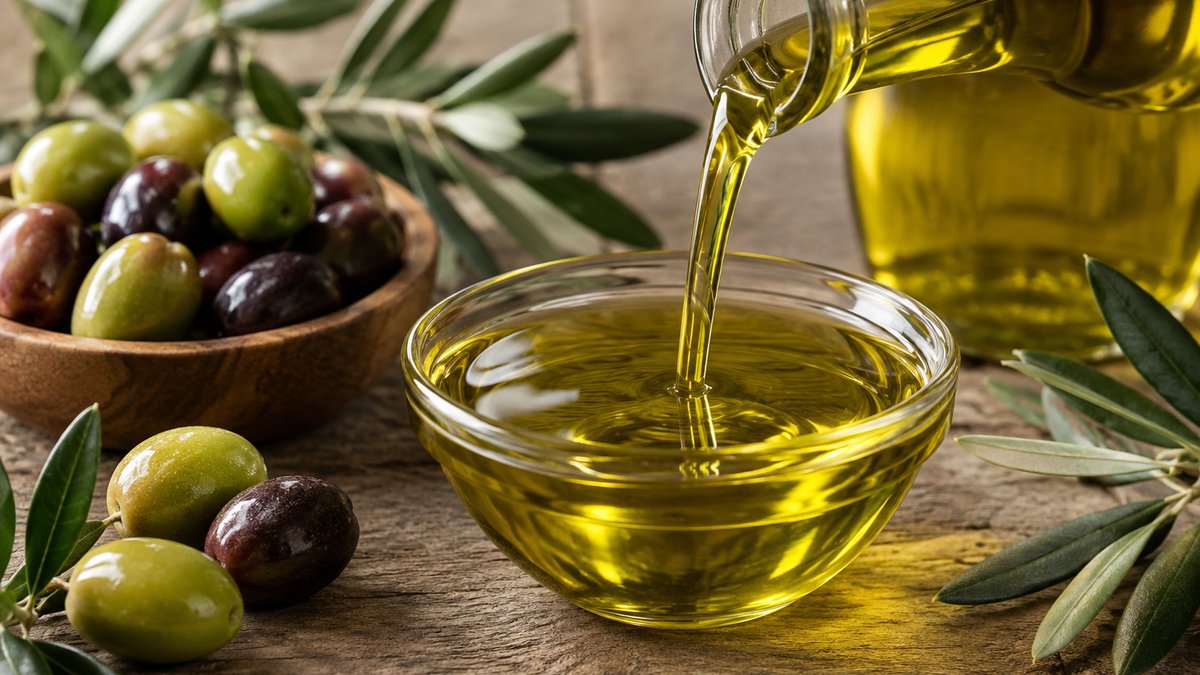
The descriptions include first cold press olive oil from Tunisia, extra virgin olive oil, a pure olive oil blend stated as 20% extra virgin and 80% refined, and olive oil infused with ouzo, black truffle or lemon. One listing describes the product as organic; another mentions a Spanish blend. The listed names and specifications do not provide a single uniform product standard.
2.1 Quantities and product formats need confirmation
All nine requests state a quantity, but they use unlike units: container, 20-foot container, MT, tons, cartons, pallet and bottles. Do not convert or compare these quantities until the buyer confirms the unit, net contents and intended order volume. For example, a request states “38000 20-foot Container,” while other entries give a tonnage, carton, pallet or bottle quantity as written.
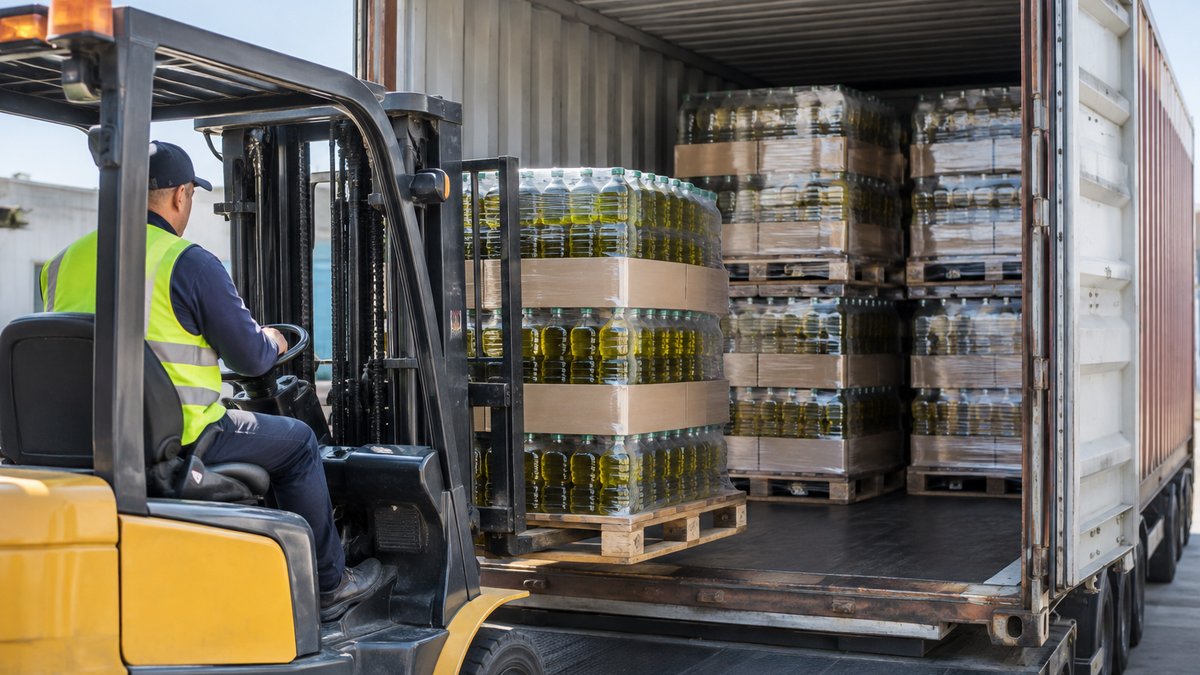
Packaging details appear in four records. The entries mention glass, cans, glass or other packaging, a 2-liter PET bottle, and packaging availability without a specific format. A supplier should confirm the requested container or bottle size, pack configuration, labeling and whether the quantity refers to packaged product or bulk supply.
2.2 Trade and payment terms vary across the requests
The supplied summary lists CIF in four requests, FOB in two, CFR in one, EXW in one and no specified trade term in one. Payment terms are listed as T/T in three requests, L/C in three, D/P in one, Other in one and not specified in one. These are counts for this nine-request sample, not platform-wide patterns.
A supplier preparing an offer should confirm the named delivery point and the applicable trade term before calculating freight or insurance. The payment method and any documentary conditions also need agreement. A term alone does not provide a complete quotation basis.
2.3 Prices and product evidence are not consistently detailed
Every request has a target-price field, but some entries show only USD rather than a numeric figure. The Surabaya request states USD 1,650, the Rotterdam infused-oil request states USD 5 per liter, and the United Kingdom request for 5,000 MT states USD 1,000 without a stated price unit. These entries do not share a clear, comparable basis, so suppliers should confirm currency, unit, grade, pack and delivery term before treating any amount as a usable benchmark.
Five records contain specification fields, but the details differ by request. They include processing method, extraction method, origin, grade, composition and private-label availability. One record lists a certificate of analysis and a certificate of quality. Four requests are marked as verified requests; this describes the request listing status in the data, not a guarantee of a transaction or payment.
3. How should suppliers assess these buying requests?
Suppliers should first match a request to the exact olive oil they can document and supply. “Extra virgin,” “refined,” “organic,” “first cold press” and an infused product describe different buyer asks in this sample; a response should address the wording of the specific request instead of substituting a broader olive oil offer.
Origin can shape the proposed offer, but a country named in a product description is not a substitute for confirming origin requirements. One request names Tunisia in its product description, another lists Cap Bon, and another gives Turkey and Italy in the origin field. Suppliers should state the actual origin of the oil they can supply and ask whether the buyer will accept it.
Before calculating a quote, confirm how the quantity is measured. For packaged oil, establish bottle or can size, units per carton, cartons per pallet and total net volume. For bulk orders, confirm the requested container or tonnage and whether the buyer means oil weight or packaged shipment quantity. The Freshdi listings do not resolve those questions for every request.
The target-price field also needs a like-for-like check. Ask whether a stated number is per liter, kilogram, bottle, carton or another unit, and whether it applies at the origin or includes freight and insurance. If the listing supplies only a currency, do not infer a target figure.
Product evidence should match the proposed oil and the buyer’s stated needs. The request that lists a certificate of analysis and certificate of quality gives a specific documentary signal; other listings do not state the same certificates. Suppliers can prepare available product specifications and analysis documents, then confirm which documents the buyer requires for the destination and transaction.
Destination fields span Dar es Salaam, Cotonou, Chittagong, Surabaya, Houston, Spain, Rotterdam, Manchester and Lomé, as entered in the requests. The buyer country is stated in six records, so it should not be inferred for the others from a destination field. Confirm the actual delivery point, route and responsible party before pricing.
Before sending a firm quotation, ask the buyer to resolve any missing or unclear details that affect cost or product fit. A useful reply can state which requirements the supplier can meet, identify the details still needed and separate a preliminary price from a firm offer.
4. How can suppliers use Freshdi to review olive oil demand?
Freshdi provides a place to review the olive oil buying requests discussed here and compare the requirements each listing states. Suppliers can open the Olive Oil buying-request category and check the product description, quantity, destination, trade terms and payment information before deciding whether a request fits their supply.
A listing is a starting point for commercial clarification. Prepare a product-specific response with the oil type, actual origin, available volume, packaging, price unit, delivery basis and payment proposal. Where a request leaves a detail open, ask the buyer to confirm it rather than filling the gap with an assumption.
Suppliers can also review the Olive Oil supplier category to see relevant supplier listings. Keep any profile or product details consistent with what the business can provide, and check that the information used in an offer matches the actual product.
Suppliers who want to review current olive oil buying requests can start with the requests that match their product and available volume.
View Latest Buying Requests for This Product →
5. What should suppliers do next?
This snapshot shows different olive oil descriptions, order units and commercial terms across nine requests posted from October 26 to November 11, 2026. It does not establish a single market-wide specification or a comparable price level. Suppliers should check each listing against their actual product and confirm the quantity, packaging, price basis, destination and payment terms before committing to an offer.
Freshdi is the place to review the buying requests described here. A supplier can use the request details to decide which buyers to respond to, then prepare a quotation around confirmed product and delivery requirements.
After matching an olive oil request to your available supply, use Find Buyers to continue reviewing relevant buying requests.
View Latest Buying Requests for This Product →
Frequently Asked Questions
How many recent olive oil buying requests are included?
The snapshot includes nine Freshdi olive oil requests posted by nine buyers from October 26 to November 11, 2026. They were posted within the 30-day window and are reported as of November 21, 2026.
Do these requests represent total olive oil import demand?
No. They are requests listed on Freshdi during a stated period. They do not measure global or national import demand, and the market statistics in this article are separate public data.
Can I compare the quantities across all nine requests?
Not directly. The listings use different units, including containers, MT, tons, cartons, bottles and pallets. Confirm the intended order volume, unit and package contents with the buyer before comparing or quoting.
How should I use a target price shown in an olive oil request?
First confirm the price unit, product grade, packaging, currency and delivery basis. Some entries show USD without a numeric amount or unit basis, so they are not usable as comparable price references without clarification.
Which trade and payment terms appear in the requests?
The sample lists CIF, FOB, CFR and EXW, with one request not specifying a trade term. Payment fields include T/T, L/C, D/P, Other and not specified. Confirm the named place, payment conditions and any documentary requirements with the buyer.
Where can suppliers review olive oil buying requests on Freshdi?
Suppliers can use Freshdi’s Olive Oil buying-request category to review the requests and their stated requirements. Check each listing for the product, quantity, destination and commercial terms, then clarify any missing details before submitting a firm quotation.
References
1. European Commission – DG AGRI Dashboard: Olive Oil, 30 September 2026.
2. International Olive Council – Key Figures on the World Market for Olive Oils, data adopted at the 122nd session, November 2025.
Disclaimer: This article is compiled from platform data, public sources and information provided by third parties, for general informational purposes only. We do not guarantee its accuracy or completeness. Mentions and rankings of suppliers do not constitute an endorsement or guarantee, and strategies and examples are illustrative; results may vary. Please conduct your own due diligence before making business decisions.