
Introduction
Wood pellet buyers specify different scales of supply, from trial-sized orders to large recurring requirements. Recent Freshdi requests also vary in pellet diameter, quality references, packaging, destination and commercial terms, so a product name alone does not show whether an order fits a supplier’s operation.
This snapshot covers nine wood pellet buying requests posted on Freshdi from October 21 to November 18, 2026, representing eight buyers. It reports each request as stated, separately from external production and trade figures. Suppliers can use the details to identify requirements to match and questions to resolve before quoting.
Key Takeaways
- Nine Freshdi wood pellet requests posted from October 21 to November 18, 2026, came from eight buyers; all nine state a quantity and a target-price field.
- Stated quantities range across very different scales and units, so suppliers should confirm the order basis, shipment schedule and whether a request is recurring before assessing capacity.
- Six requests provide product specifications. They refer to pellet size, calorific value, density, moisture, wood type, quality references or certifications, but the detail level varies.
- Eight requests state a trade term: five CIF, two CFR and one FOB. Destination and payment details still need to be checked against each supplier’s quotation basis.
- FAO reported 48 million tonnes of global wood pellet production in 2024, with 31 million tonnes entering global trade; Freshdi requests are a separate platform snapshot, not a measure of total market demand.
1. What does the global wood pellet market show?
The latest global figure identified in this research is for 2024: the Food and Agriculture Organization (FAO) reported 48 million tonnes of wood pellet production, with 31 million tonnes entering international trade. These figures provide market context for the requests, but they do not indicate how much demand exists for a particular grade, origin or destination.
FAO reported that Europe accounted for 70% of wood pellet consumption in 2024 and the Asia-Pacific region for 28%. The Asia-Pacific share of global output rose from 14% in 2020 to 22% in 2024. Those regional patterns help explain why the requests include destinations in South Korea and other Asian markets, but they do not establish that any specific request will proceed to an order.
FAO’s 2024 country rankings use a broader category that combines wood pellets, briquettes and other agglomerates. Within that combined category, the United States, Viet Nam and Canada accounted for 29%, 18% and 9% of global exports, respectively. The United Kingdom, Japan and the Republic of Korea accounted for 29%, 20% and 13% of global imports. These shares should not be read as wood-pellet-only figures.
The European Union is a large destination market. In a report dated July 7, 2026, USDA’s Foreign Agricultural Service estimated EU wood pellet consumption at 22.7 million metric tonnes in 2025 and forecast an increase of 500,000 tonnes in 2026. The report said EU imports were projected to partially recover as local production was expected to lag demand. It also reported that the United States supplied 1.78 million metric tonnes of EU imports, valued at USD 423 million, in 2025.
These global and EU figures describe production, trade and consumption through 2025, with a 2026 forecast from USDA. Freshdi’s nine requests are a separate observation of buyer-posted requirements from October 21 to November 18, 2026. Their destinations and stated specifications can help suppliers screen individual opportunities, but should not be generalized into country-wide import demand.
Looking to Sell Wood Pellet?
Connect with verified buyers, receive relevant buying leads, and explore sourcing opportunities from global markets.
2. What do nine recent wood pellet RFQs specify?
The nine requests posted on Freshdi between October 21 and November 18, 2026, are from eight buyers. Four requests are marked as verified requests on the platform. Every request states a quantity and has a target-price field; a field’s presence does not mean that it contains enough detail to price a shipment.

2.1 Order scale and repeat requirements
The requests state quantities from 5 tons to 42,000 tons, using the units as entered in each listing. The largest stated quantities are 42,000 tons, 10,000 tons and 8,000 tons; the smallest is 5 tons. These figures are not directly comparable as commercial commitments without confirmation of the unit basis, delivery schedule and whether the quantity applies to one shipment or a longer contract.
One request states a 12-month contract, a total requirement of 96,000 Mt and a monthly volume of 8,000 Mt. Suppliers considering recurring supply should check whether the total and monthly amounts, delivery intervals and contract duration are all intended as written. The other requests do not all provide that level of scheduling detail.
2.2 Product, quality and packaging details
Six requests include specification details, but the information varies by listing. One request gives a 6 mm to 8 mm diameter range, bulk density of 600 to 750 kg per cubic meter and a calorific value stated as 4,200% to 4,800% Kcal per kg. Because the percentage signs appear in the request, a supplier should confirm the intended unit and values before preparing a technical offer.
Other listings mention ENplus A1, wood type, ash content, length, fuel type, moisture, emission level or burn efficiency. Three requests contain certification language. The exact names and wording vary, so suppliers should compare the buyer’s request with the actual certificate, its scope and validity rather than treating a general quality reference as proof of a specific certification.
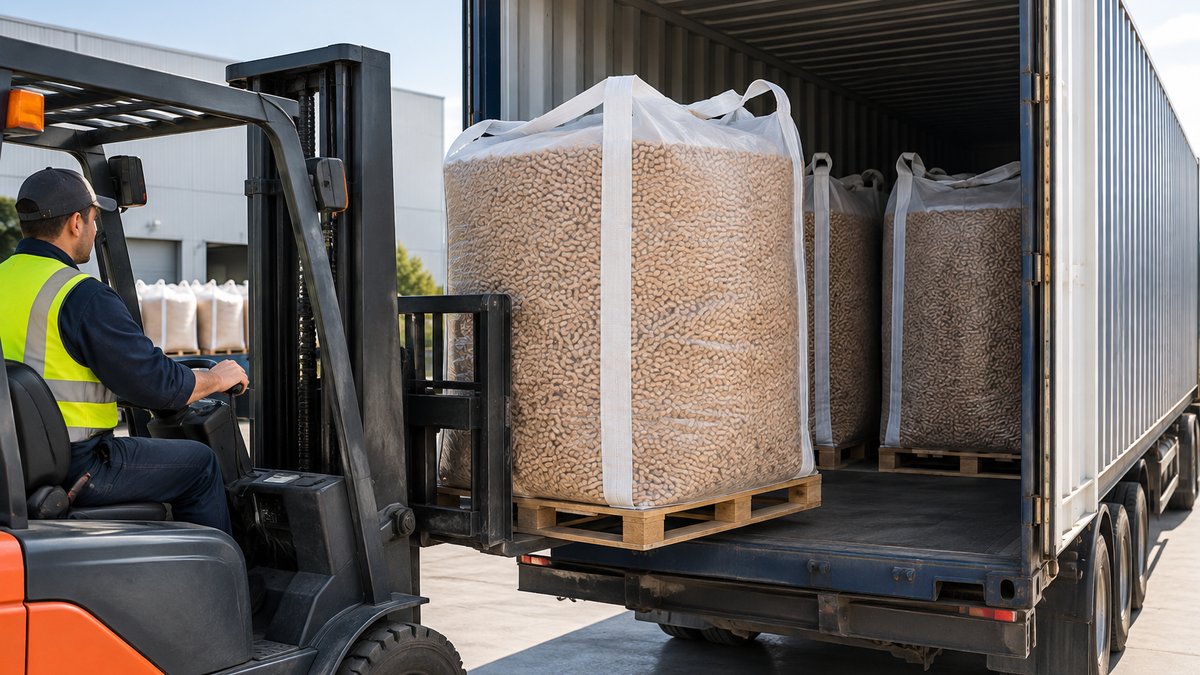
Two requests list packaging information. One includes 40 kg bags, while another specifies a one-ton big bag. A request also contains a separate one-ton-per-bag specification alongside its 40 kg/bag packaging field. The supplier should confirm the required pack format and quantity per package before calculating loading, handling or freight.
2.3 Price fields and commercial terms
All nine records include a target-price field, but most state only USD. Two listings show numeric amounts, 150 USD and 250 USD, without a clear price unit or basis in the recorded field. Treat these as buyer-entered references, not comparable market prices or firm offers; confirm currency, unit, specification, delivery basis and validity before quoting.
Eight requests list trade terms: five CIF, two CFR and one FOB. CIF means cost, insurance and freight; CFR means cost and freight; FOB means free on board. The buyer and supplier should identify the precise named destination or port and confirm the applicable Incoterms rule and version in the contract. Payment entries include T/T, L/C and “Other”; where the request does not give a clear payment arrangement, confirm the instrument, timing and documents required.
Destination details also deserve a close read. One request from a Pakistan-based buyer names “Gansun Korea” as the destination port, while another request lists Koper as its destination and gives the buyer country as the United Arab Emirates. These are reported as entered. Confirm the port, country and routing with the buyer instead of pricing against an assumed destination.
3. What should wood pellet suppliers prepare before responding?
Suppliers should first match the request to a product they can document and deliver. The RFQs vary in scale, pellet specifications, packaging and destination; an offer based only on the phrase “wood pellets” leaves important commercial and technical points unresolved.
- Confirm the pellet’s wood or material type, diameter, length and grade, then state only specifications supported by current product documentation.
- Provide measured quality values requested by the buyer, such as calorific value, ash, moisture or bulk density. Ask the buyer to clarify any value or unit that appears inconsistent.
- Identify the exact certificate or quality scheme requested, the certificate holder, scope and validity. Do not substitute a general quality claim for a named certification.
- Confirm the total quantity, unit, shipment size, monthly schedule and contract duration. For a request stating both monthly and annual volumes, check that the figures agree.
- State packaging clearly, including net weight per bag, bulk-bag format and any pallet or container requirements. Resolve any conflicting pack details before calculating costs.
- Confirm the destination port and named delivery point, then quote against the agreed Incoterm. State the price unit, currency, shipment basis and what freight or insurance the offer includes.
- Agree payment method, timing, inspection requirements and any documents needed before reserving production or arranging shipment.
The requests do not all supply the same information. Missing details should be treated as questions for the buyer, not as requirements the supplier can fill in by assumption. A written clarification record also helps keep the technical offer, price calculation and draft contract consistent.
4. How can suppliers use Freshdi to review wood pellet buying requests?
Suppliers can browse wood pellet buying requests on Freshdi and compare each listing with their available product, production schedule and export route. Read the full request before deciding whether the stated quantity, specifications, destination and commercial terms fit the business.
A request can help identify what a buyer has stated, but it does not confirm that every detail is complete or that a transaction will follow. Check the posting date and status, ask the buyer to resolve inconsistencies, and prepare a quotation that answers the stated requirements directly. Where the platform listing leaves a point open, keep that point conditional until the buyer confirms it.
Suppliers can also review wood pellet supplier listings to see how product information is presented. Keep product descriptions, available quantities and certificates aligned with documents the business can provide. The nine requests in this snapshot are posted by eight buyers, so repeated postings by one buyer should not be mistaken for additional independent buyers.
A suitable next step is to select a request that matches current supply, list any unresolved points and prepare a quotation only after confirming the buyer’s intended basis.
Suppliers ready to review active wood pellet demand can start with requests that match their product and shipment capacity.
View Latest Buying Requests for This Product →
5. What should suppliers do next?
The recent requests span different quantities, destinations and levels of specification. Before quoting, confirm the unit and delivery schedule, technical values, packaging, named destination, trade term and payment arrangement. The 2024 global figures and USDA’s EU outlook provide market context, while each RFQ remains an individual buyer request that needs its own review.
Suppliers can use Freshdi to find relevant wood pellet buying requests, compare the requirements stated by buyers and decide which opportunities fit their actual supply.
After checking product fit and clarifying open terms, suppliers can use Find Buyers as the next step.
View Latest Buying Requests for This Product →
Frequently Asked Questions
How many recent wood pellet buying requests are included?
The snapshot covers nine Freshdi wood pellet requests posted from October 21 to November 18, 2026. They represent eight buyers. The records are a platform sample for that period, not a count of all global wood pellet demand.
What quantities do the requests state?
The requests use quantities ranging from 5 tons to 42,000 tons, as entered. Confirm the unit basis, shipment size and delivery schedule with the buyer before treating a quantity as a firm supply requirement.
Can I use the target-price fields as market prices?
No. All nine requests contain a target-price field, but most state only USD. Two list numeric amounts without a clear unit or price basis. Confirm the product specification, price unit, currency, delivery term and validity directly before preparing an offer.
Which wood pellet specifications should I include in a quotation?
Answer the specific request with documented details such as material or wood type, diameter, length, grade, calorific value, ash, moisture, density, packaging and any requested certification. Confirm unclear or inconsistent values with the buyer, and do not claim a certificate or test result your business cannot document.
How should I handle CIF, CFR or FOB requests?
Confirm the named port or delivery point and the Incoterms rule and version that the buyer intends. CIF includes cost, insurance and freight; CFR includes cost and freight; FOB means free on board. Make the quotation basis explicit and verify which shipment costs it includes.
Where can suppliers find wood pellet buying requests on Freshdi?
Suppliers can browse the wood pellet buying-request category on Freshdi, then review each listing’s posting date, quantity, specifications, destination and commercial terms. Check for missing or inconsistent information before sending a quotation.
References
1. Food and Agriculture Organization of the United Nations – Global forest products trade and production show signs of recovery in 2024, December 24, 2025.
2. USDA Foreign Agricultural Service – Wood Pellets Annual: European Union, July 7, 2026.
3. Freshdi – Wood pellet buying requests posted October 21 to November 18, 2026; nine requests from eight buyers, November 20, 2026.
Disclaimer: This article is compiled from platform data, public sources and information provided by third parties, for general informational purposes only. We do not guarantee its accuracy or completeness. Mentions and rankings of suppliers do not constitute an endorsement or guarantee, and strategies and examples are illustrative; results may vary. Please conduct your own due diligence before making business decisions.