
Introduction
Frozen pork requests can describe very different supply needs: a specific cut or meat form, a temperature requirement, or simply a quantity and destination. Eight Freshdi requests from eight buyers were posted between October 21 and November 13, 2026. Each states a quantity, but the units range from pieces and cartons to tons and kilograms, so the quantities cannot be compared as a single volume.
This snapshot covers requests posted in the 30 days before November 20, 2026. It reports buyer countries and destinations as written in the requests, including entries that may need confirmation. Suppliers can use the stated specifications to screen for product fit, then check unresolved commercial details and whether the requested schedule is still active before preparing an offer.
Key Takeaways
- Eight frozen pork buying requests from eight buyers were posted between October 21 and November 13, 2026; all state a quantity, but they use different units and product descriptions.
- Seven requests state specifications. Requirements include cuts, fat or lean content, processing, storage temperature, shelf life and compliance details.
- Trade terms vary: the records include FOB, CIF, DAP, a combined CIF/DAP entry and two entries marked not specified. Payment terms are not stated in three requests.
- Two requests contain delivery dates that had passed by November 20, 2026. Confirm that the request and schedule remain current before preparing a quotation.
- USDA reported lower export unit values for EU and Brazilian pork in January to July 2026 than in the same period of 2025, while its October 2026 outlook forecast 2026 global pork exports to rise 2% and 2027 exports to remain unchanged.
1. What does the wider pork market indicate about these requests?
The global pork market is large, but its trade is shaped by changing import demand, disease-related restrictions and the availability of product from major exporters. FAO reported total world meat production of 374 million tonnes in 2024, up 7 million tonnes from 2023; pig meat was among the three most-produced meat categories. That figure covers all meat, not pork alone.
OECD and FAO reported that global meat production rose 1.4% to 375 million tonnes carcass-weight equivalent in 2025. Pig meat output increased, mainly in China, and consumption of pig meat also rose. World meat trade increased slightly, driven mainly by poultry. These figures describe the wider meat market and should not be read as a measure of frozen pork trade alone.
USDA’s October 9, 2026, report described a shift in pork trade during 2026. It attributed greater export availability to stronger-than-expected slaughter in China and trade disruptions following African swine fever cases in Spain. USDA forecast global pork exports to grow 2% in 2026 and remain unchanged in 2027. The agency also reported that China’s pork imports fell nearly 30% through August 2026 compared with the same period in 2025.
Import demand did not move uniformly. USDA reported that, through June 2026, pork imports increased 5% in Japan and 18% in South Korea, while imports in the Philippines increased 1%. By July, stocks had risen in these markets; USDA said import pace had stalled in South Korea and the Philippines. Its report says those stock levels and expected softer demand could increase competition among exporters.
Recent exporter unit values also differed. USDA reported January to July 2026 unit values of USD 2,867 per tonne carcass-weight equivalent for EU pork and USD 1,939 per tonne for Brazilian pork, down 8.7% and 2.1%, respectively, from January to July 2025. These are reported export unit values, not supplier quotations or prices for a particular cut, frozen product form, destination or Incoterm.
The Freshdi requests are a separate platform observation: eight requests from eight buyers posted from October 21 to November 13, 2026, each with a stated quantity. The records do not establish market-wide demand or provide comparable product-level prices. Their stated destinations and specifications can help a supplier assess individual fit, while official market information gives broader context on trade conditions.
Looking to Sell Frozen Pork?
Connect with verified buyers, receive relevant buying leads, and explore sourcing opportunities from global markets.
2. What do eight recent frozen pork requests ask suppliers to provide?
The eight requests cover a wide range of product forms, order sizes and delivery details. The quantity field is present in every record, but units differ and the amount requested in one unit cannot be compared directly with another. The target-price field states USD in each record; it does not provide a numerical target price.
2.1 Product form and specification detail
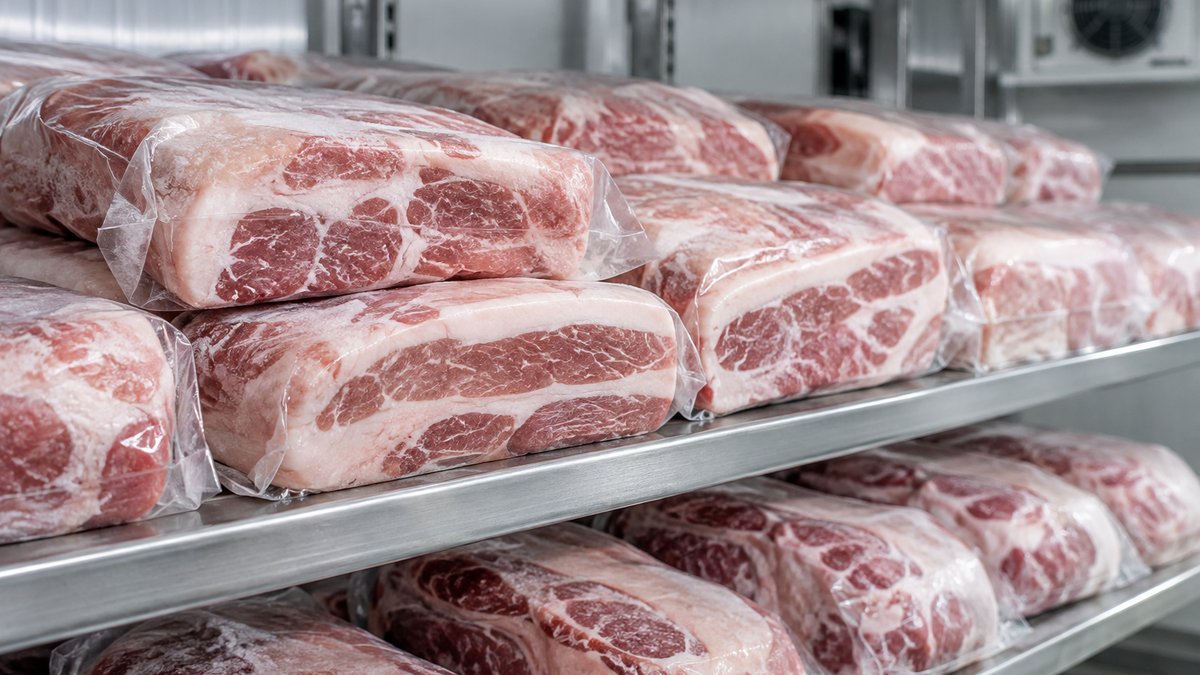
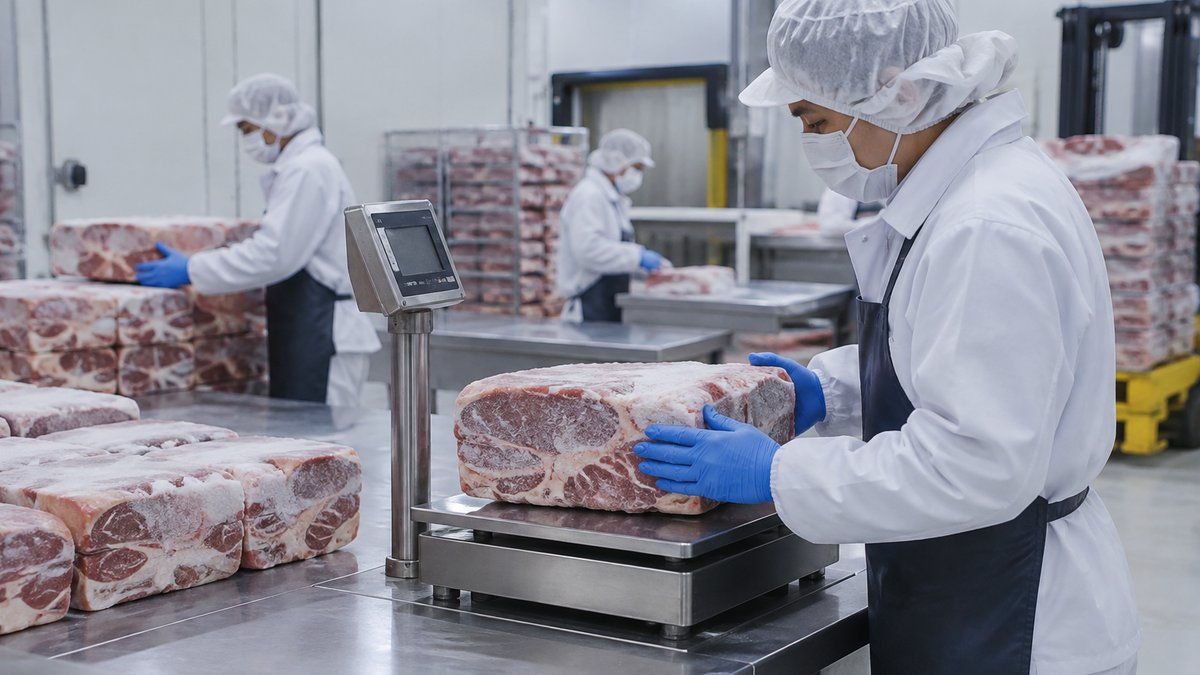
Seven of the eight requests state specifications. Their wording ranges from a defined meat form to long lists of technical and delivery requirements. One request describes boneless lean pork blocks, including a visible-fat limit, a minimum piece size, storage temperature, shelf life and a maximum drip-loss figure. Another describes pork trim with 80% lean, skin-on presentation and a storage temperature. A separate request names mechanically deboned meat, while another states only a frozen temperature requirement.
Two requests describe IQF processing, an individual quick-freezing method. One names belly, breast and cutlet; another states a 24-month shelf life and storage at -18°C or below. The record fields also include moisture requirements, processing descriptions and shelf-life details. Suppliers should quote against the exact product and conditions stated, rather than treating every request for frozen pork as interchangeable.
Only two requests state packaging information. One specifies food-grade inner material and cartons or polypropylene bags as the outer packaging. Another lists the presentation as pieces. The remaining six do not state packaging in that field. A supplier considering those requests would need to confirm pack type, net weight per pack, carton or bag configuration and any labelling requirement before pricing.
2.2 Quantity, destination and commercial fields
The listed quantities are 99,400 kg, 900 cartons, 1,000 tons, 5 tons, 20 pieces, 2,000 cartons, 10 tons and 100 tons. These figures should remain in the units supplied by the buyers. The records do not provide enough information to convert every quantity to a common basis, and some do not state the pack weight needed to calculate a total net weight.
The destination fields also need individual review. For example, one buyer country is listed as Singapore and the stated destination is Manila International Container Terminal. Another request lists a buyer in China and a destination in Vitória, Brazil. These entries are reported as stated, not reconciled. Confirm the delivery point, route and applicable import requirements with the buyer before building freight or compliance costs into an offer.
The trade-term field is not consistent across the records. The summary lists three FOB entries, two CIF entries, one DAP entry, one combined CIF/DAP entry and two marked not specified. One request lists both FOB and CIF. Payment terms appear in seven records: three state T/T, one says negotiable and three are not specified. These fields need confirmation where they are absent or present more than one way.
2.3 Dates and request freshness
Two schedules require particular attention. A request posted October 21, 2026, lists delivery from April through July 2026. Another, posted October 30, 2026, gives a delivery deadline of December 20, 2025. Both dates had passed by November 20, 2026. A supplier should confirm whether either request is still active and obtain a revised schedule before allocating stock or quoting.
The records do not provide one consistent level of detail. Some specify cut, temperature, processing or pack; others give a quantity and few product details. Treat each stated field as a starting point for qualification. Ask for missing information directly, and retain the buyer’s original units and destination wording until the buyer confirms any change.
3. What do these buying requests mean for frozen pork suppliers?
The requests point to several distinct supply profiles: defined cuts or trim, IQF product, mechanically deboned meat, and bulk frozen pork with limited detail. A supplier should first match its actual product to the requested form and specification. A generic frozen-pork offer does not answer a request that names a cut, lean percentage, temperature or processing method.
For requests with technical requirements, prepare a product sheet that states the cut, presentation, fat or lean content, processing method, storage temperature and shelf life that the supplier can document. Where the buyer states a limit, such as a maximum fat content or drip loss, provide the relevant test or quality documentation if available. Do not claim compliance with a standard or certification unless the supplier can substantiate it for the product and facility.
Order units affect quotation preparation. A quantity in cartons needs a carton net weight; a request in pieces needs a piece weight or pack specification; a request in tons needs confirmation of whether the buyer means metric tonnes and whether the quantity is net or gross. The records do not supply those missing conversions. Confirm the measurement basis rather than using an assumed pack size.
The buyer’s country, named destination and delivery term determine which commercial and regulatory checks apply. Confirm the exact delivery point and Incoterm, the named place or port, shipment mode, import eligibility, required health documentation and any country-specific labelling rules. A request’s country field alone does not establish where the shipment will enter or which rules apply.
Before quoting, suppliers should resolve open commercial points: quantity basis, product allocation where multiple cuts are named, packaging, shipment window, currency amount, payment schedule and the named delivery point. If a request lists more than one trade term or an old deadline, ask the buyer to confirm the current requirement in writing. Freight, insurance and delivery costs depend on the confirmed route and term.
Buying consideration: Screen each RFQ against the product the supplier can actually document and ship. Then confirm the missing pack, destination, schedule and payment details before submitting a firm quotation.
4. How can suppliers use Freshdi to find frozen pork buyers?
Suppliers can review frozen pork buying requests on Freshdi and compare each listing with their available product, quantity and export capability. The requests discussed here are a dated snapshot, so check the current listing and confirm that its commercial details and schedule still apply before responding.
Start with the Frozen Pork buying requests. Read the product description, quantity, destination, specifications, trade terms and payment fields together. Where a request leaves information unstated, treat it as a question for the buyer rather than a requirement the supplier can fill in by assumption.
Compare the request with the product information in your own offer. State the exact pork form and cut, processing method, storage temperature, packaging, available quantity and shipment readiness. Give a quotation with a currency amount, unit basis, Incoterm and named place, payment terms and validity period. If the request gives an expired date or an unclear destination, request confirmation before pricing delivery.
Suppliers can also review the Frozen Pork supplier category when checking how product listings are presented. Keep any product description and supporting claims aligned with the supplier’s actual production, documentation and export capability.
Suppliers ready to review current frozen pork requests can use Freshdi to find buyers and assess the requirements in each listing.
View Latest Buying Requests for This Product →
5. What should suppliers do before responding to a frozen pork RFQ?
These eight requests differ in product detail, quantity units, destination and commercial terms. Suppliers should match the requested product first, verify the quantity and delivery basis, then confirm any missing or outdated details. Market data can help explain wider trade conditions, but it cannot replace a check of the buyer’s current requirements.
Review relevant frozen pork buying requests on Freshdi, confirm the destination and schedule with the buyer, and prepare a quotation that states exactly what the supplier can deliver. No request guarantees a completed transaction; the final terms depend on confirmation and agreement between the parties.
Suppliers can use Freshdi to find buyers and review the current frozen pork requests that fit their documented supply.
View Latest Buying Requests for This Product →
Frequently Asked Questions
How many recent frozen pork buying requests are included?
The snapshot includes eight requests from eight buyers, posted between October 21 and November 13, 2026. The data is a Freshdi platform observation for the 30 days before November 20, 2026, not a measure of total market demand.
Can I compare the quantities in the eight requests directly?
No. The requests state quantities in kilograms, cartons, tons and pieces. Some do not provide pack weight or piece weight, so the records do not support conversion to a common quantity basis. Quote in the buyer’s stated unit only after confirming its net or gross basis and any pack details.
Do the requests provide numerical target prices?
The target-price field in each record states USD, but no numeric target amount is provided. Suppliers should prepare their own quotation using a clearly stated currency, product unit, price basis, delivery term and named place.
What should suppliers include in a frozen pork quotation?
State the product form and cut, specification, packaging, available quantity and unit basis, country of origin, storage conditions, shipment schedule, currency and price unit, Incoterm and named place, payment terms and quotation validity. Attach only documentation that applies to the offered product and facility.
What should I do if a request has an old delivery date or unclear destination?
Ask the buyer to confirm whether the request remains active and provide a current schedule and exact delivery point. Two records in this snapshot contain delivery dates that had passed by November 20, 2026. Other destination entries should also be confirmed before estimating freight or checking import requirements.
Where can suppliers find frozen pork buying requests on Freshdi?
Suppliers can browse the Frozen Pork buying-request category on Freshdi and open listings to review the stated product, quantity, destination and commercial fields. Check each listing’s current details and ask the buyer to resolve missing or conflicting information before sending a firm offer.
References
1. Food and Agriculture Organization of the United Nations – Agricultural production statistics 2010–2024, 2025.
2. OECD and Food and Agriculture Organization of the United Nations – OECD-FAO Agricultural Outlook 2026-2035, Meat, 2026.
3. USDA Foreign Agricultural Service – Livestock and Poultry: World Markets and Trade, October 2026.
4. Freshdi – Frozen pork buying requests posted October 21 to November 13, 2026; platform data as of November 20, 2026, 2026.
Disclaimer: This article is compiled from platform data, public sources and information provided by third parties, for general informational purposes only. We do not guarantee its accuracy or completeness. Mentions and rankings of suppliers do not constitute an endorsement or guarantee, and strategies and examples are illustrative; results may vary. Please conduct your own due diligence before making business decisions.