
Introduction
Fresh onion import demand varies by requested color, size, packing, quantity and delivery point. From 26 October to 16 November 2026, 12 fresh onion buying requests were posted on Freshdi by 9 buyers.
These requests are a snapshot of those listings, not a measure of global demand. They name destinations ranging from Gambia and the Port of Lome to Jebel Ali and Colombo. Nine requests state a buyer country; destination entries and buyer country are separate fields, and three requests do not state the buyer country. Suppliers can use the listings to assess product fit, identify details to confirm and prepare a quotation that matches the request.
Key Takeaways
- The 12 Freshdi requests were posted from 26 October to 16 November 2026 by 9 buyers; they show platform activity, not total onion-market demand.
- Quantities are stated in different forms, from 5 tons and 13–20 MT to container quantities and listings using very large tonnage figures. Report them as written and confirm the required quantity and unit.
- CIF appears in 9 request records and FOB in 5; several requests list more than one trade term, so suppliers should confirm the requested basis and named destination before quoting.
- Only 5 requests state packaging information, and 11 include specifications. Most records therefore leave some product or shipment details for clarification.
- The target-price field is present across the sample, but entries that state only a currency or lack a unit and price basis do not provide a comparable market price.
1. What recent market data says about fresh onions
The latest global production figure in Agriculture and Agri-Food Canada’s 2025 statistical overview is for 2024: world production of dry onions and shallots was 108.26 million tonnes, or 9.6% of the fresh-vegetable volume shown in the report. The category is “onions and shallots, dry”; it is not a measure of every fresh-onion type or of international trade.
That production figure gives scale, but it cannot establish demand at any destination named in these Freshdi requests. FAO’s production data cover agricultural output, while buyers’ requirements in the RFQs are individual, live requests. No global market-value or consumption figure is used here because the sources reviewed do not provide a directly comparable figure for the product scope of these listings.
Country trade data show why market context needs a defined scope. USDA Economic Research Service reported that U.S. imports of fresh onions, shallots and onion sets totaled 1.33 billion pounds in 2025, down 5% from 2024. For 2023–2025, Mexico accounted for an average 64% of U.S. imports in that combined category, Peru 22% and Canada 11%. These are U.S. import patterns, not a ranking of global onion suppliers.
The same USDA report put U.S. exports of fresh onions, shallots and onion sets at 757.7 million pounds in 2025, down 5% from 2024. Shallots made up 65% of that export volume, and 94% of U.S. shallot exports went to Canada. Because the export total combines onions, shallots and onion sets, it should not be treated as an export figure for fresh bulb onions alone.
Seasonality also shapes availability. USDA describes U.S. mild and sweet onions as more available from March to August and storage onions as generally available from August to May. That schedule is specific to U.S. supply. It does not establish the harvest or availability calendar for the origins in the Freshdi listings.
In the Freshdi snapshot, the sample spans several named destinations rather than one import market. Its requests include different colors, sizes, packaging and delivery terms, while some descriptions contain incomplete or conflicting details. The platform observations below should be read as requirements stated in these 12 listings, not as market-wide price, volume or preference trends.
Looking to Sell Fresh Onion?
Connect with verified buyers, receive relevant buying leads, and explore sourcing opportunities from global markets.
2. What the 12 fresh onion buying requests specify
The 12 requests were posted between 26 October and 16 November 2026, and each states a quantity. Their destination entries are reproduced in the Freshdi listings; some are named ports, while others are country names or multiple destinations. The table is generated from the original request records.
2.1 Specifications differ across the requests
Eleven requests state specifications, but they do not use one shared specification format. Color is stated in 5 records. Size appears in several forms: one listing gives ranges from 30–45 mm to 55–60 mm, while another gives a 55–65 mm range. A request for fresh red onions names 45+ mm or 50+ mm as well as 25+ mm and 35+ mm, so the supplier should ask which size is required before building an offer.
One request names red, yellow or white onions and asks for mature, dry and firm produce with an export grade for wholesale distribution. It also lists freedom from sprouting, mold, rot, pests and major defects, plus documents including a phytosanitary certificate and certificate of origin. Those are requirements in that request; they should not be assumed to apply to every buyer or destination.
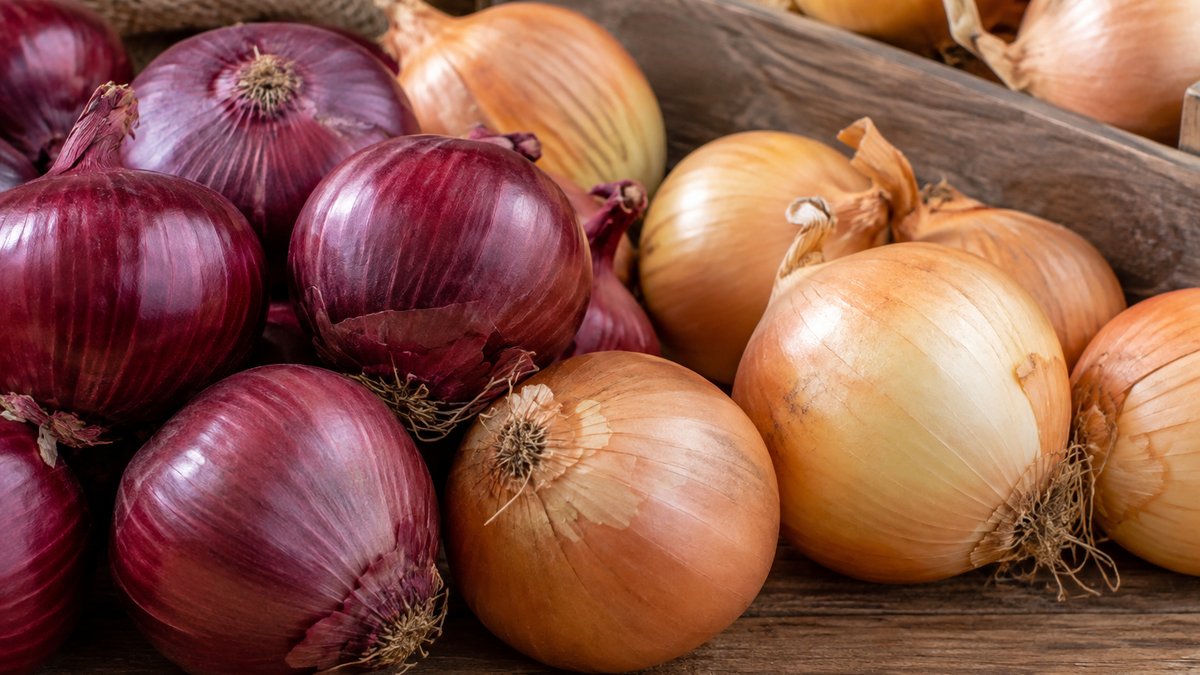
The listed product forms also vary. One request describes dried whole onions; others refer to fresh onions, red onions or yellow onions. A quotation should identify the exact form offered and avoid treating a request for dried onions as interchangeable with a fresh-bulb requirement.
2.2 Quantities and price fields need a careful read
The quantity field is populated in all 12 records, but the entries use different units and formats. They include a 5-ton request, a 13–20 MT request and container-based quantities. Several requests contain unusually large figures or unit wording that a supplier may need to confirm. Keep the buyer’s stated figure intact when discussing the listing; do not convert it into a shipment size or assume the intended unit.
The target-price field is present in all 12 records, but a field entry is not automatically a usable price. Some entries state “USD” without a numeric amount; others provide an amount without a clear unit or commercial basis. For example, a listing shows “780 USD” without a unit price basis. Treat the entry as written and ask whether the figure is per kilogram, per tonne, per container or another basis before using it in a quotation.
2.3 Trade terms, payment and packing are not consistent
CIF appears in 9 records, FOB in 5 and CFR in 2; the same record may list more than one term. CIP, DAP, DDP and EXW also appear in the sample. A supplier should confirm which term the buyer wants and state the named place precisely. The trade term affects which costs and responsibilities the quotation includes, so a list of alternatives is not enough to calculate a firm offer.
Eleven requests state payment terms. T/T appears in 6 records, D/P in 3 and L/C in 2; other entries include Money Gram, W/U, “To be negotiated” and “Other.” Some records list multiple options. Suppliers should confirm the selected payment method, timing, currency and documentary conditions rather than assuming one option governs.
Packaging is stated in 5 records. The entries include mesh bags, 20 kg net bags, and options ranging from 2 kg to 20 kg mesh bags. One listing mentions custom packaging. These are request-specific statements, not a single packaging preference across all buyers. Confirm net weight, bag material, labeling and whether the buyer’s stated sizes apply to each onion grade.
Only 4 requests state a shipping method, and 2 provide a lead-time field. Where the buyer does not state a transport method or schedule, the supplier should not infer one from the destination. Confirm whether the buyer expects sea or air freight, the shipment window and the exact delivery point before preparing a landed-cost offer.
3. What the onion requests mean for suppliers
The strongest practical signal in this sample is variation: buyers request different colors, size ranges, product forms, packing and commercial terms. Suppliers should qualify each RFQ against the stock they can actually supply, then resolve missing or conflicting details before submitting a final price.
A request for Indian onions names Nashik as origin, lists multiple size and net-weight options, and describes loading capacities for 20-foot and 40-foot reefer containers. It also states that temperature and humidity requirements are to be confirmed. The listing contains overlapping size details, including a minimum-size field and several size ranges. An exporter considering it should ask which grade and packing option the buyer wants, then confirm the required loading quantity and reefer conditions.
A red-onion request for Colombo names a 30–50 mm size range and red color, plus a 20 kg net-bag entry. Its quantity is stated as 56 tons and its target-price entry as “300$ USD,” without a clear price unit or basis. A supplier should confirm both before calculating an offer. The listing also says “Urgent order”; it does not give a full shipment schedule in the fields provided.
Three requests from the same buyer name the Port of Lome, Togo. Their product descriptions, quantities and listed trade terms differ. Suppliers should assess each request separately rather than merging the quantities or assuming the entries are one order. One describes fresh red onions and color details; another mentions curing and ventilation; a third is titled Egyptian fresh red onion. Confirm product origin, specification and order volume for the particular request being answered.
A 400 MT request for fresh red onions lists Iran, Jersey, Uganda, Egypt and Ethiopia as origins, gives a CIF term and names Jebel Ali as destination. It also lists a target of “780 USD,” with no unit or price basis stated. The origin field names possible sourcing origins; it does not establish that any particular supplier can serve the request or that the listed amount is comparable to a market quotation.
Before quoting, suppliers should verify the product and commercial details that change the delivered offer: fresh or dried form, color, grade and size, acceptable defects, net quantity, packing, origin, destination point, Incoterm, shipment mode, payment schedule and quotation validity. If a listing gives alternatives, ask the buyer to select one. If two fields conflict or the unit is unclear, request confirmation in writing.
- Match the request to available stock by onion type, color, size range and origin. State any differences from the buyer’s requested specification.
- Confirm quantity and unit, especially for container-based orders or entries with unusually large figures. Do not convert an unclear quantity into an assumed shipment volume.
- Prepare a quotation with price currency and unit, quantity, packing, named delivery point, trade term, transport basis, payment conditions and validity period.
- Attach only documents and certificates the business holds and can provide for the shipment. Check destination requirements with the buyer and relevant authorities.
Buying consideration: Use the RFQ’s stated requirements as a starting point, then resolve gaps before reserving stock or pricing freight. Clear answers protect both sides from comparing offers built on different grades, units or delivery bases.
4. How suppliers can find onion buyers on Freshdi
Suppliers can review buying requests by product category, then open each listing to compare its stated product, quantity, destination and commercial terms. Start with the Fresh Onion buying requests, and use the broader Vegetables buying requests when the offered product spans more than one vegetable category.
Check whether the request is a genuine product fit before spending time on a quotation. Compare the listing with current stock, pack formats, export destinations and available documents. Freshdi’s sample includes 8 requests marked verified; that platform field is a listing attribute, not a substitute for the supplier’s own commercial checks.
A useful response addresses the buyer’s stated requirements and labels any assumptions. State the onion type and origin, available quantity, size and color, packing, price unit, named delivery point, shipping basis and payment terms. If the request leaves a field open, ask a direct question instead of filling it with an estimate.
Suppliers ready to review current onion requests can use Freshdi’s Find Buyers page.
View Latest Buying Requests for This Product →
A supplier profile should match the offer: list only products, origins, certifications and capabilities the business can support. Buyers reviewing a quotation need enough accurate information to compare it with the request, while the supplier remains responsible for confirming specifications and shipment terms directly.
5. Practical next steps for fresh onion exporters
This snapshot contains requests for several onion forms and destinations, with varied quantity units and incomplete or alternative commercial details. Suppliers can narrow the gap between an RFQ and a comparable offer by checking the original listing, confirming ambiguous fields and quoting against the confirmed specification.
The 12 records represent requests posted from 26 October to 16 November 2026. Listings can change, and a stated quantity or target price does not confirm stock availability, buyer intent beyond the request, or a completed transaction. Review the listing and verify all commercial details before committing supply.
Freshdi gives suppliers a place to review fresh onion buying requests and assess whether their products fit the stated requirements.
After confirming which requests match their supply, exporters can use Find Buyers to review relevant opportunities.
View Latest Buying Requests for This Product →
Frequently Asked Questions
How many fresh onion buying requests are covered in this snapshot?
The snapshot covers 12 Freshdi requests posted between 26 October and 16 November 2026. They came from 9 buyers. The figures describe this platform sample, not total market demand.
Do the stated quantities represent confirmed shipment volumes?
The requests state quantities, but the entries use different units and formats, including containers, tons and MT. Confirm the intended quantity, unit and order scope with the buyer before calculating capacity or a quotation.
Can I use the target-price entries as onion market prices?
No. The field is present in the records, but some entries state only a currency and others do not make the unit or commercial basis clear. Ask whether a figure is per kilogram, per tonne, per container or another basis. The RFQ entries are not a comparable market-price series.
What should a fresh onion quotation include?
State the onion form, color, origin, size or grade, quantity and unit, packing, price currency and unit, named delivery point, trade term, transport basis, payment terms and validity period. Include only specifications and documents your business can support.
What if an RFQ lists several trade terms or payment options?
Ask the buyer which option applies to the offer. A listing that gives alternatives does not establish a single agreed delivery or payment basis. Confirm the named place, freight responsibility, payment method and timing before quoting.
Does a destination entry always identify the buyer’s country?
No. Buyer country and destination are separate fields. Nine requests state a buyer country, while destination entries may name a port, a country or multiple possible destinations. Use the listing’s destination as stated and confirm the exact delivery point.
References
1. Agriculture and Agri-Food Canada – Statistical Overview of the Canadian Field Vegetable Industry, 2025, 2025.
2. USDA Economic Research Service – Vegetables and Pulses Outlook: April 2026, VGS-378, 30 April 2026.
3. Food and Agriculture Organization of the United Nations – Agricultural production statistics 2010–2024, 31 December 2025.
Disclaimer: This article is compiled from platform data, public sources and information provided by third parties, for general informational purposes only. We do not guarantee its accuracy or completeness. Mentions and rankings of suppliers do not constitute an endorsement or guarantee, and strategies and examples are illustrative; results may vary. Please conduct your own due diligence before making business decisions.