
Introduction
Eight white sugar buying requests posted on Freshdi from 22 October to 12 November 2026 provide a recent view of the requirements suppliers may encounter. The requests come from eight buyers. They state quantities and target-price fields, while details such as packaging, specifications, trade terms and payment terms vary.
These requests are individual buyer requirements, not a measure of total white sugar import demand. Destination entries and quantities are reproduced as buyers stated them, including entries that may need confirmation. Suppliers can use the requests to check product fit, identify missing quotation details and decide what to clarify before preparing an offer.
Key Takeaways
- Eight white sugar requests from eight buyers were posted on Freshdi between 22 October and 12 November 2026; each states a quantity and target-price field.
- Trade terms vary across the requests: two state FOB, two CFR, two CIF, one DAP and one leaves the term unspecified.
- Only three requests state packaging, and four include product specifications; suppliers should not assume that unstated details match their own standard offer.
- Some request entries contain details that need clarification, including different quantity figures within one request and destination or price information that lacks a clear basis.
- USDA’s May 2026 outlook forecast 2026/27 global sugar production at 184.9 million metric tons, raw value, and exports at 62.3 million metric tons; these global figures do not establish demand for any specific RFQ.
1. Global sugar production and trade set the market context
USDA Foreign Agricultural Service’s May 2026 Sugar: World Markets and Trade forecast global sugar production of 184.9 million metric tons, raw value, in the 2026/27 marketing year, down 1.2 million metric tons from its previous forecast. The same report forecast exports at 62.3 million metric tons, slightly below the prior outlook. These are forecasts for centrifugal sugar in raw-value terms, not figures for refined white sugar alone.
The May report identified Brazil as the largest producer, with 2026/27 production forecast at 42.5 million metric tons, raw value. India’s production was forecast at 33.6 million metric tons, and the European Union’s at 14.4 million. USDA linked the expected Brazilian decline to a forecast shift toward ethanol production, while lower sugar-beet area was expected to reduce EU output. These origin-level forecasts describe supply conditions; they do not establish which origins can meet a particular buyer’s refined-sugar specification or delivery schedule.
On 17 November 2026, USDA FAS listed a newer Sugar: World Markets and Trade release. The figures cited here are from the May 2026 report and should be read with that date and forecast period in mind. The newer release’s publication confirms that market assessments can change between reporting cycles. Suppliers preparing an offer should check current origin availability and landed costs rather than use an older global forecast as a price quotation.
The Freshdi requests discussed below are a separate platform observation: eight requests posted between 22 October and 12 November 2026. They cover different buyer locations, destinations, quantities and terms. This small group cannot establish total global demand or rank importing markets. It can show the details individual buyers chose to state and the questions a supplier may need answered before quoting.
Looking to Sell White Sugar?
Connect with verified buyers, receive relevant buying leads, and explore sourcing opportunities from global markets.
2. What do the recent white sugar buying requests specify?
The eight requests range from a five-ton order to quantities stated in tens or hundreds of thousands of metric tons, as well as an order measured in bags. Quantities, product descriptions and destinations are reproduced in the original request records. Read each quantity alongside the rest of its entry: one request has a separate quantity figure in its specifications, while several name destinations that a supplier should confirm before arranging freight.
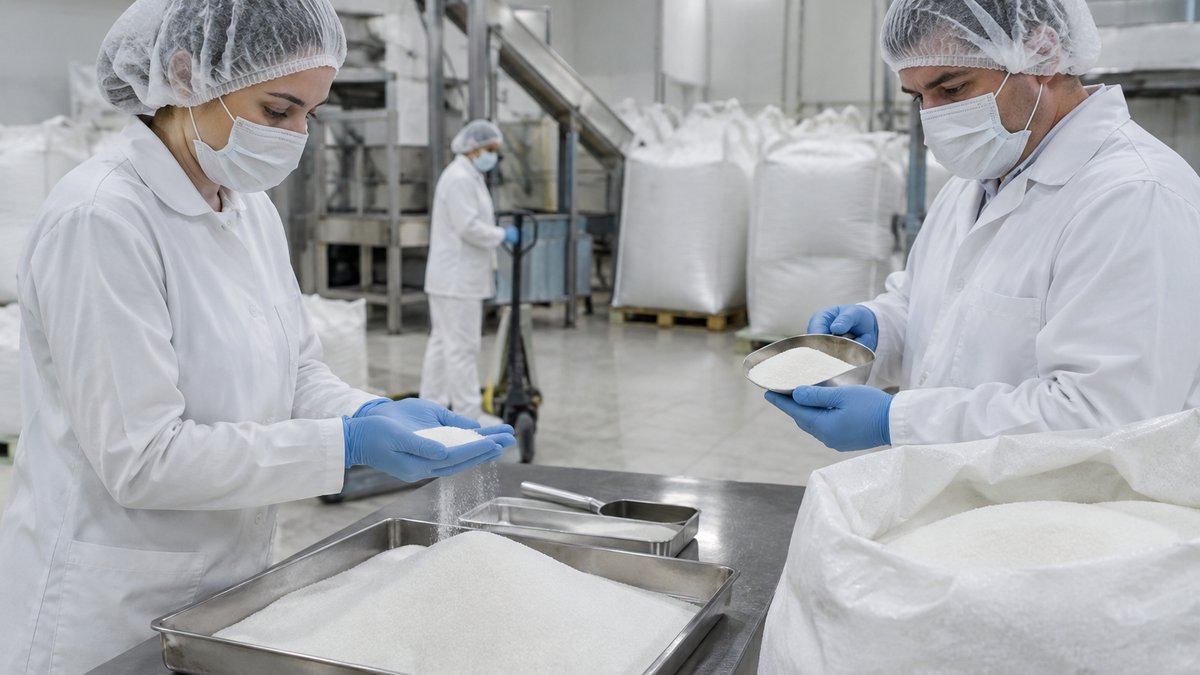
The request descriptions include ICUMSA 45 sugar, refined white sugar, granulated sugar, a request for white and brown refined sugar, and white sugar in a one-kilogram bag. ICUMSA is a method-based color scale used in sugar specifications; when a buyer states an ICUMSA value, suppliers should confirm the exact test basis and whether the buyer requires a certificate or test report. The records do not all give a comparable grade or full technical specification, so the product names alone are not enough to confirm equivalence.
Four requests include specifications, according to the Freshdi records. Their stated details include color, texture, grade, shelf life, solubility, purity, ash by conductivity, application and ICUMSA rating. The entries do not establish one shared specification across the requests. A supplier should map each stated requirement to its own product specification sheet and identify any missing tolerance, test method or document before confirming compliance.
Three requests state packaging. The packaging entries include PP bags in specified sizes, PP or PE bags, a brief entry of “50,” and options that also mention special packaging for sugar cubes. These descriptions are not equivalent packaging instructions. Confirm bag material, net weight, inner liner, sewing or sealing method, pallet configuration and labeling requirements. Where the record only says “50,” ask the buyer to confirm what that number refers to.
Trade terms are stated in seven requests: two FOB, two CFR, two CIF and one DAP. One request leaves the term unspecified. Payment terms are stated as T/T in four requests, L/C in two, another term in one, and not specified in one. FOB, CFR, CIF and DAP assign different responsibilities for carriage, insurance and delivery. For any quotation, agree on the named place or port and the applicable Incoterms rule; a three-letter term without a precise named location may not settle the shipment scope.
All eight requests contain a target-price field, but the records do not provide a complete, comparable quotation basis across them. Some entries show USD without a numeric amount; others show a number without stating a price unit in the record. One entry states a zero amount. These fields should not be treated as verified market prices or compared as if they share a unit, grade, delivery basis and date.
3. What the requests mean for white sugar suppliers
The requests call for different products and shipment sizes, so a supplier should first match the requested sugar form and specification to available stock. A request for ICUMSA 45 is more specific than a generic white-sugar request, while a request for granulated sugar intended for food, beverage, bakery and confectionery use also names an application. Suppliers should quote only the grade and form supported by their product documents and current production or stock.
Quantity deserves an independent check before a supplier calculates production, packaging or freight. One request states 60,000 MT in its headline quantity but 42,500 pounds in a separate specification. Those figures are not the same quantity basis. Another request states 1,000 bags without a bag weight in the quantity field. Ask the buyer to confirm the intended total and unit before reserving product or offering a total price. Report the buyer’s units as written until the buyer clarifies them.
Destination and origin details also need review. The requests include destination entries naming Somalia, Lomé in Togo, Chittagong in Bangladesh, Hangzhou in China, New York or Newark in the United States, Port Victoria in Seychelles and Everglades. Buyer country and destination are separate fields: for example, some request records name a buyer country that differs from the listed destination. Keep both fields distinct and confirm the final discharge point, port, country and consignee requirements before costing transport.
Two requests specify Brazil as the requested origin. That statement identifies the origin sought in those requests; it does not show that every supplier from Brazil can meet the buyer’s grade, volume, timing or documentation requirements. Suppliers from other origins should not assume the buyer will accept a substitute. If the buyer is open to alternatives, obtain written confirmation before preparing an offer on a different origin.
Five requests are marked as verified requests in the supplied Freshdi data. Verification status is a record attribute, not a guarantee of a transaction, payment or buyer response. Suppliers still need to check the request’s current status and conduct their own commercial due diligence before committing inventory, credit or freight.
Buying consideration: Before quoting, prepare a line-by-line response covering sugar type, grade, ICUMSA or other test basis where specified, quantity and unit, bag format, origin, available shipment period, destination, Incoterm with named place, payment method and required documents. Mark any item that remains unconfirmed instead of filling it with an assumption.
4. How suppliers can use Freshdi to review buyer requests
Freshdi gives suppliers a place to review the white sugar requests covered here and compare each request with their own export capability. The request records show the buyer-stated product, quantity, destination and commercial details; they do not certify that a supplier can meet those terms or that a purchase will follow. Suppliers can browse white sugar buying requests and assess fit using the details actually stated.
A practical review starts with product identity and quantity. Check whether the buyer wants refined white sugar, a named ICUMSA value, granulated sugar or retail packs. Then confirm whether the quantity is a total order or a per-product amount, what unit applies, and whether packaging is included in the requirement. If the request contains conflicting or incomplete values, request clarification before calculating a quotation.
Next, review the route and commercial basis. Confirm the destination port and country, the agreed Incoterms rule and named place, and whether the supplier or buyer arranges freight and insurance. For a payment term such as T/T or L/C, confirm timing, required documents, currency and any conditions in the contract. The request entry alone may not provide enough information to price those obligations.
Suppliers can compare their specification documents with buyer-stated requirements and prepare an offer that separates confirmed terms from proposed terms. For example, if a buyer requests a specific ICUMSA rating but does not state a test document, the supplier can state the rating supported by its report and ask whether that report meets the buyer’s needs. Likewise, a supplier should state a bag size only when it can supply that format.
Suppliers can also browse white sugar suppliers to review relevant marketplace listings. Keep company and product information consistent with actual capacity, origin, packaging and certificates. A complete listing helps buyers understand what is available, while each RFQ still requires a separate check against its quantity, destination and commercial conditions.
The eight requests were posted from 22 October to 12 November 2026, and their details may change after publication. Check the live request page before allocating stock or sending a final offer. Freshdi is the place to find and review the buying requests discussed here.
Suppliers who have confirmed their product and shipment fit can use Freshdi’s Find Buyers page to continue reviewing relevant requests.
View Latest Buying Requests for This Product →
Frequently Asked Questions
How many recent white sugar buying requests are included?
The Freshdi records contain eight requests posted between 22 October and 12 November 2026, from eight buyers. The records are a platform snapshot, not a count of all white sugar buyers or imports.
What should a supplier confirm when a request states ICUMSA 45?
Confirm the product grade, the applicable test method and basis, the required tolerance, and whether the buyer needs a test report or other supporting document. Quote only the rating your product documentation supports.
How should suppliers handle a quantity that conflicts with another request detail?
Ask the buyer to confirm the intended quantity and unit before calculating production, packing or freight. One request states 60,000 MT as the quantity and 42,500 pounds in a separate specification. Keep the figures as stated until the buyer confirms which one governs.
Can suppliers compare the target prices shown in the requests?
Not reliably from the record fields alone. Some entries show USD without a numeric amount, and the numeric entries do not all state a comparable unit or delivery basis. Confirm currency, unit, grade, packaging, Incoterm and named place before making a comparison.
What details should a white sugar quotation include?
State the sugar type and grade, supported specification or test basis, quantity and unit, packaging, origin, price currency and unit, shipment period, Incoterm and named place, payment terms and quotation validity. Identify proposed terms separately from details the buyer has confirmed.
How can suppliers find white sugar buying requests on Freshdi?
Suppliers can open Freshdi’s white sugar buying-request category and review each listing’s product, quantity, destination and commercial details. Check the live request before quoting because the information or status may change.
References
1. USDA Foreign Agricultural Service – Sugar: World Markets and Trade, May 2026.
2. USDA Foreign Agricultural Service – Data and Analysis, Sugar: World Markets and Trade release listing, November 17, 2026.
Disclaimer: This article is compiled from platform data, public sources and information provided by third parties, for general informational purposes only. We do not guarantee its accuracy or completeness. Mentions and rankings of suppliers do not constitute an endorsement or guarantee, and strategies and examples are illustrative; results may vary. Please conduct your own due diligence before making business decisions.