
Introduction
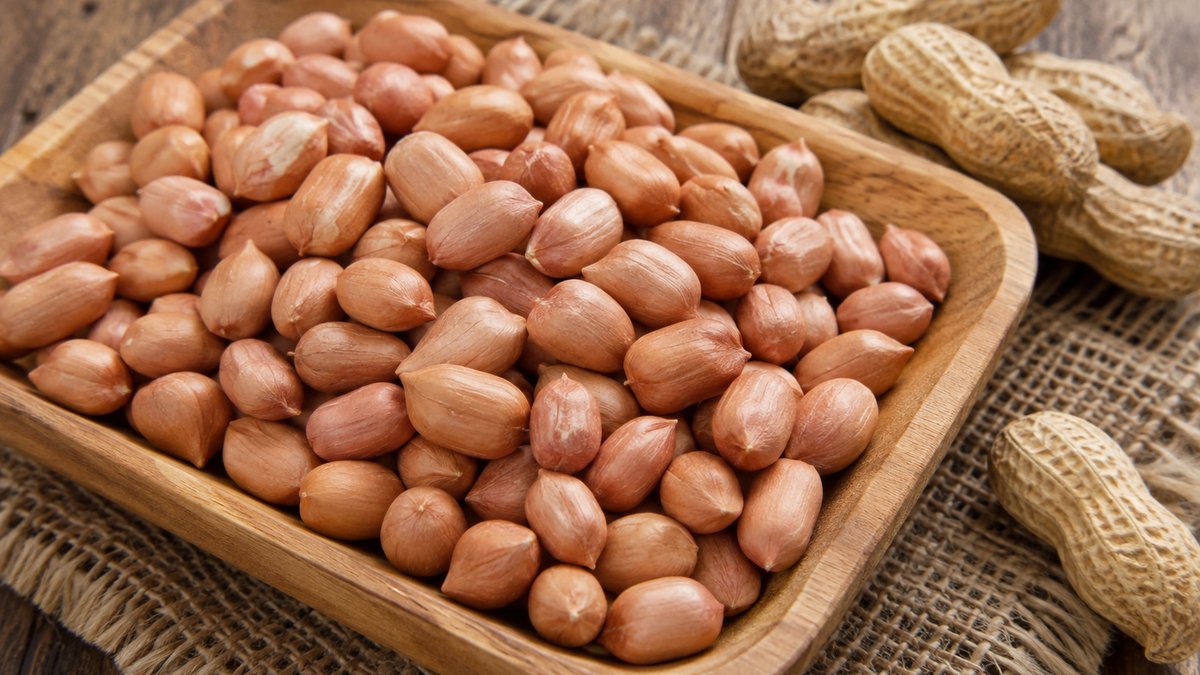
The latest available benchmark for peanuts delivered to Northwest Europe was US$1,600 per metric tonne in October 2026. The World Bank series covers US 40/50 runner peanuts on a CFR Northwest Europe basis, so it is a regional reference rather than a Germany-specific quotation.
Germany imported 176,000 tonnes of groundnuts in 2025. The Netherlands and Argentina were the largest individual suppliers, according to the Centre for the Promotion of Imports from developing countries (CBI). This update uses October 2026 for the latest benchmark and 2025 for the most recent German supplier breakdown found. The two periods and measures are not directly interchangeable.
Key Takeaways
- The World Bank’s US 40/50 runner peanut benchmark for CFR Northwest Europe was US$1,600/MT in October 2026, up 2.4% from September and 33.3% from October 2025. It is not a Germany-specific offer.
- Germany imported 176,000 tonnes of groundnuts in 2025. The Netherlands supplied 32% and Argentina 31%, according to CBI.
- The available evidence does not provide current, like-for-like quotations by exporting origin for delivery to Germany. Buyers should compare quotations against the same count, quality limits, shipment window and Incoterm.
- USDA’s September 2026 outlook described ample US peanut supplies and forecast a 2026/27 farm price of 24 cents per pound. That is a US farm-price forecast, not an export quotation for Germany.
- Buyers should calculate landed cost using the quoted delivery basis and shipment details. Suppliers should state the grade, count, origin, quantity, loading port and quotation validity.
1. Germany’s peanut market and the October price reference
The October 2026 reference price for peanuts in the Northwest Europe market was US$1,600 per metric tonne, according to the World Bank series republished by Agri.Markets. The series specifies US 40/50 runner peanuts, CFR Northwest Europe. CFR means the seller pays freight to the named destination port; the buyer generally arranges insurance. The benchmark is a regional indicator, not a delivered quote for a particular German buyer.
The benchmark rose 2.4% from September 2026 and 33.3% from October 2025. It is the latest monthly figure located for this update, written on 14 November 2026. It does not establish prices for other peanut counts, origins, packaging or contract terms.
Germany’s trade data gives a different view. CBI reports that German groundnut imports reached 176,000 tonnes in 2025. The latest benchmark and the annual import figure describe different periods and measures: one is a price reference for a specified runner grade and delivery basis, while the other covers national imports across groundnut categories.
Looking to Source Peanut?
Connect with verified suppliers, discover matching products, and explore sourcing opportunities from global markets.
2. Market overview: supply, demand and Germany’s position
Germany is one of Europe’s largest groundnut markets, with demand from a substantial food-processing sector. CBI reports that apparent German consumption was 128,832 tonnes in 2025, down from 130,565 tonnes in 2021. German imports grew by an average of 0.4% per year from 2021 to 2025.
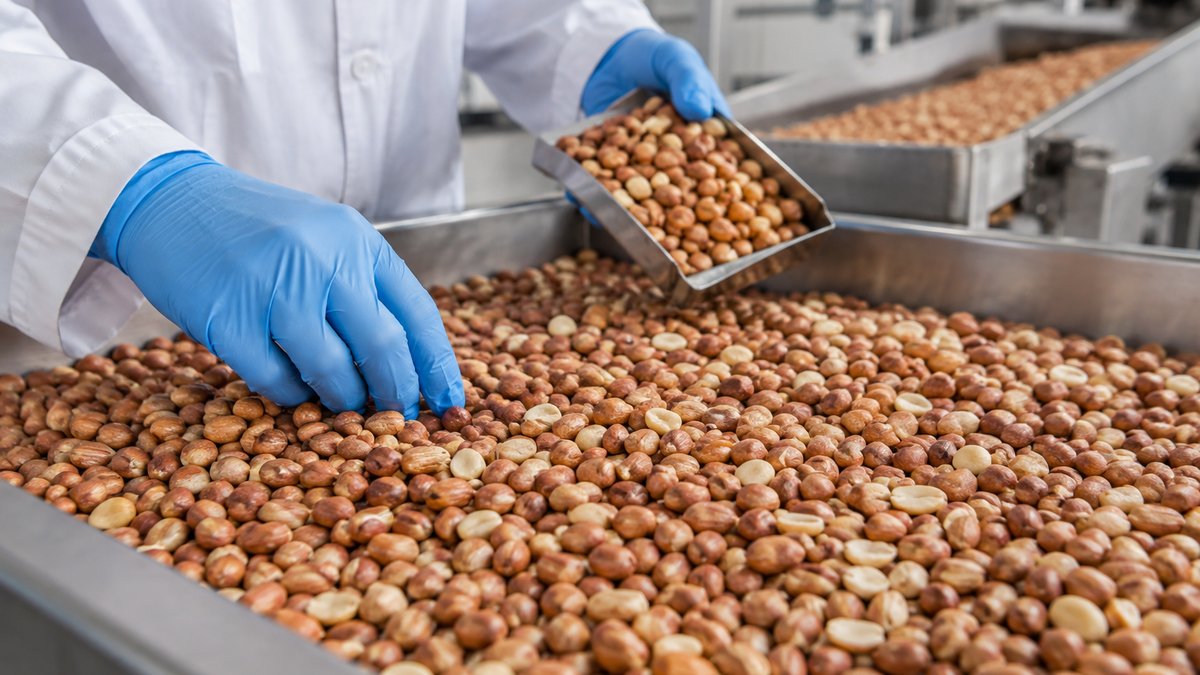
The Netherlands is both a supplier to Germany and a European trade hub. In 2025 it supplied 32% of German groundnut imports, while Argentina supplied 31%. The United States and India each accounted for 6%; Egypt supplied 5%, and Luxembourg 4%. CBI reports these as supplier shares, not shares of a single peanut grade or contract basis.
Europe’s trade also includes processing and re-export. CBI reports that European imports of shelled raw groundnuts were worth €1.4 billion in 2025, with Argentina the largest supplier by value. The Netherlands imported 393,000 tonnes of groundnuts that year and re-exported 67% of its imports to other European markets. Its large share of German supply therefore includes goods moving through a regional trade hub.
CBI projected European groundnut market growth of 3% by volume and 5% by value over 2025 to 2028. These are forecasts, not confirmed orders. Germany’s 2025 import volume and supplier shares are recorded trade data; they do not show current demand from individual buyers.
3. Latest peanut prices for Germany and Northwest Europe
3.1 Current regional benchmark and German market scope
The latest price reference found is US$1,600/MT for US 40/50 runner peanuts, CFR Northwest Europe, in October 2026. Agri.Markets attributes the monthly series to the World Bank. The benchmark increased 2.4% month on month and 33.3% year on year. Buyers in Germany can use it as a regional point of reference, but should not treat it as a current supplier offer or a German customs unit value.
No recent, publicly available Germany-specific quotation series with a matching grade, unit and delivery basis was found for this update. Nor did the sources provide current origin-by-origin offers on equivalent terms. An origin comparison based on unlike grades or delivery conditions would give buyers a misleading price ranking.
3.2 Price comparison by exporting origin
The available Germany supplier data shows where groundnuts came from in 2025, but it does not provide a current, like-for-like quotation for each origin. The supplier shares below can guide sourcing inquiries; they are not price comparisons.
The October benchmark covers US 40/50 runners on a CFR Northwest Europe basis, while the supplier shares cover Germany’s 2025 groundnut imports across categories. They should not be combined to claim that one origin was cheaper than another. Ask suppliers to quote the same count, kernel quality, crop or shipment period, packaging and delivery basis before comparing prices.
3.3 Price trend and reporting period
The World Bank benchmark’s 33.3% annual increase is a change in the same monthly reference series, not a forecast for German retail prices or every peanut grade. It also does not show the full cost of a German import shipment. Freight, insurance, handling, packaging, financing and applicable import costs can change the buyer’s landed cost.
4. Why peanut prices are changing
Supply, crop conditions and buyer demand affect peanut prices, but the available October benchmark does not attribute its monthly or annual change to a single cause. The USDA Economic Research Service’s September 2026 Oil Crops Outlook reported record US peanut production in marketing year 2025/26 and record ending stocks of 3.2 billion pounds. USDA forecast US supplies of 8.6 billion pounds for 2026/27, supported by high beginning stocks.
USDA forecast the US season-average farm price at 24 cents per pound for 2026/27, above the previous year but below the previous five-year average. This is a US farm-price forecast with a different basis and unit from the US$1,600/MT CFR Northwest Europe benchmark. It should not be used as a German import offer.
Weather and harvest updates can affect expected availability, while exchange rates and freight change the cost of moving a shipment. These factors need to be checked against dated origin-specific information and a supplier’s actual offer. The sources used here do not establish a particular weather event or freight change as the cause of the October benchmark movement.
Competition between origins also matters to German buyers because supply comes from the Netherlands, Argentina and other exporting countries. Supplier shares describe 2025 trade flows; they do not reveal current inventories, shipment slots or the price of an equivalent lot.
5. Which countries import the most peanuts?
5.1 Major importing markets and Germany’s position
The sources reviewed for this update establish Germany as one of Europe’s largest groundnut markets, but do not provide a reliable current ranking of the world’s largest importing countries. CBI reports 176,000 tonnes of German groundnut imports in 2025. The Netherlands imported 393,000 tonnes that year, partly reflecting its role as a processing and re-export hub.
CBI reported that European groundnut imports were expected to grow in value and volume over 2025 to 2028. That forecast describes a regional outlook, not confirmed German orders or a guaranteed increase in demand.
5.2 Main suppliers to Germany
The Netherlands and Argentina were the two largest individual suppliers to Germany in 2025, with 32% and 31% of imports respectively. The United States and India each supplied 6%, followed by Egypt at 5% and Luxembourg at 4%. These shares show the recent origin mix, not the current share of buyers’ inquiries or current supply availability.
Dutch exports of groundnuts to Germany reached 96,247 tonnes in 2025, according to CBI. The Netherlands’ role as a transit and re-export market means the supplier country recorded in trade data may differ from the crop’s growing origin. Buyers should confirm both country of dispatch and country of origin in the contract and supporting documents.
5.3 What import demand means for exporters
Germany’s import volume and supplier mix make it a relevant market for exporters able to meet buyer specifications and applicable EU requirements. A national import total does not establish demand for a particular grade, crop year, pack size or shipment month. Exporters should check the target buyer’s specification and avoid treating regional forecasts as purchase commitments.
6. How buyers can compare peanut quotations
A competitive peanut offer is the one that meets the buyer’s specification at a workable landed cost. Compare quotations for the same product form and count, with matching quality tolerances, shipment period, quantity and delivery basis.
- Confirm whether the goods are shelled kernels or in-shell peanuts, and specify the runner count or other grade required.
- Set measurable quality limits, such as moisture, foreign matter, damaged kernels and aflatoxin requirements, where applicable to the product and destination.
- Compare the same quantity, packaging and shipment window. A bulk shipment and a retail-ready pack do not have the same cost structure.
- Check the named port and Incoterm. For a CFR offer, verify the destination port and clarify who arranges insurance; for CIF, confirm the included insurance scope.
- Add freight, insurance, destination handling and other applicable charges when comparing delivered cost. Check EU and German import requirements for the product form and shipment.
- Ask the supplier to state origin, loading port, availability, payment terms and quotation validity in writing.
Buying consideration: Use the US$1,600/MT October benchmark only as a reference for US 40/50 runners on CFR Northwest Europe terms. Obtain dated quotations for the actual grade and German destination before setting a purchase budget.
Buyers preparing a matched specification can review potential peanut suppliers before requesting comparable quotations.
View Related Suppliers for This Product →
7. Freshdi peanut buying requests
No Freshdi buying-request data was supplied for this article, so there are no request counts, buyer destinations or buyer specifications to report. The 2025 German import figures above come from CBI and describe national trade, not Freshdi activity.
A buyer request is useful for a supplier only when the product, quantity, destination, required documents and delivery terms fit the supplier’s offer. Suppliers should review each request’s stated requirements before preparing a quotation; this article cannot establish how many current requests match German peanut shipments.
8. Practical steps for buyers and suppliers
8.1 For buyers and importers
- Write one specification for all suppliers, including product form, count, quality limits, packaging, quantity and shipment window.
- Request quotations on the same delivery basis and to the same destination port. Ask suppliers to date the quotation and state how long it remains valid.
- Compare landed cost rather than headline price. Keep the October regional benchmark separate from current offers and from annual customs statistics.
- Confirm origin, product documentation and applicable EU import requirements before contracting.
- Check samples, inspection arrangements and contract tolerances against the specification.
8.2 For exporters and suppliers
- State peanut form, count or grade, crop or shipment period, quantity and packaging in the offer.
- Identify the country of origin and loading port, and name the Incoterm and destination port clearly.
- Date each quotation and include its currency, payment terms and validity period.
- Keep product listings current and ensure any certificate or capability claim is supported by current documentation.
- Review relevant buying requests and respond with a quotation only when the product and shipment terms match the buyer’s stated needs.
9. How Freshdi helps buyers and suppliers connect
Freshdi provides product pages where buyers can review potential suppliers and suppliers can review buying requests. A listing or request is a starting point for assessing fit; it does not confirm a supplier’s availability, a buyer’s current demand or a completed transaction.
Buyers can browse peanut suppliers and check product details against their sourcing specification. Suppliers can review peanut buying requests and assess whether the requested quantity, destination and terms match their offer.
Once buyers have settled the peanut grade and delivery basis, they can review current sourcing options and related buying requests.
View Latest Bean, Nut & Seed Buying Requests →View Potential Bean, Nut & Seed Suppliers →
10. Conclusion: Peanut market outlook for Germany
The latest benchmark found for this update was US$1,600/MT for US 40/50 runner peanuts, CFR Northwest Europe, in October 2026. The reference was up 2.4% from September and 33.3% year on year, but it is not a Germany-specific quotation. Germany imported 176,000 tonnes of groundnuts in 2025, with the Netherlands and Argentina as its leading individual suppliers.
Buyers should request current, grade-specific offers and compare them on the same delivery basis. Exporters should state origin, quality, quantity, shipment terms and quote validity. Freshdi’s peanut supplier listings provide a place to review potential suppliers for the category.
Buyers and suppliers can use Freshdi to review peanut sourcing options and relevant buying requests.
View Latest Bean, Nut & Seed Buying Requests →View Potential Bean, Nut & Seed Suppliers →
Frequently Asked Questions
What was the latest peanut price reference for Germany?
The latest figure found was the October 2026 World Bank benchmark, republished by Agri.Markets: US$1,600 per metric tonne for US 40/50 runner peanuts, CFR Northwest Europe. It is a regional benchmark, not a Germany-specific supplier offer.
Did the Northwest Europe peanut benchmark rise in October 2026?
Yes. The benchmark was up 2.4% from September 2026 and 33.3% from October 2025. Those changes apply to the same US 40/50 runner, CFR Northwest Europe series.
Which countries supplied Germany with the most groundnuts?
CBI reports that the Netherlands supplied 32% of German groundnut imports in 2025 and Argentina supplied 31%. The United States and India each supplied 6%, followed by Egypt at 5%. The figures cover the reported groundnut category, not a single grade.
Why can’t I compare the benchmark directly with a supplier’s offer?
The benchmark specifies US 40/50 runner peanuts and CFR Northwest Europe. A supplier may quote another count, origin, packaging, shipment date or delivery term. Compare offers only after matching those details and calculating the cost to the German destination.
What should a peanut quotation for Germany state?
It should identify the product form, count or grade, quality limits, quantity, packaging, origin, loading port, destination port, Incoterm, currency, payment terms, shipment timing and quotation validity. Buyers should also check applicable import requirements and required documents.
Where can buyers find peanut suppliers or buying requests on Freshdi?
Buyers can browse the peanut supplier category on Freshdi. Suppliers can review peanut buying requests and assess whether the stated product, quantity, destination and terms match their offer. A listing or request does not guarantee a transaction.
References
1. World Bank, republished by Agri.Markets – Groundnut (Peanut) Price, October 2026 monthly data; accessed 14 November 2026.
2. Centre for the Promotion of Imports from developing countries (CBI) – The European market potential for groundnuts, 2026.
3. USDA Economic Research Service – Oil Crops Outlook: September 2026, September 2026.
Disclaimer: This article is compiled from platform data, public sources and information provided by third parties, for general informational purposes only. We do not guarantee its accuracy or completeness. Prices, volumes and forecasts are indicative, reflect conditions as of 2026-11-14 and may change without notice. This is not financial, investment or trading advice.