
Introduction
Vietnamese soybean buyers can use export-origin quotations as reference points, but they are not delivered prices at Vietnamese ports. On 19 November 2026, daily FOB benchmarks for soybeans were US$499.50 per metric tonne from the United States at NOLA, US$508 from Brazil and US$487 from Argentina, according to CommodityScope.
This November update compares those dated origin benchmarks with USDA market commentary and Vietnam trade information. The prices are indicative FOB references, not offers to buyers in Vietnam. Freight, insurance, port charges, product specifications and shipment timing change the cost of an actual purchase.
Key Takeaways
- On 19 November 2026, daily FOB soybean benchmarks were US$487/MT for Argentina, US$499.50/MT for the United States at NOLA and US$508/MT for Brazil. The series do not state matching grade specifications, so the figures are indicative comparisons.
- Each of the three daily benchmarks rose from 18 November: US$4.75/MT for Argentina, US$5.75/MT for the United States and US$6.75/MT for Brazil.
- USDA reported that export prices had declined over the month through 4 November as the U.S. harvest and Brazilian planting progressed without major issues. That report period ends before the 19 November daily quotations.
- USDA FAS forecast Vietnam's soybean imports at 3.8 million tonnes for MY 2025/26 and 4 million tonnes for MY 2026/27, citing additional crushing capacity.
- Buyers should compare full specifications and landed cost. Suppliers should date quotations and state grade, origin, loading port, Incoterm, quantity and validity.
1. Vietnam's soybean market depends on imported supply
Vietnam relies on imported soybeans to supply crushing and food-processing businesses. USDA's Foreign Agricultural Service forecast imports of 3.8 million tonnes in marketing year 2025/26 and 4 million tonnes in 2026/27. These are USDA FAS estimates, not completed customs totals.
The same October 2026 USDA FAS update linked the higher import outlook to newly launched crushing capacity. Crushing turns soybeans into soybean meal and oil. Buyers planning raw-bean purchases should therefore track processor requirements and shipment windows, as well as the futures market.
Vietnam's import suppliers include major soybean origins in the Americas. World Bank WITS data for 2025 records the United States, Brazil and Canada among the leading exporters of soybeans to Vietnam by reported trade value and quantity. The figures cover calendar-year trade, while USDA's import forecasts use marketing years, so the two measures should not be combined as if they shared a reporting period.
The latest global price context available in USDA's November 2026 Oilseeds: World Markets and Trade report covers export prices through 4 November. USDA said prices had declined over the preceding month as the U.S. harvest and Brazilian planting progressed without major issues. The report also noted that Brazil retained a seasonal premium over U.S. origin, with the gap narrowing as the Brazilian real depreciated after late-October elections.
The 19 November daily benchmarks show a later one-day increase for all three origins. That movement does not establish a sustained trend or a Vietnam delivered price. Global production, harvest progress and currency movements inform export offers, while a Vietnamese buyer's final cost also depends on shipment terms, freight and destination charges.
Looking to Source Soybean?
Connect with verified suppliers, discover matching products, and explore sourcing opportunities from global markets.
2. Latest soybean export prices relevant to Vietnam
2.1 Current export price benchmarks
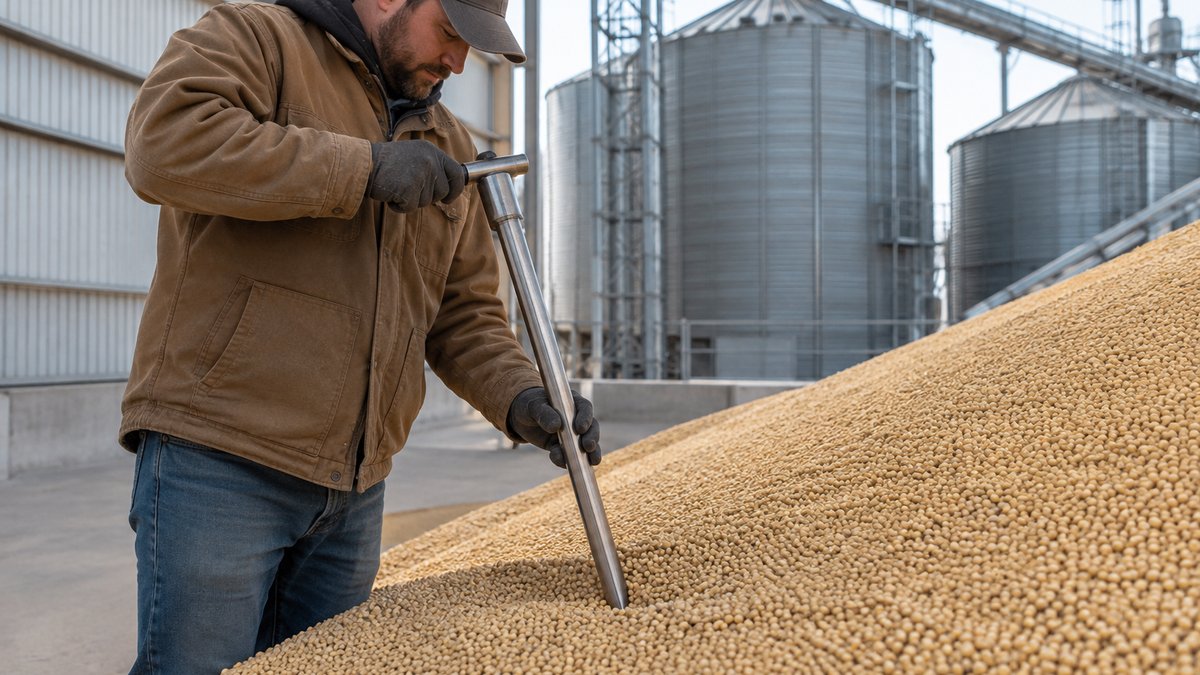
CommodityScope's daily FOB series dated 19 November 2026 place Brazilian soybeans at US$508/MT, U.S. soybeans at US$499.50/MT FOB NOLA and Argentine soybeans at US$487/MT FOB Argentina. These are origin export benchmarks in U.S. dollars per metric tonne, not CIF or CFR quotations for Vietnam.
The benchmark source does not give a shared grade or full product specification for these daily series. Buyers should treat the comparison as a price reference, not proof that the beans are interchangeable. Confirm origin, crop year, moisture, foreign matter, protein or other contract parameters, and shipment availability with each seller.
Vietnam import statistics offer a different measure. A January 2026 report based on Vietnam customs data put the average price of soybean imports from Brazil at US$494.02/tonne. That is a historical customs-derived unit value for one origin and month, not a November quotation and not directly comparable with an FOB benchmark.
2.2 Price comparison by exporting origin
On 19 November, the listed Brazilian FOB benchmark was US$21.50/MT above the U.S. benchmark and US$21/MT above Argentina's. The U.S. benchmark was US$12.50/MT above Argentina's. These arithmetic differences compare published benchmark values only; unspecified grade and contract details limit their use in supplier selection.
The benchmark series use the same currency, unit and assessment date, but their named loading locations differ. A buyer should request quotations on the same delivery basis and for the same specification before treating one origin as cheaper. A price at FOB NOLA cannot be compared directly with a CIF Vietnam offer without accounting for ocean freight, insurance and destination costs.
2.3 Price trend and recent changes
The daily series rose on 19 November compared with 18 November, but the USDA report describes a broader decline over the month through 4 November. Those observations cover different date windows. USDA attributed the earlier easing to progress in the U.S. harvest and Brazilian planting, while its report noted that Brazil's seasonal premium over U.S. soybeans had narrowed.
A one-day change does not replace the wider trend or establish the price available for a particular Vietnamese shipment. Buyers comparing offers should record the quotation date, expiry, loading period and delivery basis, then refresh the comparison when any of those terms change.
3. Supply, demand and currency movements shape export prices
U.S. harvest progress and Brazilian planting were the main supply developments cited in USDA's November report. USDA said both were proceeding without major issues during the period covered, accompanying a decline in export prices over the preceding month. The report's price chart ends on 4 November, so it does not explain every movement in later November quotations.
Currency movements can alter an export origin's offer in U.S. dollars. USDA noted that a depreciating Brazilian real helped narrow Brazil's seasonal price premium over U.S. soybeans after late-October elections. Buyers should compare dated offers rather than assume that a currency movement produces a fixed price change for every shipment.
Vietnamese demand is connected to domestic crushing capacity. USDA FAS raised its import forecast for MY 2025/26 and projected further growth in MY 2026/27, citing new crushing lines. The forecast indicates expected import demand, not confirmed purchases by individual processors.
Export competition also depends on the timing of crops and shipments from different origins. The 19 November benchmarks put Brazil above the U.S. and Argentina, while the USDA commentary describes an earlier month in which Brazil's premium narrowed. These are dated observations, not a price forecast.
Freight, insurance, exchange rates, port capacity and shipment timing affect a Vietnamese buyer's landed cost. Public FOB benchmarks do not include those destination-specific costs. Requesting the same shipment quantity, specification and destination basis from each supplier gives the buyer a more useful comparison.
4. Vietnam and other markets import soybeans for processing
4.1 Global importing markets
Soybean-import rankings depend on the marketing year and whether the measure is forecast or recorded trade. The sources used for this November price snapshot provide a Vietnam import forecast and selected exporter-to-Vietnam trade data, but they do not provide a consistent, current ranking of all global importing countries. No global ranking is included here.
For Vietnam, USDA FAS forecasts imports at 3.8 million tonnes in MY 2025/26 and 4 million tonnes in MY 2026/27. Those figures describe a national forecast, not a confirmed volume of buyer orders. They also differ in scope from customs data reported by calendar month.
4.2 Vietnam's main export origins
World Bank WITS trade data for calendar year 2025 lists the United States, Brazil and Canada among the leading soybean exporters to Vietnam. The reported quantities were 1,389,320 tonnes from the United States, 1,235,320 tonnes from Brazil and 189,899 tonnes from Canada. These trade figures are historical and should not be read as November 2026 supplier shares.
The annual trade data and the USDA marketing-year forecast answer different questions. WITS records reported 2025 trade by partner; USDA's forecast estimates Vietnam's total imports over marketing years. Buyers should keep those periods distinct when planning origin diversification.
4.3 What import demand means for exporters
The USDA forecast points to continued Vietnamese import requirements alongside expanding crush capacity. Exporters considering this market should establish whether their beans match a processor's intended use and specification before quoting. A national forecast does not confirm a buyer's order, contract timing or required origin.
Suppliers should state crop year, available quantity, shipment window, loading port and quality parameters in the offer. Buyers can then assess whether the quotation fits a real procurement requirement instead of relying on broad import forecasts.
5. Compare delivered cost, not FOB prices alone
An FOB benchmark excludes costs that arise after the goods leave the named export point. To compare soybean offers for Vietnam, buyers should request quotations on a common basis, such as FOB for each origin or a named CFR or CIF destination, and then list any charges that remain outside the quotation.
- Match the product specification, including grade, crop year and agreed quality limits.
- Set the same quantity, bagging or bulk format, loading window and destination port for every quote.
- Check whether each price is FOB, CFR or CIF. CFR includes cost and freight to the named destination; CIF also includes insurance.
- Add freight, insurance and destination charges when those items are not included in the quoted price.
- Confirm documentation, inspection arrangements, payment terms and quotation validity before comparing the total.
A lower FOB number may produce a higher delivered cost if freight, insurance or destination charges differ. A higher benchmark may also reflect a different specification or shipment window. The price table is a starting reference; supplier quotations must establish the commercial terms for a particular purchase.
Buying consideration: Ask each supplier to quote against the same written specification and Vietnamese destination, then compare the full cost and shipment schedule.
6. Freshdi demand should be checked at request level
The market figures in this update describe trade benchmarks, customs data and USDA forecasts. They do not measure current soybean buying requests on Freshdi. No dated November RFQ count or request-level dataset is used here, so this update makes no claim about Freshdi request volume, buyer quantities or preferred specifications.
A supplier reviewing soybean requests should assess each request by product form, quantity, destination, delivery terms and stated quality requirements. A national import forecast is not a substitute for an individual buyer's requirements, and a platform listing is not evidence that a transaction will proceed.
Buyers can also use supplier listings as a starting point for gathering quotations, then verify origin, specifications, available volume and delivery terms directly through the information presented on Freshdi.
7. Practical steps for buyers and exporters
7.1 For buyers and importers
- Set the soybean specification, quantity, destination port and shipment window before requesting offers.
- Ask suppliers from different origins to quote on the same Incoterm and currency basis.
- Record the date and validity period of each quotation. The 19 November benchmarks are dated references, not standing prices.
- Calculate landed cost by adding charges excluded from each offer.
- Check import documentation and applicable Vietnamese requirements for the specific product and shipment before signing the contract.
7.2 For exporters and suppliers
- Date each offer and state the quotation's validity period.
- Identify the origin, loading port, grade or specification, crop year and available quantity.
- Name the Incoterm and destination point where relevant, and state what the price includes.
- Give the expected shipment window and list the documents available for the shipment.
- Review each buying request against actual capacity and destination requirements before submitting a quotation.
Clear offer details let buyers separate price differences from differences in quality, timing or delivery basis. Suppliers can use the same information to avoid sending quotations that do not fit the requested shipment.
8. Find soybean suppliers and buying requests on Freshdi
Freshdi's soybean category lets buyers review potential suppliers and lets suppliers review buying requests. Buyers can view potential soybean suppliers and compare the product and commercial information shown in their listings.
Suppliers can review soybean buying requests and check whether a request matches their origin, quantity and shipment terms. A listing or request is a place to identify possible trade requirements, not a guarantee of a completed deal.
Buyers and exporters comparing soybean requirements can review relevant listings and buying requests on Freshdi.
View Latest Grains, Cereal & Legumes Buying Requests →View Potential Grains, Cereal & Legumes Suppliers →
9. Soybean market outlook for Vietnam
The latest daily FOB benchmarks available for this update rose on 19 November, while USDA's November report described a decline over the month through 4 November. The dates and reporting windows differ, and neither measure is a Vietnam delivered quotation.
Vietnam's import outlook remains supported by USDA's forecast of higher soybean imports as new crushing capacity comes online. Buyers should compare fresh offers on a shared specification and landed-cost basis. Exporters should keep prices, quantities and shipment details current when responding to buyers.
Freshdi is a place to review potential soybean suppliers and buying requests relevant to sourcing.
Buyers preparing a Vietnam soybean inquiry can review related suppliers after setting the required grade, quantity and delivery terms.
View Related Suppliers for This Product →
Frequently Asked Questions
What were soybean export prices on 19 November 2026?
CommodityScope's daily FOB benchmarks were US$508/MT for Brazil, US$499.50/MT for U.S. soybeans at NOLA and US$487/MT for Argentina. These are origin benchmarks, not delivered prices in Vietnam, and the series do not state matching product specifications.
Are these Vietnam soybean import prices?
No. The 19 November figures are FOB export benchmarks at named origins. A January 2026 customs-based report put Brazil-origin soybean imports at an average US$494.02/tonne, but that is a historical monthly unit value, not a November quotation.
Why did soybean prices move in November?
USDA reported that export prices declined over the month through 4 November as the U.S. harvest and Brazilian planting progressed without major issues. CommodityScope's daily benchmarks then rose on 19 November compared with 18 November. These statements cover different dates and do not establish a longer-term direction.
Which countries supplied soybeans to Vietnam?
World Bank WITS data for 2025 lists the United States, Brazil and Canada among the leading soybean exporters to Vietnam. The reported quantities were 1,389,320 tonnes, 1,235,320 tonnes and 189,899 tonnes, respectively. Those are calendar-year figures, not November 2026 market shares.
How should buyers compare soybean quotations for Vietnam?
Compare offers for the same specification, quantity, shipment window, currency and delivery basis. Add freight, insurance and destination costs that are excluded from an FOB offer, and check documentation and applicable import requirements before contracting.
How can soybean suppliers find buying requests on Freshdi?
Suppliers can review soybean buying requests on Freshdi and check each request's stated product, quantity, destination and trade terms. They should respond only when the requested shipment matches their actual availability and offer.
References
1. USDA Foreign Agricultural Service – Oilseeds: World Markets and Trade, November 2026.
2. CommodityScope – Soybean Prices: Brazil, US Gulf and Argentina, 19 November 2026.
3. USDA Foreign Agricultural Service – Vietnam: Oilseeds and Products Update, October 2026.
4. World Bank – Soya Beans Exports to Vietnam, 2025, 2025 data.
5. Asemconnect Vietnam – Soybean Imports Increased Sharply in January 2026, 2026.
Disclaimer: This article is compiled from platform data, public sources and information provided by third parties, for general informational purposes only. We do not guarantee its accuracy or completeness. Prices, volumes and forecasts are indicative, reflect conditions as of 2026-11-21 and may change without notice. This is not financial, investment or trading advice.