
Introduction
Urea fertilizer buyers specify a range of order sizes, nitrogen content, product form, destination and commercial terms. Twelve urea-related buying requests posted on Freshdi from 19 October to 15 November 2026 provide a recent view of what those buyers stated.
The requests come from 12 buyers. They include single-product urea orders and one request that also lists other fertilizers. Quantities range from 30 MT to 50,000 MT as entered by buyers; destination and specification details vary, and some fields are incomplete or inconsistent. The requests describe this Freshdi sample, not total market demand. Suppliers can use them to assess product fit and prepare questions before quoting.
Key Takeaways
- Twelve buyers posted quantity-bearing urea requests on Freshdi between 19 October and 15 November 2026.
- Seven requests state a nitrogen-content specification; several identify 46% nitrogen, while others leave the product specification broad or use inconsistent fields.
- Requested quantities range from 30 MT to 50,000 MT as stated. Several requests do not clarify how a quantity should be divided across products or grades.
- Nine requests list CIF and five list FOB; one also lists EXW. Because buyers can state more than one term, these counts overlap.
- Price fields are not consistently comparable: the data includes USD entries, but does not consistently provide a price basis, unit, named delivery point or complete specification.
1. Global urea supply, fertilizer use and price conditions
The International Fertilizer Association estimated global urea output at 204.1 million tonnes in 2025, up 2% from 2024, and urea trade at 56 million tonnes, up 4%. These are estimates for urea product, not nitrogen nutrient content. IFA also forecast nitrogen nutrient use to grow 1.7% in 2025/26; that measure covers nitrogen fertilizer use, not urea alone.
FAO’s latest inorganic-fertilizer statistics, published on 30 July 2026, report 216 million tonnes of global inorganic-fertilizer production in 2024, measured by nutrient content. Nitrogen made up 57.7% of that output. FAO also reported 197 million tonnes of agricultural fertilizer use in 2024, including 115 million tonnes of nitrogen nutrients. These nutrient-based totals use a different measurement basis from IFA’s urea-product figures and should not be compared as though they measured the same thing.
Price conditions shifted during 2026. The World Bank’s October 2026 Commodity Markets Outlook says fertilizer prices are forecast to rise 14% over 2026 after an early-year urea price surge eased. This is a forecast for the fertilizer price group, not a urea quotation or a forecast for any particular destination. The World Bank’s November 2026 Pink Sheet includes monthly commodity prices through October 2026; a benchmark still needs its location, product basis and date checked before a supplier uses it in a quotation.
The Freshdi requests add a separate, platform-level view. They show buyers specifying quantities, delivery terms and, in some cases, 46% nitrogen, product form or packaging. They do not establish global import volumes, market shares or current transaction prices. Suppliers should treat the market figures as context and assess each request against its own stated destination, specification and commercial details.
Looking to Sell Urea Fertilizer?
Connect with verified buyers, receive relevant buying leads, and explore sourcing opportunities from global markets.
2. What the recent urea buying requests specify
The 12 requests were posted between 19 October and 15 November 2026, and all 12 include a quantity and a target-price currency field. Ten state a buyer country; destination entries range from named ports to country names or, in one request, a destination in a different country from the buyer’s stated country. The destination and buyer country are reported as entered.

Seven requests state a nitrogen-content specification. Several state 46% or a minimum of 46%; one describes a range of concentration entries, and some requests have no usable, specific nitrogen value in that field. Treat each specification as the buyer’s wording and confirm its intended basis before offering product.
2.1 Quantities and product scope
The stated quantities run from 30 MT in R6 to 50,000 MT in R11. Other requests include 50 MT, 100 tons, 400 tons, 500 tons, 1,000 tons, 5,000 metric units as written, 12,000 tons in two requests and 25,000 MT. The records use different quantity wording and units, so suppliers should confirm the required unit and shipment size before calculating availability or freight.
Most request titles focus on urea, but R9 also names triple superphosphate, muriate of potash and sulfate of potash. The 500-ton quantity in that request is not divided among the listed products. R8 gives a quantity as “5000 Metric,” without specifying the unit in that field. R11 states 50,000 MT and allows partial shipment in its specifications. These details need buyer confirmation before an offer is prepared.
2.2 Nitrogen, form and quality details
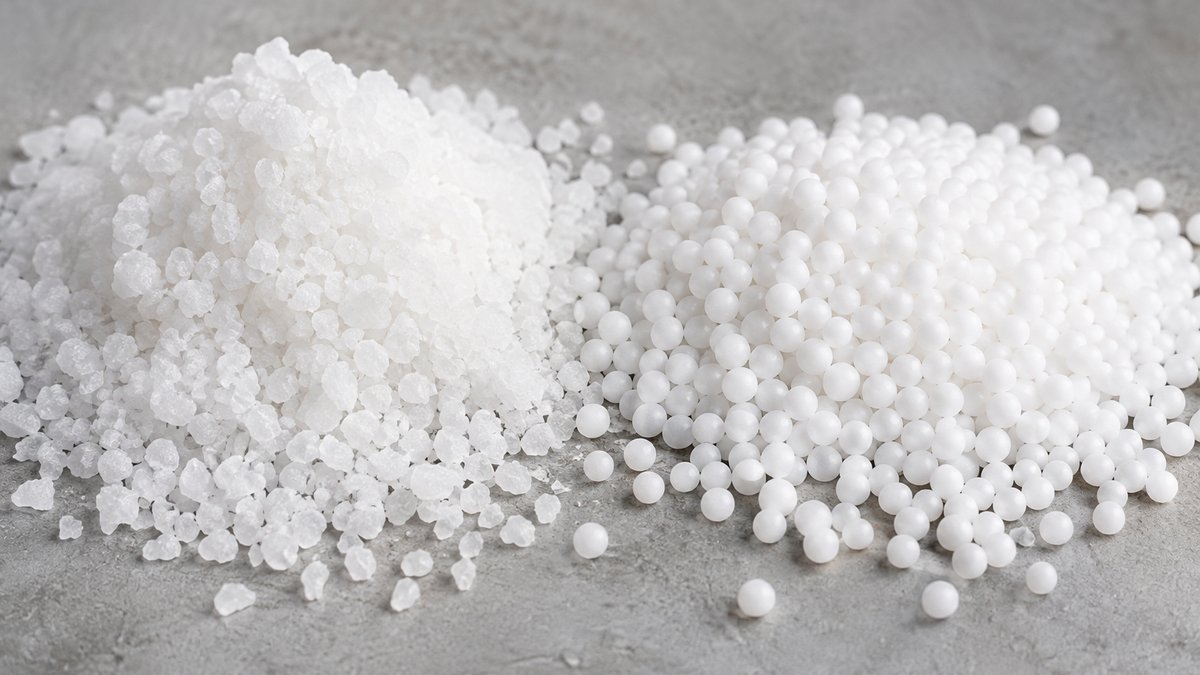
Several requests identify fertilizer-grade urea at 46% nitrogen. R1 and R7 also specify maximum moisture of 0.5% and maximum biuret of 1.0%, and ask for prilled and granular product. R6 states agricultural grade and a minimum nitrogen content of 46%. R11 accepts prilled or granular product, with the supplier to specify the form, and calls for an agricultural or fertilizer grade.
R5 lists 46% nitrogen, 99% purity, complete solubility and 2 mm to 4 mm granules. R4 names prilled form in one specification and granular urea in another. R8 and R10 include broad, mixed concentration and form entries. A supplier should quote against a confirmed specification rather than reconcile these fields by assumption.
Packaging is stated in five requests. Options include 50 kg polypropylene bags, 500 kg or 1 MT jumbo bags, bulk, 25 kg to 50 kg bags, and packaging to be agreed. R11 lists bulk vessel, 50 kg woven bags or 1 MT jumbo bags and asks the supplier to specify. The other seven requests do not state packaging in the packaging field.
2.3 Destinations, terms and payment
Destination entries include Santos, Brazil; Port of Lomé, Togo; Mombasa, Kenya; Ho Chi Minh City, Vietnam; Kandla Port, India; and country-only entries for Ghana, the Philippines, Brazil and Zambia. R12 names Quy Nhon, Vietnam as its destination while listing the buyer country as the Democratic Republic of the Congo. Suppliers should use each destination as stated and confirm the discharge point and importing party before costing delivery.
Nine requests list CIF and five list FOB; one also lists EXW. These counts overlap because some buyers selected multiple terms. R2 lists FOB in its trade-term field while its specifications mention FOB, CFR and CIF. R4 and R5 list both FOB and CIF. Confirm the governing Incoterms rule and named place before comparing offers or pricing transport.
Eight requests list T/T and six list L/C; those counts also overlap. One request each lists Money Gram, PayPal and W/U, while one uses the separate entry “TT.” The record counts do not establish that a payment method is acceptable to a supplier, secure or suitable for the transaction. Confirm the parties’ agreed payment instrument and documentary conditions independently.
2.4 Prices and certificates need clarification
The target-price field is present for all 12 requests, but its recorded value is USD. Some specifications separately include amounts such as USD 270, USD 300, USD 445 or USD 450. The requests do not consistently state whether these amounts are per tonne, which Incoterm or delivery point applies, or which grade and packaging they cover. They cannot be compared as like-for-like offers.
Three requests list certificates. Across those records, entries include a certificate of quality, test report, certificate of conformity, certificate of analysis and certificate of origin. R11 separately asks for loading-port inspection by SGS or an equivalent third party. Suppliers should verify the destination’s applicable import rules and confirm the buyer’s requested documents, inspection scope and timing before agreeing to supply.
Buying consideration: Before quoting, confirm the product grade, nitrogen and other quality limits, prilled or granular form, quantity and unit, packaging, destination point, Incoterm, payment terms, delivery schedule and documentary requirements. If a request lists conflicting terms or multiple products without a quantity split, ask for clarification first.
3. What these urea requests mean for suppliers
The requests point to a mix of sizeable bulk requirements and smaller orders, with many buyers naming 46% nitrogen. The sample also contains incomplete specifications and commercial fields that need clarification. A supplier’s response should distinguish confirmed capability from information still needed from the buyer.
- Match the stated product form and grade. If the buyer asks for 46% nitrogen, provide a product specification and supporting test documentation for the lot being offered.
- Quote a quantity the business can supply and state the unit. For combined fertilizer requests, provide separate quantities and prices by product only after the buyer confirms the requested split.
- Describe packaging in the buyer’s terms, including bag weight or bulk format. Confirm whether bagging, palletization or loading arrangements are included in the offer.
- Name the Incoterms rule and delivery point. Calculate freight and insurance only for a confirmed destination and delivery basis.
- Explain the price basis in the quotation: currency, unit, product grade, packaging, delivery term, named place and validity period. Do not treat a USD field without those details as a comparable price.
- List only certificates, inspections and shipment dates the supplier can provide. Confirm whether the buyer requires a certificate of analysis, certificate of origin, loading-port inspection or other documents.
A complete response also separates supplier-confirmed details from buyer decisions still pending. For example, the supplier can state its available form and packing options while asking the buyer to confirm the order’s quantity split, named port or conflicting delivery terms. That keeps the quotation tied to the actual request without filling in missing terms.
4. How suppliers can use Freshdi to find urea buyers
Suppliers can review the urea fertilizer buying requests on Freshdi and compare each request with the product, volume and delivery arrangements they can support. The 12 requests discussed here were posted from 19 October to 15 November 2026; their details are a dated snapshot, so check the individual request for its current status before preparing an offer.
Read the stated requirements first, then identify what needs confirmation. In this sample, that includes unclear quantity units, a combined multi-product order, differing trade-term entries and USD amounts without a consistent pricing basis. A request that appears to match a supplier’s product still needs a destination-specific quotation and the buyer’s confirmation of unresolved terms.
Suppliers can also make their Freshdi product information consistent with the offers they can actually fulfill. Include the product form, grade, nitrogen content, available packaging, minimum order quantity and export documentation only where those details are accurate. A quotation should then address the buyer’s stated destination, requested volume and commercial terms.
Suppliers comparing their available urea with current requests can browse the relevant buyer listings.
View Latest Buying Requests for This Product →
A practical response starts with a short list of confirmed facts: product specification, available quantity, packing, origin, delivery point, price basis and shipment timing. Add any required certificates or inspection arrangements that the supplier can document. Ask the buyer to resolve missing or inconsistent details before treating the quotation as final.
5. Urea fertilizer buying requests: supplier FAQs
These answers reflect the 12 Freshdi requests posted from 19 October to 15 November 2026 and the external market sources cited in this article. Buyers may set different requirements for other transactions.
6. Match the urea offer to the confirmed request
The recent requests range from 30 MT to 50,000 MT as stated and include a variety of destinations, packaging options and commercial terms. Many specify 46% nitrogen, while some leave product details broad or contain entries that require confirmation. Suppliers should verify the specification, quantity, destination, price basis, delivery term and payment conditions before sending a firm quotation.
Freshdi is a place to review relevant urea buying requests and compare their stated requirements with available supply. Check the live request details before responding, since the records in this snapshot were current as of 17 November 2026.
Suppliers ready to compare their current stock or production with urea requests can review the relevant Freshdi buyer listings.
View Latest Buying Requests for This Product →
Frequently Asked Questions
What nitrogen content do the recent urea requests specify?
Seven of the 12 requests state a nitrogen-content specification. Several request 46% nitrogen or a minimum of 46%. Other requests use broader or inconsistent entries, so suppliers should confirm the buyer’s intended specification before quoting.
What order quantities do the urea buyers request?
The stated quantities range from 30 MT to 50,000 MT. The records use varied wording and units, and some requests do not divide a combined quantity among products. Confirm the unit, total volume and any product-level allocation with the buyer.
Which trade terms appear in the requests?
Nine requests list CIF, five list FOB and one lists EXW. The counts overlap because some requests include more than one term. Confirm the governing rule and named place before calculating freight, insurance or the offer price.
Can I compare the target prices in these requests?
Not consistently. The target-price field records USD, and some specifications separately state amounts, but the requests do not consistently provide a unit, delivery basis, named place and matching product specification. Ask the buyer to confirm these details before comparing prices.
Which certificates do buyers mention?
Three requests list certificate requirements. Their entries include certificates of quality, analysis, conformity and origin, as well as a test report. One request also asks for loading-port inspection by SGS or an equivalent third party. Confirm the buyer’s exact documents and check destination requirements independently.
How should a supplier respond when an RFQ has conflicting or missing details?
Ask the buyer to confirm the missing or conflicting information before sending a firm quotation. Check the product form and grade, quantity and unit, packaging, destination, Incoterm and named place, payment terms, shipment timing and documents.
References
1. International Fertilizer Association – Fertilizer Outlook 2025–2029, January 2026.
2. Food and Agriculture Organization of the United Nations – Inorganic fertilizers. 2015–2024, 30 July 2026.
3. World Bank – Commodity Markets Outlook, October 2026, 28 October 2026.
4. World Bank – World Bank Commodities Price Data (The Pink Sheet), 3 November 2026.
5. Freshdi – Urea fertilizer buying requests posted 19 October to 15 November 2026; 12 requests from 12 buyers, as of 17 November 2026, 17 November 2026.
Disclaimer: This article is compiled from platform data, public sources and information provided by third parties, for general informational purposes only. We do not guarantee its accuracy or completeness. Mentions and rankings of suppliers do not constitute an endorsement or guarantee, and strategies and examples are illustrative; results may vary. Please conduct your own due diligence before making business decisions.