
Introduction
Yellow corn prices relevant to Philippine buyers moved across two different measures in the latest reported data. On 5 November 2026, the USDA’s global market report listed FOB corn export bids of US$201 per metric ton from Argentina, US$213 from Brazil and US$216 for U.S. No. 3 yellow corn at the Gulf. The Philippine Statistics Authority’s latest monthly figures put mature yellow corn at ₱19.84 per kilogram at farmgate in September 2026.
These are different stages of the supply chain, so they are reference points rather than directly comparable offers. This update focuses on the Philippines as the destination market, uses November 2026 as its reporting period, and draws on the latest available export bids and domestic price data. Buyers should confirm grade, shipment date, delivery basis and freight before comparing supplier quotations.
Key Takeaways
- On 5 November 2026, USDA reported FOB export bids of US$201/MT for Argentina, US$213/MT for Brazil and US$216/MT for U.S. No. 3 yellow corn at the Gulf.
- The Philippines’ September 2026 farmgate price for mature yellow corn was ₱19.84/kg, up 24.4% year on year, according to the Philippine Statistics Authority.
- USDA’s November 2026 Philippines update forecast 2.9 million metric tons of corn imports for marketing year 2026/27 and described sourcing as price-based.
- Argentina and Myanmar each accounted for about 27% of Philippine corn imports in MY 2025/26; the United States’ share rose to 18%, according to USDA FAS Manila.
- A FOB export bid and a Philippine farmgate price do not represent the same cost point. Compare like grades and delivery terms, then add freight, insurance, port charges and applicable import costs.
1. Philippine Yellow Corn Prices Reflect Both Import Offers and Local Farmgate Values
The latest available export references are dated 5 November 2026, while the latest monthly Philippine yellow corn prices cover September. USDA’s November Grain: World Markets and Trade report lists FOB export bids for selected origins. The Philippine Statistics Authority reports local farmgate prices, meaning the price received by farmers at the first point of sale.
The measures answer different questions. FOB bids are origin-port export references before ocean freight and destination costs. Farmgate prices describe local sales in the Philippines and do not include the cost of importing, moving or processing corn. Treating the figures as directly interchangeable would give buyers a misleading comparison.
For feed buyers, the market context includes import competition and domestic crop availability. USDA FAS Manila’s November 2026 update raised its forecast for Philippine corn imports in MY 2026/27 to 2.9 million metric tons. The forecast is an agency estimate, not a confirmed purchase total.
Looking to Source Yellow Corn?
Connect with verified suppliers, discover matching products, and explore sourcing opportunities from global markets.
2. Latest Corn Export Prices and Philippine Yellow Corn References
2.1 Export bids from competing origins
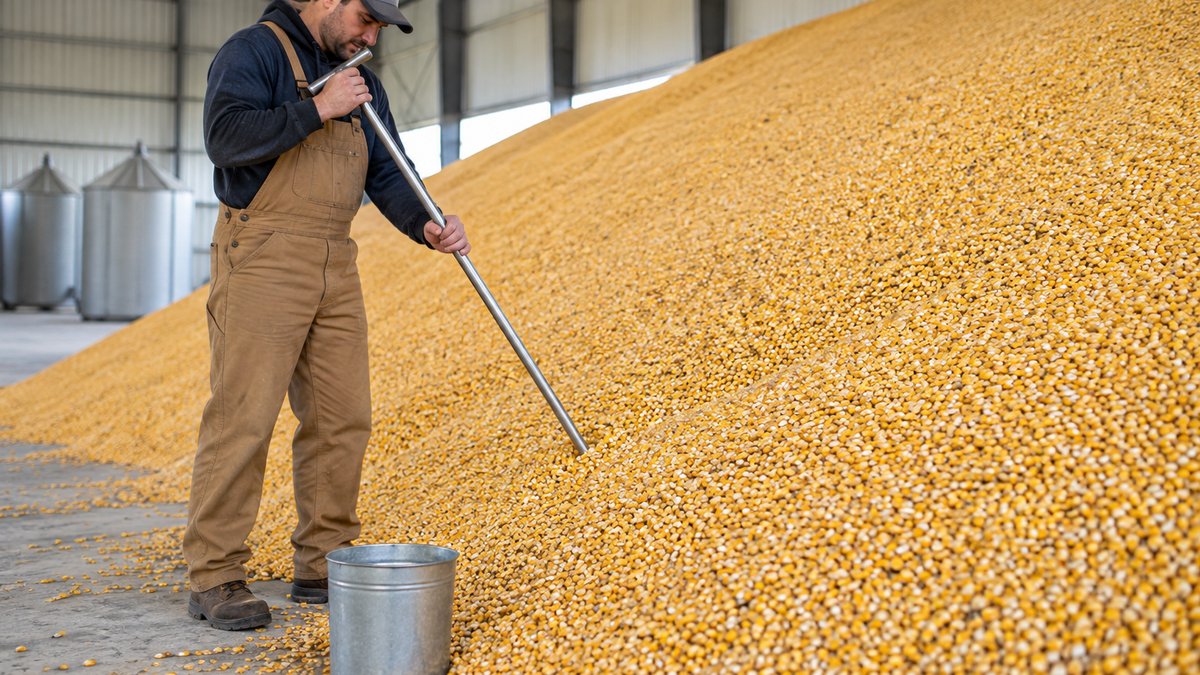
USDA reported the following FOB bids for 5 November 2026. The report identifies U.S. corn as No. 3 yellow corn at the Gulf; it does not give an equivalent grade description for Argentina or Brazil in this table. The figures therefore show market reference levels, not a fully specification-matched offer comparison.
Compared with 5 October 2026, the reported bids were lower by US$13/MT for Argentina, US$13/MT for Brazil and US$17/MT for U.S. No. 3 yellow corn. USDA attributed the broad decline to large U.S. supplies and relatively weak sales, prospects for a larger Argentine crop in 2027, and seasonal supply changes in Brazil. These explanations apply to the reported export market; they do not establish the price of a specific shipment to the Philippines.
2.2 Philippine farmgate prices for mature yellow corn
The Philippine Statistics Authority’s July to September 2026 crop statistics give monthly farmgate prices for mature yellow corn. September’s ₱19.84/kg was 24.4% higher than September 2025. The series records a local farmer selling price, not an import quotation or a delivered feed-mill price.
The monthly series rose from July to September. PSA’s separate seasonally adjusted estimate for all corn, not yellow corn alone, was ₱19.89/kg for July to September 2026, up 7.5% from the preceding quarter’s adjusted average. Keep that all-corn measure separate from the yellow-corn monthly series.
The export bids are dated 5 November, the latest date in the cited USDA comparison. The domestic yellow corn figures end in September, so they are two months older. Neither measure is a firm offer for a specific Philippine buyer.
3. Why Corn Prices Are Moving
Export supply expectations and Philippine domestic availability both affect the price references buyers see. USDA’s November global report said lower production forecasts for the United States, South Africa, Mexico and the European Union outweighed higher forecasts for Argentina and Brazil. It also reported that export bids from several major origins fell between October and November.
In the Philippines, PSA estimated seasonally adjusted third-quarter 2026 corn production at 1.67 million metric tons, down 21.3% from the previous quarter. That figure covers corn overall, not yellow corn alone. Quarter-to-quarter production changes can reflect harvest timing as well as output, so this statistic should not be read as a standalone measure of yellow corn availability.
Demand from feed users is one reason Philippine import volumes matter. USDA FAS Manila’s November update cited stronger feed and residual use in its discussion of imports and stocks. The report’s import forecast was raised to 2.9 million metric tons for MY 2026/27; that is a forecast, and actual imports may differ.
Competition between origins also affects sourcing decisions. USDA FAS Manila described Philippine corn sourcing as price-based and noted a change in origin shares: the United States gained share in MY 2025/26 while Argentina and Myanmar remained leading suppliers. Freight to the buyer’s port and the required corn specification can change which origin has the lowest delivered cost.
Currency, freight and shipment timing can widen the difference between an FOB reference and a Philippine buyer’s final cost. The export bid table does not provide a freight rate, insurance cost or destination-port charge. Buyers need current logistics quotations for their own route before evaluating a landed price.
4. Which Markets Import Corn and Which Origins Supply the Philippines?
4.1 Philippine import demand
USDA FAS Manila forecast Philippine corn imports of 2.9 million metric tons in MY 2026/27 in its November 2026 update. The same update reported that July 2026 imports reached 337,563 metric tons, compared with 47,090 metric tons in July 2025. The monthly figures are actual trade data cited in the report; the full marketing-year number remains a forecast.
A ranked list of the world’s leading corn-importing countries is not included here because the cited current sources do not provide a consistent, dated ranking that can be verified for this update. The Philippines’ import estimate is useful for assessing destination-market demand, but it should not be presented as a global rank.
4.2 Main corn origins for the Philippines
USDA FAS Manila’s November 2026 report says Argentina and Myanmar each supplied about 27% of Philippine corn imports in MY 2025/26. The United States accounted for 18%, Taiwan 15% and South Africa 13%. These shares describe the report’s marketing-year import data; they are not shares of global corn exports.
In MY 2024/25, Argentina and Myanmar each accounted for about 28%, Taiwan 17% and the United States 11%. The rise in the U.S. share to 18% in MY 2025/26 shows that origin composition changed between the two periods. Buyers should verify current availability and terms rather than assume the same origin mix will persist.
4.3 What import demand means for exporters
The import forecast points to a substantial sourcing requirement, but it does not identify a confirmed order, buyer or purchase schedule. Exporters can use the reported supplier mix to understand the origins already shipping corn to the Philippines. A quotation still needs to match the buyer’s grade, color, grain size, quantity, shipment window and destination.
5. How Buyers Can Compare Corn Offers Delivered to the Philippines
A low FOB bid may not produce the lowest delivered cost. FOB means the seller’s price covers delivery of the goods on board at the named export port; the buyer must account for the costs and responsibilities that follow under the agreed contract. CFR adds the seller-arranged ocean freight to the named destination port, while CIF also includes seller-arranged insurance. Confirm the named port and applicable Incoterms version in every offer.
- Match the product first. Confirm that the quotation is for yellow corn and specify the required grade, moisture, foreign matter, color, grain size and intended feed or processing use.
- Compare the same quantity and packing. Ask whether the offer is bulk or bagged, state bag size if applicable, and check whether minimum order quantities match.
- Use one delivery basis for every comparison. Put all offers on FOB, CFR or CIF terms for the same named port, or calculate landed cost by adding the costs excluded from each quotation.
- Request the loading port, shipment window, quote currency and validity period. A bid dated 5 November is a market reference, not a live offer on 20 November.
- Confirm import and product documentation requirements with the relevant Philippine authorities and your customs broker before contracting. Requirements can depend on the product and shipment.
The USDA export table gives no freight or insurance costs to the Philippines, and its Argentina and Brazil rows do not specify a grade. Buyers should ask suppliers for a current quote against one written specification, then compare the complete cost to the same destination port. A price difference between the table’s origins cannot by itself establish which shipment is cheapest for a buyer.
Buying consideration: Before approving a quotation, ask the supplier to confirm the grade, crop or shipment availability, loading port, delivery basis and all costs included in the price.
Illustrative corn inquiry:
Product: Yellow corn for feed use; specify the required grade and tolerances
Quantity and packing: State metric tons and bulk or bag format
Destination: Name the Philippine port
Quotation: Request the same Incoterm, shipment window, currency and validity from each supplier
This is an illustrative inquiry format. Buyers should set specifications to their own contract and regulatory requirements.
6. What the Latest Demand Looks Like on Freshdi
National import data and Freshdi buying requests measure different activity. This update reports government and USDA market data, but it does not report a Freshdi request count, buyer count, quantity pattern or trade-term breakdown. Those platform observations should be based on dated request records rather than inferred from national imports.
For a supplier, a Philippine import forecast can provide market context, while an individual buying request describes a buyer’s stated requirement. Check the requested product, quantity, destination and trade term before deciding whether an offer fits.
7. What Buyers and Suppliers Should Do Next
7.1 For buyers and importers
- Use the November FOB bids as dated reference levels, not as current supplier quotations.
- Ask competing origins to quote the same yellow corn specification and destination port.
- Compare landed cost after freight, insurance, handling and applicable import charges.
- Check the shipment schedule and request the documents and quality evidence required for the transaction.
7.2 For exporters and suppliers
- Date each quotation and state its currency, unit, loading port, delivery basis and validity.
- Describe the yellow corn grade and quality tolerances in measurable terms.
- State the available quantity, packing format and realistic shipment window.
- Review current Philippine buyer requirements before preparing an offer, and avoid presenting a market reference as a firm quotation.
Buyers comparing origins can review suppliers related to yellow corn after preparing a common specification for their quotations.
View Related Suppliers for This Product →
8. How Freshdi Helps Buyers and Suppliers Connect
Freshdi’s category pages let buyers browse potential suppliers and let suppliers review buying requests by product category. Use the Yellow Corn supplier category to look for relevant supplier listings, or review Yellow Corn buying requests for stated sourcing needs. A listing or request is a starting point for evaluation, not a guarantee of a transaction.
When evaluating a listing or request, compare the stated product and trade requirements with the specification in your own quotation. Follow up on fields that are not stated, including grade, shipment timing or delivery basis, before treating the opportunity as a match.
Once the product and destination requirements are clear, buyers and suppliers can review relevant category listings and requests.
View Latest Grains, Cereal & Legumes Buying Requests →View Potential Grains, Cereal & Legumes Suppliers →
9. Philippine Yellow Corn Market Outlook
The latest cited FOB export bids, dated 5 November 2026, were below their 5 October levels for Argentina, Brazil and U.S. No. 3 yellow corn. Philippine farmgate prices for mature yellow corn rose month by month from July through September, with September’s ₱19.84/kg up 24.4% year on year. The figures cover different products and points in the supply chain, so neither trend alone determines a buyer’s delivered price.
USDA FAS Manila’s 2.9-million-ton import forecast for MY 2026/27 indicates expected Philippine demand, while the agency’s origin shares show Argentina and Myanmar as leading suppliers in MY 2025/26. Buyers should compare current, specification-matched offers on a delivered basis. Exporters should state exactly what their quotation includes and how long it remains valid.
Readers preparing a Philippine yellow corn inquiry can use Freshdi to review relevant supplier listings.
View Related Suppliers for This Product →
Frequently Asked Questions
What was the latest reported yellow corn export price?
The USDA’s November 2026 global market report lists 5 November FOB bids of US$201/MT for Argentina, US$213/MT for Brazil and US$216/MT for U.S. No. 3 yellow corn at the Gulf. The report does not specify equivalent grades for Argentina and Brazil, and these figures are dated market references rather than current firm offers.
What was the Philippine farmgate price for yellow corn?
The Philippine Statistics Authority reported a September 2026 farmgate price of ₱19.84/kg for mature yellow corn, up 24.4% year on year. Farmgate is the local first-sale price received by farmers; it is not an import or delivered feed-mill price.
Why do corn export prices differ by origin?
Export bids can reflect different supply expectations and market conditions. USDA’s November 2026 report cited large U.S. supplies and relatively weak sales, expectations for a larger Argentine crop in 2027, and seasonal supply changes in Brazil. Grade, port, shipment date and contract terms also affect whether offers can be compared.
How much corn does the Philippines import?
USDA FAS Manila forecast 2.9 million metric tons of corn imports for MY 2026/27 in its November 2026 update. This is a forecast, not a final import result or a confirmed order.
How should buyers compare FOB and CIF corn prices?
FOB covers delivery on board at the named export port. CIF includes seller-arranged ocean freight and insurance to the named destination port, subject to the agreed contract and Incoterms. Compare offers for the same product specification, quantity, destination and shipment window, and check which destination charges remain outside the quoted price.
Can buyers and suppliers find yellow corn opportunities on Freshdi?
Freshdi has category pages for yellow corn suppliers and buying requests. Review the stated product and transaction requirements, then confirm any missing details directly through the appropriate transaction process. A listing or request does not guarantee a completed trade.
References
1. USDA Foreign Agricultural Service – Grain: World Markets and Trade, November 2026, November 2026.
2. Philippine Statistics Authority – Palay and Corn Statistics, July to September 2026, 2026.
3. Philippine Statistics Authority – Seasonally Adjusted Corn Production and Prices, July to September 2026, 5 November 2026.
4. USDA Foreign Agricultural Service, Manila – Grain and Feed Update, Philippines, RP2026-0030, 2026.
Disclaimer: This article is compiled from platform data, public sources and information provided by third parties, for general informational purposes only. We do not guarantee its accuracy or completeness. Prices, volumes and forecasts are indicative, reflect conditions as of 2026-11-20 and may change without notice. This is not financial, investment or trading advice.