
Introduction
The U.S. cocoa futures benchmark closed at US$5,001.50 per metric tonne on 18 November 2026, down from US$5,687.00 on 19 October. That is a futures-market reference, not a physical supplier quotation or a delivered price for cacao beans.
This update covers the United States market, with the latest available futures close through 18 November 2026 and U.S.-bound cocoa bean trade reported for 2025. Futures and customs unit values measure different things, so buyers should use each for its stated purpose.
Key Takeaways
- The U.S. cocoa futures benchmark closed at US$5,001.50/MT on 18 November 2026, about 12.1% below its 19 October close of US$5,687.00/MT, according to Investing.com historical data.
- For 2025 U.S.-bound cocoa bean exports, Ecuador reported an approximate customs unit value of US$7,731/MT and Côte d’Ivoire about US$6,208/MT. These are annual trade-value-to-quantity ratios, not current offers or like-for-like grade comparisons.
- In 2025, Ecuador, Ghana and Côte d’Ivoire were the leading exporters of cocoa beans to the United States by reported trade value in the World Bank WITS display of UN Comtrade data.
- Futures price changes reflect a market benchmark; a physical bean offer also depends on origin, quality, contract differential, shipment timing, freight, insurance and delivery terms.
- Buyers should compare offers on the same specification and delivery basis, then calculate landed cost. Suppliers should state their grade, quantity, loading point and quote validity.
1. Market Overview: U.S. Cacao Bean Supply and Demand
The United States relies on imported cocoa beans for its bean supply, and reported trade data show several important origins rather than one single source. The World Bank’s WITS display of UN Comtrade records 2025 exports of raw or roasted cocoa beans to the United States from Ecuador, Ghana, Côte d’Ivoire, the Dominican Republic and Peru, among others.
In that 2025 data, Ecuador led the listed origins by value at about US$906.2 million and 117.2 million kilograms. Ghana followed at about US$648.4 million and 23.2 million kilograms, while Côte d’Ivoire recorded about US$585.2 million and 94.3 million kilograms. These are exporter-reported values and quantities for HS 1801, a category covering whole or broken cocoa beans, raw or roasted.
Those figures describe cross-border trade, not U.S. chocolate consumption or final demand for a particular grade. The U.S. Department of Labor’s 2026 cocoa supply-chain report, using 2024 trade data, also describes Ecuador and Côte d’Ivoire as major sources of U.S. cocoa bean imports. The reporting period differs, so the 2024 and 2025 figures should not be combined as one series.
Cocoa bean supply is concentrated in producing regions near the equator, while the United States is a major importing and processing market. Supply conditions in producing countries can affect the futures benchmark, but an individual U.S. buyer’s cost also reflects the bean’s origin, quality, shipment date and contract terms.
A U.S. futures contract provides a common market reference. It does not set the price of every physical shipment: exporters and buyers negotiate physical differentials and shipment-specific terms around the relevant benchmark.
Looking to Source Cacao Beans?
Connect with verified suppliers, discover matching products, and explore sourcing opportunities from global markets.
2. Latest Cacao Bean Prices for the United States
2.1 Current U.S. cocoa futures benchmark
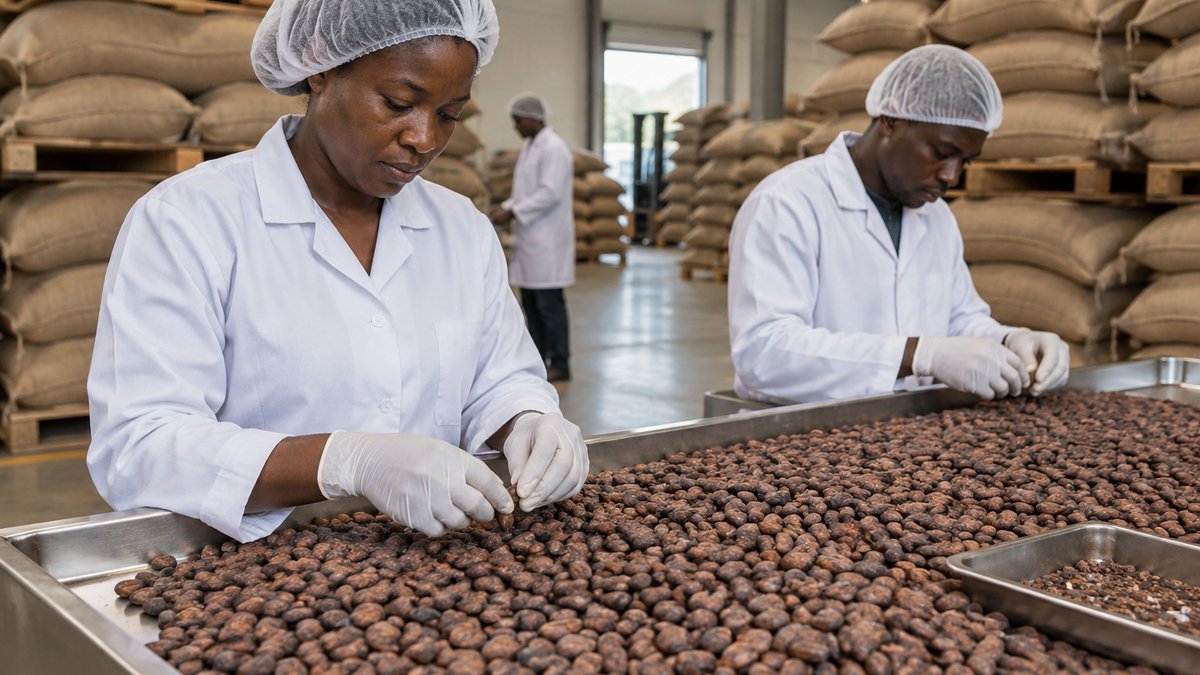
The U.S. cocoa futures historical series listed by Investing.com closed at US$5,001.50 per metric tonne on 18 November 2026. The benchmark is quoted in U.S. dollars per metric tonne. It reflects exchange-traded futures, not an FOB origin quotation, a CIF U.S. port price or a fixed price for physical beans.
The 2025 customs unit values are calculated by dividing the reported export value by reported quantity. They cover all shipments recorded under HS 1801 in that calendar year, with different qualities and contract conditions potentially mixed together. They are not November 2026 prices and should not be read as current supplier quotes.
2.2 Price comparison by exporting origin
Ecuador’s 2025 reported unit value to the United States was above Côte d’Ivoire’s when each origin’s total reported value is divided by its quantity. That gap does not prove that Ecuadorian beans of a given grade cost more than comparable Ivorian beans. The customs totals do not standardize bean quality, contracts, shipment timing or delivery basis.
The U.S. cocoa futures benchmark is a different comparison again. ICE describes its cocoa futures contract as a benchmark for the global cocoa market. A futures close cannot be compared directly with a customs unit value because the futures contract and customs data have different periods and pricing bases.
2.3 Price trend and reporting period
Between 19 October and 18 November 2026, the historical futures series fell from US$5,687.00 to US$5,001.50/MT, a decrease of about 12.1% using the two closes. The move describes the benchmark over that period; it does not establish the direction of every physical origin’s price or the price available to a particular importer.
The series also recorded a close of US$5,046.00/MT on 11 November and US$5,001.50/MT on 18 November. That is a 0.9% decline over the week between those closes. Futures prices can change from one session to another, so buyers should date the benchmark used in any budget and request a separately dated physical quotation.
Buying consideration: When reviewing a supplier’s offer, record the quote date, currency, unit, grade, crop or shipment period, Incoterm and named port. Compare it with a futures reference only after confirming that the supplier’s pricing formula and differential are clear.
3. Why Are Cacao Bean Prices Changing?
Cocoa futures reflect changing expectations for available supply and demand, while physical prices also reflect origin and shipment-specific terms. The recent fall in the U.S. benchmark is measurable in the October-to-November closes; attributing that full move to one factor would require evidence that identifies the causes over the same dates.
3.1 Crop supply and inventory
Harvest volumes, crop quality and stocks available for export affect how much cocoa can reach processors. An Associated Press report in 2026 described cocoa beans going unsold or deteriorating in producing areas during a period of falling prices. That reporting illustrates how a price correction and supply-chain bottlenecks can coexist; it does not quantify current U.S. availability or establish the cause of the November futures movement.
Buyers sourcing from a specific origin should ask whether an offer covers current-crop or carryover beans, when the lot can ship and how much is actually available. A headline futures price cannot answer those questions.
3.2 Import demand and product requirements
Demand from U.S. processors and manufacturers depends on their purchasing schedules and the specifications they need. Bean size, fermentation, moisture, defects, traceability and intended processing use can affect whether a lot suits a buyer. The general futures benchmark does not distinguish those attributes.
For suppliers, a clear specification lets a buyer assess the offer against its production needs. For buyers, an inquiry that names the required quality and shipment window reduces the risk of comparing an unsuitable lot with a lower headline price.
3.3 Currency, freight and trade terms
Exchange rates can change the local-currency proceeds received by exporters and the cost of imported inputs. Ocean freight, insurance, port charges and shipment schedules also affect a buyer’s delivered cost. A U.S.-dollar futures quote leaves those costs outside the benchmark.
FOB means the seller delivers the goods on board the vessel at the named port, while CFR includes freight to the destination port and CIF includes freight and insurance. The contract still needs to identify the named ports and allocate other costs and responsibilities. Buyers should confirm the Incoterms version and the exact delivery point in the offer.
4. Which Countries Supply the United States with Cacao Beans?
4.1 Major U.S. importing origins
The latest full-year partner figures in the cited WITS display cover 2025. By reported export value to the United States, Ecuador ranked first among the listed suppliers, followed by Ghana and Côte d’Ivoire. This is a ranking by trade value, not a ranking of bean quality, supplier reliability or current offers.
The figures are exporter-reported exports to the United States for HS 1801 in 2025. WITS notes that trade values and quantities are reported by countries to UN Comtrade. Differences in reporting methods and product mix can affect comparisons, so use the table as a trade-flow overview rather than a current price list.
4.2 Origins represented in U.S.-bound trade
Ecuador and Côte d’Ivoire both shipped substantial reported volumes to the United States in 2025, while Ghana’s reported value was high relative to its listed quantity. Because the trade data do not standardize grade or contract terms, buyers should verify the specification behind any supplier offer before interpreting differences in unit value.
National export totals and U.S.-bound shipment data describe different markets. A country’s overall production or exports do not show how much is available to a particular buyer, at a particular port, for a particular shipment window.
4.3 Reading demand without treating forecasts as orders
Trade statistics record completed or reported cross-border flows for a covered period. Forecasts describe expected outcomes, and buying requests describe buyer-stated needs. These measures are not interchangeable: a forecast is not a purchase order, and an import total does not confirm that a buyer is currently seeking a specific grade.
For commercial planning, exporters can use historical destination data to identify established routes, then confirm current buyer requirements, shipping schedules and import documentation before making an offer.
5. Where Can Buyers Source Cacao Beans at a Competitive Price?
A competitive cacao bean purchase depends on the delivered cost of beans that meet the buyer’s specification. A futures benchmark or an annual customs unit value can help frame a discussion, but neither substitutes for current supplier quotations.
- Write one specification for every supplier: origin, bean type, quality parameters, required quantity, packaging and shipment window.
- Ask each supplier to quote in the same currency and unit, with the named loading port, destination port, Incoterm and quotation validity.
- Separate the physical bean price from any futures reference and ask how the supplier calculates the differential, if one applies.
- Add freight, insurance, inspection, port and inland charges as applicable to estimate the landed cost at the buyer’s facility.
- Confirm the documents and import requirements applicable to the product and shipment with the relevant U.S. authorities and service providers.
- Check that samples, inspection terms and contract tolerances match the specification used to compare offers.
For example, an FOB offer and a CIF offer do not include the same services. Comparing their headline prices without adding the buyer’s uncovered freight, insurance and destination costs can give a misleading result. Buyers should compare the full cost to the same destination and confirm which shipment risks and expenses each offer includes.
Buying consideration: Keep the benchmark, physical offer and estimated landed cost in separate columns in a procurement worksheet. That makes the quote date and each cost component visible when market prices move.
6. What Does the Latest Demand Look Like on Freshdi?
Freshdi buying requests represent requirements posted by individual buyers, while national import statistics represent reported trade over a defined period. The two sources answer different questions. A request may specify a grade, quantity, destination or delivery term, but it does not measure total U.S. demand.
Buyers can review relevant cacao bean requests and state their required origin, quality, volume and shipment window. Suppliers can assess whether their available beans match those stated requirements before preparing an offer. Current requests should be checked directly because posted needs and availability can change.
No dated Freshdi request snapshot is available for this article, so it does not quantify request counts, buyer locations, quantities or preferred terms. The 2025 WITS figures above are public trade statistics and should not be described as Freshdi activity.
7. What Should Buyers and Suppliers Do Next?
7.1 For buyers and importers
- Use a dated futures close as a benchmark only, and request a current physical quotation for the required origin and lot.
- Compare beans with the same quality specification, shipment period, quantity and delivery basis.
- Ask suppliers to identify the pricing basis, quote validity, loading port and included costs.
- Calculate landed cost using freight, insurance, duties or charges that apply to the specific shipment, and destination handling.
- Confirm U.S. import and food-safety requirements for the product and shipment with the appropriate official sources.
- Agree inspection, sampling, rejection tolerances and documents in the contract before shipment.
7.2 For exporters and suppliers
- State the origin, product description, grade or quality parameters, available quantity and packaging in the offer.
- Name the loading port, shipment window, currency, unit, Incoterm and quote expiration date.
- If pricing follows a futures benchmark, identify the contract reference, pricing date and physical differential.
- Describe available documents and certifications only when they apply to the offered lot and can be supported.
- Check the buyer’s destination, volume and required specification before sending a quotation.
- Review current buying requests and tailor offers to the buyer’s stated requirements.
8. How Freshdi Helps Buyers and Suppliers Connect
Freshdi provides category pages where buyers can review supplier listings and suppliers can review buying requests. Buyers sourcing cacao beans can view potential suppliers in the Cacao Beans category, while suppliers can review Cacao Beans buying requests. A listing or request does not replace specification checks, due diligence or contract review.
Before responding, suppliers can compare the buyer’s stated destination, volume and required terms with the lot they can ship. Buyers can present a complete requirement so potential suppliers can judge whether their beans fit the order.
Buyers and suppliers ready to compare current cacao bean requirements can review the relevant Freshdi category pages.
View Latest Cocoa Beans Buying Requests →View Potential Cocoa Beans Suppliers →
9. Conclusion: United States Cacao Bean Market Outlook
The U.S. cocoa futures benchmark closed at US$5,001.50/MT on 18 November 2026, about 12.1% below its 19 October close. That change is a useful dated reference, but it is not a physical import price. The 2025 U.S.-bound trade figures show Ecuador, Ghana and Côte d’Ivoire among the leading origins by reported export value.
Buyers should compare current physical offers on the same grade, shipment window and delivery basis, then calculate landed cost. Exporters should state the offer’s pricing basis, origin, quality and validity. Freshdi is a place to review relevant cacao bean suppliers and buying requests.
Readers comparing current cacao bean sourcing needs can review relevant suppliers and buying requests on Freshdi.
View Latest Cocoa Beans Buying Requests →View Potential Cocoa Beans Suppliers →
Frequently Asked Questions
What was the U.S. cocoa futures price on 18 November 2026?
Investing.com’s historical series lists a U.S. cocoa futures close of US$5,001.50 per metric tonne on 18 November 2026. This is an exchange-traded benchmark, not a physical supplier quotation or a delivered price for beans.
How much did the U.S. cocoa futures benchmark change in the last month?
The series closed at US$5,687.00/MT on 19 October 2026 and US$5,001.50/MT on 18 November 2026, a decline of about 12.1% between those dates. Physical prices can differ by origin, quality, contract differential and shipment terms.
Which countries supplied the most cocoa beans to the United States in 2025?
In the cited World Bank WITS display of UN Comtrade exporter reports, Ecuador had the largest reported export value to the United States for HS 1801 in 2025, followed by Ghana and Côte d’Ivoire. The figures describe trade reported for that calendar year, not current supplier availability.
Why can a physical cacao bean offer differ from the futures price?
Futures are a market benchmark. A physical offer also depends on origin, quality, lot size, shipment timing, contract differential, freight, insurance and the named delivery basis. Buyers should ask how the supplier arrived at the offer and compare landed cost.
How can buyers compare FOB and CIF cacao bean offers?
FOB and CIF offers include different responsibilities and costs. Confirm the named ports and Incoterms version, then add the costs not covered by each offer to estimate delivery to the same destination. Compare offers only after matching grade, quantity and shipment window.
Where can buyers find cacao bean suppliers or buying requests on Freshdi?
Buyers and suppliers can review relevant supplier listings and buying requests through Freshdi’s Cacao Beans category pages. Check the current listing or request for its stated specification and terms; platform listings do not guarantee a transaction.
References
1. Intercontinental Exchange – Cocoa Futures Contract Specifications, 2026.
2. Investing.com – U.S. Cocoa Futures Historical Data, Prices through 18 November 2026.
3. World Bank WITS, using UN Comtrade data – Cocoa beans, whole or broken, raw or roasted exports to United States, 2025, 2025 trade data.
4. U.S. Department of Labor – Cocoa Supply Chain: Final Report, 2026.
5. Associated Press – Cocoa beans rot and West African farmers seek other options after commodity crash, 2026.
Disclaimer: This article is compiled from platform data, public sources and information provided by third parties, for general informational purposes only. We do not guarantee its accuracy or completeness. Prices, volumes and forecasts are indicative, reflect conditions as of 2026-11-19 and may change without notice. This is not financial, investment or trading advice.