
Introduction
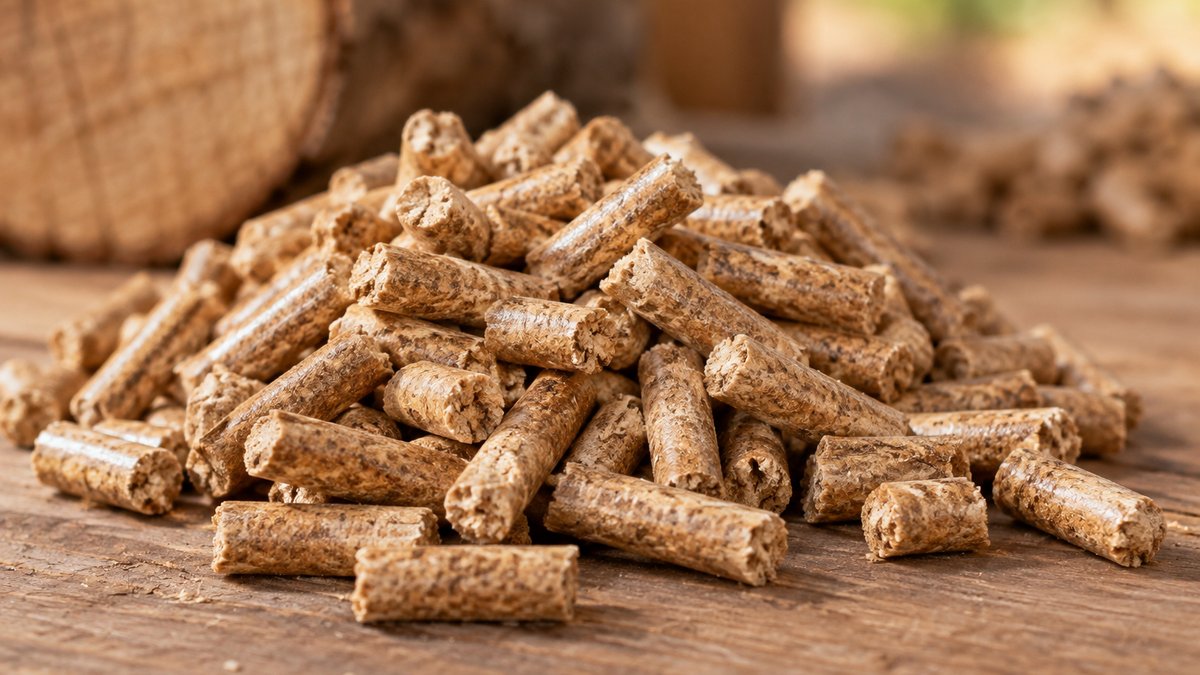
Argus assessed Vietnamese industrial wood pellets typically sold to South Korean buyers at US$115.06 per tonne FOB Vietnam on 10 June 2026. Its assessment for delivery CFR Gwangyang was US$118.21 per tonne on the same date. These are the latest dated, publicly accessible price assessments identified for this update, not live offers.
The reporting period is the 10 June 2026 assessment, reported by Argus on 16 June. By 19 November 2026, that price observation was about five months old. It is a dated benchmark for a defined industrial specification, not a current supplier quotation or an average for every grade imported into South Korea.
Key Takeaways
- Argus assessed the Vietnam-to-South Korea industrial pellet price at US$115.06/t FOB Vietnam and US$118.21/t CFR Gwangyang on 10 June 2026.
- The FOB assessment was US$9.44/t below its 25 March 2026 level. The CFR assessment was US$11.54/t below its 25 March level.
- South Korea imported about 808,000 tonnes of wood pellets in January to March 2026, down 22% year on year; Vietnam supplied about 215,000 tonnes and Indonesia about 247,000 tonnes.
- South Korea’s reduced renewable energy certificate support for biomass was cited by Argus as a factor weighing on imported pellet demand.
- Buyers should compare matching grade, specification, delivery basis and destination charges. The assessed prices are dated market references, not offers.
1. South Korea’s wood pellet market depends on imported supply
South Korea is a large import market for wood pellets used in power generation, and its procurement is sensitive to both import economics and support for biomass electricity. Lesprom Analytics figures reported in February 2026 put 2025 imports at 3.91 million tonnes, down about 3% from 2024, while import value rose 12% to US$566 million. The implied average import value was about US$145/t, a customs-based annual average rather than a spot quotation.
Supplier shares shifted in 2025. Vietnam shipped 1.44 million tonnes, or 37% of imports, while Indonesia supplied 0.90 million tonnes, or 23%. Vietnam’s shipments fell 31% year on year; Indonesia’s rose 76%. Russia, Canada and Malaysia also supplied the market. These annual shipment figures show origin competition, but they do not establish comparable prices by origin or grade.
More recent data cited by Argus show a weaker start to 2026. South Korea imported about 808,000 tonnes in the first quarter, 22% less than in the same period of 2025. Indonesia supplied about 247,000 tonnes and Vietnam about 215,000 tonnes during that quarter. The period and data basis differ from the 2025 annual figures, so buyers should not compare them as if they were the same reporting window.
Global production and consumption totals are not needed to interpret this Korea-focused price snapshot and are not included here. For South Korean buyers, the relevant market signals are the import flow, the competing origins, and the terms utilities use when purchasing pellets.
Looking to Source Wood Pellet?
Connect with verified suppliers, discover matching products, and explore sourcing opportunities from global markets.
2. Latest wood pellet export prices for South Korea
The latest dated price assessment identified for the South Korean market is Argus’s 10 June 2026 assessment for Vietnamese industrial-grade pellets. Argus reported US$115.06/t FOB Vietnam and US$118.21/t CFR Gwangyang. FOB means the seller delivers the goods on board at the named loading port; CFR includes the seller’s contracted sea freight to the named destination port, but not insurance.
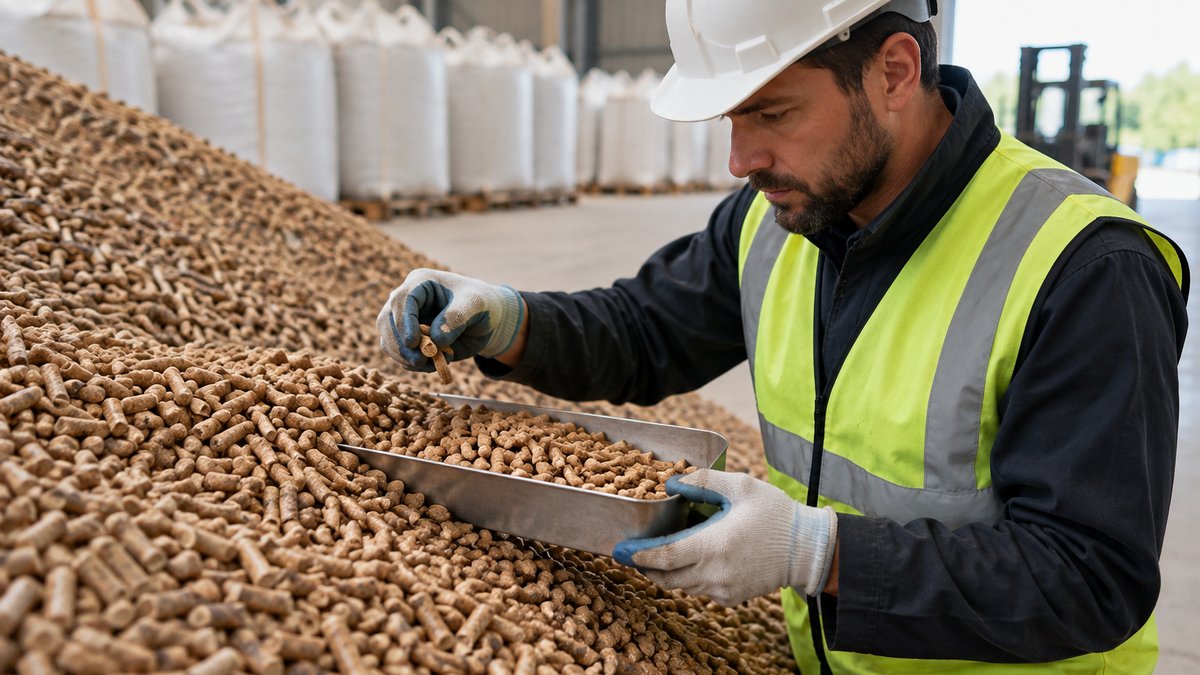
Argus said the FOB Vietnam assessment had fallen by US$9.44/t from 25 March, when its reported level was US$124.50/t. The CFR Gwangyang assessment fell from US$129.75/t on 25 March to US$118.21/t on 10 June, a decline of US$11.54/t. These are movements in Argus price assessments, not a record of a specific buyer’s completed purchase.
The price assessments and annual import average cover different bases and periods. The annual average includes a mix of shipments, origins and contract arrangements. The FOB and CFR assessments refer to Argus’s stated industrial-pellet specification and a particular assessment date. Do not use the difference between the two bases as a general freight quote.
2.1 Origin comparisons require matched specifications
South Korea bought more pellets from Indonesia than Vietnam in the first quarter of 2026, according to figures cited by Argus. However, the sources identified for this update do not provide a same-date, same-grade FOB or delivered price for Indonesian pellets that can be compared directly with the 10 June Vietnam assessment. A ranked price table by origin would therefore imply a comparison the available price evidence does not support.
Argus reported that Vietnam faced competition from Indonesia and Malaysia and that some South Korean power producers sought cargoes below US$110/t FOB. That reported buyer interest is not an assessed Indonesian or Malaysian price and does not establish that a matching cargo was available at that level.
The June price decline followed a larger fall from the March assessment. Argus attributed the pressure on Vietnamese pellets mainly to weak utility demand amid changes to South Korea’s renewable energy certificate scheme. Its report also noted that the CFR price had previously risen during a period of higher freight costs, demonstrating that a delivered-price move can reflect freight as well as the pellet price.
3. Demand, policy and supply factors behind the price movement
South Korean utility demand was the main factor Argus identified behind pressure on imported pellet prices in June 2026. Under the certificate changes described in its 16 June report, state-owned utilities received 0.75 renewable energy certificates per megawatt-hour in 2026, down from 1 in 2025. Independent power producers received 1.49, down from 1.5. Argus reported that higher certificate support for electricity generated from domestic pellets also encouraged utilities to prioritize domestic supply.
The import data point in the same direction for the first quarter: South Korean imports fell 22% year on year, and Vietnam’s shipments fell more steeply, by 55%, to about 215,000 tonnes. Indonesia supplied about 247,000 tonnes in that period. Those figures describe trade flows, not a confirmed explanation for every buyer’s procurement decision.
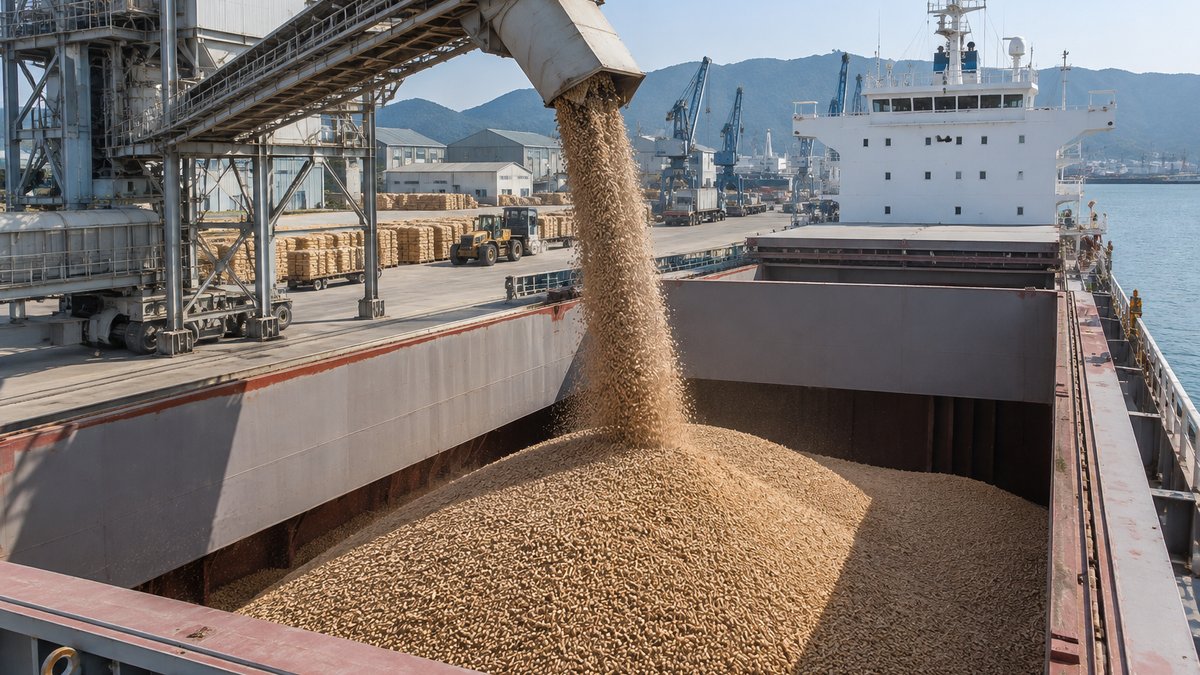
Freight can widen the gap between an origin price and a destination price. Argus reported that the CFR Gwangyang assessment reached US$132/t on 15 April 2026 amid high freight costs, before declining as fuel costs eased. A buyer comparing offers should therefore check the price date, loading port, destination port, delivery term and whether insurance or destination charges are included.
Supply conditions in Vietnam can also affect the export offer. Argus’s April 2026 market report described higher production and inland transport costs and reduced availability of feedstock as factors reported by market participants. Those observations relate to that report’s period; they should not be treated as confirmed November conditions without newer evidence.
The available dated evidence does not establish a current November price, a confirmed November tender result or a new weather-related supply disruption affecting South Korea. Buyers should request a fresh quotation before budgeting a shipment.
4. Which countries import the most wood pellets?
4.1 South Korea’s recent import market
The sources reviewed for this snapshot provide a South Korea import total and a first-quarter origin breakdown, but not a consistent latest global ranking of importing countries. South Korea imported about 3.91 million tonnes in 2025 and about 808,000 tonnes in January to March 2026. These figures use different periods and should be kept separate from global rankings or forecasts.
Vietnam was South Korea’s largest supplier for 2025, with 1.44 million tonnes, according to the figures reported by Lesprom Analytics. In the first quarter of 2026, Indonesia’s reported 247,000 tonnes exceeded Vietnam’s 215,000 tonnes. A single quarter does not establish a full-year change in supplier leadership.
4.2 South Korean demand does not equal confirmed export orders
Import totals and price assessments describe market activity, not an open purchase requirement. The sources cited here do not confirm a specific outstanding South Korean buyer order. Exporters should check the buyer, grade, delivery window, quantity, and tender or contract status before treating a general demand signal as a sales opportunity.
5. How buyers can compare wood pellet offers
A lower FOB number does not by itself identify the lowest-cost shipment to South Korea. Compare offers for the same grade and quality limits, quantity, packaging, loading window, port, delivery term and payment conditions. Argus’s October 2026 methodology guide describes the industrial-pellet assessment for South Korea as covering minimum 3,000-tonne quantities and specifications including moisture no more than 10%, ash no more than 5%, durability at least 95%, fines no more than 6%, and net calorific value at least 16.5 MJ/kg on an as-received basis.
- Ask each supplier to quote the same pellet dimensions, moisture, ash, durability, fines and calorific value limits.
- Compare FOB offers at the named loading port, or compare CFR offers to the same South Korean port. Do not mix the two bases.
- Add freight, insurance where applicable, port handling, inspection, storage and inland delivery to estimate the buyer’s landed cost.
- Confirm quantity, packaging or bulk handling, shipment window, quotation validity and the documents required for the intended use.
- Check that the quoted grade fits the buyer’s equipment and procurement requirements; an industrial specification is not automatically suitable for every facility.
The Argus June assessment is useful as a dated reference for Vietnamese industrial pellets, but its price should not be used as a November budget without a fresh quote. Buyers should ask suppliers to state the assessment or quotation date and the exact delivery basis.
6. What does the latest demand look like on Freshdi?
This price update does not state a dated Freshdi buying-request snapshot, so it makes no claim about request counts, buyer numbers, quantities, destinations or commonly requested specifications on the platform. Freshdi activity should be treated separately from customs import statistics and price assessments.
A buyer reviewing a wood pellet request should check the stated grade, quantity, destination, required documents and delivery term before responding. A supplier should compare the request with its actual product specification and available shipment window.
7. What buyers and suppliers should do next
7.1 For buyers and importers
- Use the June 2026 Argus figures as dated reference points, not as live offers.
- Request current quotations on a consistent FOB or CFR basis and specify the South Korean destination port.
- Confirm the pellet specification and ask for supporting quality documents before comparing prices.
- Include freight and destination costs in the landed-cost calculation.
- Check current procurement rules and the buyer’s own eligibility requirements before committing to a grade or origin.
7.2 For exporters and suppliers
- State the origin, grade, dimensions, moisture, ash, durability, fines and calorific value in each offer.
- Name the loading port, destination basis, available quantity, shipment window and quotation validity.
- Keep the offered price tied to a clear date and Incoterm so buyers can compare it with market references.
- Confirm that certificates and other documents are available for the specific cargo; do not imply requirements are met without evidence.
- Review relevant buyer requests and respond only when the product and shipment terms match.
8. How Freshdi helps buyers and suppliers connect
Freshdi’s wood pellet category pages give buyers and suppliers a place to review relevant marketplace listings and requests. Buyers can browse potential wood pellet suppliers, while suppliers can review wood pellet buying requests. A listing or request does not verify a transaction or guarantee that a particular offer is available.
When the grade, destination and shipment terms are clear, buyers and suppliers can review the relevant wood pellet listings and requests on Freshdi.
View Latest Energy Chemicals Buying Requests →View Potential Energy Chemicals Suppliers →
9. Conclusion: South Korea wood pellet market outlook
The latest dated price assessments identified here put Vietnamese industrial wood pellets for South Korea at US$115.06/t FOB Vietnam and US$118.21/t CFR Gwangyang on 10 June 2026. Both assessments were lower than their 25 March levels, while South Korean imports also declined year on year in the first quarter. The price data are about five months old as of 19 November, so buyers should obtain current offers before setting a budget.
For procurement, the practical comparison is a matching specification delivered on a matching basis. Exporters should state the grade, origin, port, quantity and validity period clearly when preparing a current offer.
Buyers ready to compare product listings can review wood pellet suppliers on Freshdi.
View Related Suppliers for This Product →
Frequently Asked Questions
What was the latest verified wood pellet price for South Korea?
Argus assessed Vietnamese industrial wood pellets typically sold to South Korean buyers at US$115.06 per tonne FOB Vietnam on 10 June 2026. Its CFR Gwangyang assessment was US$118.21/t on that date. These are dated market assessments, not current supplier offers.
How much did the assessed Vietnam price change?
Argus reported that the 10 June 2026 FOB Vietnam assessment was US$9.44/t below its 25 March level. The CFR Gwangyang assessment fell from US$129.75/t on 25 March to US$118.21/t on 10 June, a decrease of US$11.54/t.
Why were wood pellet prices under pressure in South Korea?
Argus cited weak utility demand amid changes to South Korea’s renewable energy certificate scheme. It also reported that support for biomass-fired electricity was reduced in 2026 and that domestic pellets received higher certificate support than imported pellets.
Which countries supplied South Korea with the most wood pellets?
Lesprom Analytics figures reported for 2025 put Vietnam first, with 1.44 million tonnes, followed by Indonesia with 0.90 million tonnes. In January to March 2026, Argus reported about 247,000 tonnes from Indonesia and 215,000 tonnes from Vietnam. The quarterly figures do not establish the full-year ranking.
How should buyers compare FOB and CFR wood pellet prices?
FOB covers delivery on board at the named loading port. CFR includes contracted sea freight to the named destination port but does not include insurance. Compare offers for the same grade, quantity and destination, then account for freight, insurance where applicable, and destination costs.
References
1. Argus Media – S Korean REC changes pressure Vietnam wood pellet price, 16 June 2026.
2. Argus Media – Argus Biomass Markets methodology and specifications guide, October 2026.
3. Argus Media – Argus Biomass Markets, Issue 26-2, 14 January 2026.
4. Lesprom Network – South Korea cuts wood pellet imports 3% in 2025, 11 February 2026.
Disclaimer: This article is compiled from platform data, public sources and information provided by third parties, for general informational purposes only. We do not guarantee its accuracy or completeness. Prices, volumes and forecasts are indicative, reflect conditions as of 2026-11-19 and may change without notice. This is not financial, investment or trading advice.