
Introduction
Taiwan relies on imported corn for feed and food processing, so export bids from major origins give buyers a useful reference when planning purchases. On 5 November 2026, USDA’s selected export-price comparison put U.S. 3YC corn at US$216 per metric tonne FOB Gulf, Brazil at US$213/tonne FOB Paranaguá and Argentina at US$201/tonne FOB Up River.
These are origin-port export bids, not delivered prices in Taiwan or confirmed offers to Taiwanese buyers. This update covers November 2026, using the latest dated USDA comparison located for major origins, Taiwan import forecasts from USDA’s 2026 Grain and Feed Annual, and a reported Taiwan corn tender. Buyers should compare product specifications, shipment timing and landed cost before treating any benchmark as a purchase price.
Key Takeaways
- USDA reported 5 November 2026 FOB bids of US$216/tonne for U.S. 3YC Gulf corn, US$213/tonne for Brazilian corn at Paranaguá and US$201/tonne for Argentine corn at Up River.
- Compared with 5 October, the reported bids fell US$17/tonne for the United States and US$13/tonne for Brazil and Argentina. The series are origin-port benchmarks, not Taiwan-delivered quotations.
- USDA’s 2026 Taiwan Grain and Feed Annual forecast corn imports at 4.4 million metric tonnes for MY 2025/26, compared with 4.35 million tonnes for MY 2024/25.
- A Taiwan MFIG tender reported in October sought corn from Brazil, among other possible origins. The report did not give a purchase price, so it does not establish a Taiwan landed-price level.
- Buyers should request offers against the same grade, quantity, shipment window, destination and delivery basis, then add freight, insurance and applicable import costs.
1. Taiwan's Corn Market Depends on Imported Supply
Taiwan’s corn procurement is large enough that changes in export bids from competing origins matter to feed and food buyers. USDA’s 2026 Grain and Feed Annual forecast Taiwan imports at 4.4 million metric tonnes in MY 2025/26, slightly above its 4.35 million-tonne estimate for MY 2024/25. Those are marketing-year forecasts, not completed import totals.
The same USDA report describes stable grain imports and identifies the United States as a competitive corn supplier to Taiwan, with bulk and containerized shipments serving different import requirements. The November 2026 USDA global outlook reports lower projected global corn trade than its previous outlook, with reductions for several exporters and importers. These broad projections provide context, but they do not determine the price of an individual Taiwan purchase.
Taiwan’s buyers also source from South America. A report on a Taiwan MFIG tender in October 2026 said the group bought an estimated 65,000 tonnes of corn from Brazil after retendering. The report did not state the purchase price. A tender purchase is evidence of a transaction and origin, but its unreported price cannot be used as a Taiwan market quotation.
This article compares export bids from the United States, Brazil and Argentina because USDA reports dated prices for those origins. The figures are FOB at different ports and may not represent identical grades or shipment terms. They help frame sourcing discussions, while each buyer still needs a supplier quotation for its exact specification and delivery window.
Looking to Source Yellow Corn?
Connect with verified suppliers, discover matching products, and explore sourcing opportunities from global markets.
2. Latest Yellow Corn Export Prices
2.1 Current export bids relevant to Taiwan
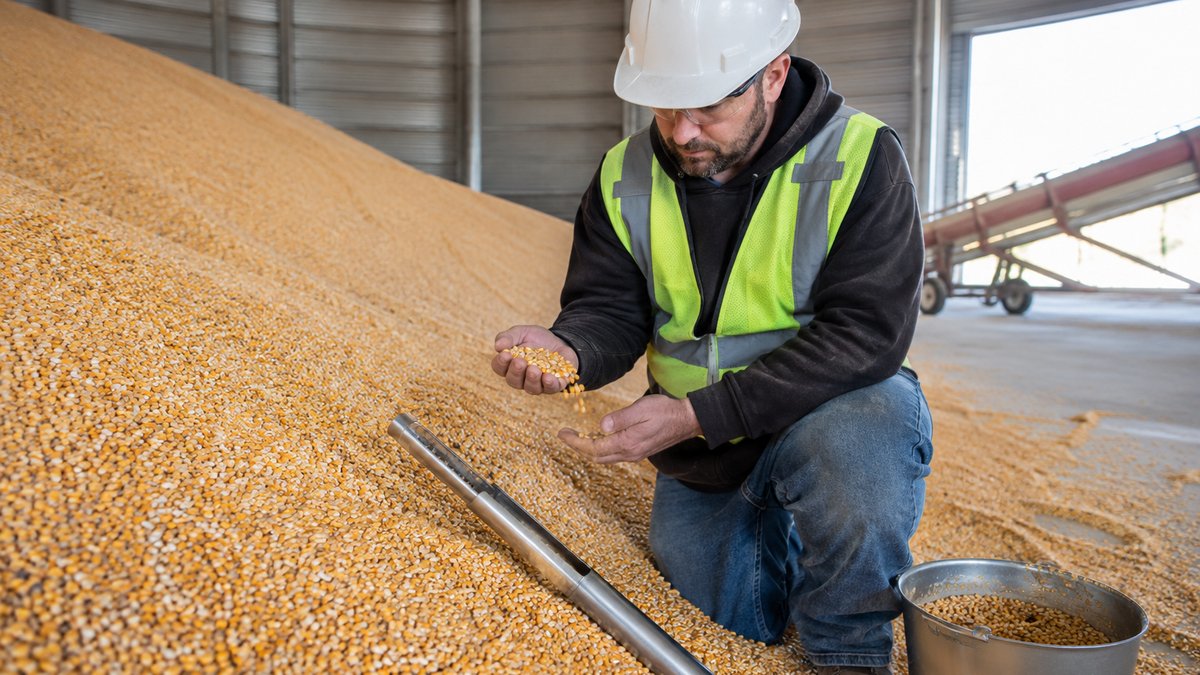
The latest dated USDA comparison located for this update is 5 November 2026. It reports the U.S. 3YC bid at US$216 per metric tonne FOB Gulf, Brazil at US$213/tonne FOB Paranaguá, and Argentina at US$201/tonne FOB Up River. FOB, or Free on Board, means the quoted price covers the goods to loading at the named port; the buyer generally arranges and pays for ocean freight and insurance.
USDA’s November 2026 coarse-grains report attributes lower export bids to factors including large supplies and relatively weak U.S. sales, alongside softer bids in Argentina and Brazil. The report gives the bid comparison in U.S. dollars per metric tonne and identifies the port basis. It does not state that these bids were offered to Taiwan or include freight to a Taiwanese port.
2.2 How the origins compare
On the reported FOB basis, Argentina was US$15/tonne below the U.S. Gulf bid and US$12/tonne below the Brazilian Paranaguá bid on 5 November. Brazil was US$3/tonne below the U.S. bid. These differences are arithmetic comparisons of the published bids, not estimates of savings after shipment to Taiwan.
The product labels and export ports are not fully interchangeable. USDA specifies U.S. 3YC, while the same table identifies Brazilian and Argentine bids by port without giving matching grade tolerances in the cited figures. Buyers should confirm moisture, broken kernels, foreign material, test weight, crop year and inspection terms before comparing a bid with a supplier offer.
A Taiwan-bound offer may also include ocean freight, insurance, handling and other charges that do not appear in an FOB bid. The difference between two origin bids can narrow or widen after freight is quoted for the same shipment size, loading period and destination.
2.3 Price trend through the reporting period
Between 5 October and 5 November 2026, USDA’s U.S. Gulf 3YC bid declined from US$233 to US$216/tonne, a US$17 decrease. Over the same dates, Brazil’s Paranaguá bid moved from US$226 to US$213/tonne, while Argentina’s Up River bid moved from US$214 to US$201/tonne. The month-on-month direction was lower for all three reported origins.
The year-on-year comparison differs by origin. USDA reported U.S. 3YC at US$197/tonne on 5 November 2025, compared with US$216/tonne on 5 November 2026. Brazil was US$210/tonne in November 2025 and US$213/tonne in November 2026; Argentina was US$203/tonne and US$201/tonne on those respective dates. These annual comparisons use the report’s listed FOB benchmarks and do not describe Taiwan’s average import cost.
3. What Is Moving Corn Export Prices?
Export prices reflect expected supply, demand and the cost of getting corn to an export port. USDA’s November 2026 coarse-grains outlook says global corn production was revised down from its prior outlook, while global trade was also forecast lower. The report notes that changes differed by country, so a global outlook should not be read as a uniform price signal for every origin.
USDA linked the lower U.S. export bid between 5 October and 5 November to large supplies and relatively weak sales. For buyers, that explanation makes the sales pace and export availability worth checking alongside the headline bid. A lower benchmark does not confirm that a particular grade, quantity or loading date is available.
Harvest timing can alter the volume available for export and the competition among origins. The USDA November report’s comparison shows bids easing for the United States, Brazil and Argentina over the month. Buyers can use origin-specific bids as a prompt to request updated offers, while checking each supplier’s crop, stock and shipment window directly.
Taiwan’s demand is another part of the price picture. USDA’s 2026 Taiwan report forecast corn imports at 4.4 million tonnes for MY 2025/26 and described demand as stable. Its forecast supports the view that Taiwan remains a substantial importing market, but it is not a forward purchase commitment by an individual importer.
Currency, ocean freight, insurance and port costs can change the delivered price even when the FOB bid is unchanged. A buyer comparing U.S. Gulf, Brazilian and Argentine offers should ask for the same delivery basis and shipment period. Where the offers use different Incoterms, first separate the goods price from transport and insurance costs.
Trade policy and import documentation can affect which offers are usable. Importers should confirm the current Taiwan requirements for the product’s intended use and form with the relevant authorities and their customs broker. A general export bid does not establish that a shipment meets destination rules.
4. Which Countries Import the Most Corn?
4.1 Major global importing markets
USDA’s November 2026 global outlook reports a downward revision to global corn imports, but the summary used for this update does not provide a complete, ranked list of importing countries with comparable volumes. No global ranking is included here. For Taiwan specifically, USDA’s 2026 Grain and Feed Annual forecast 4.4 million tonnes of imports in MY 2025/26, compared with 4.35 million tonnes in MY 2024/25.
The Taiwan figures are forecasts for marketing years, not calendar-year customs totals or confirmed orders. Buyers should keep forecast imports separate from actual shipments and from tender volumes, which describe procurement activity rather than total national demand.
4.2 Taiwan's main corn supply origins
USDA describes the United States as a competitive supplier to Taiwan and notes that bulk and containerized shipments serve differing import requirements. The October 2026 MFIG tender report also documents a purchase from Brazil, although it does not disclose the transaction price. Together, these sources show that Taiwan procurement considers more than one origin; they do not provide a complete destination-by-origin market-share table.
A buyer assessing a new origin should check whether the supplier can meet the required volume, quality, shipment schedule and documentation. A country’s presence in a tender or a global price table does not establish that every supplier in that country can serve a specific Taiwan order.
4.3 What import demand means for exporters
Taiwan’s forecast import volume indicates a substantial market for corn suppliers, while the MFIG tender illustrates procurement from Brazil during the reporting period. Forecasts and tenders describe different evidence: the first estimates national trade, while the second reports a specific buying action. Exporters should not treat either one as a confirmed order for their own product.
Suppliers considering Taiwan should prepare quotations that state origin, grade, quantity, packaging, loading port, shipment window and delivery basis. Importers can then compare the offer with other origins and request clarification where a specification or cost component is missing.
5. How Buyers Can Source Yellow Corn at a Competitive Cost
A competitive purchase depends on delivered cost and specification fit, not on the lowest FOB figure alone. The 5 November USDA comparison put Argentina lowest among the three listed export bids, but freight to Taiwan, shipment timing, quality tolerances and other contract terms could change the result.
- Ask every supplier to quote the same corn type, grade, moisture limit, foreign-material tolerance and intended use.
- Set the same quantity, packaging, loading period and destination port for each offer.
- Compare offers on one Incoterm. FOB excludes ocean freight and insurance; CFR includes freight to the named destination port, while CIF includes freight and insurance.
- Add freight, insurance, port handling and applicable import costs to calculate the landed cost on a consistent basis.
- Confirm shipment availability, inspection arrangements, contract specifications and document requirements before comparing the final offers.
The USDA benchmark can help buyers frame a request for quotation, but it is not itself a supplier offer. Ask whether a quoted price is firm or indicative, which port and shipment window it covers, and how long the quotation remains valid. A price without those details may not be comparable with another origin’s offer.
Buying consideration: Before selecting an origin, compare written offers for the same specification and delivery window, then calculate the total cost to the same Taiwan destination port.
6. What Does the Latest Demand Look Like on Freshdi?
National import forecasts, export bids and individual buying requests measure different things. USDA’s Taiwan import forecast describes expected national trade for a marketing year. A Freshdi buying request, when available, describes the requirements entered for a particular sourcing need and should be checked for its current quantity, destination, specification and trade terms.
Suppliers reviewing corn requests should match the buyer’s stated quality, volume and delivery basis before preparing a quotation. Buyers can state their intended use, required grade, volume, shipment period and destination clearly so potential suppliers can assess whether their offers fit.
7. What Buyers and Suppliers Should Do Next
7.1 For buyers and importers
- Use the 5 November USDA FOB bids as dated origin references, not as current delivered Taiwan quotations.
- Request current offers from multiple origins using one specification and shipment window.
- Compare landed costs on the same delivery basis and destination port.
- Check quality tolerances, inspection terms, supplier availability and import documentation before contracting.
7.2 For exporters and suppliers
- State the corn grade, quality parameters, quantity and crop or stock details in each offer.
- Name the loading port, Incoterm, shipment window, quote currency and validity period.
- Separate the goods price from freight and insurance when the offer is not delivered to the destination.
- Review relevant buying requests and respond when the requested specification and shipment conditions match the offer.
8. How Freshdi Helps Buyers and Suppliers Connect
Buyers sourcing yellow corn can review supplier listings and describe the specification, quantity and destination they need. Suppliers can review buying requests and decide whether their available product and shipment terms fit the stated requirements.
Buyers comparing potential corn suppliers can start with the Freshdi yellow corn supplier category; suppliers can review yellow corn buying requests and assess whether a current inquiry matches their offer.
Buyers and exporters comparing origins can review relevant corn suppliers and buying requests on Freshdi.
View Latest Grains, Cereal & Legumes Buying Requests →View Potential Grains, Cereal & Legumes Suppliers →
9. Conclusion: Taiwan Yellow Corn Market Outlook
USDA’s 5 November 2026 export bids were lower than their 5 October levels for the United States, Brazil and Argentina. The U.S. Gulf 3YC bid stood at US$216/tonne, Brazil at US$213/tonne and Argentina at US$201/tonne, all FOB origin-port references rather than delivered Taiwan prices.
Taiwan buyers should compare current supplier quotations against the same grade, shipment period and destination, then calculate landed cost. Exporters should make the offer basis and specification explicit. Freshdi gives buyers and suppliers a place to review relevant yellow corn listings and buying requests.
Buyers who have set their target grade and shipment window can review potential yellow corn suppliers on Freshdi.
View Related Suppliers for This Product →
Frequently Asked Questions
What was the latest reported yellow corn export price relevant to Taiwan?
USDA’s 5 November 2026 comparison reported U.S. 3YC at US$216 per metric tonne FOB Gulf, Brazilian corn at US$213/tonne FOB Paranaguá and Argentine corn at US$201/tonne FOB Up River. These are export bids at the stated ports, not delivered Taiwan quotations.
Did corn export prices rise or fall in November 2026?
The USDA bids dated 5 November were lower than those dated 5 October. The U.S. Gulf bid fell US$17/tonne, while the reported Brazilian and Argentine bids each fell US$13/tonne. The comparison covers those dates and listed origin-port benchmarks.
Which origin had the lowest listed FOB bid?
Argentina’s Up River bid was the lowest of the three in USDA’s 5 November 2026 comparison at US$201/tonne. That does not prove it would be the lowest-cost option delivered to Taiwan. Freight, insurance, specification, availability and other contract terms must also be compared.
How much corn does Taiwan import?
USDA’s 2026 Grain and Feed Annual forecast Taiwan’s corn imports at 4.4 million metric tonnes for MY 2025/26, compared with 4.35 million tonnes for MY 2024/25. These are marketing-year estimates, not final calendar-year import totals.
How should buyers compare FOB, CFR and CIF corn offers?
FOB covers the goods to loading at the named origin port, with the buyer generally arranging ocean freight and insurance. CFR includes freight to the named destination port, while CIF includes freight and insurance. Compare offers on the same basis and add remaining destination costs to estimate landed cost.
Where can buyers find yellow corn suppliers or sourcing requests?
Buyers can review relevant yellow corn supplier listings on Freshdi and state their product specifications, quantity, destination and shipment timing in a buying request. Suppliers can review current requests and respond when their available product and terms match the buyer’s stated needs.
References
1. USDA Foreign Agricultural Service – Coarse Grains, November 2026, November 2026.
2. USDA Foreign Agricultural Service – Grain and Feed Annual: Taiwan, 2026.
3. Business Recorder – Taiwan’s MFIG buys estimated 65,000 tons of corn from Brazil, October 2026.
Disclaimer: This article is compiled from platform data, public sources and information provided by third parties, for general informational purposes only. We do not guarantee its accuracy or completeness. Prices, volumes and forecasts are indicative, reflect conditions as of 2026-11-19 and may change without notice. This is not financial, investment or trading advice.