
Introduction
Japan’s latest reported monthly import unit value for corn was US$270 per metric tonne in September 2026, up 9.65% from September 2025. For a newer export-side reference, USDA’s November 2026 report lists 5 November FOB bids of US$216/MT for U.S. 3YC at the Gulf, US$213/MT for Brazilian corn at Paranaguá and US$201/MT for Argentine corn at Up River. These are different measures and should not be treated as equivalent quotations.
This update covers Japan’s corn market, with the latest available customs unit value for September and export bids dated 5 November 2026. The Japan figure covers HS 1005 corn imports; the FOB figures are export benchmarks from different origins. Buyers should compare the same grade, delivery basis and shipment terms before judging an offer.
Key Takeaways
- Japan’s September 2026 corn import unit value was US$270/MT, with reported import volume of 1,268,703 tonnes; the unit value was 9.65% higher year on year.
- On 5 November 2026, USDA reported FOB export bids of US$216/MT for U.S. 3YC at the Gulf, US$213/MT for Brazil at Paranaguá and US$201/MT for Argentina at Up River. Product specifications differ, so these are benchmarks rather than directly interchangeable offers.
- The three USDA FOB bids fell from 5 October 2026: US$17/MT for the U.S. benchmark and US$13/MT each for Brazil and Argentina.
- USDA’s Tokyo office forecasts Japan’s MY2026/27 corn imports at 15.6 million tonnes, 0.6% below its MY2025/26 projection, partly because some feed mills may use more feed rice.
- Use the Japan import unit value to understand the broad customs-trade trend and FOB bids to compare origin-side benchmarks. Neither figure replaces a current supplier quotation for a specified grade, volume and delivery basis.
1. Market Overview: Japan Relies on Imported Corn
Japan’s corn market is primarily supplied by imports, with feed use accounting for most demand. USDA’s Foreign Agricultural Service office in Tokyo forecasts Japan’s corn imports at 15.6 million tonnes in marketing year 2026/27, down 0.6% from its MY2025/26 projection. The office forecasts feed-use demand at 12.35 million tonnes, a 1.2% decline, as some feed mills may shift part of their formulas back toward feed rice.
U.S. and Brazilian corn are Japan’s main supply origins in the USDA report. Their relative shares can change with price and availability. In MY2024/25, Japan increased imports from the United States as Brazil’s second-crop harvest started later and reduced export availability; in the following report, USDA attributed the sourcing shift to price competitiveness. These are period-specific developments, not a guarantee of future origin shares.
Global supply also affects the bids available to Japanese buyers. USDA’s November 2026 coarse-grains report said its 2026/27 global corn production forecast had fallen, while forecast trade was lower because of reduced projections for Ukraine, the United States and India. In the same report, FOB bids from major origins had declined since October. These global figures describe supply expectations and export benchmarks; they do not establish the price of a specific shipment arriving in Japan.
Buying consideration: When planning a Japanese purchase, check the shipment’s origin, harvest availability, quality specification and arrival schedule alongside the quote. A broad import forecast cannot confirm that a particular grade or vessel is available.
Looking to Source Yellow Corn?
Connect with verified suppliers, discover matching products, and explore sourcing opportunities from global markets.
2. Latest Yellow Corn Prices for Japan
2.1 Japan’s latest reported import unit value
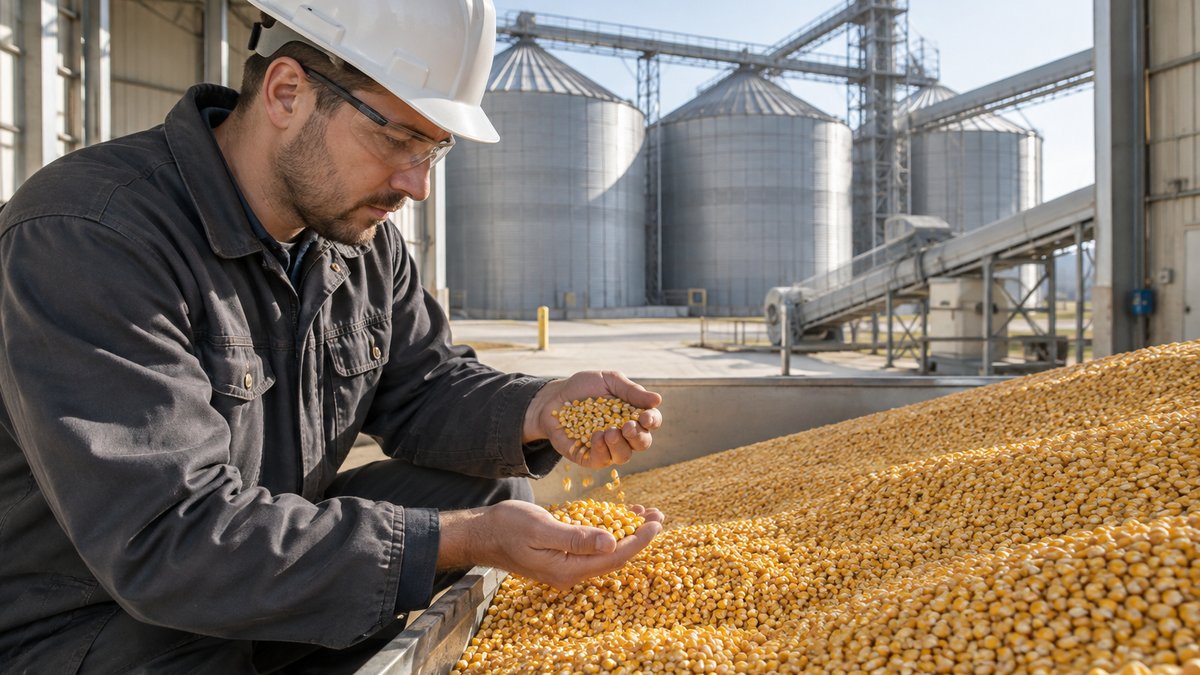
Japan’s September 2026 import statistics for HS 1005 recorded 1,268,703 tonnes of corn and a total value of US$342.274 million. The reported unit value was US$270/MT, up 9.65% from September 2025. This is a customs-trade unit value across the corn covered by HS 1005, not an offer for a particular grade, seller or delivery term.
The September customs figure is the latest Japan import unit value identified for this update. It is useful for tracking the average value of recorded imports, but it should not be read as a current November quotation: it covers a different period and a broad mix of shipments. The source does not provide an equivalent grade-specific offer in the cited summary.
2.2 FOB export bids by origin
USDA’s November 2026 report gives the latest origin-side comparison identified for this update: 5 November FOB bids in U.S. dollars per metric tonne. The report names U.S. 3YC at the Gulf, Brazil at Paranaguá and Argentina at Up River. The U.S. entry specifies 3YC; the table does not establish that all three origins share an identical grade or specification.
USDA’s figures are FOB export bids, not delivered prices in Japan. The U.S. bid was US$10/MT above Brazil’s and US$15/MT above Argentina’s on 5 November, but that arithmetic does not account for grade differences, freight, insurance, port costs or shipment timing. The USDA report also showed that the 5 November bids were higher than the corresponding 5 November 2025 values for the U.S. and Brazil, while Argentina’s bid was US$2/MT below its year-earlier figure.
The October-to-November declines came as the USDA report described large U.S. supplies and relatively weak U.S. sales as factors weighing on bids. It also reported lower Argentine bids and declining Brazilian bids. Those are the report’s explanations for export-side movements; they do not establish why Japan’s September import unit value rose year on year.
Buying consideration: Ask suppliers to quote the same corn specification, quantity, loading window and currency. Then compare their FOB offers with freight, insurance and destination charges included, rather than comparing an import unit value directly with an origin-side bid.
3. Why Are Corn Export Prices Changing?
The November FOB comparisons reflect supply and sales conditions reported by USDA, while Japan’s import outlook reflects domestic feed demand and competition from other feed ingredients. Buyers should keep these separate: an origin’s export bid can move for reasons that do not immediately change Japan’s import unit value or a buyer’s contracted price.
3.1 Exportable supply and harvest timing
USDA said large U.S. supplies continued to weigh on U.S. export bids in its November 2026 report. The same report noted that Brazilian bids had declined as supplies fell seasonally and that Argentine bids had also dropped since October. Crop timing matters to Japanese sourcing because availability at origin can affect which exporters are able to meet a requested shipment window.
3.2 Japanese feed demand and competing ingredients
Japan’s projected feed demand is a separate influence on import needs. USDA forecasts a modest reduction in corn feed use for MY2026/27 and says some feed mills may use more feed rice. The forecast is not a confirmed purchasing schedule, and the actual mix can differ as prices and available supplies change.
3.3 Currency, freight and delivery terms
An FOB bid leaves the buyer to arrange ocean freight and insurance after loading, subject to the agreed contract and Incoterm. Japanese import costs can therefore differ from an origin benchmark when freight, insurance, exchange rates and destination charges differ. Compare offers in one currency and on one delivery basis, and record the quote date and validity period.
Weather, logistics disruption and trade rules can also affect exportable supply or shipment timing. The USDA November report identified reduced global trade forecasts and continued disruption to Ukrainian export infrastructure; it did not give a Japan-specific price effect. Buyers should treat these as market conditions to monitor, not as a reason to assume a particular supplier’s offer will change by a fixed amount.
4. Which Countries Import the Most Corn?
4.1 Japan’s import demand
Japan is a large corn-importing market. USDA’s Tokyo office forecasts 15.6 million tonnes of imports in MY2026/27 and 12.35 million tonnes of corn feed use for that marketing year. The import forecast is 0.6% below the office’s MY2025/26 projection; the feed-use forecast is 1.2% lower. Both are forecasts, not final trade results.
This update focuses on Japan rather than ranking global importers. The cited Japan report provides a national outlook, while the November USDA coarse-grains report supplies global trade and export-bid context. Neither source excerpt used here provides a like-for-like ranking of all importing countries with comparable volumes for the same period.
4.2 Japan’s main supply origins
USDA identifies the United States and Brazil as Japan’s dominant corn suppliers, with purchasing decisions responding to price and availability. Historical changes in their shares show that buyers can switch origins when supply timing or relative competitiveness changes. Argentina also appears in the current USDA export-bid comparison, but that comparison alone does not establish its share of Japan’s imports.
Buying consideration: Treat an export-origin benchmark as a starting point. Confirm that the supplier can meet Japanese import requirements and the requested specification, then compare shipment cost and timing against alternative origins.
5. Where Can Buyers Source Yellow Corn at a Competitive Price?
The November FOB bids put Argentina lowest among the three listed benchmarks, followed by Brazil and the U.S. Gulf. Those bids do not establish which origin has the lowest delivered cost to Japan. Freight route, vessel availability, loading port, quantity and the corn specification can change the comparison.
5.1 Compare equivalent product specifications
Send each supplier the same specification sheet. Identify whether the corn is intended for feed, starch or another use, and state the required grade or quality parameters, moisture limit, foreign matter tolerance, crop year and any testing or inspection requirement. Ask suppliers to confirm each item in their quotation rather than assuming that a general description such as yellow corn means the same product across origins.
5.2 Compare the full delivery cost
FOB, CFR and CIF describe different divisions of cost and responsibility. Under FOB, the buyer generally arranges the main carriage and insurance. Under CFR, the seller pays freight to the named destination port, while insurance is not included in the seller’s obligation. Under CIF, the seller pays freight and minimum insurance to the named destination port. Confirm the named port and contract terms because responsibility for risk and cost does not transfer in the same way under every term.
Build a landed-cost comparison using the same destination port, quantity and shipment period. Add the costs that are outside each quotation, including freight, insurance where applicable, port and handling charges, financing, inspection and any import-related expense. The September Japan customs unit value is a broad historical measure, while a supplier quotation is a commercial offer for defined terms; they serve different purposes.
Quotation details to request:
Product: Yellow corn, with grade and intended use
Quantity and shipment window: State metric tonnes and the requested loading period
Delivery basis: FOB, CFR or CIF, with named port
Quality and documents: State agreed tolerances, inspection and required documents
This is an illustrative inquiry format. Final requirements depend on the contract, shipment and applicable Japanese rules.
6. What Does the Latest Demand Look Like on Freshdi?
National import statistics describe trade across a country; an individual buying request describes one buyer’s stated requirement. Buyers and suppliers reviewing yellow corn requests should check the posting date, destination, quantity, product specification and delivery terms before treating a request as relevant to a particular shipment.
The import and FOB figures in this update are market references, not Freshdi buying-request data. A request should be assessed on its own stated requirements and should not be treated as proof of national demand or a confirmed purchase.
7. What Should Buyers and Suppliers Do Next?
7.1 For buyers and importers
- Request current quotations from more than one origin and compare the same grade, quantity, shipment window and currency.
- Ask each supplier to identify the loading port and Incoterm, and state the quote’s validity period.
- Calculate landed cost to the same Japanese port, including freight, insurance and destination charges not included in the offer.
- Confirm quality parameters, inspection arrangements and import documentation before agreeing a purchase.
- Check whether the supplier can meet the required shipment schedule and provide the quantity stated in the offer.
7.2 For exporters and suppliers
- State the origin, grade, quality parameters, crop year, quantity and loading port in each offer.
- Identify the delivery basis and named port, and separate included charges from costs paid by the buyer.
- Give the quotation date and validity period so buyers can compare current offers.
- Confirm shipment availability and required documents before accepting a delivery schedule.
- Review buying requests for fit with the product, destination and volume before preparing a tailored quotation.
8. How Freshdi Helps Buyers and Suppliers Connect
Buyers can use Freshdi’s yellow corn supplier listings to review potential suppliers, while exporters can check yellow corn buying requests for stated sourcing needs. A listing or request does not confirm that a supplier or buyer will complete a transaction.
Before responding to a request, compare the stated product, quantity, destination and delivery terms with the available offer. Buyers should confirm supplier details and shipment terms directly through appropriate due diligence before making a commercial decision.
Buyers comparing origins and suppliers can review relevant yellow corn listings and sourcing requests.
View Latest Grains, Cereal & Legumes Buying Requests →View Potential Grains, Cereal & Legumes Suppliers →
9. Conclusion: Japan Yellow Corn Market Outlook
Japan’s September 2026 corn import unit value was US$270/MT, while the latest export benchmarks identified for this update were dated 5 November: US$201/MT for Argentina, US$213/MT for Brazil and US$216/MT for U.S. 3YC, all FOB at the stated origin locations. The import unit value and export bids cover different measures and periods, so buyers should not compare them as competing quotations.
USDA forecasts slightly lower Japanese corn imports and feed use in MY2026/27, while its November report describes lower FOB bids from the three listed origins compared with October. Buyers should check current offers and delivered cost; exporters should state their specification, shipment terms and quote validity clearly. Freshdi provides a place to review relevant suppliers and buying requests.
Buyers preparing a shipment can review suppliers whose yellow corn listings match their required specification.
View Related Suppliers for This Product →
Frequently Asked Questions
What was Japan’s latest reported corn import unit value?
Japan’s September 2026 import statistics for HS 1005 reported a corn import unit value of US$270 per metric tonne, based on 1,268,703 tonnes and a total value of US$342.274 million. The figure is a broad trade unit value, not a current supplier quotation or a grade-specific price.
What were the latest FOB corn bids by origin?
USDA’s 5 November 2026 figures were US$216/MT for U.S. 3YC at the Gulf, US$213/MT for Brazil at Paranaguá and US$201/MT for Argentina at Up River. These are FOB export bids, and the source does not establish identical product specifications across all three origins.
Why can Japan’s import unit value differ from FOB export bids?
The measures cover different trade stages and periods. Japan’s September unit value reflects a broad set of recorded imports under HS 1005. The USDA bids are origin-side FOB benchmarks dated 5 November. Grade, freight, insurance, shipment timing and other costs can also differ.
How much corn is Japan expected to import?
USDA’s Tokyo office forecasts Japan’s MY2026/27 corn imports at 15.6 million metric tonnes, 0.6% below its MY2025/26 projection. This is a forecast, not a final import total.
How should buyers compare FOB, CFR and CIF corn offers?
Compare the same product, quantity, destination port and shipment window. FOB leaves the buyer to arrange the main carriage and insurance; CFR includes seller-paid freight to the named port but not seller-arranged insurance; CIF includes seller-paid freight and minimum insurance to the named port. Check the contract for the precise cost and risk responsibilities.
Where can buyers find yellow corn suppliers or sourcing requests?
Buyers can review yellow corn supplier listings and buying requests on Freshdi. Check each listing or request for its stated product details, quantity, destination and terms, then conduct due diligence before making a commercial decision.
References
1. USDA Foreign Agricultural Service – Grain and Feed Annual: Japan, 2026.
2. USDA Foreign Agricultural Service – Coarse Grains: November 2026, November 2026.
3. TESEO, CLAL – Japan Import Cereal: September 2026, September 2026.
4. Japan Agriculture & Livestock Industries Corporation – Customs Clearance Statistics of Corn (Import) in Previous 3 Months, 2026.
Disclaimer: This article is compiled from platform data, public sources and information provided by third parties, for general informational purposes only. We do not guarantee its accuracy or completeness. Prices, volumes and forecasts are indicative, reflect conditions as of 2026-11-19 and may change without notice. This is not financial, investment or trading advice.