
1. Confectionery and oil-type sunflower seeds serve different markets
Confectionery sunflower seeds are grown mainly for human food, such as in-shell snacks and kernels used as ingredients. Oil-type sunflower seeds are grown mainly for crushing into vegetable oil, with the remaining meal commonly used in animal feed. Buyers should identify the intended end use before requesting a quotation because the two types are selected, graded and traded against different specifications.
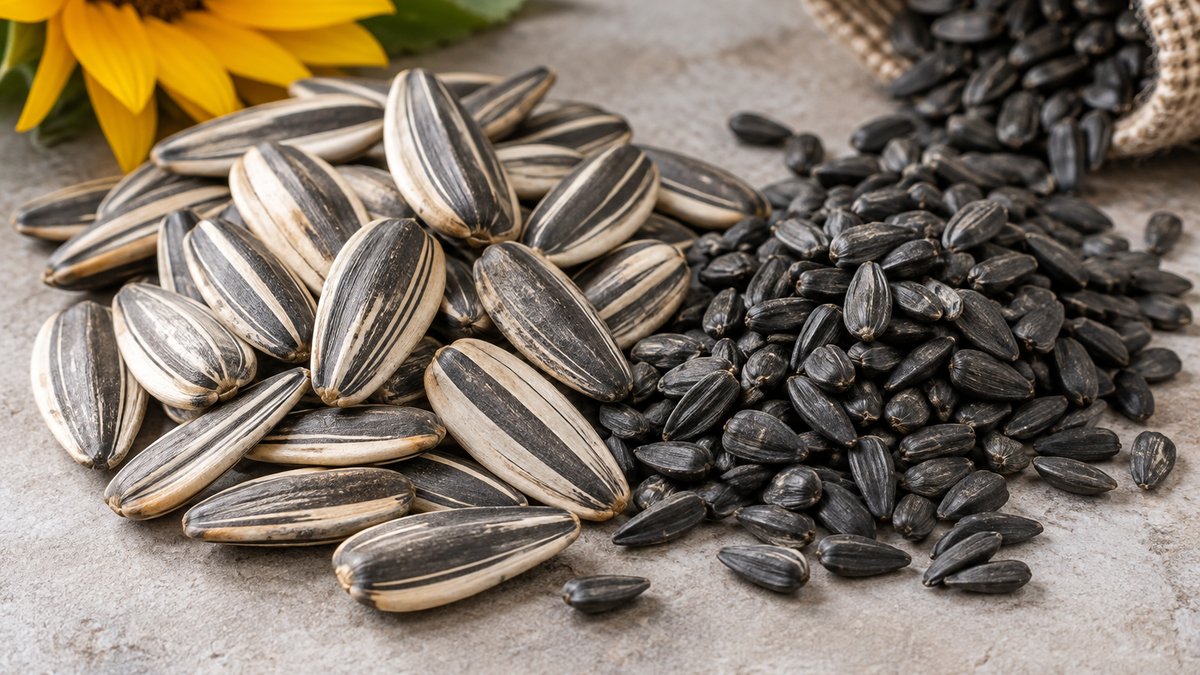
The distinction describes commercial types of sunflower seed, not two different species. Both are generally Helianthus annuus. Their appearance offers a useful first clue: confectionery seeds are often larger and striped or mottled, while oil-type seeds are commonly smaller and mostly black. Those traits are typical, not a substitute for a contract specification or an official inspection.
The Canadian Grain Commission classifies sunflower into Confectionary and Oil classes and describes how seed size and hull colour are used to determine the class under its grading system. In the United States, USDA inspection guidance defines confectionary sunflower seed by its non-oil marketing purpose and gives inspection procedures for that class. These are jurisdiction-specific systems; buyers should check the rules and contract terms that apply to their shipment.
Purpose is the practical distinction. A food processor buying seeds to roast for retail needs edible-seed characteristics, while a crushing plant needs a lot suited to oil extraction. A seed's colour or size alone cannot establish its oil content, food suitability, cleanliness or grade. Confirm those attributes through the agreed specification and, where needed, inspection or laboratory results.
2. Compare the types by use, seed traits and purchase specification
The comparison below describes common commercial characteristics. Varieties and contract requirements vary, so buyers should treat appearance and typical oil content as screening information rather than acceptance criteria.
Seed size, hull pattern and typical oil content are related to the type, but no single visual marker proves how a particular lot will perform. The Canadian Grain Commission uses size and hull colour to determine class under its grading guide. NDSU describes oilseed varieties as usually black-seeded with a thin hull, and confectionery varieties as usually larger and white-striped. Both sources describe common traits, not a universal test that applies in every trading jurisdiction.
Oil content needs particular care in comparisons. The 38% to 50% range in the North Dakota State University production guide is a general description of oilseed varieties, not a guaranteed value for an offered shipment. If extraction yield or payment depends on oil percentage, agree on the sampling method, test method, basis, tolerance and consequences of a result outside specification before shipment.
A grade name also needs context. Canada's official grading guide includes separate Confectionary and Oil classes, with the class forming part of the grade name. USDA publishes sunflower seed standards and separate inspection guidance for confectionary seed. A grade or class from one country should not be treated as equivalent to another country's grade without checking definitions and contract language.
For confectionery seed, a buyer should state whether the purchase is for in-shell snack use or for kernels, and define size, allowable damaged or empty seeds, foreign material, moisture, and any food-safety or processing requirements that apply. For oil-type seed, state the intended crushing use and the contractual limits for oil content, moisture, foreign material, damaged seed and other relevant factors. The exact list depends on the plant and the destination market.
Packaging and shipment terms are separate from seed type. A product can be sold in bulk or packed for a specific customer, subject to supplier capability and the buyer's requirements. Record the packaging, quantity, delivery point, applicable trade term, inspection arrangements and documents in the inquiry or contract. Avoid comparing quotations that use different test bases, delivery conditions or quality tolerances.
3. A food buyer and an oil crusher need different lots
Consider two buyers reviewing sunflower seed. A snack producer wants large, intact, clean seeds that can be roasted and sold in-shell. An oil processor wants seed that meets its crushing specification and has an acceptable oil yield. Even if both receive a shipment called “sunflower seed,” the relevant purchase tests and commercial value may differ.
3.1 Scenario: in-shell roasted snack
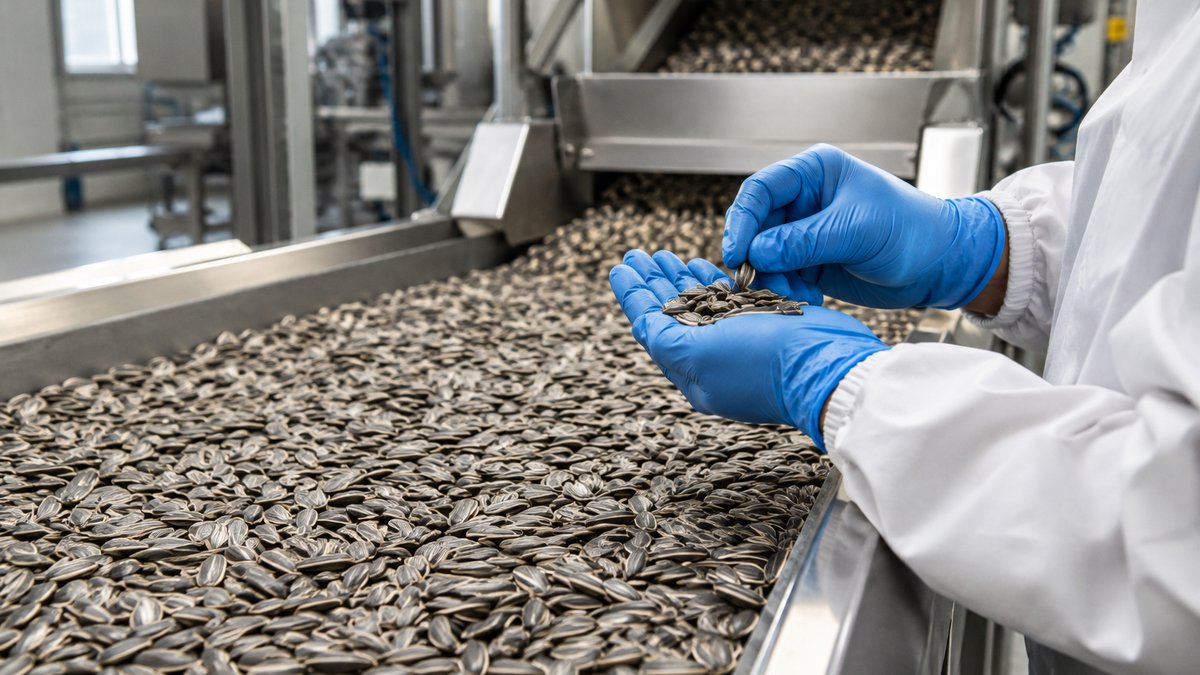
The snack producer should ask for confectionery sunflower seed and describe the intended use. The inquiry can specify whether the seeds must be sold in-shell, the required size range or screening method, moisture limits, cleanliness, damaged-seed tolerance and packaging. If the buyer needs a particular hull appearance or roast performance, those details should be written into the specification and assessed against a representative sample.
A statement such as “large striped seeds” is not enough to settle acceptance. The parties should define how they measure size, how inspectors draw and test samples, and which limits apply if the lot contains undersized, empty, broken or damaged kernels. The destination's food rules and the buyer's processing requirements should be checked separately; a visual class does not certify food safety.
3.2 Scenario: seed for oil crushing
The crushing plant should request oil-type sunflower seed and state the plant's acceptance limits. If payment depends on oil content, the contract should state the test method and sampling procedure, along with the moisture and foreign-material basis used for settlement. The buyer should also clarify whether hull content, damaged seed or other factors affect intake, processing or price.
An offer of oil-type seed should not be assessed only by its stated oil percentage. The buyer needs the test result's method and basis, and should compare it with the same measures for competing offers. Handling, cleaning, storage, delivery terms and the value of the resulting meal can also affect the plant's purchasing calculation.
These examples are illustrative, not universal contract templates. A confectionery lot may be dehulled for food ingredients, and some oil-type seed may enter other channels if it meets the buyer's requirements. The end use and written specification determine what the parties are buying.
Illustrative inquiry details
Product: Confectionery sunflower seed for in-shell roasting, or oil-type sunflower seed for crushing
Quality: State size or screening basis, moisture, foreign-material and damaged-seed limits
Testing: Specify sampling, test method, inspection point and acceptance procedure
Shipment: State quantity, packaging, delivery point, trade term and required documents
This is an illustrative inquiry format. Set limits and documents to match the actual product, destination and contract.
Looking to Source Sunflower Seed?
Connect with verified suppliers, discover matching products, and explore sourcing opportunities from global markets.
4. Choose the type that matches the product you will make
Choose confectionery sunflower seed when the intended product is a human-food item that depends on seed size, appearance or kernel characteristics. Choose oil-type sunflower seed when the planned use is crushing and the buyer evaluates the lot against extraction and intake requirements. Start with the process and finished product, then specify the seed.
4.1 Choose confectionery seed for snack and food-ingredient uses
In-shell snack buyers often care about seed size, visual uniformity, intact kernels, cleanliness and how the seed performs during roasting. A processor buying kernels may place greater emphasis on dehulling yield, kernel condition and the specifications of its downstream food product. Buyers should say which format they need because “confectionery” by itself does not state whether the product is in-shell or shelled.
Before confirming a lot, ask for its grade or class under the named grading system, a sample or inspection plan, and the agreed limits for the factors that affect your process. Confirm applicable food and import requirements for the destination. A large striped seed can suit a visual preference, but it does not by itself show that a lot meets the buyer's other requirements.
4.2 Choose oil-type seed for crushing
Oil processors should focus on their plant's intake criteria and the lot's measured attributes. Agree on oil-content testing when relevant and define the basis for comparison. State the required grade or inspection standard, moisture, foreign-material and damage limits, plus any plant-specific conditions. Discuss the meal or other co-products as part of the plant's own calculation rather than assuming the same seed value for every processor.
A high oil percentage is useful only when the result is measured and reported on the basis the buyer accepts. Likewise, black hulls or small seed size can suggest an oil-type lot but do not establish the laboratory result or grade. Require evidence that matches the contractual claim.
4.3 Check whether the type name matches the commercial lot
Seed lots and varieties can serve more than one channel. North Dakota State University's production guide also describes Conoil types that may be used for dehulling, confectionery, oil or bird-food markets. USDA inspection guidance says a lot presented for inspection as confectionary seed for non-oil marketing can include mixtures of confectionary and oil-type seed. These examples reinforce the need to verify the lot's intended market and actual specification instead of relying on a label alone.
For an import or export contract, write down the product's end use, class or grade system, measurable acceptance limits, sampling method and inspection responsibilities. Add packaging, quantity, shipment terms and any destination-specific requirements. If the supplier and buyer use different grading systems, attach or define the relevant measures rather than assuming the grade names are interchangeable.
Buying consideration: Before comparing offers, make every supplier quote the same intended type, test basis, quality limits, packaging and delivery conditions. If those details differ, ask for revised offers or compare each difference explicitly.
5. Use grading guides and supplier information to verify the specification
Official grading guides can help buyers define class and inspection factors, while the contract sets the commercial requirements for the particular transaction. The Canadian Grain Commission's 2025-2026 Official Grain Grading Guide explains the country's two sunflower classes and its class-determination approach. USDA's Federal Grain Inspection Service provides a separate confectionary sunflower inspection directive, and USDA's Agricultural Marketing Service maintains its sunflower seed standards.
These references are useful starting points, not a replacement for checking the destination's rules or the contract. Confirm that the named standard covers the product and inspection being purchased. If the buyer needs a particular oil content, food-use characteristic or size, state it directly and agree on how it will be measured.
Freshdi has sunflower seed buying requests and sunflower seed suppliers for buyers and sellers exploring the category. Review each listing's stated product details and verify specifications, documents and commercial terms with the potential business partner.
References
1. Canadian Grain Commission – Official Grain Grading Guide: Sunflower Seed, 2025-2026.
2. USDA Federal Grain Inspection Service – Directive 9180.51: Sunflower Seed Inspection, March 14, 2022.
3. North Dakota State University Extension – Sunflower Production Guide, December 2020.
4. USDA Agricultural Marketing Service – Sunflower Seed Standards, Accessed November 19, 2026.
Disclaimer: This article is compiled from platform data, public sources and information provided by third parties, for general informational purposes only. We do not guarantee its accuracy or completeness. Please conduct your own due diligence before making business decisions.