
Introduction
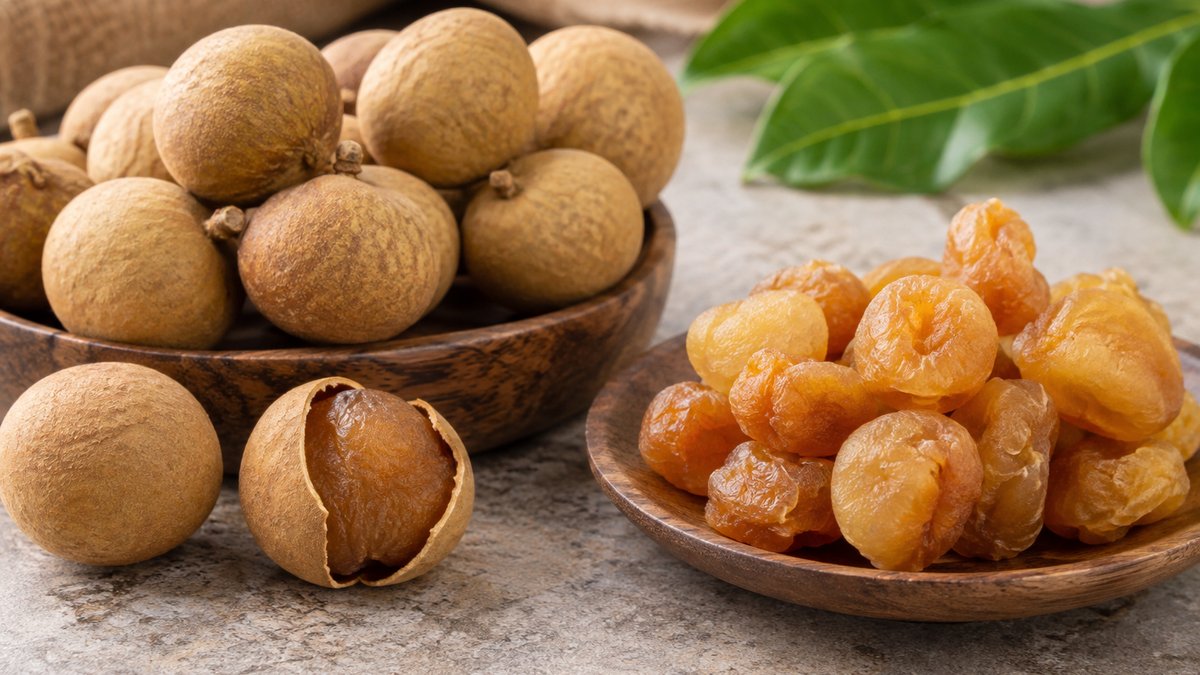
Dried longan with shell is dried whole fruit, with the peel and seed still present. Dried longan pulp, called “dried longan flesh” in the Codex standard, is peeled and pitted fruit. The processing difference affects what the buyer receives and how the product should be specified.
For importers and exporters, the clearest comparison begins with the product style, not a seller’s informal use of “pulp.” Codex Alimentarius distinguishes dried whole longan from dried longan flesh and sets separate moisture limits for each. Buyers should confirm the style, drying method, quality criteria and destination-market requirements in the specification.
1. How Dried Longan With Shell Differs From Dried Longan Pulp
Dried longan with shell keeps the fruit unpeeled and unpitted; dried longan pulp has both peel and seed removed. Codex Alimentarius calls these styles “dried whole longan” and “dried longan flesh,” respectively. The Codex definition covers mature Dimocarpus longan fruit dehydrated without prior immersion in sugar solution.
“Pulp” is common commercial shorthand, but it is less precise than the Codex name. Under the Codex definition, dried longan flesh is the peeled and pitted whole fruit, with irregular shape, size and thickness. A buyer using “pulp” should confirm whether the offer is whole peeled flesh, cut pieces, paste, or a product with added ingredients.
The shell style includes more than edible flesh: it retains peel and seed. Dried flesh is ready for use without peeling or pitting at the buyer’s facility. That difference affects handling and the amount of edible material in a purchased weight, so price per kilogram alone may not make the two offers comparable.
Codex CXS 360-2020 gives a maximum moisture content of 13.5% by mass for dried whole longans when measured as the whole fruit, including flesh, seed and peel. It separately allows up to 17% for the flesh of whole dried longans, and up to 18% for dried longan flesh. Those limits belong to specific product and measurement bases; they should not be treated as interchangeable values or as a substitute for the importing country’s rules.
Codex also provides separate class designations. Dried whole longan can be Extra Class and Classes I, II or III; dried longan flesh can be Extra Class and Classes I or II. A grade name should therefore be tied to the relevant style and the standard or buyer specification being used.
2. Comparison of the Two Dried Longan Styles
The main commercial distinction is whether the peel and seed remain. Buyers can use the following comparison to frame a request, then confirm the details against the applicable standard and supplier’s product specification.
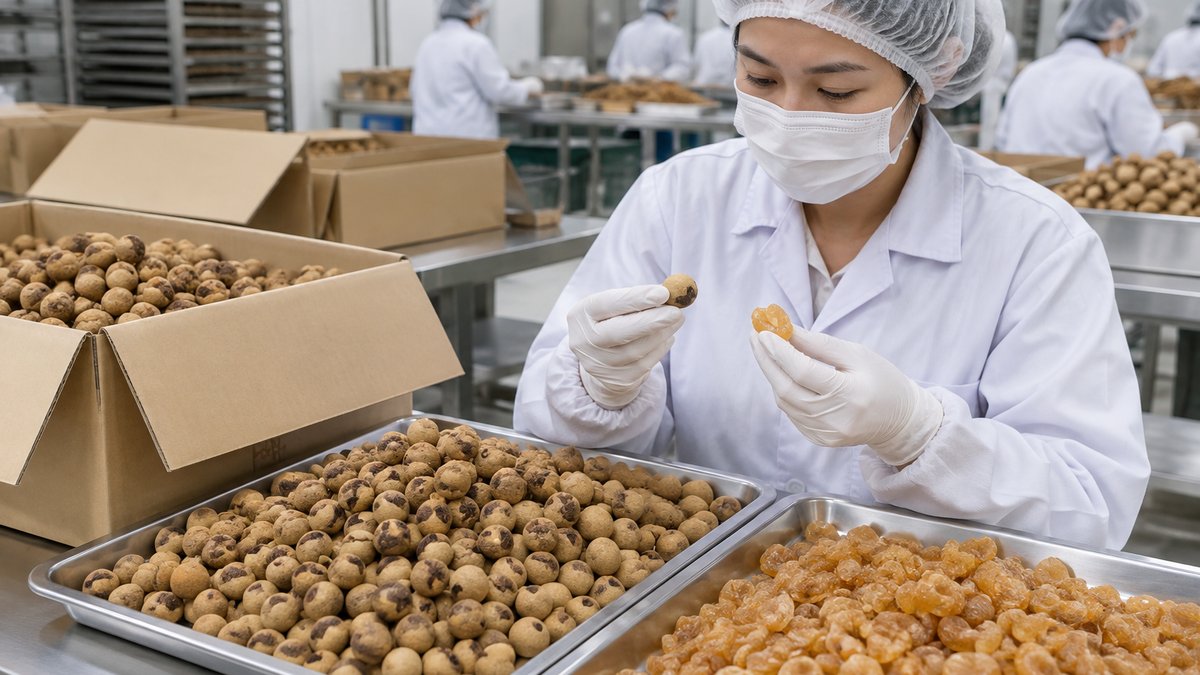
The moisture figures in the table come from Codex CXS 360-2020. For the whole-fruit value, the standard specifies that the mass includes flesh, seed and peel; it also lists a separate flesh-only limit for dried whole longans. A purchase specification should state the tested part or basis so that a laboratory result can be compared with the correct limit.
Codex describes cracks, shape defects and syrup stains for whole dried longans. For dried longan flesh, its listed defects include broken flesh and extraneous vegetable material. These criteria reflect the different physical forms, so inspection terms for one style should not be copied automatically into a contract for the other.
Sizing also depends on style. Codex uses fruit diameter for dried whole longans and the number of fruits per 100 grams for dried longan flesh when those products are sized. Sizing is optional under the standard. If size affects the buyer’s packing, presentation or processing, the contract should state the measurement method and accepted range.
Codex CXS 360-2020 allows no food additives in dried whole longan under its dried-longan annex. For dried longan flesh, it permits only preservatives that comply with the referenced Codex food-additive provisions. Buyers should check the actual ingredient declaration and confirm that the product complies with the destination’s rules.
Codex is an international food standard, not automatically the law in every importing country. Check whether the destination has adopted or supplemented its provisions. Thailand’s voluntary TAS 10-2006 standard for dried whole longan, for example, includes requirements for quality, moisture, water activity, packaging and labeling. It specifies a flesh water activity limit of 0.6 and moisture limits of 13.5% for the whole fruit or 17% for flesh only. Those Thai provisions should not be presented as a universal legal requirement.
Buying consideration: Ask the supplier to name the style as dried whole longan or dried longan flesh, state whether any additional ingredients are used, and provide the moisture result with its measurement basis. Then verify the quality and labeling requirements for the destination market.
Looking to Source Dried Longan?
Connect with verified suppliers, discover matching products, and explore sourcing opportunities from global markets.
3. A Sourcing Scenario: Choosing a Style for the Next Processing Step
A buyer’s next processing step can point to the more suitable style. A buyer that needs intact dried fruit for sale or further repacking may consider dried whole longan; a buyer that needs edible fruit without peel and seed may consider dried longan flesh. These are sourcing examples, not claims that either style is restricted to one use.
Suppose a distributor is sourcing dried fruit in a whole-fruit presentation. Shell-on longan arrives with the peel and seed in place, so the buyer can assess whole-fruit appearance and the lot’s size classification. The distributor would still need to confirm the class, permitted defects, packaging, net weight, moisture basis and labeling before agreeing to the purchase.
Now suppose a food processor needs peeled and pitted longan for a recipe or for further processing. Dried longan flesh reduces the need for the buyer to remove peel and seed, but the request should specify whether the buyer expects intact flesh or accepts broken pieces. It should also define the count or size basis, moisture limit, ingredient declaration and pack format.
In either case, the buyer should not assume that shell-on product carries the same usable edible yield per kilogram as dried flesh. The styles contain different parts of the fruit. If yield drives the buying decision, request representative samples or measured yield information under an agreed method, then compare cost using the buyer’s own processing and acceptance criteria.
The Codex limits provide useful specification references, but they do not establish shelf life, a particular drying process or a universal storage condition. Ask the supplier for the product’s actual process and storage guidance, and set any agreed shelf-life or packaging requirements in the contract. A moisture result on its own does not answer every quality or storage question.
Illustrative inquiry format:
Product style: Dried whole longan or dried longan flesh
Processing: Peel and seed status; intact or broken flesh if applicable
Quality: Class or buyer grade, moisture limit and test basis
Commercial details: Quantity, pack format, destination and delivery term
Compliance: Ingredient declaration and destination-market documents
This is an illustrative inquiry format. Buyers should set requirements for their product, process and destination.
4. When Buyers Should Choose Each Style
Choose dried longan with shell when the specification calls for dried whole fruit, or when the buyer wants to handle the whole-fruit presentation. The product arrives unpeeled and unpitted under the Codex definition. Buyers should establish how size, visible defects, moisture and packaging will be checked before shipment.
For shell-on lots, Codex’s class and defect provisions can guide a quality discussion. Buyers can agree on the class, inspect the percentage of cracks, shape defects and syrup stains, and specify how the lot will be sampled. If the supplier uses a local grade or size code, the parties should agree on its meaning rather than assume that it matches a Codex class.
Choose dried longan flesh when the buyer’s specification requires peeled and pitted fruit. The flesh style is more directly suited to a buyer who needs the edible portion separated from the peel and seed, but the buyer should still state whether irregular whole pieces or a different cut form is acceptable. “Pulp” alone may not convey that distinction clearly.
For flesh lots, define the allowable amount of broken pieces, the size basis and the permitted extraneous material. Codex gives separate defect allowances for dried longan flesh and whole dried longans, and its sizing method differs by style. A contract that simply says “dried longan, Grade I” leaves room for disagreement unless the product style and grading reference are also named.
Neither style is automatically the lower-cost option. Shell-on fruit includes peel and seed in the purchased weight; flesh requires peeling and pitting before sale. Compare offers with like specifications and consider usable yield, processing labor, the buyer’s acceptance criteria and packaging. State whether the quoted price is based on net product weight and whether packaging is included.
Before confirming an order, ask for a product specification and representative sample, agree on inspection and test methods, and identify the destination-market requirements. The contract should clearly name dried whole longan or dried longan flesh and define any buyer-specific terms that go beyond the standard.
Buyers comparing the two dried longan styles can review relevant buying requests and supplier listings for the broader processed-fruit category.
View Latest Processed Fruits Buying Requests →View Potential Processed Fruits Suppliers →
5. Related Resources for Dried Longan Sourcing
The Codex dried-fruit standard provides the international style names and quality provisions for dried whole longan and dried longan flesh. Thailand’s TAS 10-2006 provides a country-specific voluntary reference for dried whole longan. For an actual import, check the rules in the destination market and confirm that the specification, testing basis and labeling match the product being sold.
Freshdi lists relevant buying requests and supplier profiles for dried longan and processed fruits. Buyers and exporters can use those listings to explore sourcing opportunities, then confirm product details, business information and commercial terms directly through their own due diligence.
References
1. Codex Alimentarius Commission – General Standard for Dried Fruits, CXS 360-2020, Annex D: Dried Longans, 2020.
2. National Bureau of Agricultural Commodity and Food Standards, Thailand – Thai Agricultural Standard TAS 10-2006: Dried Whole Longan Fruit, 2006.
Disclaimer: This article is compiled from platform data, public sources and information provided by third parties, for general informational purposes only. We do not guarantee its accuracy or completeness. Please conduct your own due diligence before making business decisions.