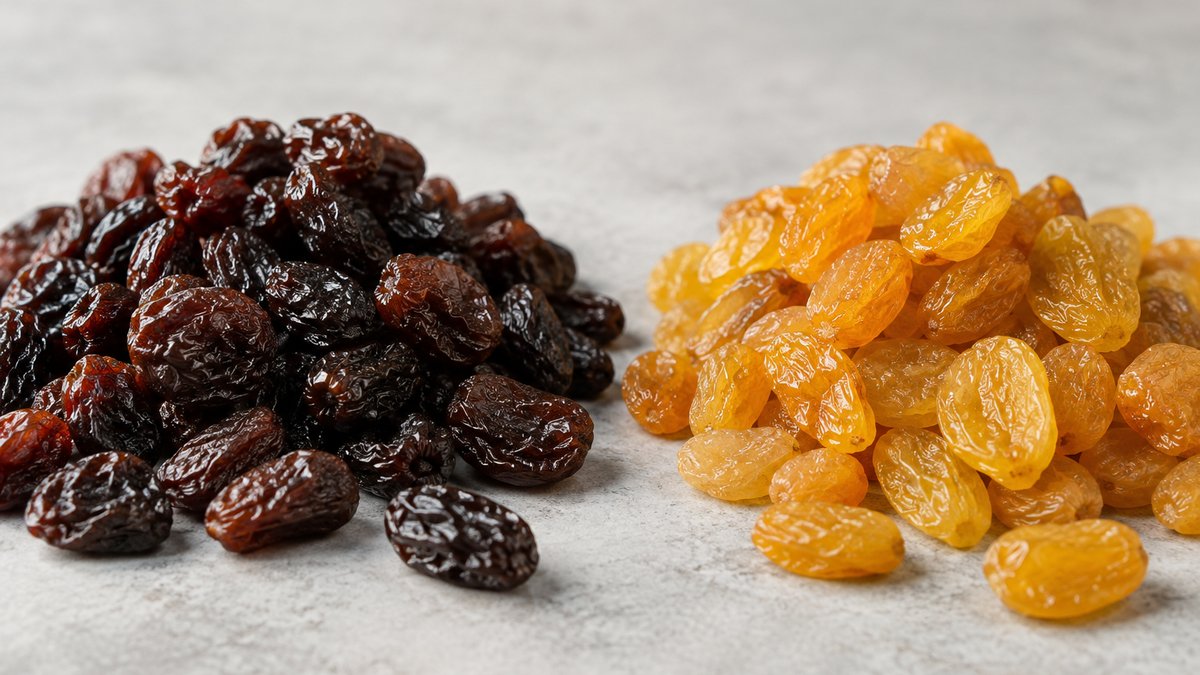

1. Natural dark and golden raisins differ mainly in how they are processed
Natural dark raisins usually get their brown color as grapes dry in the sun. Golden raisins are treated with sulfur dioxide and artificially dehydrated to retain a lighter color. In the United States marketing order for California raisins, “Golden Seedless” is defined by a production process that includes soda dipping, sulfuring and artificial dehydration. The two product names therefore describe meaningful processing differences, though the precise terminology can vary by origin and market.
The distinction does not, by itself, tell a buyer the grape variety, grade, size, moisture level, sweetness, softness or final sulfur dioxide residue. Those details belong in the product specification. USDA standards assess raisin grade using factors such as color, flavor, maturity, moisture and defects; the style name alone is not a grade.
For California-style production, the California Raisins industry describes natural seedless raisins as sun-dried and golden seedless raisins as mechanically dried and treated with sulfur dioxide to preserve their color. USDA's marketing order also recognizes that natural-condition raisins may be sun-dried or artificially dehydrated, so buyers should avoid assuming that every product labeled “natural” worldwide was dried in the same way. Ask the supplier to identify the origin, grape type and actual drying and treatment process.
Color is the clearest visible difference. Natural dark raisins are brown to dark brown, while golden raisins range from yellowish green to amber under the U.S. standard for natural-condition Golden Seedless raisins. In food manufacturing, that color can affect the appearance of a finished mix, baked good or retail pack. The buyer should still request a sample or agreed color specification when appearance is commercially important.
“Sulphured” describes treatment with a sulfiting agent; it does not state the finished product's measured residue. Sulfur dioxide levels depend on processing, and a buyer needing a defined limit should write the limit and test method into the purchase specification. U.S. labeling rules treat sulfites at 10 parts per million or more in finished food as detectable for the relevant declaration requirements. That is a U.S. labeling rule, not a universal threshold for every destination market.
2. Comparison of natural dark raisins and golden raisins
Use the style name as a starting point, then compare processing, intended appearance and destination-market requirements. The following comparison reflects common California-style trade usage and U.S. regulatory sources; suppliers in other origins may use different names or methods.
The production definitions above are not a substitute for the contract specification. The U.S. definition of Golden Seedless applies within the California raisin marketing order. USDA also publishes processed-raisin grade standards, but grade and product style answer different questions: style identifies a product type or processing route, while grade describes quality against a standard.
Buying consideration: When two quotations use different style names, ask each supplier to confirm grape variety, drying method, any sulfiting treatment, color range, moisture, grade basis and test documentation before comparing price.
3. Two sourcing situations show when the distinction affects a purchase
A bakery selecting raisins for a light-colored dough may prefer golden raisins because their color is less likely to create dark inclusions. A bakery producing a dark loaf or a conventional raisin filling may choose natural dark raisins if the brown color suits its recipe. These are formulation choices, not quality rankings. The product must still meet the bakery's requirements for size, moisture, softness, flavor and performance during mixing and baking.
Consider a food manufacturer buying raisins for a visible fruit-and-grain blend. If the product specification requires a consistent light appearance, the buyer can request golden raisins and set an acceptable color range. The buyer should also ask whether the product is sulfured, obtain the supplier's ingredient and allergen-label information where relevant, and define any required sulfite limit or test report. A color description alone does not establish the residue.
A second buyer may be formulating a product for a market where sulfite disclosure or limits matter. That buyer can evaluate natural dark raisins as one candidate, but should not rely on the word “natural” as proof of a particular residue or regulatory status. The supplier should document processing and provide test results against the importer's specification. The importer must check the rules for the destination and product category.
These examples also show why price comparisons need matching specifications. A quote for golden raisins and a quote for natural dark raisins are not directly comparable if they differ in grade, moisture, size, origin, packaging, crop year, shipment terms or testing requirements. Additional processing may affect cost, but the style name alone cannot establish which quote should be higher.
Illustrative raisin inquiry format:
Product style: Golden Seedless raisins
Intended use: Light-colored bakery mix
Required details: Origin, grape variety, grade standard, size, moisture, color range and packaging
Treatment and testing: State whether sulfured; provide the agreed sulfite limit and test method, if required
Commercial details: Quantity, delivery destination, delivery term and shipment schedule
This is an illustrative inquiry format, not a universal raisin specification. Set requirements for the actual product and destination.
Looking to Source Raisin?
Connect with verified suppliers, discover matching products, and explore sourcing opportunities from global markets.
4. Choose the style that fits the formulation and destination rules
Choose natural dark raisins when the product can use a brown raisin appearance and the supplier's process and quality specifications meet the buyer's requirements. Choose golden raisins when a lighter color is required and the buyer accepts the treatment and labeling implications for the destination market. Neither style is inherently superior; the suitable option depends on the product formula, commercial specification and applicable rules.
4.1 For importers
Start with the intended use. A retail pack, bakery ingredient, snack mix and industrial filling can require different raisin sizes, moisture levels, softness and defect tolerances. State the style and any color expectation, then name the grade standard or describe the acceptance criteria. If a contract references a USDA grade, specify the applicable standard and inspection basis rather than treating “golden” or “natural” as the grade.
For golden raisins, request the producer's process description and documentation of sulfite treatment. If the product is destined for the United States, confirm label declarations against current FDA requirements; for another country, check that market's rules. Where sulfite sensitivity, customer policy or a regulatory limit is relevant, specify the maximum residue, sampling plan and analytical method in writing. Ask whether the report covers the finished raisins or a different production stage.
For natural dark raisins, confirm whether the lot was sun-dried or artificially dehydrated and whether any treatment was used. The word “natural” does not settle those questions across all origins. Buyers making organic, clean-label or no-added-sulfite claims should obtain the required supporting evidence and verify that the claims comply with the importing market's rules.
4.2 For exporters
Describe the product in terms buyers can verify: style, grape variety, origin, process, grade basis, size, moisture range, color, packaging and available inspection or laboratory documents. For sulfured golden raisins, state the treatment and provide current test documentation when requested. Do not use “sulfite-free” or a residue figure unless the evidence supports the claim for the offered lot.
A clear specification reduces disputes over what the style name means. If a buyer requests golden raisins but has not specified color range, grade or sulfite criteria, ask for those requirements before quoting. If the buyer requests natural raisins, clarify the requested process and any treatment restrictions. Keep quotation and sample details aligned with the contract so the delivered lot can be checked against the agreed terms.
Before signing, both parties should settle the inspection point, sampling method, acceptance criteria, packaging and labeling language. For a processed food ingredient, the importer should also check whether the product's intended use triggers requirements beyond those for raisins sold as a standalone food. Destination regulations can differ, so a U.S. rule should not be presented as a global standard.
5. Related raisin standards and sourcing resources
USDA's raisin standards help buyers distinguish product type from grade, while the U.S. marketing order defines Golden Seedless production for California raisins. FDA's sulfite rule is relevant to food labeling in the United States. These sources were checked on November 19, 2026; importers should verify that destination-specific requirements remain current before contracting.
- USDA Agricultural Marketing Service, “7 CFR § 989.7, Golden Seedless raisins” and “7 CFR § 989.8, Natural condition raisins.” The definitions apply to the California raisin marketing order.
- USDA Agricultural Marketing Service, “United States Standards for Grades of Processed Raisins.” Use the applicable grade standard and inspection basis in the contract.
- U.S. Food and Drug Administration, “21 CFR § 130.9, Sulfites in standardized food.” Check the relevant labeling provisions for the product and U.S. market.
Buyers and exporters can review Raisin buying requests on Freshdi and Raisin suppliers on Freshdi as starting points for relevant B2B sourcing. Confirm each supplier's specifications and documents for the lot under consideration.
References
1. U.S. Department of Agriculture, Agricultural Marketing Service – 7 CFR § 989.7, Golden Seedless raisins; § 989.8, Natural condition raisins, 2025.
2. U.S. Department of Agriculture, Agricultural Marketing Service – United States Standards for Grades of Processed Raisins, 2023.
3. U.S. Food and Drug Administration – 21 CFR § 130.9, Sulfites in standardized food, 2025.
4. California Raisins – The California Raisin Industry, n.d..
Disclaimer: This article is compiled from platform data, public sources and information provided by third parties, for general informational purposes only. We do not guarantee its accuracy or completeness. Please conduct your own due diligence before making business decisions.