
Introduction
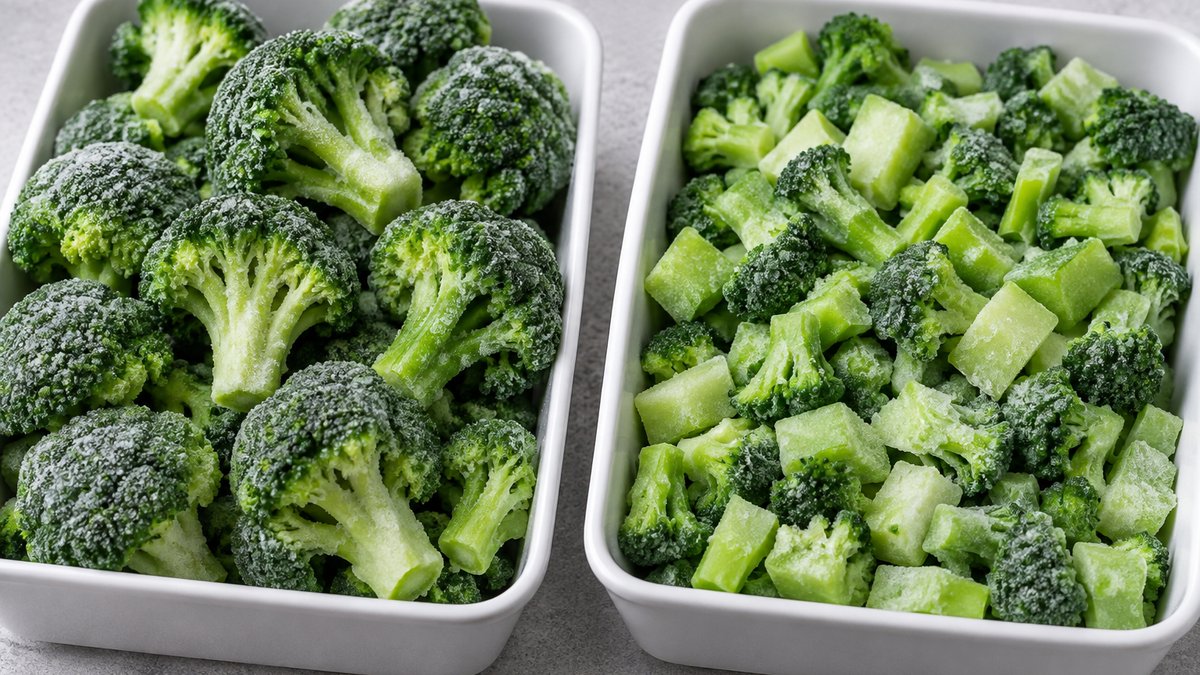
IQF broccoli florets and frozen broccoli cuts describe different product attributes. IQF refers to a quick-freezing presentation in which individual pieces remain free-flowing; florets and cuts describe the broccoli's form. A cut product can also be IQF.
For buyers and exporters, the purchase specification should name both attributes separately. Codex and the U.S. Department of Agriculture define broccoli styles with different measurements, so state which standard applies when the dimensions or style definition affect acceptance.
1. How IQF Broccoli Florets Differ from Frozen Broccoli Cuts
The main distinction is product form, not freezing method. Florets are recognizable broccoli heads with attached stem; cuts are portions made by cutting spears or short spears. IQF means the frozen pieces are free-flowing enough to separate easily while frozen. It does not tell a buyer whether the broccoli is supplied as florets, cuts or another style.
Under the Codex Standard for Quick Frozen Vegetables, broccoli florets include the head and adjoining stem, generally 15 to 80 mm long, with enough attached stem to keep a compact head. Codex cut spears are portions of spears, possibly irregular in shape, measuring 1.5 to 5 cm in their longest dimension. Codex also sets limits for leaf and head material in cut spears.
The U.S. frozen broccoli grade standard uses its own style definitions. It describes short spears or florets as 2.5 to 9 cm long, with each unit weighing more than 6 g. Its cut style covers portions of spears or short spears 2 to 5 cm long and specifies the minimum head material and maximum leaf material in a sample. These definitions are not identical to Codex's. A contract should name the applicable standard rather than assume that a word such as “florets” has one universal size range.
The dimensions overlap: some pieces could fall within the length range for either style, depending on their shape and the standard used. Buyers should assess the whole style definition, including head shape, attached stem, leaf content and sample tolerances. A cut is not automatically chopped broccoli. USDA defines chopped broccoli separately as portions shorter than 2 cm; Codex defines chopped as pieces shorter than 1.5 cm.
IQF is also not a grade or a quality claim. Codex describes individually quick-frozen vegetables as free-flowing, with individual pieces not stuck together in a way that prevents easy separation in the frozen state. The standard also describes quick-freezing as a process and specifies cold-chain maintenance for quick-frozen vegetables. Buyers still need separate requirements for grade, defects, piece size, temperature handling and packaging.
In a quotation, keep the style and freezing terms in separate parts of the product description. For example, “IQF broccoli florets” states both a form and a freezing presentation. “Frozen broccoli cuts” states a style but leaves the freezing presentation open. If a buyer wants cuts that separate easily in the frozen state, the inquiry should say “IQF broccoli cuts” and give the dimensions and acceptance criteria.
A supplier's product name may be a commercial description rather than a promise that the lot meets a particular standard. Before treating the name as a contractual requirement, ask which standard or supplier specification supports it. Confirm that the description, size range and tolerances appear consistently in the quotation, product specification and contract.
2. Comparison of IQF Broccoli Florets and Frozen Broccoli Cuts
Use “florets” or “cuts” to identify the style, then state whether the product must be IQF. These terms answer different questions, and a purchase specification that combines them is easier for suppliers to interpret.

The Codex dimensions above come from the Codex Standard for Quick Frozen Vegetables. The U.S. measurements are from USDA's standard for frozen broccoli. They are jurisdiction-specific definitions, not interchangeable specifications. The USDA standard sets grade and style requirements for products offered under that standard; Codex's scope covers quick-frozen vegetables offered for direct consumption, including catering, and excludes products identified for further processing or other industrial purposes. Check the standard's scope and the destination market's requirements before using either as a contractual benchmark.
The word “cuts” can be used loosely in commercial descriptions. For example, a supplier may describe small broccoli pieces as cuts without giving a formal grade or a recognized cut-size range. Ask for the supplier's written definition and a product specification sheet, then put the agreed measurements and tolerances in the contract.
Read the comparison as a starting point for drafting specifications, not as a substitute for the full standard or product agreement. Codex's cut-spears definition includes both a dimension and composition criteria. The U.S. frozen broccoli standard likewise includes requirements beyond piece length. A size range alone may therefore be insufficient to establish whether a shipment meets the style the buyer ordered.
Also distinguish the size of a floret from the size of a cut portion. A supplier may quote a nominal size but use a different measurement method or tolerance. State whether the dimension refers to length, diameter, the longest dimension or another agreed measure. If the buyer needs a particular proportion of pieces within a range, specify that proportion and how it will be assessed.
When comparing offers, check that suppliers are quoting the same style and the same basis of measurement. One quotation may cover florets by length while another describes pieces by diameter. Those descriptions do not necessarily identify equivalent products, even if the numbers look similar. Request a written explanation of any difference before comparing commercial terms.
Looking to Source Frozen Broccoli?
Connect with verified suppliers, discover matching products, and explore sourcing opportunities from global markets.
3. Example: Selecting Broccoli for a Prepared Meal
A prepared-meal buyer choosing broccoli for a visible side portion may specify florets, while a buyer blending broccoli into a filling may request cut pieces. These are illustrative applications, not fixed rules: the recipe, line equipment and finished-product standard determine the required form.
Suppose the first buyer wants distinct broccoli heads on top of a meal tray. The inquiry can request IQF florets and define a size range, allowed proportion of undersized or broken pieces, stem length and maximum leaf material. It should also state whether the buyer will judge the product against Codex, a U.S. grade standard or a separately agreed specification. Merely asking for “frozen broccoli florets” leaves those acceptance details open.
A second buyer producing a mixed vegetable filling may prefer pieces that distribute through the recipe. The inquiry can request frozen broccoli cuts and set the cut dimensions, head-to-stem or head-to-leaf proportions if relevant, tolerance for pieces outside the declared size, and whether the pieces must be IQF. The buyer should not assume that cuts are IQF, or that the supplier's term “cuts” matches Codex or USDA definitions.
In either case, request comparable information from each supplier: broccoli style, size method, grade or quality criteria, preparation and blanching details, freezing presentation, net weight, pack format, storage conditions and documents required for the destination. Ask suppliers to identify any specification they cannot meet before comparing quotations.
The buyer should check that the proposed style fits the actual production step. If workers need to place visible pieces in set positions, floret integrity and size consistency may be important acceptance points. If the broccoli is mixed into another product, cut dimensions and the agreed proportion of different piece sizes may matter more. These priorities come from the buyer's process, so the inquiry should state the intended product use clearly enough for suppliers to assess the specification.
The two buyers should also consider how the frozen product will be received and handled. A requirement for IQF should be connected to a practical inspection point, such as whether the pieces separate as agreed when the sample is examined frozen. The contract can state who takes the sample and which procedure applies. That makes the acceptance test clearer than using “IQF” as the only quality description.
If a supplier proposes an alternative style, compare it against the intended use before accepting a substitution. A different piece form can affect portioning, appearance and the buyer's production process. Ask the supplier to describe the alternative in measurable terms and provide a sample for review. Record any accepted change in the purchase documents rather than relying on an informal product-name change.
Illustrative inquiry format:
Product: Frozen broccoli florets, IQF
Style and size: Florets with adjoining stem; state the required size range and measurement method
Standard: Name the applicable standard or attach the agreed product specification
Quality limits: State tolerances for broken pieces, undersized florets, leaves and other defects
Packaging and quantity: State pack format, net weight per pack and order quantity
Handling: State the required storage and transport temperature and destination
This is an illustrative inquiry format, not a universal product specification. Set the measurements, limits and destination requirements for the actual purchase.
4. When to Choose Florets or Cuts
Choose florets when the finished product depends on a recognizable broccoli head and the supplier can meet the required size and appearance tolerances. Choose cuts when the intended recipe or manufacturing process needs portions rather than intact heads. Then decide separately whether the product must be IQF.
4.1 Choose IQF florets when piece separation and appearance matter
Specify IQF florets when the buyer needs separate pieces that can be handled or portioned from the frozen pack, subject to the agreed free-flowing performance. Set the target floret dimensions and describe the acceptable condition of the head and attached stem. If presentation matters, state limits for broken heads and small pieces rather than relying on “whole florets” alone.
IQF describes the frozen presentation, not the cooking result or a guarantee that every piece will remain intact after transport, storage and handling. Agree on inspection criteria and a sampling method, and confirm how the product will be packed and maintained in the cold chain.
If the buyer needs different floret sizes for separate product lines, make each size range a distinct line in the specification or purchase order. State whether the supplier can mix sizes in one pack and how the size distribution will be measured. This prevents a general label such as “medium florets” from carrying a different meaning in the supplier's offer and the buyer's receiving inspection.
4.2 Choose cuts when the process needs defined portions
Cuts may suit a process that needs broccoli in portions rather than compact heads. The buyer should specify the maximum and minimum dimensions, how dimensions are measured, and whether irregular pieces are acceptable. If the supplier's product includes both head and stem portions, clarify the expected composition and any limit on leaves.
When the product is for a line that meters pieces into recipes, the permitted variation can matter as much as the nominal cut size. Agree on the percentage or sample-based tolerance for pieces outside the target range, and state whether IQF separation is required. If smaller pieces are needed, define “chopped” or the required dimensions explicitly instead of treating cuts and chopped as synonyms.
A buyer should also decide whether the cut specification describes only the finished frozen pieces or includes additional processing requirements. If blanching, preparation, permitted ingredients or packaging affect the finished product, state those requirements separately. That allows a supplier to answer each part of the request and makes it easier to identify which points remain open.
4.3 Specify the standard and inspection basis
A buyer and supplier should identify the governing product standard, if one applies, and the contract's test method. Codex and USDA use different boundaries for florets and cut spears, so citing only a style name can leave room for disagreement. If neither standard fits the intended product, attach a buyer-supplier specification that defines style, size, composition and tolerances.
State which version of a specification applies and how samples will be judged. If the parties use a published standard, name it and identify any additional buyer requirements. If the buyer adds limits that go beyond the standard, list those limits directly. That separates the standard's requirements from the contract's additional acceptance conditions.
Consider asking the supplier to confirm the product name, style, dimensions, freezing presentation and packing details in one current specification sheet. Compare that sheet with the quotation and contract before order confirmation. If the documents use different descriptions, resolve the inconsistency in writing so the supplier and buyer are working from the same agreed product definition.
Buying consideration: Before placing an order, compare the written specification with a representative sample and confirm which party inspects the shipment, when inspection occurs and how a nonconforming lot will be handled.
5. Related Resources for Frozen Broccoli Buyers
The Codex Standard for Quick Frozen Vegetables provides international definitions and requirements for quick-frozen broccoli styles. USDA's frozen broccoli standard and inspection instructions give U.S.-specific style definitions and grading guidance. Both sources were checked on November 19, 2026; buyers should confirm that the applicable edition and scope match their contract and destination.
For a sourcing comparison, buyers can review Frozen Broccoli buying requests on Freshdi and Frozen Broccoli supplier listings on Freshdi. Compare each listing with the required style, size, freezing presentation and destination documents; confirm specifications directly through the transaction process.
References
1. FAO and WHO Codex Alimentarius – Standard for Quick Frozen Vegetables (CXS 320-2015), Annex on Broccoli, 2022.
2. U.S. Department of Agriculture, Agricultural Marketing Service – United States Standards for Grades of Frozen Broccoli, Current standard checked November 19, 2026.
3. U.S. Department of Agriculture, Agricultural Marketing Service – Frozen Broccoli Inspection Instructions, May 2026.
Disclaimer: This article is compiled from platform data, public sources and information provided by third parties, for general informational purposes only. We do not guarantee its accuracy or completeness. Please conduct your own due diligence before making business decisions.