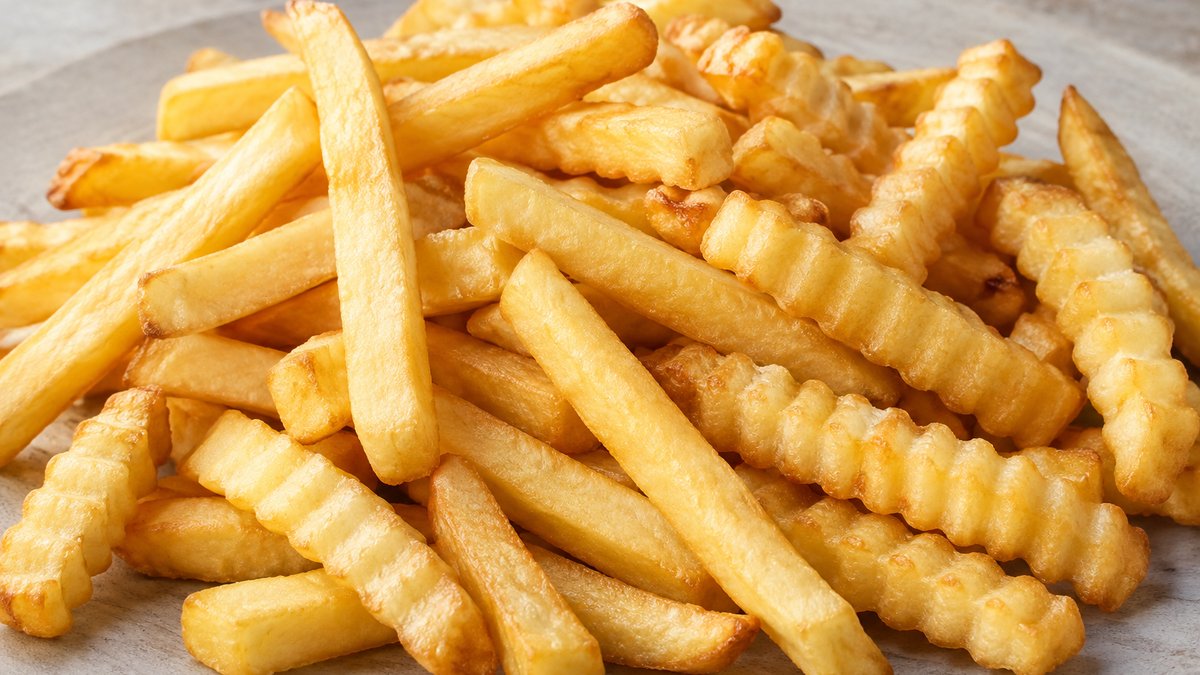

1. Straight-Cut and Crinkle-Cut Fries Differ in Surface Shape
Straight-cut and crinkle-cut frozen French fries are both potato strips. The difference is the shape of their cut surfaces: straight-cut fries have smooth surfaces, while crinkle-cut fries have corrugations on two or more sides. Codex Alimentarius uses these definitions in its standard for quick-frozen vegetables, and the United States Department of Agriculture (USDA) uses the same basic distinction in its frozen French-fried potato standard.
That difference is visible and affects the product’s appearance and feel. It does not, by itself, establish the strip’s thickness, length, potato variety, coating, pre-frying treatment or cooking instructions. Both styles can be made in different sizes, so a buyer who specifies only the cut style has left important parts of the product specification open.
For importers and foodservice buyers, the useful comparison is therefore about the required presentation and the complete specification. A smooth-sided strip may suit a menu that calls for a conventional straight fry. A ridged strip may suit a menu where the corrugated form is part of the intended presentation. Neither style is inherently higher quality, faster to cook or more suitable for every kitchen.
The cut name is a product-style description, not a complete quality grade. USDA’s frozen French-fried potato standards assess qualities such as flavor, color, size uniformity, symmetry, defects and texture separately from the cut-style description. A buyer should not read “crinkle cut” or “straight cut” as a claim about grade or performance.
Codex sets a minimum cross-section of 4 mm for four-sided straight-cut and crinkle-cut strips measured in the frozen condition. Its size designations apply to the largest cut surface: shoestring is 4 to 8 mm, medium is over 8 to 12 mm, thick cut is over 12 to 16 mm, and extra large is over 16 mm. Those size bands help describe the product; they do not make straight and crinkle styles equivalent in appearance.
Codex is an international food standard, not automatically a binding rule in every destination. Importers should check the applicable national requirements and the buyer-supplier contract. In practice, the contract specification should describe both the style and the size, using a clear measurement basis and any agreed tolerances.
2. Comparison Table: Cut, Size and Purchasing Implications
The main difference is the cut surface. Size, quality and cooking performance still need separate confirmation, because the cut-style name does not specify them.

Codex treats the style and the cross-section as separate product details. Its standard also says the strips in a pack should have similar cross-sectional dimensions. When lengths are not specified, the standard gives a tolerance for non-conforming style units. Buyers who need a tighter size or length range should state that requirement in the contract rather than assume the style name covers it.
For crinkle-cut strips, measurement needs particular care. USDA inspection instructions describe measuring the cross-section from ridge to valley. A buyer reviewing a supplier’s specification should confirm how dimensions are measured and whether the stated figures are approximate. Without a shared measurement basis, two quoted sizes may not be directly comparable.
The shape alone also cannot settle how a product will perform in a fryer, oven or other preparation method. Cross-section, product formulation, coating, pre-frying or blanching, frozen condition, equipment and cooking instructions can all affect the result. This is a practical inference from the fact that style is only one part of the product specification. Test the finished product using the supplier’s instructions and the buyer’s own equipment before approving a commercial order.
A quotation comparison should keep like specifications together. If one supplier quotes straight-cut fries and another quotes crinkle-cut fries, confirm that the products also match on dimensions, ingredients, coating, processing, pack size, storage conditions and delivery terms before comparing price. Differences in these details may matter more to the delivered product than the cut style alone.
3. Example Scenario: Specifying Fries for a Foodservice Order
A foodservice buyer planning a menu item that calls for ridged fries can begin by requesting crinkle-cut frozen French fries. That description identifies the desired surface form, but it does not yet give a processor enough detail to confirm whether the product matches the kitchen’s needs.
Illustrative inquiry format:
Product: Frozen French fries
Cut style: Crinkle-cut
Dimensions and length: State the required or acceptable specification
Product details: State coating, ingredients and processing requirements
Packaging and storage: State pack format and required frozen storage conditions
Commercial details: State order quantity, destination and requested delivery terms
This is an illustrative inquiry format, not a universal product specification.
The buyer can then ask the supplier to confirm the exact cut, measurement method, dimensional range and any length requirements. For crinkle-cut fries, the parties should agree whether the cross-section is measured ridge to valley. The buyer should also request the product specification and cooking directions, then assess a sample under the intended preparation conditions.
A buyer considering straight-cut fries for the same menu can request the same core information, changing the cut-style requirement and confirming that the supplied product has smooth surfaces. Comparing the two products under the same kitchen setup can help the buyer assess appearance, preparation results, portioning and service suitability. The trial should use the exact product being quoted, since style names alone do not describe all product attributes.
A sample review should record the supplier’s product identification and instructions, along with the buyer’s own preparation method and observations. If the product is intended for a particular service format, evaluate it in that format rather than relying only on a visual check while frozen. The buyer can use the findings to clarify the specification before approving a purchase.
Looking to Source Frozen French Fries?
Connect with verified suppliers, discover matching products, and explore sourcing opportunities from global markets.
4. When to Choose Straight-Cut or Crinkle-Cut Fries
Choose between the styles according to the presentation the buyer needs and the product that performs acceptably in the intended operation. Straight-cut is the direct fit when smooth-sided strips are required. Crinkle-cut is the direct fit when the required product has corrugated sides. A product trial should resolve questions about preparation and service performance.
4.1 Choose straight-cut when smooth-sided strips are required
Straight-cut fries meet a specification calling for smooth cut surfaces. Buyers may prefer this form when the menu, packaging presentation or existing product standard calls for straight strips. The style is also straightforward to describe in a purchase order, provided the buyer adds the required dimensions and other product attributes.
A foodservice buyer switching from one straight-cut supplier to another should compare dimensions, length, ingredients, coating and cooking instructions. A shared style name does not guarantee that the products have the same size or preparation characteristics. Where consistency across outlets or deliveries matters, put the accepted specification and tolerances in writing.
4.2 Choose crinkle-cut when corrugated sides are required
Crinkle-cut fries meet a specification calling for corrugated surfaces on at least two sides. The ridged form can provide a distinct visual presentation on a plate or in a pack. Buyers should decide whether that appearance suits the menu and then confirm the dimensions, length and other product requirements with the supplier.
Ridges alone do not establish that a crinkle-cut fry will cook faster, stay crisp longer or hold sauce better. Those claims depend on the particular product and preparation conditions, and should be checked with product information or a controlled kitchen trial. Ask the supplier for preparation directions and test the quoted product using the method planned for service.
4.3 Compare complete specifications before selecting a supplier
The two cut styles can be offered in different cross-sections and product formulations. When evaluating quotations, buyers should align the style, dimensions, length, ingredients, coating, processing, pack weight and storage requirements. A price comparison is meaningful only after the parties confirm which product is being supplied and which commercial terms apply.
If a buyer’s priority is a particular cooking result, specify the preparation equipment and request a sample for testing. If the priority is a defined appearance, use the style name and, where needed, a written description or approved sample. For both styles, the purchase specification should make clear which characteristics are acceptance criteria and how the parties will check them.
5. Related Resources for Frozen French Fries Buyers
The Codex Standard for Quick-Frozen Vegetables includes requirements for quick-frozen French-fried potatoes, including cut-style descriptions, size designations, quality factors and labeling. USDA’s frozen French-fried potato standard and inspection instructions provide additional United States references for style and inspection terminology. These standards can inform a specification, but buyers should check the destination’s rules and write the final commercial requirements into their contract.
Buyers preparing a sourcing inquiry can include the required cut, dimensions, length, ingredients, coating, preparation instructions, pack format, quantity, destination and delivery terms. Suppliers can then confirm whether their product matches the requested specification and identify any differences before quotation or sampling.
Buyers can review frozen French fries supplier listings on Freshdi as one place to find potential suppliers for follow-up.
Use the product requirements above when reviewing potential suppliers for frozen French fries.
View Related Suppliers for This Product →

References
1. Codex Alimentarius Commission – Standard for Quick-Frozen Vegetables, CXS 320-2015, 2015, revised 2022.
2. United States Department of Agriculture, Agricultural Marketing Service – United States Standards for Grades of Frozen French Fried Potatoes, 1997.
3. United States Department of Agriculture, Agricultural Marketing Service – Frozen French Fried Potatoes Inspection Instructions, 1972.
Disclaimer: This article is compiled from platform data, public sources and information provided by third parties, for general informational purposes only. We do not guarantee its accuracy or completeness. Please conduct your own due diligence before making business decisions.