
Introduction
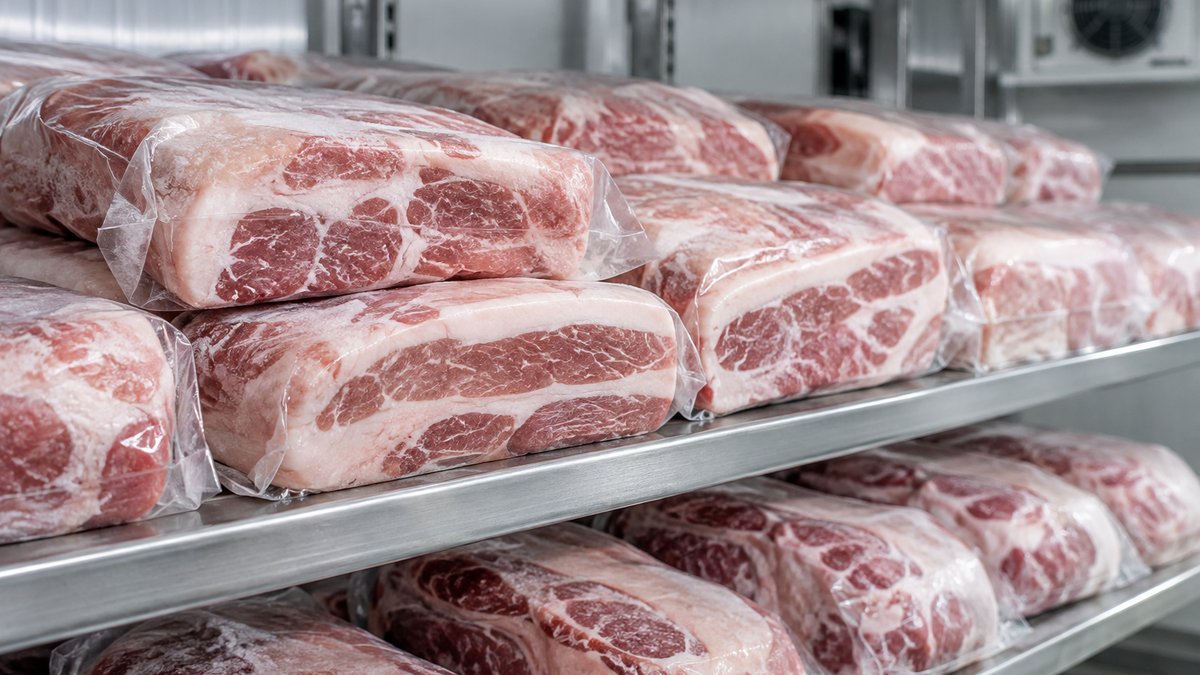
Three buying requests for frozen beef or broader frozen-meat products appeared on Freshdi between October 28 and November 6, 2026. They came from buyers based in Nigeria, the United Kingdom and Turkey. The stated quantities range from 22 MT to four 40-foot containers and 5,000 tons; the requests also differ in product scope and detail.
This is a snapshot of those three requests, not a measure of global demand. The listings state USD as the target-price currency but do not state numerical target prices. Suppliers can use the details to assess fit, then confirm product, quantity, destination and commercial terms before preparing a quotation.
Key Takeaways
- Three buyers posted frozen-beef or broader frozen-meat requests on Freshdi from October 28 to November 6, 2026.
- The requests state quantities of 5,000 tons, four 40-foot containers and 22 MT. The four-container request does not state a weight.
- Product scope varies: one request specifies a back cut, another includes beef offals and other meats, and the third lists beef alongside pork, lamb and goat.
- All three requests state a target-price currency of USD, but none of the records provides a numerical target price.
- USDA data for January to August 2026 show rising U.S. beef imports, but those figures cover all beef imports and do not establish demand for frozen beef in the Freshdi buyers’ destinations.
1. What Does the Frozen Beef Market Context Tell Suppliers?
Recent market indicators show active beef trade, but the available figures need careful scope checks. FAO reported that global meat production reached 374 million tonnes in 2024, up 7 million tonnes from 2023; that total covers meat categories together and is not a frozen-beef production or trade figure.
A more recent national indicator comes from the United States. USDA’s October 16, 2026, Livestock, Dairy, and Poultry Outlook reported U.S. beef imports of 4,358.5 million pounds in January to August 2026, 14% above the same period in 2025. The report’s table covers beef imports from all suppliers, not frozen beef alone. Australia, Brazil, Canada, Mexico and New Zealand were among the listed supplier origins.
The same USDA report forecast U.S. beef imports of 6.347 billion pounds for 2026, nearly 18% above 2025 if realized. It forecast exports of 2.343 billion pounds for 2026, about 9% below 2025. These are forecasts for U.S. beef trade, not confirmed outcomes or global frozen-beef estimates. USDA’s November 18 market outlook later noted that its U.S. beef production forecasts for 2026 and 2027 had been reduced slightly from the prior month, while import forecasts were revised higher.
These national indicators provide context for trade activity, but they cannot confirm demand in Nigeria, the United Kingdom or Turkey, or establish a price for any requested cut. The Freshdi listings are a separate, small platform observation: three requests from three buyers posted within the stated 30-day window. Their destinations and product descriptions should be checked individually, rather than treated as a market-wide pattern.
The requests do not provide numerical target prices. USD appears as the currency only, so suppliers cannot calculate a buyer’s budget from these fields. Any quotation should specify its own price, currency, product basis, quantity, delivery term and named place.
Looking to Sell Frozen Beef?
Connect with verified buyers, receive relevant buying leads, and explore sourcing opportunities from global markets.
2. What Do the Three Frozen Beef Buying Requests Specify?
The three requests differ in volume, product coverage and completeness. Freshdi listings state that the requests were posted on October 28, November 3 and November 6, 2026. Their buyer countries and destinations are reproduced as listed; one destination is typed as “dyubai.”
2.1 A 5,000-ton request for a back cut
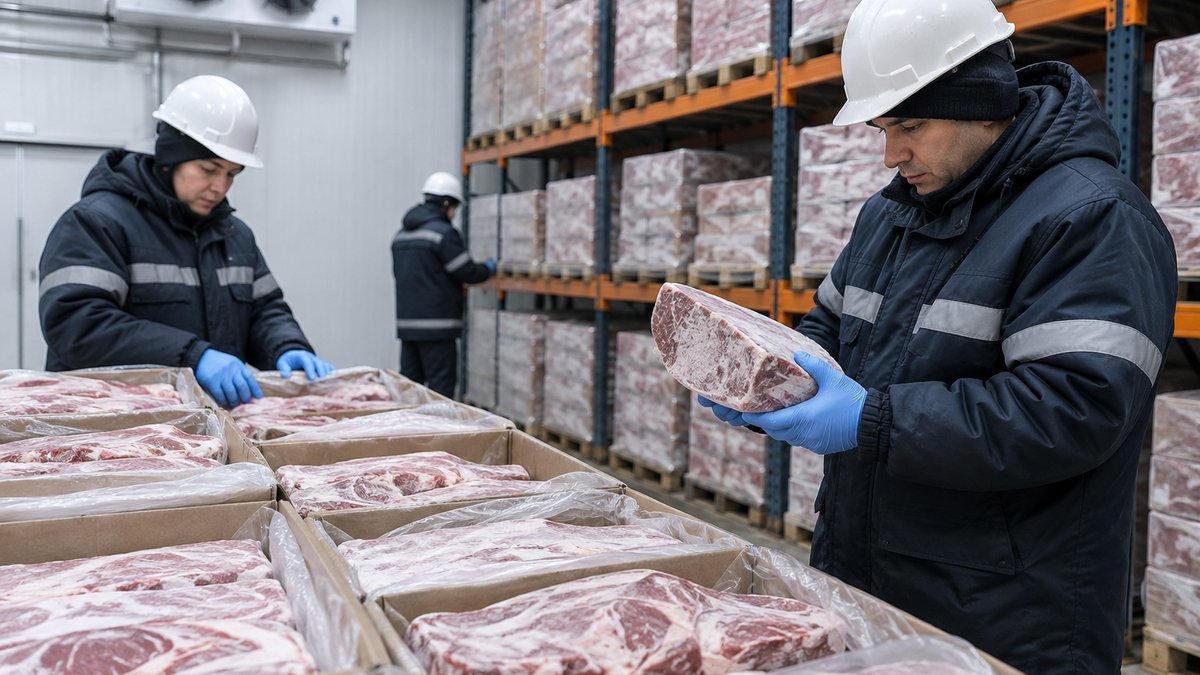
The request from a buyer based in Nigeria, posted November 3, states a quantity of 5,000 tons and identifies a back cut, unprocessed, with a frozen freshness level. Its title also describes the product as frozen beef. The listing names “dyubai” as the destination port, states FOB as the trade term and T/T as the payment term. Its specification also uses the word “Fresh” for texture, alongside “Frozen” for freshness level. Suppliers should ask the buyer to confirm the intended product state and exact destination before assessing logistics or quoting.
The amount is stated as 5,000 tons, with no further basis or shipment schedule in the record. Suppliers should preserve that unit as written and request confirmation of the quantity, delivery schedule, cut definition, grade, packing and temperature requirements. The request is marked unverified in the supplied record; that status is not a finding about the buyer’s identity or commercial reliability.
2.2 Four 40-foot containers with a broad meat list
A buyer based in the United Kingdom posted a “Frozen Beef” request on November 6 for four 40-foot containers, with Lagos named as the destination. The request’s product specifications include beef offals, buffalo meat, boneless carcass, beef, sheep, lamb and mutton. It also states frozen product form, 100% purity and halal certification.
The four-container quantity does not state net weight, container loading basis or the share required for each listed meat type. The trade-term field lists EXW and FOB, while the payment field lists T/T and L/C. The buyer should confirm which option applies, the exact product mix, packaging, shipment timing and named delivery point. The record marks the request as unverified.
2.3 A 22 MT mixed-meat request
A buyer based in Turkey posted a 22 MT request on October 28. The product description lists frozen meat including beef, pork, lamb and goat, while its specifications state tender texture and certifications written as “Iso, Haccp, Halal.” The destination is listed as Alexandria, and CIF is the stated trade term. The listing does not specify a payment term.
This is a mixed-meat request, not a beef-only specification. Suppliers should establish whether the buyer wants all listed meat types or only some of them, and confirm the quantity allocation, product cuts, applicable certificate names, packaging and delivery point. The certification wording should be clarified before a supplier claims that its own documents meet the requirement. The record marks the request as unverified.
Across the three listings, the structured data gives a USD target-price currency but no numeric target price. Two records state payment terms, and the summary lists T/T twice and L/C once; those values overlap because a record can list more than one term. Three records state trade terms; the values listed are FOB twice, EXW once and CIF once, also with overlap because one request lists two alternatives.
3. What Should Frozen Beef Suppliers Confirm Before Responding?
Suppliers should first match the product they can document and ship to the actual request. The listings use “Frozen Beef” as a label, but their specifications include a back cut, offals, buffalo, sheep, lamb, mutton, pork and goat. A supplier should not assume that a mixed-meat listing is a beef-only order.
3.1 Resolve product scope and specifications
Ask which animal species, cuts and product forms the buyer wants, and whether the quantity applies to each item or the whole order. For the back-cut request, confirm the buyer’s cut definition and whether the word “Fresh” describes texture or indicates a fresh product. For the mixed requests, ask for a product-by-product quantity split. The record does not state a grade, trimming specification or allowable defect level for every product, so suppliers should request those details instead of supplying their own assumptions.
3.2 Put quantity and packing on a shipment basis
Confirm whether the stated quantity is net product weight, gross weight or another basis. The four-container request gives a container count but no weight; the 5,000-ton request gives a large tonnage without a shipment schedule. Ask the buyer to confirm the intended order size, number of shipments and packing format. Provide the supplier’s actual carton or bulk-pack details and explain any loading assumptions in the quotation.
3.3 Agree on delivery and payment terms
The listings name FOB, EXW and CIF, with some requests showing more than one option. Confirm one applicable term and the named place or port before calculating the offer. The destination text “dyubai” appears in one record exactly as written, so confirm the intended destination rather than silently correcting it. The request naming Lagos lists two payment options, T/T and L/C; ask which applies and agree on the payment schedule and documentary conditions.
3.4 Check certificates and import conditions
One request specifies halal certification, and another lists “Iso, Haccp, Halal.” Ask which certificate or standard the buyer requires, which product and facility it must cover, and which documents the destination authorities require for the shipment. Import conditions depend on the destination, product origin, species and processing. Suppliers should verify the applicable requirements with the buyer and competent authorities before confirming compliance.
A complete response should identify the product and origin, specification, quantity and unit, packaging, price and currency, delivery term and named place, payment conditions, shipment timing, and supporting documents. If a request leaves a commercial field open, label the assumption in a preliminary quotation or seek confirmation before issuing a firm offer.
Buying consideration: Before spending time on a detailed offer, compare the request with available stock, documented specifications and the supplier’s permitted export scope. Ask for written clarification where product scope, quantity, destination or commercial terms remain unresolved.
4. How Can Suppliers Use Freshdi to Review Frozen Beef Buying Requests?
Suppliers can browse Frozen Beef buying requests to review the requirements stated in current listings. Open each request and check its product scope, quantity, destination, trade terms and payment terms before deciding whether it fits the supplier’s actual products and export capacity.
A supplier profile and product listing should describe what the business can support. Use accurate product names, species and cuts, processing state, packing details, available quantity and export documentation. Do not add a certification, origin or delivery capability unless the business can substantiate it.
When a request is incomplete or internally broad, use the listed requirements to prepare specific clarification questions. For example, the four-container request calls for confirmation of the net weight and product allocation; the mixed-meat listing calls for a product split and confirmation of certification wording. These are questions to settle with the buyer, not details suppliers should infer.
Suppliers whose documented products match the request can use Freshdi’s Find Buyers path to review relevant buying opportunities.
View Latest Buying Requests for This Product →
5. What Are the Next Steps for Frozen Beef Suppliers?
These three requests show different sourcing needs, from a specified back cut to container-based and mixed-meat orders. Their stated quantities are not directly comparable: one is given in tons, one in metric tons and one as a container count. Product scope and destination details also need confirmation in several listings.
Suppliers should select only requests that match their products, verify unresolved specifications and shipment details, and make each quotation explicit about its price basis, quantity, delivery term and documentation. The USD fields in these records are currency labels, not numerical offers or buyer budgets.
Freshdi is a place to review relevant buying requests; suppliers should confirm each listing’s current details and carry out their own checks before making a commercial commitment.
Suppliers ready to review current requests can take the next step through Find Buyers.
View Latest Buying Requests for This Product →
Frequently Asked Questions
What quantities do the recent frozen beef requests state?
The three requests state 5,000 tons, four 40-foot containers and 22 MT. The container request does not state a net weight, and suppliers should confirm the quantity basis and product allocation with the buyer.
Do these Freshdi requests give numerical target prices?
No. Each record states USD as the target-price currency, but none gives a numerical target price. Suppliers should prepare their own quotation with a stated price, currency, product basis and delivery term.
Are all three requests for frozen beef only?
No. One request specifies a beef back cut. Another lists beef alongside offals, buffalo, sheep, lamb and mutton. The third describes a mixed-meat requirement that includes beef, pork, lamb and goat. Ask the buyer to confirm the requested product mix.
What should suppliers clarify about the trade terms?
Confirm which listed term applies and the named place or port before quoting. One request lists EXW and FOB, another lists FOB, and the third lists CIF. One destination is typed as “dyubai” in the record and should be confirmed with the buyer.
Which certificates do these requests mention?
One request specifies halal certification. Another lists “Iso, Haccp, Halal.” Confirm the exact certificate names, scope and destination-market requirements with the buyer and relevant authorities before claiming compliance.
How should suppliers respond when an RFQ is incomplete?
Ask focused questions about product identity, quantity basis, product split, packing, destination, delivery term, payment and shipment timing. State any assumptions clearly and avoid treating unstated details as buyer requirements.
References
1. Food and Agriculture Organization of the United Nations – Agricultural production statistics 2010–2024, 2025-12-31.
2. USDA Economic Research Service – Livestock, Dairy, and Poultry Outlook: October 2026, LDP-M-388, 2026-10-16.
3. USDA Economic Research Service – Cattle & Beef: Market Outlook, 2026-11-18.
4. Freshdi – Fresh Frozen Beef With Natural Aroma Premium Frozen Beef Perfect For Export And Bulk Distribution Worldwide, 2026-11-03.
5. Freshdi – Frozen Beef, 2026-11-06.
6. Freshdi – Frozen Meat beef, pork, lamb, and goat Type MEAT Texture Tender Certifications Iso, Haccp, Halal, 2026-10-28.
Disclaimer: This article is compiled from platform data, public sources and information provided by third parties, for general informational purposes only. We do not guarantee its accuracy or completeness. Mentions and rankings of suppliers do not constitute an endorsement or guarantee, and strategies and examples are illustrative; results may vary. Please conduct your own due diligence before making business decisions.