
Introduction
Twelve Basmati rice buying requests posted on Freshdi from October 23 to November 16, 2026, show a range of requested rice types, quantities, packaging and commercial terms. The requests come from 11 buyers and span destinations in the Middle East, Europe, West Africa and South Asia.
This is a snapshot of those Freshdi requests, not a measure of total market demand. Suppliers can use it to see what buyers specified, identify details that need clarification, and compare the requests with current supply. Global rice figures below provide context; they cover rice overall and are not Basmati-only statistics.
Key Takeaways
- The 12 Freshdi requests were posted by 11 buyers between October 23 and November 16, 2026; all state a quantity, buyer country and destination.
- Requests mention several Basmati forms, including 1121 steam, white sella and golden sella. Grain length, moisture, broken-grain limits and packing are specified in some requests, not all.
- Quantities and units vary, from metric tons to container descriptions. Two requests contain quantity details that suppliers should reconcile before quoting.
- All 12 records have a target-price entry, but entries that give only a currency or omit a price basis are not usable market quotations.
- FAO forecasts 2026/27 global rice production at 552.5 million tonnes on a milled basis; that figure covers all rice, not Basmati specifically.
1. What Do Global Rice Trade and Basmati Exports Show?
Global rice trade remains large, but the broad rice outlook should not be confused with demand for Basmati. FAO’s October 2, 2026 Cereal Supply and Demand Brief forecasts 2026/27 global rice production at 552.5 million tonnes on a milled basis, 2.4% below the 2025/26 record. It forecasts rice utilization at 559.1 million tonnes, up 0.7% year on year, and international rice trade of 61.2 million tonnes in calendar 2027, after a forecast 2.2% decline in 2026. These are global figures for rice of all types.
India’s Basmati export data provides a closer product-specific reference. APEDA reports exports of 6.52 million metric tons in 2025/26, valued at US$5.67 billion. Its listed leading destinations include Saudi Arabia, Iran, Iraq, the UAE, Yemen and the United States. These are India’s export figures and destinations, not a global Basmati total.
The Freshdi requests add a separate platform observation. Their buyer-country and destination fields span the UAE, Oman, Hungary, Turkey, Benin, Togo and Bangladesh. Several requests name West African destinations, while others point to the Gulf, Europe and South Asia. This spread describes the selected requests posted during the stated period; it does not establish the size or direction of national import markets.
Market context can help an exporter assess where Basmati is traded, but an offer still has to match the individual request. A supplier should confirm the rice type, origin, quantity and unit, packaging, destination, delivery term and payment arrangement before pricing.
Looking to Sell Basmati Rice?
Connect with verified buyers, receive relevant buying leads, and explore sourcing opportunities from global markets.
2. What Are Buyers Requesting in Recent Basmati Rice RFQs?
The 12 requests posted during the last 30 days state quantities, buyer countries and destinations. Eleven are marked as verified requests in the supplied Freshdi data. The requests vary considerably in detail, so a listed quantity or a named rice type alone may not be enough to prepare a comparable offer.
2.1 Rice types, processing and grain specifications
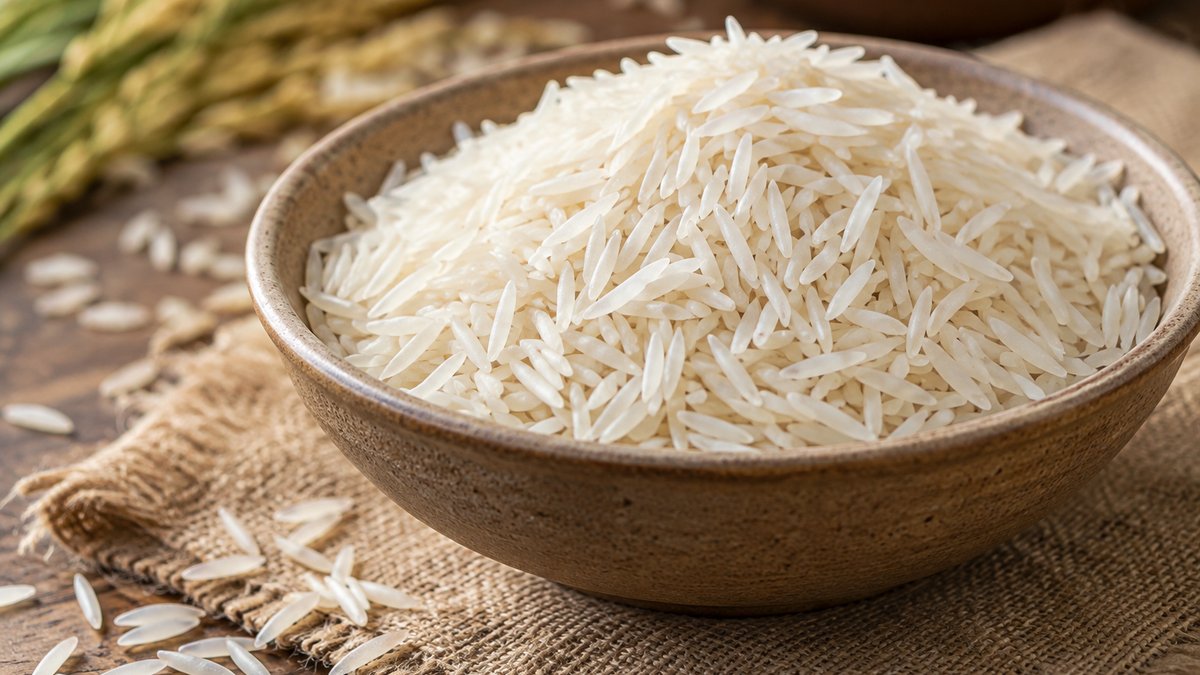
The request titles and specifications name different products rather than a single uniform Basmati grade. Examples include 1509 white sella, 1121 steam, 1121 white sella, 1121 golden sella and aromatic long-grain Basmati. One request asks for organic Basmati. Suppliers should match the requested type and processing description rather than quote a generic Basmati offer.
Some requests provide measurable quality details. One gives an 8.3 mm grain-length specification, maximum moisture of 12.5% and maximum broken grain of 1%. Another specifies 8.35 mm length, moisture up to 12% to 12.5%, and broken grain under 1%. Other requests mention grain length, moisture, aroma, texture, color, processing or cooking performance without providing the same combination of details. Those differences matter when buyers compare offers: a supplier should state its own measured specification and explain the basis of any test results.
Aromatic qualities and end use also appear. Requests describe natural Basmati aroma, aromatic fragrance, or use in biryani, pulao and other rice dishes. These descriptions indicate what the buyer typed; they do not replace a defined variety, grade or test method. If a quotation uses a grade name, grain-length claim or cooking result, the supplier should be ready to substantiate it with a product specification.
2.2 Quantities, packaging and commercial terms
The requests use several quantity formats, including metric tons, tons and container descriptions. One request states a 12,000 MT quantity while its specifications separately state 25 MT. Another says 1,000 containers in its quantity field, while its specification states one 20-foot full-container-load requirement. Suppliers should ask which figure and unit govern before calculating stock, freight or a final price. Report the stated figures as they appear; do not assume they are equivalent.
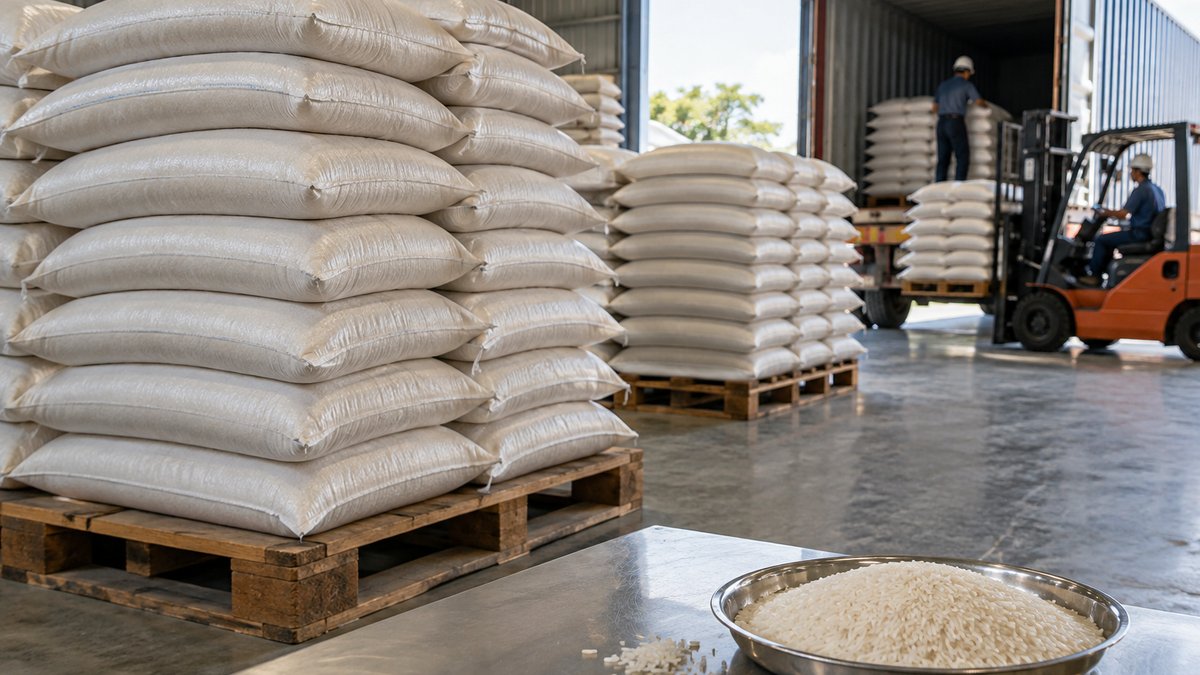
Packaging details are present in eight requests. They range from non-woven bags and PP or PE bags to several requested bag sizes and customizable packing. Four requests do not state packaging in the supplied data. A quotation should distinguish net weight per bag from the total order quantity and confirm the material, printed or unprinted format, labeling and pallet arrangement if those affect the offer.
The trade-term entries list FOB on eight requests and CIF on six; one is marked not specified. These values overlap because some requests list more than one term. Payment terms are stated in 11 requests. T/T appears on eight, L/C on three, and other entries include additional or alternative terms. Since multiple choices can appear on one request, suppliers should confirm the buyer’s actual preferred term rather than infer a settled payment arrangement from a list.
The target-price field appears on all 12 requests, but the entries do not consistently provide a usable price. Several show USD without a numeric amount; one states 18 USD without a clear unit or price basis. None of those entries should be treated as a verified market quotation. A supplier’s own offer should state currency, price per unit, specification, quantity, Incoterm and named place.
3. What Do These Basmati Rice Requests Mean for Suppliers?
The requests reward product-level responses. A supplier who can identify the requested variety or processing type and document the relevant grain and moisture specifications can answer more directly than one who sends a general Basmati catalogue. Where a request leaves a grade or test method unstated, ask the buyer what specification will govern acceptance.
Quantity checks should come before price calculations. Container counts, metric tons and bag weights describe different things. Where a request gives conflicting quantities, confirm whether the buyer intends a single shipment, a recurring program, an aggregate volume or a container quantity. Do not commit stock or quote freight using an unresolved figure.
Commercial terms also need a precise basis. FOB and CIF allocate cost and responsibility differently. A supplier preparing either offer should confirm the applicable Incoterms rule, named port or place, shipment mode and the cost components included. Where payment options are listed together, ask which instrument and timing the buyer expects, then state those terms in the quotation.
A useful response can cover the buyer’s stated requirements and flag what remains open. Include the rice type, origin, available quantity, grain and moisture results, broken-grain tolerance, processing, packing, shipment readiness, price basis and validity period. Attach supporting product specifications only when they describe the offered lot. Avoid claiming a certification or export capability unless the business can document it.
Buying consideration: Before sending a final offer, match the quotation line by line to the request and obtain written confirmation for any unclear quantity, specification, destination or commercial term.
4. How Can Suppliers Use Freshdi to Find Basmati Rice Buyers?
Suppliers can review Basmati rice buying requests on Freshdi and decide whether the stated product, quantity and destination fit their actual supply. Read each request’s fields and description together. If a field conflicts with the narrative, or if the buyer has left a detail open, seek clarification before making a firm offer.
A complete supplier profile and an accurate product listing give buyers context for the quotation. Keep origin, product type, processing, specifications, packing options and available quantity consistent with what the business can supply. The requests in this snapshot show why specifics help: buyers may distinguish sella from steam rice, request different bag formats, or state grain and moisture limits.
Prepare a quotation that is easy to compare with the buyer’s requirements. Identify the exact product and lot, available volume, unit price and currency, packing, delivery term with named place, payment terms and shipment timing. If a request lists alternative terms or has inconsistent quantities, mark the point for confirmation instead of silently choosing one.
Suppliers can browse Basmati Rice buying requests on Freshdi to review listings and assess their fit. The request details may change, so check the current listing before relying on the information in a snapshot.
Suppliers whose products match the stated requirements can review current requests and choose which ones to pursue.
View Latest Buying Requests for This Product →
5. What Should Suppliers Do Next?
The recent requests show varied Basmati types, packaging choices, destinations and order formats, alongside gaps that need direct clarification. The strongest next step is to shortlist requests that match available stock, verify the exact specification and quantity, and quote on a clearly stated commercial basis.
Before responding, check that the offered origin, rice type, processing, grain measurements, moisture, broken-grain tolerance and pack format are supported by the lot documentation. Then confirm the destination, shipment unit, named place, Incoterm and payment method. For a request with conflicting quantities, get confirmation before reserving supply or freight.
Freshdi gives suppliers a place to find and review Basmati rice buying requests; each supplier must assess product fit and verify the commercial details before making an offer.
After checking the specification and commercial details, suppliers can continue by reviewing relevant buyer requests.
View Latest Buying Requests for This Product →
Frequently Asked Questions
How many recent Basmati rice buying requests are covered here?
The snapshot covers 12 Freshdi requests posted between October 23 and November 16, 2026, from 11 buyers. The requests were selected because they state a quantity; they do not represent total market demand.
Which Basmati rice specifications do buyers mention?
Requests mention product type or processing such as 1121 steam, white sella and golden sella, as well as grain length, moisture, broken-grain limits, aroma, color and cooking use. Each buyer states different details, so suppliers should check the original request and quote against the exact specification provided.
How should I quote when a request has an unclear or conflicting quantity?
Ask the buyer to confirm the quantity and unit before calculating price, stock or freight. The snapshot includes a request whose quantity field and specification give different figures, and another whose fields use different container quantities. Do not assume which figure is intended.
Can I use the target prices in these requests as market prices?
No. The target-price field appears on all 12 records, but some entries state USD without a numeric amount, and a numeric entry lacks a clear unit and price basis. Treat these as request-field entries, not verified market prices. Set out your own currency, unit, specification and delivery basis clearly.
What should a Basmati rice export quotation include?
State the rice type, origin, lot specification, available quantity and unit, bag size and material, price and currency, Incoterm with the named place, payment terms, shipment timing and quotation validity. Include test or certification documents only when they apply to the offered product and destination.
Do the Freshdi request locations represent the largest Basmati import markets?
No. They are the buyer countries and destinations named in this 12-request snapshot. They are not a ranking of importing markets. For broader context, APEDA reports India’s 2025/26 Basmati exports and leading destinations, while FAO’s global rice figures cover all rice types.
References
1. Food and Agriculture Organization of the United Nations – Cereal Supply and Demand Brief, 2 October 2026.
2. USDA Foreign Agricultural Service – Grain: World Markets and Trade, November 2026, November 2026.
3. Agricultural and Processed Food Products Export Development Authority – Basmati Rice, 2025-26 export data; accessed 18 November 2026.
4. Freshdi – Basmati Rice buying requests, Requests posted 23 October to 16 November 2026; data as of 18 November 2026.
Disclaimer: This article is compiled from platform data, public sources and information provided by third parties, for general informational purposes only. We do not guarantee its accuracy or completeness. Mentions and rankings of suppliers do not constitute an endorsement or guarantee, and strategies and examples are illustrative; results may vary. Please conduct your own due diligence before making business decisions.