
Finding a supplier online is easy. Finding one that matches your specifications, price range, quality expectations, and delivery timeline takes a more deliberate process. For international buyers, the goal is not simply to find a low price - it is to identify a supplier whose products and capabilities fit the order.
Use these five steps to build a better shortlist and compare supplier offers with more confidence.
1. Define Your Sourcing Requirements
Before searching, write down the details that matter to your purchase:
- Product: specification, grade or size, material/processing, packaging, and required quality standard.
- Order: target quantity, minimum/maximum volume, target price if known, and whether samples are needed.
- Delivery: destination country/port, required delivery date, preferred Incoterm, and payment expectations.
- Compliance: certificates, labelling, or import requirements relevant to your market.
Prepare one clear Request for Quotation (RFQ) or Letter of Intent (LOI) and send the same requirements to each candidate. This makes offers easier to compare fairly.
Buyer tip: If your target price is not confirmed, ask suppliers to quote against the same specification and quantity, and state the Incoterm and destination. That makes the price comparison more meaningful.
2. Search With Specific Keywords
Avoid searching only for broad terms such as “food supplier” or “rice supplier.” Combine the product with the supplier type, origin country, grade, and order scale. This helps surface companies that are more likely to match your requirements.
Try searches like:
- “cashew kernel wholesale suppliers Vietnam W320”
- “frozen HOSO shrimp exporters India 16/20”
- “halal frozen chicken manufacturers Brazil”
- “1121 Sella Basmati rice exporters India”
Choose words based on the supply route you need: manufacturer/factory for production and customization, wholesaler for ready stock or smaller orders, and exporter for cross-border supply experience. Add a target country - such as “in Vietnam” or “in Turkey” - instead of relying on a generic global search.
3. Use B2B Marketplaces to Find and Compare Suppliers
A B2B marketplace helps you explore product listings from different suppliers in one place. On Freshdi, buyers can search by product, review supplier and product cards, and use available listing details to shortlist potential sourcing partners.
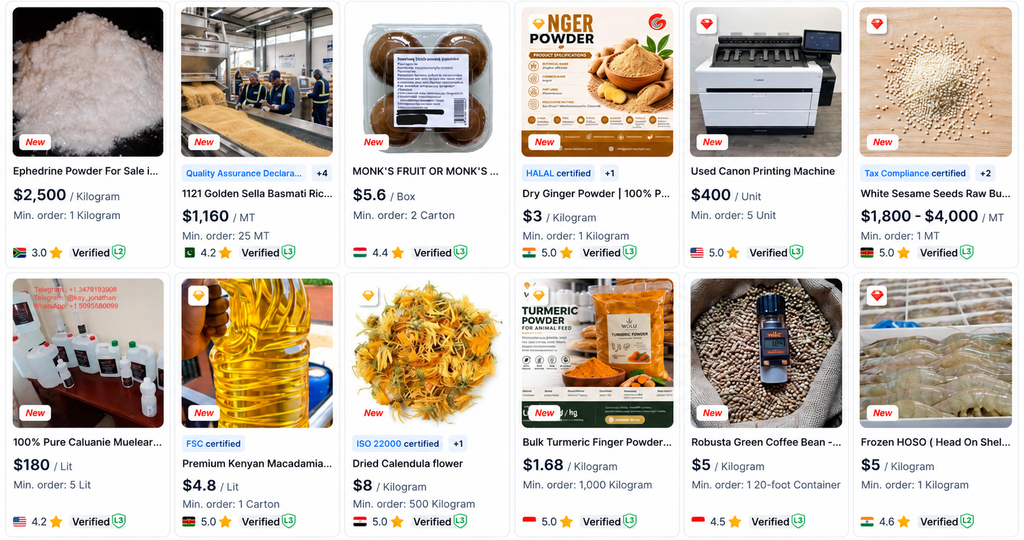
Source: Verified suppliers on Freshdi.com
When comparing listings, check more than the headline price:
- Product fit: specification, grade, origin, packaging, and available quantity.
- Commercial terms: price basis, MOQ, payment terms, lead time, and delivery destination.
- Trust indicators: verification labels and certificates can help with initial screening, but they do not replace independent checks.
Where possible, request comparable quotations from at least three suitable suppliers. The lowest unit price may not mean the lowest total landed cost once shipping, duties, quality, and payment conditions are considered.
Looking to Source ?
Connect with verified suppliers, discover matching products, and explore sourcing opportunities from global markets.
4. Connect With Industry Experts
Not sure which origin, supplier type, or specification best fits your market? Freshdi Account Managers support different product categories and can provide sourcing guidance based on your needs.
- Book a free consultation with a Freshdi Account Manager to discuss your product and target market.
- Get guidance on building a shortlist of potential suppliers and clarifying your sourcing requirements.
- Post a Buying Request on Freshdi so interested suppliers can respond with quotations directly.
Make your request specific. Include the product specification, quantity, destination, required certificates, and target delivery schedule. A well-prepared request helps suppliers understand whether they can meet your needs.

5. Verify Suppliers Before Placing a Large Order
A polished website or a verification badge is a useful starting point, not a guarantee of performance. Before committing to a large order:
- Check the company name, business address, contact details, export experience, and relevant certificates. Verify important documents with the issuing organization when possible.
- Ask for product samples, a live video call, or an independent inspection when appropriate.
- Confirm bank account details through a separate, trusted contact channel. Make sure product specs, tolerances, quantity, delivery terms, and remedies are recorded in writing.
- Consider a manageable trial order before scaling up, where practical.
Freshdi provides supplier information and verification indicators, but buyers should still conduct their own due diligence before entering a business relationship.
Frequently asked questions
How do I find reliable suppliers for international sourcing?
Start with clear product and delivery requirements, search using product-specific keywords, compare several offers on a B2B marketplace, and verify the shortlisted companies before paying.
What should I search to find wholesale suppliers?
Combine the product with “wholesale supplier,” “manufacturer,” or “exporter,” plus a country, grade, size, or other key specification.
How can I find manufacturers instead of trading companies?
Search for “manufacturer” or “factory,” then ask about production capacity, facility details, and business registration. Verify the company’s role independently.
Are suppliers on Freshdi verified?
Some listings display verification status. You can use this as an initial filter, but it is not a guarantee of quality or transaction performance. Always conduct independent checks.
Can I request quotations from multiple suppliers?
Yes. Share the same specifications, quantity, destination, and trade terms with each supplier so you can compare like-for-like offers. You can also post a Buying Request on Freshdi.
Can Freshdi help me shortlist potential suppliers?
You can contact a Freshdi Account Manager for category guidance and a free consultation about your sourcing needs.