
Introduction
Black Pepper buyers can request anything from a 100 kilogram lot to container quantities, and the product name alone does not define a comparable offer. Whole pepper, density, cleaning, origin, packaging and delivery terms all affect what a supplier should quote.
Six Black Pepper buying requests from six buyers were posted on Freshdi between 30 October and 13 November 2026. Checked on 13 November, they name destinations in the United Arab Emirates, Kenya, Sri Lanka and Togo. This review summarizes the requirements buyers stated and points out details suppliers should clarify before quoting.
Key Takeaways
- The six requests span quantities from 100 kilograms to 28,000 40-foot containers as entered by buyers. Those units and quantities are reproduced as stated and should be confirmed before a commercial offer.
- Four requests state CIF and two state FOB. Destination ports are given in all six, while shipping method is stated in two.
- Five requests include specifications. Examples include whole pepper, Vietnam origin, machine cleaning, 550 GL density, Grade 1 and high purity. The remaining requirements are not uniform across requests.
- All six records include a target-price field, but the entries do not establish a consistent unit or quotation basis. They are not comparable market prices.
- Before quoting, confirm product form and grade, origin, quantity and unit, packaging, quality tests, shipment details, named delivery point and payment conditions.
1. Black Pepper Market Overview and Sourcing Context
International Pepper Community publications identify Vietnam, Brazil, India, Indonesia and Malaysia among the major pepper-producing and exporting countries. Its 2025 annual review and 2026 outlook describe supply as concentrated among a limited number of producing countries. Suppliers should treat origin as a commercial specification: a buyer asking for Vietnam-origin pepper has not automatically accepted pepper from another origin.
Global market statistics and an individual RFQ answer different questions. Trade statistics describe reported flows over a defined period and product classification; a buying request states what one buyer is seeking at the time it is posted. UN Comtrade explains that its official trade data are reported by countries and standardized by the UN Statistics Division, and that missing country reports are not filled in. This article uses the six Freshdi requests as platform observations, not as a measure of global demand or import volumes.
Freshdi's six requests were posted from 30 October to 13 November 2026, and all six list a destination port. Five state a buyer country. Three list requested supplier origins, including Vietnam and India in more than one request. These figures describe this selected 14-day group only. They do not establish the size of demand in any country or prove that a buyer is still seeking offers after the date checked.
Prices need the same care. Each of the six requests contains a target-price field, but several entries show only a currency label without a usable amount, and the records do not supply a consistent unit and quotation basis for comparison. One entry is stated as 5,000 USD and another as 21.56 USD, but neither should be treated as a comparable Black Pepper market quote without a confirmed unit, product specification, delivery basis and price date. The Freshdi target-price entries are buyer-provided fields, not a market benchmark or an offer.
Looking to Sell Black Pepper?
Connect with verified buyers, receive relevant buying leads, and explore sourcing opportunities from global markets.
2. Latest Black Pepper Buying Requests on Freshdi
The requests below were posted during the 14 days ending 13 November 2026. Together they come from six buyers. The listed quantities range from 100 kilograms to a very large container count; because the units are buyer-entered, suppliers should confirm the intended quantity and unit directly through the request process before costing supply or freight.
2.1 Whole pepper, bulk loads and destination requirements
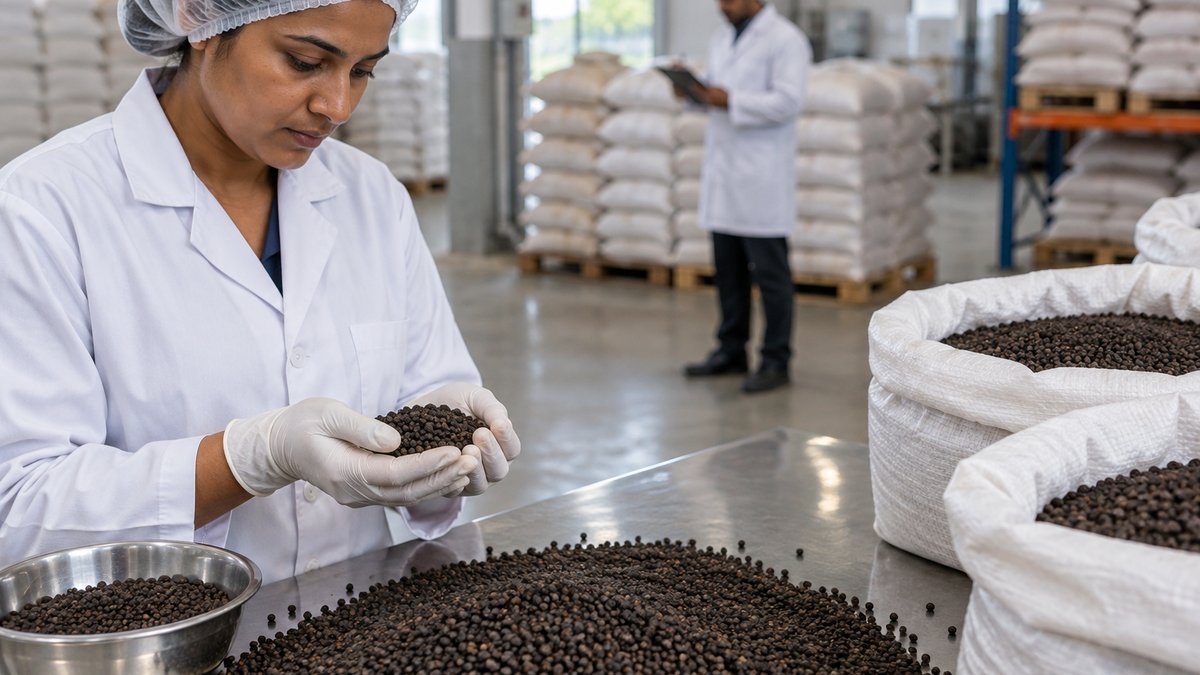
Several requests point to whole pepper, but the details differ. One asks for whole pepper in bags and lists Vietnam in its specifications, while its origin list names several countries. Suppliers should clarify whether the Vietnam specification is mandatory or whether the wider origin list represents acceptable alternatives. Another request asks for 25 MT of Vietnam Black Pepper 550 GL, machine cleaned, for Khorfakkan Port. The record names density and processing, but does not provide a full quality specification in the supplied details.
The largest stated quantity is “28000 40-foot Container” for a UAE buyer seeking delivery to Dubai. The entry does not make clear whether 28,000 refers to containers or another quantity basis. The supplier should ask the buyer to confirm the intended number of containers, net weight per container, shipment schedule and whether the request is for one contract or repeated shipments. The quantity should not be converted into tonnage without that clarification.
Other requests cover 50 tons for Mombasa, four 20-foot containers for the Port of Lomé, 100 kilograms for Colombo and 10 MT for Dubai. These units should remain separate when assessing capability. A supplier equipped for containerized bulk shipments should not assume it can meet a small boxed order on the same packing and commercial basis.
2.2 Terms, payment and price fields
CIF appears in four requests and FOB in two, according to the Freshdi summary for this group. CIF means the seller arranges cost, insurance and freight to the named destination port under the agreed Incoterms rules; FOB means the seller delivers the goods on board the vessel nominated by the buyer at the named port of shipment. The term alone does not settle all contract details, so the parties should identify the applicable Incoterms version and exact named port.
Payment terms vary across the six requests. The summary records T/T in three, D/P in two and L/C in one; some records list more than one option, and other payment descriptions appear in the request data. Suppliers should verify the exact requested mechanism, documents, timing, bank requirements and any advance-payment conditions rather than treating a list of alternatives as an agreed term.
The records do not provide a consistent basis for comparing target prices. A supplier preparing a quotation should state currency, price per unit, grade or specification, net weight basis, Incoterm and named place, validity period and any inspection or document charges. If the buyer's target-price entry lacks a unit or is unclear, ask for confirmation instead of guessing.
2.3 Specifications and information gaps
Five requests contain specification details, but the level of detail varies. The group includes whole pepper, dark brown to black color, a cooking application, Grade 1, a high-purity claim, Vietnam origin, machine cleaning and 550 GL density. These are buyer-entered descriptions, not proof that a lot meets a particular standard. The supplier should state the offered product's actual specification and provide supporting evidence where available.
Only one request states packaging: 25 kg and 50 kg PP bags. Only one request lists certificates, naming a certificate of analysis, test report and certificate of quality. Suppliers should not assume these requirements apply to the other requests. Ask the buyer which documents, tests and packaging are required for the specific lot, and agree the sampling and acceptance method before shipment.
Origin deserves particular attention where the fields differ. One request lists several countries as possible origins and separately states Vietnam in its specifications. Another asks for Egypt origin with Grade 1 and high purity, while a separate request names Vietnam origin. Confirm which origin statement controls and whether the buyer accepts alternatives. Do not substitute an origin based on availability without the buyer's written agreement.
3. What These Black Pepper Buying Requests Mean for Suppliers
The requests do not describe one standard Black Pepper order. They range from a small whole-pepper requirement to container-scale entries, and the listed specifications vary by buyer. A supplier should first decide whether the quantity, product form, origin and destination fit the stock and export capability actually available.
Build the offer around the buyer's stated requirements, then identify what remains open. For a 550 GL machine-cleaned offer, include the basis and method used for the density figure and provide the specification sheet or test result that supports it. For a request stating Grade 1 or high purity, ask which grading or purity standard the buyer means. Those phrases alone do not define tolerances or inspection criteria.
Packaging and transport details need to match the order. Where the request names 25 kg and 50 kg PP bags, confirm which size applies, bag construction, labeling and required net weight. Where packaging is unstated, do not assume a format. Confirm the named loading and destination ports, shipment frequency, container size, freight responsibility and whether the buyer requires sea freight or another method.
A complete response should give the product name, whole or ground form, origin, grade or density where applicable, cleaning and processing details, quantity with unit, packaging, available shipment date, Incoterm with named place, payment terms and price basis. Attach only documents that correspond to the offered lot. If a request asks for a certificate of analysis, test report or certificate of quality, confirm the accepted issuer, test scope and date with the buyer before relying on an existing document.
Treat buyer-entered quantities and commercial terms as items to verify, not as a settled contract. The 28,000 40-foot-container entry needs clarification before capacity or freight can be priced. The 100-kilogram request and the container requests also call for different cost calculations. For any order, confirm the final written specifications, quantity, currency, delivery term, payment method and inspection procedure before committing stock.
Buying consideration: Before sending a firm quotation, match the offer to one specific request and list every assumption that affects price, especially quantity unit, origin, grade, packaging and named delivery point.
4. How Freshdi Helps Suppliers Find Black Pepper Buyers
Suppliers can review Black Pepper buyer requests on Freshdi and compare the information each buyer has stated, such as product description, quantity, destination, origin preferences, trade terms and payment terms. Check the original request before preparing an offer because the buyer's requirements and listing status can change after the date reviewed here.
A focused reply addresses the buyer's stated requirement first, then asks for missing details. For example, a supplier responding to the Vietnam 550 GL request can state whether the offered pepper is machine cleaned, provide the density basis and available quantity, and ask the buyer to confirm the required test method, packaging and delivery schedule. A supplier without that origin or specification should not present a different lot as equivalent.
Suppliers can browse Black Pepper buying requests on Freshdi and review Black Pepper suppliers on Freshdi. The two pages serve different sourcing tasks: one is for reviewing buyer demand, and the other is for viewing supplier listings.
When a request matches your documented stock and export capacity, use Freshdi's Find Buyers page to continue reviewing buyer demand.
View Latest Buying Requests for This Product →
5. Conclusion: Confirm the Specification Before Quoting
These six recent Black Pepper buying requests differ widely in quantity, destination, origin and detail. Some name whole pepper, Vietnam origin, machine cleaning or a density figure; others leave important product and commercial terms open. Target-price fields also lack a consistent basis for comparison.
Suppliers should verify the quantity and unit, match the offered origin and specification to the request, and agree packaging, inspection, delivery and payment terms before quoting. Freshdi is where suppliers can review relevant Black Pepper buying requests and identify inquiries that fit their documented supply.
Review Black Pepper buyer requests on Freshdi when you are ready to compare current requirements with your available product.
View Latest Buying Requests for This Product →
Frequently Asked Questions
How many Black Pepper buying requests were reviewed?
The review covers six requests from six buyers posted on Freshdi between 30 October and 13 November 2026, checked on 13 November 2026. It is a dated platform sample, not a count of all Black Pepper demand or a claim that every request remains open.
Which countries are named as destinations?
The listed ports include Dubai and Khorfakkan in the United Arab Emirates, Mombasa in Kenya, Colombo in Sri Lanka and the Port of Lomé in Togo. One destination field is written as Dubai, United Arab, Ae (DXB); the table preserves the request details as supplied. Confirm the exact port and delivery point in the original request.
What should a supplier clarify when an RFQ says 550 GL?
Ask how the buyer defines and measures the density figure, what tolerance is acceptable and what inspection or test evidence will be accepted. The request also says machine cleaned and names Vietnam origin, but the provided details do not state a complete specification, packaging or shipment schedule.
Can I compare the target prices in these requests?
Not reliably from the supplied entries. Although all six records include a target-price field, the entries do not establish a common unit, grade, delivery basis or other terms needed for a like-for-like comparison. Confirm those details with the buyer and quote your own price on a clearly stated basis.
Which trade terms appear in the recent requests?
The Freshdi summary lists CIF in four requests and FOB in two. Both terms require a named port and a clear understanding of which party handles each part of the shipment. State the applicable Incoterms version and named place in your quotation, and confirm any buyer-specific requirements.
How can suppliers find Black Pepper requests on Freshdi?
Use Freshdi's Black Pepper buying-request listing to review buyer-posted requirements, then check the individual request for its current details before responding. Compare the requested origin, quantity, specification, destination and terms with your actual offer.
References
1. International Pepper Community – Global Pepper Market Report Annual Review 2025 and Outlook 2026, quarterly publication listing, 2026.
2. United Nations Statistics Division – UN Comtrade Trade Statistics: Data Coverage and Reporting Method, 2026.
3. Freshdi – Black Pepper buying requests posted from 30 October to 13 November 2026, reviewed 13 November 2026, 2026-11-13.
Disclaimer: This article is compiled from platform data, public sources and information provided by third parties, for general informational purposes only. We do not guarantee its accuracy or completeness. Mentions and rankings of suppliers do not constitute an endorsement or guarantee, and strategies and examples are illustrative; results may vary. Please conduct your own due diligence before making business decisions.