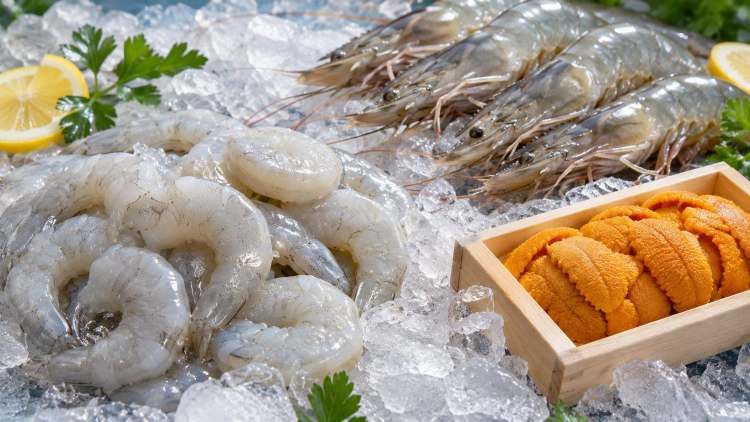

For seafood exporters, a new buying request is useful only when the product form, size, processing method, shipment basis and destination can be translated into a workable offer. A shrimp buyer may be comparing several size grades and processing styles within one request, while a sea urchin buyer may need a premium product for air-freight delivery. A broad product name alone does not establish whether two quotations are comparable.
This article reviews two recent Freshdi requests posted by buyers in Japan and Hong Kong. The Japan-based buyer is seeking aquaculture whiteleg shrimp in alternative frozen formats, with a request that includes both a container quantity and an estimated monthly volume. The Hong Kong-based buyer is seeking IQF frozen sea urchin roe, but the request contains a material difference between the quantity displayed in its summary and the quantity written in the detailed specification.
Both buyer profiles display Verification Level 2 and ratings above 4.0/5. These are platform screening signals, not guarantees of purchasing capacity, payment performance or transaction success.
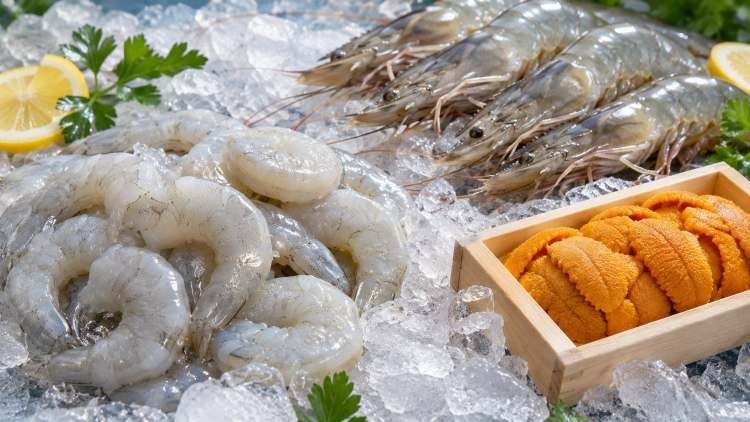
Key Takeaways
- The Japan-based buyer specifies one 40-foot container in the RFQ summary and approximately 100 MT per month in the request narrative; suppliers should clarify the shipment programme before pricing.
- The shrimp request describes two product routes: headless shell-on block-frozen shrimp, or peeled and deveined IQF shrimp with 7% glaze and 1 kg retail packs.
- The Hong Kong sea urchin request lists 1 ton in its summary but 1 tray in its detailed specification. The intended order quantity must be confirmed before quotation.
- Both requests raise destination or Incoterm questions that should be resolved before a firm offer is issued.
Market Overview: Japan’s Seafood Import Context
Japan remains a substantial seafood import market. The Japan Fisheries Agency’s 2025 fisheries and seafood trade statistics report that seafood imports reached 2.08 million metric tons on a product-weight basis, down 3.4% from the previous year, while import value rose 3.8% to JPY 2.1454 trillion. The same report identifies shrimp among Japan’s higher-value imported seafood categories and notes that shrimp is sourced in significant amounts from India, Vietnam and Indonesia.
Agriculture and Agri-Food Canada’s 2026 sector analysis similarly identifies frozen shrimp and prawns as Japan’s leading imported fish and seafood product by value in 2025, at approximately Can$1.78 billion. That figure uses Canadian dollars and the report’s product classification, so it should not be directly compared with Japan’s overall import value in yen. Taken together, the sources show why shrimp specifications and shipment planning matter to exporters serving Japan-linked buyers, but they do not predict the outcome of any individual RFQ.
The second request, for sea urchin roe delivered to Hong Kong, represents a more specialised seafood line. Its commercial requirements are not directly comparable with bulk shrimp: species identification, roe grade, processing treatment, packing unit and cold-chain method can be decisive. The available RFQ does not state these technical details, so suppliers should request them instead of assuming a standard premium specification.
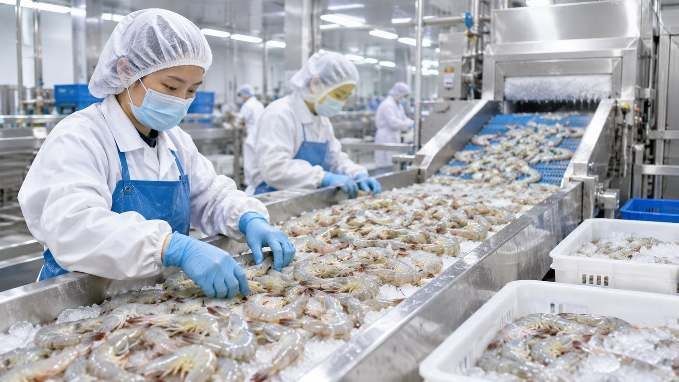
Buying Request Comparison Table
| Buying request | Buyer profile | Product and quantity | Destination and terms |
|---|---|---|---|
| Whiteleg Shrimp (Japan) | Japan · Level 2 · 4.7/5 | 1 × 40-foot container in the summary; approx. 100 MT per month in the narrative | Destination field: Russian port; narrative asks for CFR St. Petersburg. Payment: T/T |
| IQF Frozen Sea Urchin Uni (Hong Kong) | Hong Kong · Level 2 · 4.4/5 | Summary: 1 ton; detail: 1 tray | Hong Kong port; CFR; air freight. Payment: L/C or T/T |
Source: Observed and compiled by Freshdi.
The buyer’s location and the delivery destination are shown separately in the table, because they are not always the same.
Looking to Sell Whiteleg Shrimp?
Connect with verified buyers, receive relevant buying leads, and explore sourcing opportunities from global markets.
Individual Buying Request Analysis
The details of each buying request are outlined below.
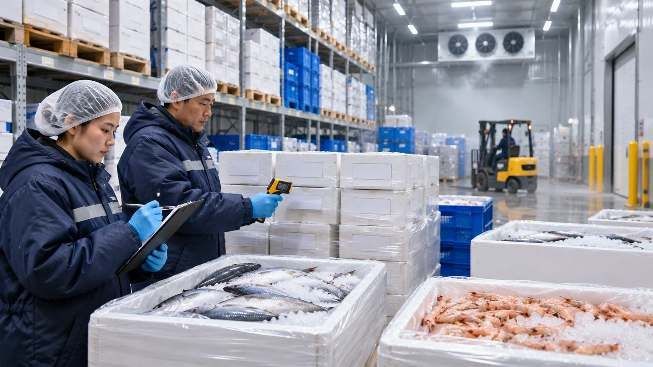 | 1. Whiteleg Shrimp: Block-Frozen and IQF Formats for Japan New RFQ Buyer market: Japan · Verification: Level 2 · Buyer profile rating: 4.7/5 Quantity field: 1 × 40-foot container · Estimated volume in the buyer’s narrative: approximately 100 metric tons per month Destination field: Russian port; the narrative specifically requests a CFR quotation to St. Petersburg Trade term: CFR · Payment term: T/T Product and processing options The buyer identifies the product as aquaculture Litopenaeus vannamei (whiteleg shrimp) and accepts two distinct processing routes. Option 1 is raw headless, shell-on shrimp in block-frozen form, with 1.8 kg net blocks and sizes 16/20, 21/25, 26/30 and 31/35. Option 2 is peeled and deveined, shell-off shrimp, tail-on or tail-off, IQF with 7% glaze, packed in 1 kg retail packs and sizes 26/30 or 31/40. Why this request may matter This is the more technically detailed of the two requests. The request summary states one 40-foot container, while the narrative describes estimated demand of approximately 100 MT per month. Suppliers should not assume that the one-container field equals the full monthly programme. It may represent an initial shipment, a quotation unit or one part of a recurring purchase plan. The RFQ also asks suppliers to identify the country of origin, processing plant and approval status for export eligibility to the Russian Federation, along with certifications such as HACCP, BRC and ISO. What to clarify first Confirm whether 100 MT per month is the ongoing requirement and whether the first shipment is one 40-foot container or a different trial volume. Confirm the exact destination port and the named place for the CFR quotation; do not treat “Russian port” as sufficient for a final freight calculation. Ask whether the buyer wants Option 1, Option 2 or both, and whether both formats should be priced separately. For each size, confirm the acceptable count tolerance, net weight basis, master-carton configuration and pallet pattern. Provide the processing plant name and its relevant approval or export eligibility details for the destination market, plus current certificates where held. State glazing percentage, monthly available capacity, production lead time, sample availability, payment terms and quotation validity. |
 | 2. IQF Frozen Sea Urchin Uni for Hong Kong by Air Freight New RFQ Buyer market: Hong Kong · Verification: Level 2 · Buyer profile rating: 4.4/5 Quantity in the request summary: 1 ton · Quantity in the detailed specification: 1 tray Destination: Hong Kong port · Trade term: CFR · Shipping method: air freight · Payment terms: L/C or T/T Product and buyer profile The buyer is seeking IQF frozen sea urchin uni described as top-premium grade and requests a quotation, lead time, catalogue and available certificates. The buyer profile identifies a food-manufacturing business, but the request does not specify the sea urchin species, roe grade standard, colour, size, processing treatment or shelf-life requirement. Why this request may matter The most important issue is a quantity inconsistency: the request summary says 1 ton, whereas the body of the request says 1 tray. Suppliers should treat the order quantity as unconfirmed. A one-tray sample and a one-ton commercial order have very different production, packing, air-freight and price implications, so no final price should be presented as though the buyer’s intended volume were settled. What to clarify first Confirm whether the requested quantity is one tray for sampling or one metric ton for commercial supply. Identify the sea urchin species and agree on a measurable premium-grade specification, including roe appearance, texture, colour and defect tolerance. Confirm whether the product is raw IQF uni or subject to any washing, brining, alum treatment, blanching or other processing; do not assume a treatment that is not stated. Confirm net weight per tray, trays per carton, carton dimensions, glazing or protective-packaging details, shelf life and storage temperature. The request uses CFR while specifying air freight, so resolve the air-freight destination and named place and confirm the handling responsibilities at origin and destination. Clarify whether L/C or T/T is preferred, and which certificates, health documents and test reports are required. |
What These Requests Mean for East Asian Seafood Suppliers
The two requests are a reminder that seafood quotations should be built around a defined product specification, not just a commodity name. Whiteleg shrimp can be sold in several cuts and freezing formats, and a buyer may compare sizes and packaging across multiple processing options. Sea urchin roe is a specialised product where species, processing, grade and packing unit can affect the commercial offer. A supplier should only quote the product form it can document and consistently supply.
Separate product variants into comparable quotations. For the shrimp request, a single blended price for block-frozen product and peeled IQF retail packs would not help the buyer compare offers. Suppliers should quote each requested option separately, with a distinct line for size, processing, glaze, pack format and net-weight basis. For sea urchin, quote only after the buyer confirms the exact unit and grade. Where a sample is requested, price and describe the sample separately from any larger commercial order.
Make the volume basis explicit. A 40-foot container, an estimated monthly programme, one ton and one tray are not interchangeable quantity descriptions. Suppliers should state whether their price applies to a single shipment, a recurring call-off or a sample. For recurring programmes, specify the production capacity available per month and whether the stated volume can be reserved or only offered subject to stock.
Keep buyer market and destination separate. The shrimp buyer is based in Japan but identifies a Russian destination in the request. The sea urchin buyer is based in Hong Kong and requests delivery to Hong Kong. Suppliers should not assume that the buyer’s country is the delivery country, because this affects freight, documentation, plant eligibility, labelling and the regulatory checks that may apply to the shipment.
Commercial and Export Considerations
Product identity and processing. State the scientific species name where relevant and describe whether the product is raw, cooked, peeled, shell-on, shell-off, headless, tail-on or tail-off. Identify block freezing or IQF accurately, and do not claim a process that is not supported by the plant’s production records.
Size grading and count. For shrimp, state the count range and the basis used to determine it. Confirm whether the buyer’s size grades are per pound or another convention before preparing a final specification. If the buyer accepts multiple sizes, quote each grade separately.
Glazing, net weight and packing. Distinguish gross weight, net weight and glazed weight. State the glazing percentage and how it is measured. Confirm block weight, retail-pack weight, master-carton weight and pallet layout, because a 1 kg retail pack and a 1.8 kg block require different packing calculations.
Sea urchin quality and treatment. Ask for the buyer’s definition of premium grade, acceptable colour and texture, species preference and any treatment restrictions. State processing and preservation methods accurately and disclose any treatment that may affect the product’s grade or destination acceptance.
Cold chain and transport. Confirm the required storage and transport temperature, pre-cooling, frozen loading method, transit duration and handover points. For air freight, specify the named airport and handling arrangement; for container shipments, identify the loading and discharge ports.
Destination compliance and documents. Check the import requirements for the actual destination and product form. The shrimp buyer specifically asks about plant approval and export eligibility for the Russian Federation. Suppliers should verify current official requirements rather than relying on a general certificate list.
Incoterms and payment. Quote on the requested Incoterm and named place only after confirming the transport mode. Under Incoterms 2020, CFR and CIF are for sea or inland-waterway transport; for air or multimodal carriage, confirm the appropriate any-mode rule such as CPT or CIP. Confirm whether T/T or L/C is preferred, and for L/C review issuing-bank, document-presentation and payment conditions before accepting the transaction.
Quotation validity and lead time. Include the price currency and unit, quotation validity, production lead time, shipment schedule, sample availability and assumptions. If a key RFQ field remains unresolved, label the offer indicative and list the condition that must be confirmed.
How Freshdi Helps Suppliers Discover Seafood Buying Requests
Freshdi provides a place for suppliers to review buyer-posted requirements across seafood categories and international markets. By browsing seafood buying requests, exporters can compare visible details such as species, processing form, quantity, destination, packing, payment method and trade term before deciding whether an inquiry matches their products and export capability.
When a request is relevant, suppliers can open the original RFQ and use the quotation workflow where available. A useful response should address the stated specifications, present a transparent price basis, identify the loading and destination points, and ask concise questions about missing details. Suppliers can also keep their product listings and company profiles up to date so that buyers can better understand the business behind an offer.
Some contact details and connection features may depend on account eligibility and plan access. Suppliers should check what is available in their own Freshdi account rather than assuming all buyer contact information is public. Verification and profile completion can improve the information presented to buyers, but they do not guarantee a response or a transaction.
Explore current Seafood buying requests
Frequently Asked Questions
How many seafood buying requests does Freshdi have?
Freshdi’s Seafood buyer-category page displayed 43,012 buying leads as of 3 November 2026, including 96 requests posted in the preceding 30 days. These are platform listing counts, not confirmation that every RFQ is still open; check the individual request status before quoting.
What shrimp forms does the Japan-based buyer accept?
The request describes two options: raw headless, shell-on block-frozen whiteleg shrimp in 1.8 kg net blocks, or peeled and deveined IQF shrimp with 7% glaze in 1 kg retail packs. Sizes differ between the two options, so suppliers should quote each format separately.
Is the shrimp buyer requesting 100 MT in one shipment?
The RFQ quantity field states one 40-foot container, while the narrative mentions estimated demand of approximately 100 MT per month. The request does not make clear whether the container is a trial shipment or part of the monthly programme. Suppliers should confirm the shipment schedule and volume basis.
What is unclear in the sea urchin request?
The request summary states 1 ton, while the detailed specification says 1 tray. It also lacks the species, grade standard, processing treatment and several packing details. Suppliers should confirm the order unit and technical specification before presenting a firm commercial offer.
Which delivery terms and payment methods appear in these requests?
The shrimp request specifies CFR and T/T, with the detailed text asking for a CFR price to St. Petersburg. The sea urchin request lists CFR and L/C or T/T but also says air freight. CFR is a sea or inland-waterway rule, so the buyer should clarify whether CPT or CIP is intended instead.
Do Verification Level 2 and a high buyer rating guarantee a transaction?
No. They are profile screening signals shown by Freshdi, not a guarantee of purchasing capacity, payment performance or contract completion. Suppliers should still conduct their normal due diligence, verify business and import details, and agree on secure contractual and payment terms.
Conclusion: Quote Against the Details, Not Just the Product Name
The two requests in this article show different seafood sourcing needs across East Asia: a technically detailed whiteleg shrimp inquiry with two processing options and an ongoing-volume reference, and a specialised sea urchin roe request with an unresolved quantity unit. The most useful supplier response is one that clarifies these gaps, quotes on the correct delivery basis and documents the product’s actual specifications.
References
1. Japan Fisheries Agency, 2025 fisheries and seafood trade statistics.
2. Agriculture and Agri-Food Canada, 2026 sector analysis of Japan’s seafood imports.
3. International Chamber of Commerce, Incoterms 2020 rules.