
Introduction
White rice prices relevant to Philippine buyers differed by grade and selling basis in November 2026. The Philippine Statistics Authority (PSA) reported a national average retail price of PHP 64.30 per kilogram for special rice during 1 to 5 November. Separately, export-price benchmarks and regional trade assessments provide reference points for import sourcing, but they are not Philippine wholesale or retail prices.
This update uses the latest dated figures located through 21 November 2026. It separates Philippine retail prices from free-on-board (FOB) export assessments, which cover the goods at the named loading port before the buyer pays ocean freight and insurance. Buyers and exporters should compare the same grade, broken percentage, packaging and delivery basis when evaluating offers.
Key Takeaways
- The PSA reported special rice at PHP 64.30/kg nationally on 1 to 5 November 2026, up from PHP 64.07/kg on 15 to 17 October. This is a retail measure, not an import quotation.
- USDA's November 2026 rice-price benchmark put long-grain white rice at US$389/MT for India, US$411/MT for Pakistan and US$439/MT for Vietnam; the Thai benchmark was US$497/MT for 100B rice, a different specification.
- A 17 November S&P Global assessment put Thai 25% white rice at US$472/MT FOB, India and Pakistan 25% white rice at US$389/MT FOB, and Myanmar's 25% assessment at US$458/MT FOB on 13 November. Product descriptions and assessment dates differ.
- USDA FAS Manila maintained its Philippine MY 2026/27 rice import forecast at 5.20 million metric tons. The forecast reflects an anticipated domestic production shortfall; it is not a confirmed buyer order.
- Compare total landed cost and confirm the current import conditions, shipment timing and grade before committing. A quoted FOB price does not include freight, insurance or destination charges.
1. White Rice Market Overview for the Philippines
The Philippines remains a large import market, with USDA Foreign Agricultural Service (FAS) Manila forecasting 5.20 million metric tons of rice imports for marketing year (MY) 2026/27. The USDA report maintains the forecast to offset an anticipated domestic production shortfall while consumption is forecast at 17.65 million metric tons for the marketing year.
The same USDA report forecasts Philippine milled rice production at 12.25 million metric tons in MY 2026/27. FAS Manila cites moderate to strong El Niño conditions and elevated fertilizer costs as risks to production, while noting that reservoir recovery in August and September 2026 improved irrigation prospects for dry-season planting. These are forecast assumptions, not final crop results.
The Philippines has also changed its import setting over time. USDA FAS Manila reported that the Department of Agriculture had halted premium-grade rice imports and was pursuing a safeguard investigation. Importers should verify the rules and permits that apply to their shipment at the time of purchase; policies and eligible grades can change.
Export origin matters because regional quotations moved differently during November. USDA's November 2026 price report showed higher benchmark prices since its October WASDE report for India, Pakistan, Thailand and Vietnam. Meanwhile, the Philippines had resumed buying from Vietnam, Thailand and Myanmar by 17 November, according to S&P Global Energy's market report.
Looking to Source White Rice?
Connect with verified suppliers, discover matching products, and explore sourcing opportunities from global markets.
2. Latest White Rice Export Prices
2.1 Current export price benchmarks in November 2026
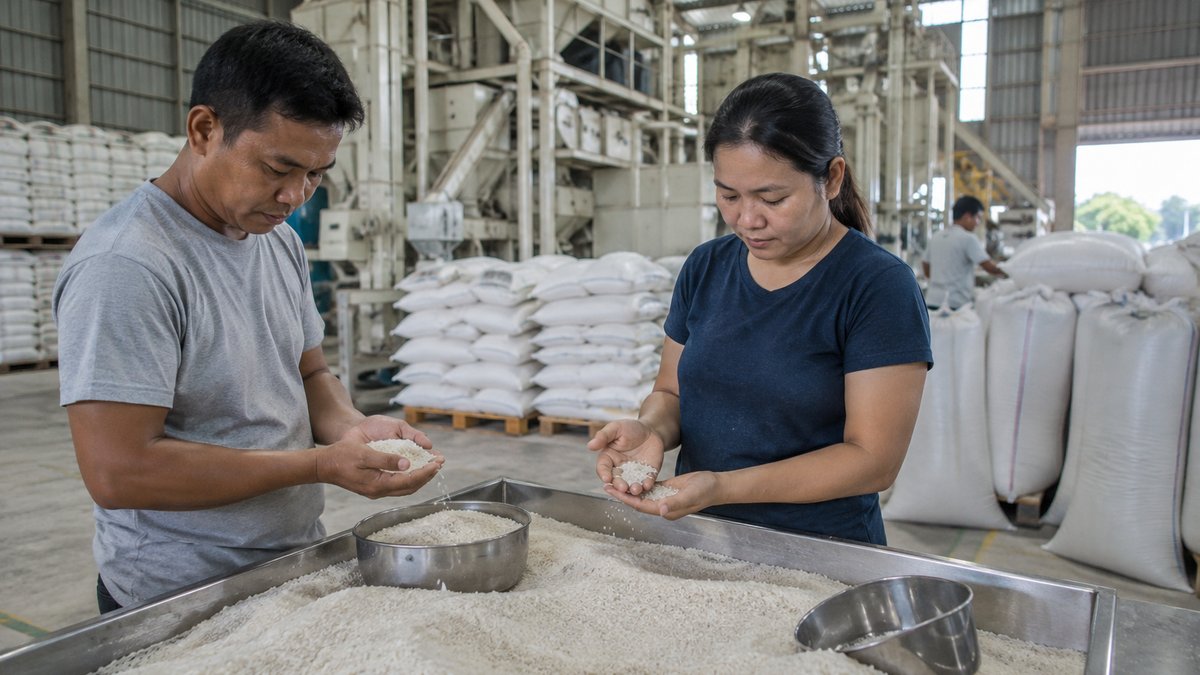
USDA's November 2026 report, using International Grains Council export quotations, lists long-grain white rice prices in US dollars per metric ton. The benchmark uses 5% broken white rice for India, Pakistan and Vietnam, while Thailand is quoted as Thai 100B. Thai 100B should not be treated as the same grade as 5% broken rice.
The benchmarks are FOB export quotations, not delivered prices in Manila. USDA reported that, since October's WASDE, the benchmark rose US$5/MT for India, US$15/MT for Pakistan, US$24/MT for Vietnam and US$31/MT for Thailand. The reported U.S. benchmark rose US$41/MT. These month-to-month changes compare the USDA report's cited benchmark points, not a guaranteed offer available to a specific buyer.
2.2 Recent export assessments relevant to Philippine sourcing
A 17 November S&P Global Energy report gave more specific regional assessments for 25% broken rice. These provide a closer comparison for Philippine buyers considering lower-broken grades, although the product descriptions and assessment dates still need checking against a supplier's written specification.
S&P Global also reported a planned December purchase by a Philippine buyer of 5,000 metric tons of Vietnamese Fragrant 25% rice at about US$550/MT FOB Vietnam. That was a reported buying plan for a specific fragrant product, not a general market price or a completed transaction. The same report said a buyer considered Vietnamese DT8 25% rice too expensive at prevailing levels.
The regional assessments show why grade and variety belong beside the price. India's and Pakistan's cited 25% assessments were lower than Thailand's, while Vietnam's reported planned purchase involved fragrant DT8 rice, a different product. Buyers should request a current quote for their own specification and shipment window.
2.3 Price trend and Philippine retail context
Domestic retail data show a separate part of the price picture. The PSA's national average retail price for special rice was PHP 64.30/kg during 1 to 5 November 2026, compared with PHP 64.07/kg during 15 to 17 October and PHP 64.05/kg during 1 to 5 October. The measure covers retail special rice and cannot be directly compared with export prices per metric ton.
On a year-on-year comparison, the PSA recorded PHP 57.12/kg for special rice on 1 to 5 November 2025. The November 2026 figure was PHP 7.18/kg higher, about 12.6% using the two reported averages. This retail movement does not establish that import prices rose by the same percentage; retail price also reflects domestic distribution, product mix and other costs.
For procurement, record the price date and basis on each offer. An FOB quotation, a national average retail price and a planned purchase price describe different stages of the rice supply chain.
3. Why Are White Rice Export Prices Changing?
Regional export prices responded to supply, buyer activity and currency movements during November. Reuters reporting published by Business Recorder on 13 November said Indian 5% broken white rice was quoted at US$390 to US$395/MT, while 5% broken parboiled rice was US$385 to US$390/MT. Exporters cited rupee appreciation and African demand as factors supporting Indian prices.
Thailand's 5% broken rice was reported at US$495 to US$500/MT on 13 November, up from US$490 to US$495 the previous week. Traders cited tightening supplies, while purchases were described as subdued and concentrated among regular customers and the Philippines. That weekly quotation is separate from the Thai 100B benchmark in the USDA report.
For Vietnam, the 13 November Reuters report quoted 5% broken rice at US$490 to US$495/MT and linked firmer pricing to the resumption of Philippine purchases and tightening supplies. S&P Global's 17 November report separately described limited Vietnamese availability through February and renewed buying interest from Philippine importers. These are market observations, not a guaranteed volume or shipment allocation.
The import-policy setting affects which grades buyers can source. S&P Global reported that the Philippines resumed purchases from Vietnam, Thailand and Myanmar after restrictions were eased, while market sources described lower broken grades as open for import at that point. USDA FAS Manila separately reported a halt on premium-grade imports. Importers should confirm current eligibility for the specific grade and origin rather than treating a market report as an import permit.
Weather and production forecasts add uncertainty to later supply, but they do not determine a specific export price. USDA FAS Manila's MY 2026/27 Philippine production forecast incorporates El Niño and fertilizer-cost risks alongside improved reservoir conditions. Buyers planning later shipments can ask suppliers to state crop year, stock position, loading window and quotation validity in writing.
4. Which Countries Import the Most White Rice?
4.1 Major global importing markets
USDA FAS Manila's November 2026 report forecasts Philippine rice imports at 5.20 million metric tons in MY 2026/27. This is a country-specific forecast, not a ranking of the world's largest importers. The USDA report also expects Philippine rice consumption of 17.65 million metric tons in that marketing year, with demand forecast to hold despite elevated retail prices.
A forecast is not an order book. It estimates national supply and use over a marketing year; it does not identify the buyers, delivery dates, rice varieties or origins that will make up the eventual imports.
4.2 Main exporting origins serving the Philippines
Vietnam, Thailand and Myanmar were among the origins from which Philippine buyers had resumed purchasing by 17 November, according to S&P Global Energy. Its report also described Philippine sourcing of Vietnamese fragrant 25% broken rice and 25% broken white rice from Myanmar and Pakistan. These reports identify current sourcing activity, not each origin's share of total Philippine imports.
The price references differ by origin and product. S&P Global's 17 November assessment put Thai 25% white rice at US$472/MT FOB and India and Pakistan 25% white rice at US$389/MT FOB, while Myanmar's cited assessment was dated 13 November. Buyers should confirm comparable milling, sorting, variety and delivery specifications before interpreting those values as a price ranking.
4.3 What the demand signals mean for exporters
The Philippine import forecast indicates a substantial projected import requirement, while the November trade reports show buying interest returning for selected origins and grades. Neither signal confirms a purchase for a particular exporter. A supplier should check the buyer's grade, volume, shipment month, destination port and import eligibility before preparing a firm quotation.
5. Where Can Buyers Source White Rice at a Competitive Price?
Compare total landed cost rather than choosing an origin from its headline FOB price. FOB is the seller's delivery basis through loading the goods on board at the named port; the buyer generally arranges and pays for ocean freight and insurance after that point. A lower FOB figure may result in a higher delivered cost if freight, port charges or inland transport differ.
Ask each supplier to quote the same variety, broken percentage, milling standard, moisture limit, foreign matter tolerance, crop year, bag size and order quantity. For example, the reported Vietnamese DT8 fragrant rice purchase plan at about US$550/MT cannot be compared directly with a general 25% white rice assessment without accounting for the variety and transaction context.
For a delivered-cost comparison, add freight, insurance, destination handling, duties and other applicable charges to the quoted goods value. Confirm which party pays each charge under the chosen delivery term, and identify the named port. Keep currency, quote date and validity period consistent across the comparison.
Import requirements can affect the usable price. Check that the grade and origin are eligible under current Philippine rules, then confirm shipment documents and any applicable inspection conditions before signing. Ask the supplier to identify the exact product and packing in the pro forma invoice and contract.
Buying consideration: Request at least two quotations against one written specification, then compare FOB and landed-cost totals separately. Treat each November benchmark as a dated reference, not a live supplier offer.
6. What Does the Latest Demand Look Like on Freshdi?
National import forecasts measure expected country-level supply needs, while a buying request describes an individual buyer's stated requirement. A Freshdi request should therefore be assessed on its own quantity, destination, grade, delivery term and timing rather than taken as a measure of total Philippine demand.
A supplier reviewing a white rice request can check whether the buyer has named a variety and broken percentage, whether packaging and quantity are stated, and whether the requested destination and trade term fit the offer. If a request leaves a specification open, ask for clarification before quoting. Buyers can likewise set out these details when posting a sourcing requirement.
Use national market data to understand the broad import setting and individual requests to assess specific procurement needs. Keep those two evidence types separate when making sales or purchasing decisions.
7. What Should Buyers and Suppliers Do Next?
7.1 For buyers and importers
- Write a purchase specification that states rice variety, broken percentage, milling or sorting standard, quality tolerances, crop year, packaging and quantity.
- Ask suppliers to quote on the same basis and name the loading port, destination port, currency, shipment window and offer validity.
- Check current Philippine import eligibility and required documents for the product, origin and shipment date before paying a deposit or signing the contract.
- Calculate landed cost using freight, insurance and destination charges. Keep FOB figures separate from CFR or CIF totals.
- Agree on sample approval, inspection method, claim process and the quality tolerances that will appear in the contract.
7.2 For exporters and suppliers
- State grade, variety, broken percentage, crop year, packing and available quantity in the offer; identify whether the rice is white, parboiled or fragrant.
- Name the loading port and delivery term. Explain which costs the buyer must arrange and give a validity date for each quotation.
- Check that the requested grade and origin can be imported into the Philippines under the rules in force when the shipment is planned.
- Separate confirmed stock and shipment capacity from expected future availability. Give a realistic loading window and update the buyer if it changes.
- Review each buying request against the product offered, then prepare a quotation that answers the buyer's stated destination, quantity and specification.
8. How Freshdi Helps Buyers and Suppliers Connect
Buyers can use Freshdi's White Rice supplier category to review relevant supplier listings, then compare product details against a written specification. A listing is a starting point for due diligence; confirm current availability, quality documents and shipment terms directly through the transaction process.
Suppliers can review White Rice buying requests and decide whether a request fits their product, volume and shipment schedule. A request is a buyer's stated need, not a promise of a completed purchase.
Buyers comparing offers and suppliers checking for matching demand can review the relevant White Rice category pages on Freshdi.
View Latest Rice Buying Requests →View Potential Rice Suppliers →
9. Conclusion: Philippines White Rice Market Outlook
November's price references show different movements at different stages of the supply chain. The PSA's PHP 64.30/kg national retail average for special rice in 1 to 5 November is not comparable with FOB export benchmarks. Regional export assessments also differ by broken percentage, variety and date.
Philippine buyers should verify eligible grades, compare quotations against one specification and calculate delivered cost. Exporters should state grade, origin, loading port and offer validity clearly, while treating national import forecasts as market context rather than confirmed orders.
Freshdi gives buyers and suppliers a place to review relevant White Rice listings and buying requests.
Buyers preparing a sourcing inquiry can review related White Rice suppliers on Freshdi.
View Related Suppliers for This Product →
Frequently Asked Questions
What was the latest reported Philippine rice price in November 2026?
The latest PSA figure located for this update was a national average retail price of PHP 64.30/kg for special rice during 1 to 5 November 2026. It is a retail figure, not a wholesale or import price, and it does not cover every white rice grade.
What were the November 2026 white rice export price benchmarks?
USDA's November 2026 benchmark listed 5% broken white rice at US$389/MT for India, US$411/MT for Pakistan and US$439/MT for Vietnam. Its Thai figure was US$497/MT for Thai 100B, which is a different specification. These are export benchmarks, not firm offers to a Philippine buyer.
Why do white rice prices differ between exporting countries?
Prices reflect the grade and variety being quoted, available export supply, buyer demand, currency movements and the delivery basis. A 25% broken fragrant rice price, for example, should not be compared directly with a general 25% white rice assessment without checking the specifications.
Which countries are supplying rice to Philippine buyers?
S&P Global Energy reported renewed Philippine buying from Vietnam, Thailand and Myanmar in November 2026. Its report also described sourcing of 25% broken rice from Myanmar and Pakistan. These reports identify buying activity but do not give a complete country-by-country import-share ranking.
How should a Philippine importer compare FOB and CIF prices?
FOB covers the seller's delivery through loading at the named port. CIF includes cost, insurance and freight to the named destination port, but importers should still confirm which destination charges, duties and inland costs are excluded. Compare quotations for the same product specification and delivery point, then calculate the total landed cost.
Does the Philippine import forecast guarantee buyer demand?
No. USDA FAS Manila forecast Philippine rice imports of 5.20 million metric tons for MY 2026/27. A national forecast estimates supply needs for a marketing year; it does not confirm an order, buyer, grade, shipment date or supplier.
References
1. Philippine Statistics Authority – Special Release on Price Situationer of Agricultural Commodities, First Phase of November 2026, November 2026.
2. USDA Foreign Agricultural Service – Grain and Feed Update: Philippines, 2026.
3. USDA Foreign Agricultural Service – World Agricultural Supply and Demand Estimates: Grain, November 2026, November 2026.
4. S&P Global Energy – Philippines Resumes Rice Buying from Vietnam, Thailand, Myanmar, 17 November 2026.
5. Business Recorder – Indian Rice Export Rates Gain on Africa Demand, Firm Rupee, 13 November 2026.
Disclaimer: This article is compiled from platform data, public sources and information provided by third parties, for general informational purposes only. We do not guarantee its accuracy or completeness. Prices, volumes and forecasts are indicative, reflect conditions as of 2026-11-21 and may change without notice. This is not financial, investment or trading advice.