

What products are you looking for?
Popular Searches:
Where to Buy Black Rice Wholesale:
8,001 Supply, Exporters on Freshdi, India leads Black Rice supply with 30% of suppliers, followed by South Africa ( 15% ) and China ( 10% ) — a distribution that reflects regional cultivation and processing capacity across South Asia and Africa.
55% of suppliers were active in the last 90 days, and 65% carry business verification — a solid base of suppliers with recent activity and documented business credentials.
Updated Oct 7, 2026
Based on suppliers' real activity on Freshdi over the past 7 days

















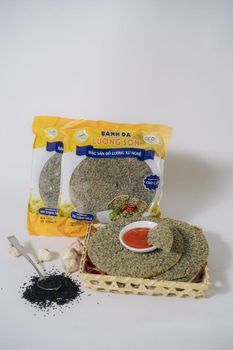

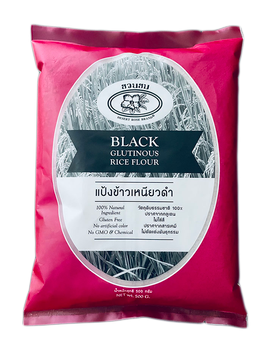

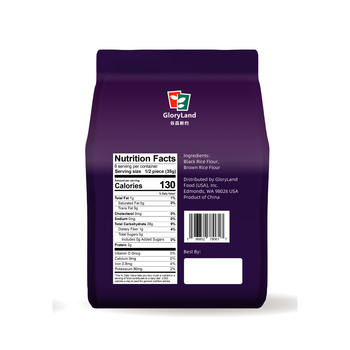
Gluten Free Black Rice Noodles- 4 rice cakes in each Bag, 2-ingredients
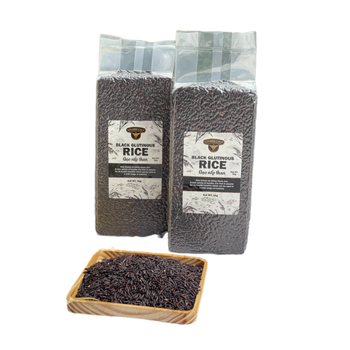









Black Rice Market Insight | Price, Payment Terms, Trade Terms & Supplier Countries
Updated Oct 7, 2026Based on suppliers' real activity on Freshdi over the past 7 days
Black Rice listings show a typical price range of USD 223 - 1,050 per metric ton on an FOB basis, with the median landing at USD 540 . Basmati is the largest variety in priced listings at 33.1% , with a median of USD 1,000 , while Long Grain White accounts for 20.8% at a median of USD 500 , Jasmine makes up 6% at USD 568 , Parboiled is represented in 4.5% at USD 1,100 , and Japonica is the smallest variety at 2.3% with a median of USD 600 .
The typical minimum order quantity for Black Rice is 25 MT , with most listings falling within the common range of 10 to 100 MT , offering buyers a broad spectrum of order sizes to consider.
For Black Rice, suppliers predominantly offer FOB at 49.4% of listings, with CIF next at 32.2% , indicating that freight and insurance responsibilities are mostly left to the buyer.
Supplier payment terms for Black Rice are split between T/T at 34.9% and L/C at 33.9% , showing a balanced use of both bank transfer and letter of credit methods.
A supplier who offers CIF could stand out in the Black Rice market: demand for this trade term exceeds supply by 27.3 percentage points , suggesting many buyers would welcome more sellers arranging freight and insurance to the destination port rather than leaving those responsibilities to the buyer. This gap may present an opportunity for suppliers to increase their match rate by aligning with buyer preferences for destination-based terms.