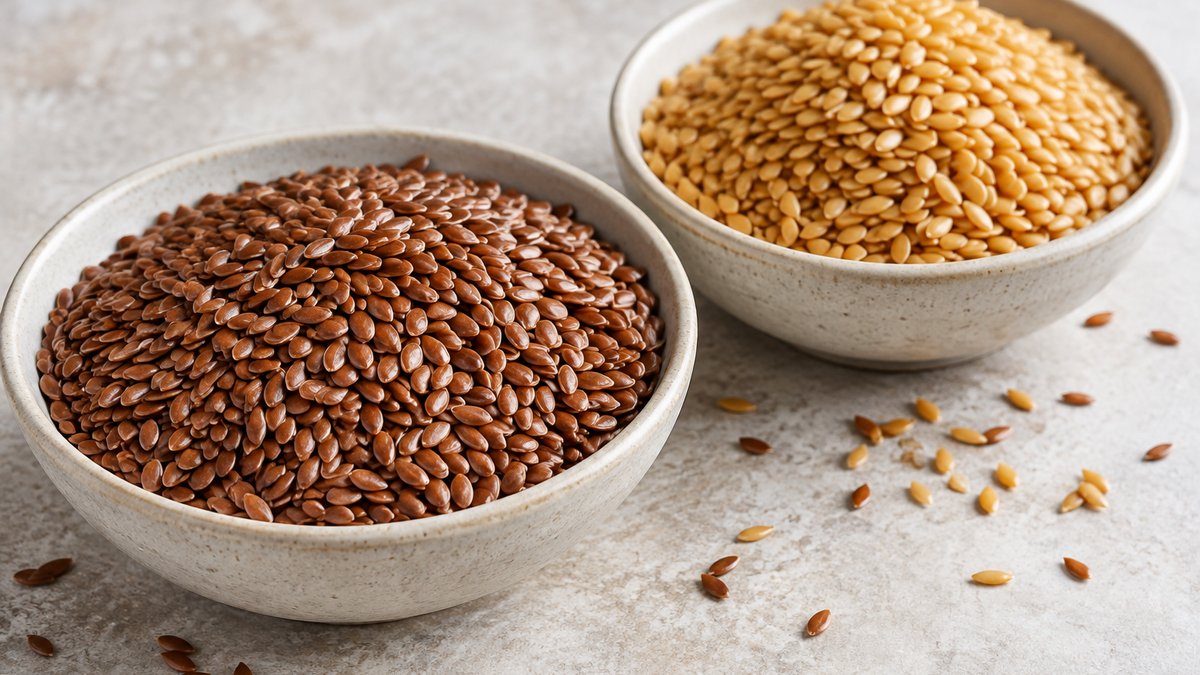

1. Brown and golden flaxseed differ first by seed-coat color
Brown and golden flaxseed are color classes of common flaxseed, Linum usitatissimum. The visible difference is the seed coat: brown varieties have brown coats, while golden or yellow varieties have yellow coats. The Canadian Grain Commission's Official Grain Grading Guide, dated August 1, 2026, uses the class names “brown flaxseed” and “yellow flaxseed” for varieties with those respective coat colors.
Color helps identify the variety or class a seller is offering, but it does not establish the lot's grade, cleanliness, oil content, fatty-acid profile, or suitability for a buyer's process. Those attributes need their own specifications and, where relevant, test results. A golden appearance alone also does not show that a lot is a low-linolenic variety.
For importers and processors, the practical comparison is usually about product identity and the required end use. A food manufacturer may care about the color visible in a finished product. An oil processor may place more weight on oil content and fatty-acid profile. A grain buyer may need a recognized class, grade, and cleaning standard. These are separate requirements, even when the contract starts with a color term.
Research also cautions against treating color as a complete measure of composition. A 2021 field study of related brown- and yellow-seeded flax families found that the difference in the lignan secoisolariciresinol diglucoside changed with growing conditions: yellow-seeded families had higher values in the non-stress environment, while brown-seeded families had higher values under water stress. That finding concerns the families and conditions studied; it does not set a universal composition rule for commercial lots.
Some specially bred yellow-seeded flax cultivars have low linolenic acid in their oil and are described in research as Linola or solin types. That is a specific oil trait, not a synonym for golden flaxseed generally. Buyers specifying oil for a particular application should name the required fatty-acid profile and request the relevant analysis rather than rely on seed color or a broad market label.
The terms can also vary between commercial descriptions and formal classification systems. The Canadian guide uses “yellow” for the class, while traders may use “golden” in product descriptions. In a contract, name the color class the parties have agreed to and make the quality and test requirements explicit.
2. Compare color, grading, composition, and intended use separately
A sound comparison separates the visible seed color from the lot attributes that affect acceptance and processing. The Canadian Grain Commission's guide provides a Canadian grading framework; it does not make its class terms a universal export specification. Importers and exporters should confirm which national standard or contract specification governs their shipment.
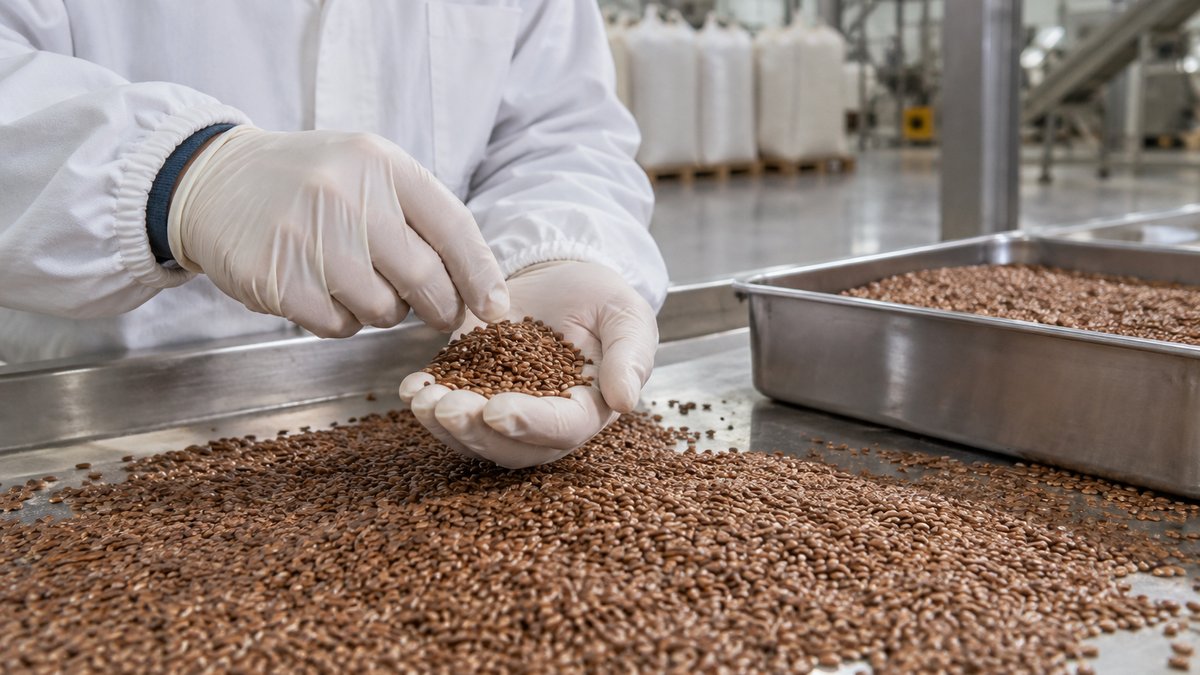
The Canadian guide makes seed coat color relevant to class identification, and its grading material also addresses quality factors such as dockage and damage. Dockage is material intermixed with a grain parcel that can and must be separated before a grade is assigned. A color description does not replace those checks, and the Canadian rules should not be presented as the importing country's rules unless that jurisdiction applies to the transaction.
For food use, buyers should describe the color the finished product requires and establish an acceptable range for visual uniformity or mixed-color seeds. Whether a color difference matters depends on the recipe and how visible the seed remains after processing. Do not assume a color class guarantees a specific flavor, texture, or performance; request samples or agreed test results when those properties affect acceptance.
For crushing, the buyer's decision should turn on the agreed oil specification and process requirements. Ask for oil content, the method used to determine it, and fatty-acid results when the oil profile is material to the product. If the purchase requires low-linolenic flax, put that requirement in the specification and verify it analytically. Golden color on its own is not adequate evidence.
For cleaning, storage, and delivery, buyers should define the commercial quality measures that apply to either color: moisture limit, foreign material or dockage, damaged or immature seed tolerance, packaging, lot identification, and sampling method. The exact limits should come from the buyer's market requirements and the parties' contract, not from the color name.
Before treating two offers as comparable, check that they refer to the same crop or delivery period, weight basis, grade or quality specification, packaging, shipment term, and destination. Then compare the stated color class. A price comparison that pairs a cleaned lot with a lot of different cleanliness, or ordinary golden seed with a specified low-linolenic cultivar, does not isolate the value of color.
3. A food manufacturer and an oil processor may specify different flaxseed
Consider a bakery buyer sourcing whole seed for a product where the seeds remain visible after baking. The buyer can request brown or golden flaxseed according to the intended appearance, then state the required grade, cleanliness, moisture, packaging, and delivery conditions. A sample can help both parties confirm visual suitability before shipment.
Illustrative purchase specification:
Product: Whole flaxseed, brown or yellow as agreed
End use: Bakery ingredient; seed color remains visible
Quality: State the applicable grade and agreed limits for moisture, dockage, and damaged seed
Verification: Agree on sampling, test methods, and sample approval before shipment
Commercial terms: State quantity, packaging, delivery term, destination, and shipment schedule
Illustrative only. The buyer and supplier must set limits and terms that fit the actual product, market, and shipment.
In that case, color is a product attribute the bakery can inspect, while the other limits define whether the lot meets its purchase requirements. The request should not say simply “golden flaxseed” if the buyer also needs a particular grade or cleaning level. Those details let suppliers assess the same specification.
Now consider an oil processor seeking a particular oil profile. The processor should begin with the required oil characteristics and test method. If a low-linolenic cultivar is required, the buyer should state that explicitly and request documentation or an analysis supporting the claim. A golden seed lot that lacks that evidence should not be treated as equivalent merely because its color matches.
The processor should also distinguish seed quality from extracted-oil requirements. Seed color identifies appearance; laboratory results address composition. The purchase agreement can specify the sampling point, testing laboratory or method, acceptance procedure, and action if the result falls outside the agreed limit. Those terms reduce disputes over whether a color description was meant to imply a measurable oil property.
A grain trader buying for storage or resale has a different job. The trader may need the recognized class and grade used in the origin or destination market, along with documents that identify the lot and its quality. If the shipment is intended for a market that uses a different grading system, parties should state the standard by name and agree how the inspection result will be recognized.
Across all three scenarios, the efficient approach is the same: describe the color requirement, list each measurable quality requirement separately, and agree how each will be checked. A color label can help identify a product, but it cannot replace inspection, laboratory data, or a complete contract specification.
Looking to Source Flaxseed?
Connect with verified suppliers, discover matching products, and explore sourcing opportunities from global markets.
4. Choose the color that fits the product, then verify the lot
Choose brown or golden flaxseed according to the buyer's actual product requirement. If visible seed color matters, select the agreed class and define how much variation the buyer accepts. If oil composition or a formal grade matters more, specify and verify that attribute directly instead of using color as a proxy.
4.1 When golden or yellow flaxseed fits
Golden or yellow seed is a suitable choice when the buyer's recipe, retail presentation, or processing specification calls for that appearance. Buyers seeking a low-linolenic type should name that property separately, identify the required cultivar or specification when applicable, and request supporting test results. The words “golden” and “yellow” alone do not certify a fatty-acid profile.
4.2 When brown flaxseed fits
Brown seed fits a purchase that calls for brown-coated varieties or a finished product where the brown appearance is acceptable or intended. As with yellow seed, the color does not establish grade, moisture, cleanliness, oil content, or any other contractual quality measure. State those requirements separately.
4.3 What to put in the inquiry
- Name the product as whole flaxseed and state whether the required seed coat is brown or yellow/golden.
- Identify the governing grade or quality specification and the jurisdiction or contract standard it follows.
- List the required moisture, cleanliness, dockage, damage, and other acceptance limits that apply to the purchase.
- For crushing or oil use, state the required oil content and fatty-acid profile, together with the test method and documents required.
- For low-linolenic seed, name that specific requirement and request analysis; do not rely on golden color as proof.
- State packaging, quantity, delivery term, destination, shipment period, sampling procedure, and how the parties will resolve a failed test.
Ask suppliers to quote against the same specification so offers can be compared on a like-for-like basis. If a supplier uses “golden” while the contract or grading reference says “yellow,” confirm that both parties mean the same class. Keep a representative sample and record the agreed test basis when visual color, cleanliness, or composition could affect acceptance.
Buyers and exporters can use Freshdi's Flaxseed supplier listings to find relevant supplier profiles, then confirm each product's color, grade, available analysis, and commercial terms directly through the transaction process.
References
1. Canadian Grain Commission – Official Grain Grading Guide: Flaxseed, August 1, 2026.
2. Scientific Reports – Water stress intensified the relation of seed color with lignan content and seed yield components in flax (Linum usitatissimum L.), 2021.
Disclaimer: This article is compiled from platform data, public sources and information provided by third parties, for general informational purposes only. We do not guarantee its accuracy or completeness. Please conduct your own due diligence before making business decisions.