
1. IQF and block-frozen blueberries differ mainly in how the berries are presented
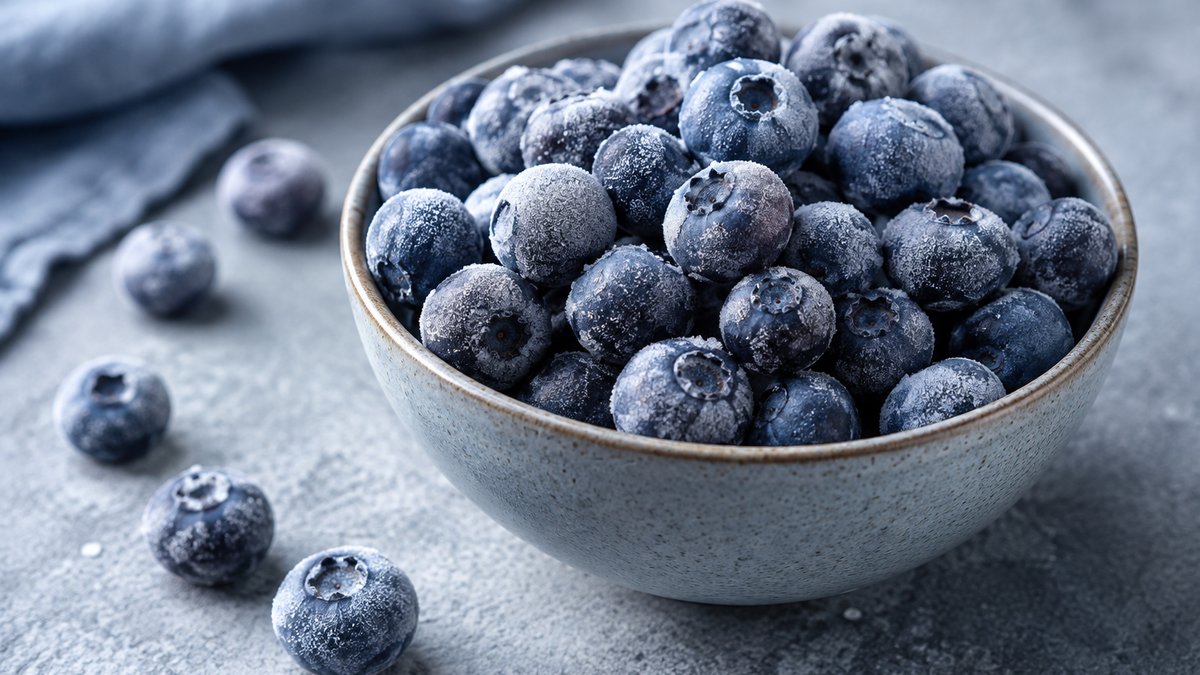
IQF means individually quick frozen. In commercial use, IQF blueberries are frozen as separate berries and supplied in a free-flowing form, so a buyer can handle or portion individual berries while they remain frozen. Block-frozen blueberries are supplied as a solid mass in which berries adhere to one another.
The Codex Alimentarius Commission describes these as two presentation styles for quick frozen blueberries: free-flowing berries that do not adhere to one another, and non-free-flowing berries presented as a solid block. This distinction helps buyers compare handling and processing needs. It does not, by itself, establish the berries’ variety, grade, sweetness, origin or overall quality.
The terms also describe different things. IQF refers to an individual-freezing process and is commonly used to identify berries that remain separate. Block-frozen describes the product’s resulting form. In a purchase specification, use the required form directly, such as “free-flowing IQF” or “non-free-flowing solid block,” and ask the supplier to confirm it.
For buyers, the practical distinction is how the product will be handled after opening the package. Separate berries can be weighed and added in portions without first breaking apart a frozen mass. A block may suit a production line that uses the berries together or processes them further, but the buyer should confirm how the frozen product will be broken down or thawed for that operation.
Neither format is automatically higher grade. Codex sets quality requirements for quick frozen blueberries, including color, cleanliness, flavor and odor. For berries sold as free-flowing, the standard also addresses berries that stick together and sets a tolerance for those that cannot be easily separated while frozen. A buyer assessing quality should therefore check the applicable product standard and agreed specification, not use “IQF” or “block-frozen” as a quality grade.
The U.S. Department of Agriculture’s frozen blueberry grade standard assesses characteristics such as color, defects and character. It describes grades separately from the berry presentation. Buyers trading across markets should confirm which grade standard, if any, applies to their contract and destination.
Before comparing quotations, define both the presentation and the other product attributes that affect suitability: wild or cultivated berries, whole or broken fruit, grade or defect limits, ingredients or packing medium, packaging, net weight and storage conditions. A quote for IQF berries and one for a frozen block may refer to different handling formats while leaving these other terms unspecified.
2. How IQF and block-frozen blueberries compare
The main difference is whether the berries remain separate in the frozen state. The choice affects portioning and production handling; it does not replace a complete quality and product specification.
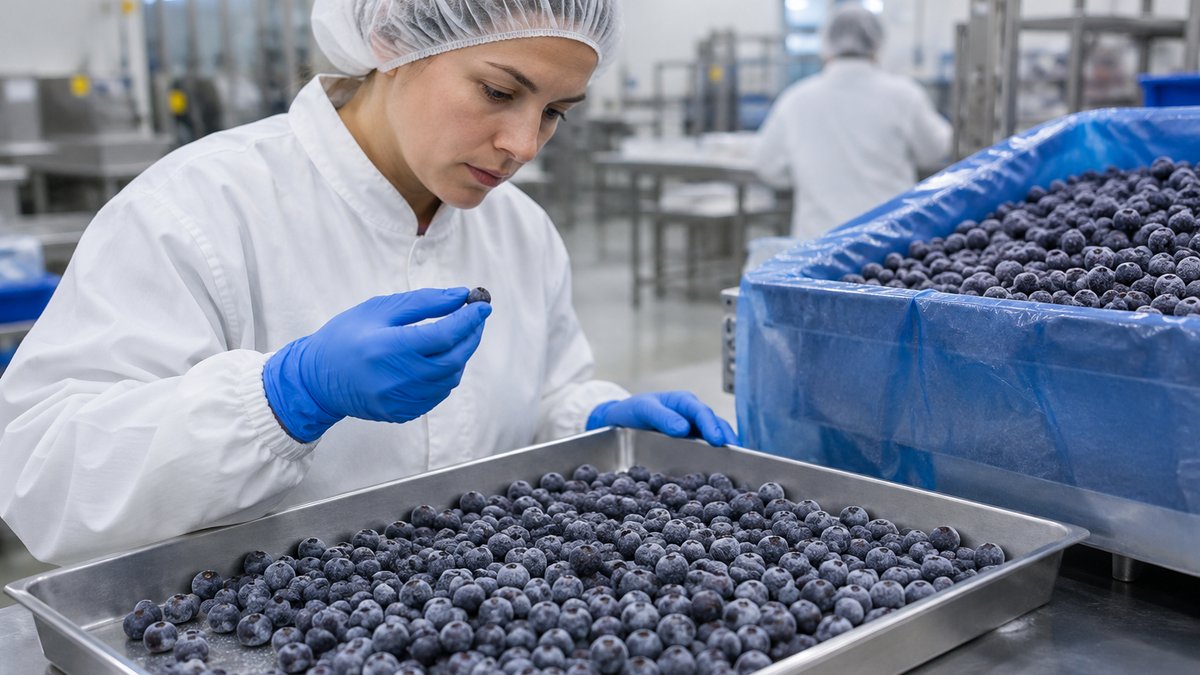
The comparison uses “IQF” as a commercial format term and “block-frozen” as a form description. Codex’s standard for quick frozen blueberries uses the terms free-flowing and non-free-flowing. A contract should state the condition the buyer expects rather than rely on shorthand that a supplier may interpret differently.
Free-flowing is a product condition that can be checked in the frozen state. Under the Codex standard, free-flowing blueberries must meet a stated tolerance for berries that stick together and cannot be easily separated while frozen. Buyers who need berries to dispense reliably should state an acceptance criterion and agree how sampling and inspection will be carried out.
Packaging can influence how product is stored and fed into production, but a package type alone does not establish whether the contents will be free-flowing. Specify the inner liner, outer container, net weight and handling requirements separately. If a buyer needs smaller packs for staged use or larger bulk units for a processing line, state the pack size and explain how the product will be used.
The freezing presentation also should not be used as a substitute for checks on the berries themselves. Ask about cultivar or wild type, color, maturity, foreign material, broken or crushed berries, and any defects relevant to the end use. The Codex blueberry standard addresses product quality factors, while the USDA grade standard provides a separate grading framework for frozen blueberries in the United States.
A buyer comparing two offers should make sure the quoted price basis covers the same product attributes and package size. If one offer is for a specified grade and the other gives no grade, or if one is free-flowing and the other is block form, the prices are not a direct comparison until those differences are understood.
3. A bakery’s production plan shows when the format difference matters
Consider a bakery that makes products in batches and needs to add a measured quantity of whole frozen blueberries to each mix. If the berries must be dosed while frozen and remain distinct during that step, free-flowing IQF berries may fit the operation. The buyer can ask the supplier to confirm that the product meets the agreed free-flowing condition and packaging requirement.
Now consider a plant that sends blueberries through a process where the fruit is broken up, blended or cooked with other ingredients. If the production line receives and processes the berries as a batch, a solid block may be acceptable. The buyer would need to confirm how the block is received, handled and prepared for that line, including whether any thawing or break-up step is required.
These scenarios are examples of matching format to process, not claims that every bakery prefers one format. A bakery may need separate berries for a visible fruit topping, while another may use fruit in a cooked filling. The product specification and actual production sequence determine whether the berries need to remain separate.
A buyer should map the process from receipt to the point where blueberries enter the product. Check whether staff open and reseal packs, weigh berries in frozen form, feed them into a hopper, thaw them, or send them directly to cooking or blending. The answer helps identify whether the main requirement is free-flowing product, a bulk block, a particular pack size or another handling feature.
A receiving test can help confirm that a shipment matches the purchase order. For a free-flowing order, agree the sampling method and the acceptable degree of adhesion. For a block order, confirm the block dimensions or pack presentation if those details affect equipment or storage. For both formats, set inspection criteria for the berries’ condition and document how deviations will be handled.
The buyer should also check that the frozen product is suitable for the intended recipe. A whole-fruit application may be sensitive to berry shape and visible defects. A puree, filling or blended application may place different weight on appearance, but still require specific controls for flavor, foreign material, ingredients and consistency. State those needs in the specification rather than expecting the format name to cover them.
This example does not establish a universal cost or quality ranking. Processing method, raw material, grade, packaging and contract terms all affect an offer. Compare quotes only after the buyer has aligned the format, product requirements, pack size, delivery basis and inspection terms.
Looking to Source Frozen Blueberry?
Connect with verified suppliers, discover matching products, and explore sourcing opportunities from global markets.
4. Choose the format that fits the next production step
Choose IQF or another specified free-flowing format when the operation needs separate berries in frozen storage, portioning or dosing. Choose block-frozen product when the production line can accept a solid mass and has a defined way to prepare or process it. If the line cannot handle a block, a lower quoted price may not offset the extra labor or equipment changes needed.
Before requesting quotations, write a product description that separates presentation from quality and commercial requirements. A useful specification identifies the requested form, blueberry type, grade or quality criteria, whole or broken condition, ingredients or packing medium, package material and size, net weight, storage conditions, order quantity and delivery terms.
For free-flowing berries, say that the requirement applies while the product is frozen. Ask the supplier to define its inspection method and the acceptable amount of berries adhering to each other. Codex allows a specified tolerance for sticking in free-flowing quick frozen blueberries, so a buyer needing stricter separation should put the agreed criterion in the contract.
For a block, specify that the frozen berries may arrive as a solid mass. If block size, package dimensions or preparation steps affect the production line, include those conditions. Do not assume the supplier will infer how the buyer plans to handle the product.
Request comparable offers using the same specification. Ask each supplier to identify any exception clearly, including a different presentation, grade, berry type, ingredient or pack size. If the destination market or buyer’s own quality program requires particular documents or testing, state those requirements separately and confirm that they apply to the product and shipment.
Fresh frozen-blueberry buying requests and supplier listings on Freshdi can help buyers and exporters review relevant sourcing activity: view Frozen Blueberry buying requests and view Frozen Blueberry suppliers. Confirm specifications, availability and commercial terms directly through the transaction process.
References
1. Codex Alimentarius Commission – Standard for Quick Frozen Blueberries, CXS 103-1981, 1981.
2. U.S. Department of Agriculture, Agricultural Marketing Service – United States Standards for Grades of Frozen Blueberries, 1957; corrected and reprinted April 24, 2026.
3. U.S. Highbush Blueberry Council – Blueberry Formats, Undated; accessed November 20, 2026.
Disclaimer: This article is compiled from platform data, public sources and information provided by third parties, for general informational purposes only. We do not guarantee its accuracy or completeness. Please conduct your own due diligence before making business decisions.