
1. Coconut milk and coconut cream differ in composition and concentration
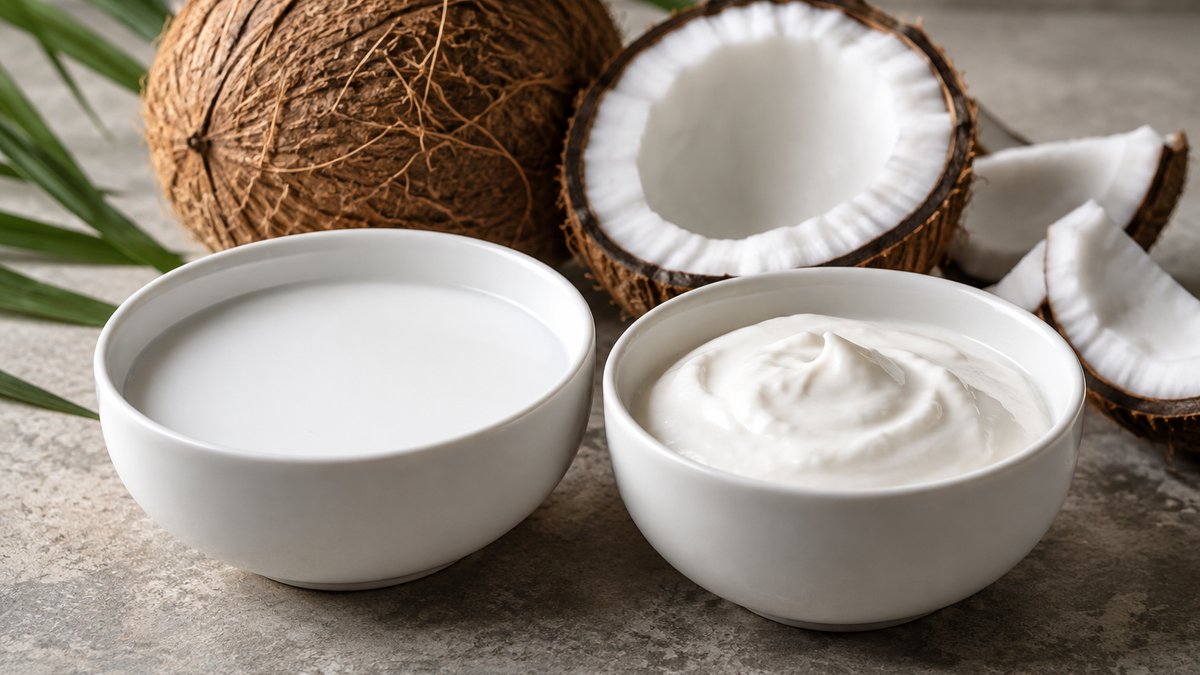
Coconut milk is the more dilute product; coconut cream has higher minimum fat and total solids under the Codex composition table. For food manufacturers, those differences affect how much coconut ingredient a formula needs and how the finished product tastes and flows.
The Codex Alimentarius Commission’s Standard for Aqueous Coconut Products, CXS 240-2003, defines coconut milk as a dilute emulsion of coconut kernel in water. It defines coconut cream as an emulsion extracted from mature coconut kernel, with or without added coconut water or water. The standard’s composition table sets minimum fat at 10% by mass for coconut milk and 20% for coconut cream. It sets total solids at 12.7% to 25.3% for coconut milk and 25.4% to 37.3% for coconut cream.
These figures are Codex composition benchmarks, not a guarantee that every product sold under either name has the same fat content. The standard applies to packaged products for direct consumption, including catering or repacking. It expressly excludes products identified as intended for further processing, as well as sweetened or flavoured products. A food manufacturer buying an ingredient for further processing should therefore treat the Codex figures as a reference point and confirm the applicable rules in the destination market.
Labels can also use descriptions such as light coconut milk or coconut cream concentrate. CXS 240-2003 sets separate composition limits for these styles: light coconut milk has a minimum fat content of 5% by mass, while coconut cream concentrate has a minimum of 29%. A buyer comparing quotations should check the full product name and specification, rather than assuming that “cream” alone identifies a single concentration.
Coconut cream may suit formulas that need more coconut solids or a richer texture in a smaller ingredient volume. Coconut milk may suit products that need a more pourable coconut base or lower concentration. Actual performance depends on the supplier’s formulation and process, including any permitted stabilizers, so product testing remains important.
2. Coconut milk vs coconut cream: composition, packing and shelf life
For procurement, compare the product specification and process alongside the name. The Codex figures below apply within the standard’s scope; shelf-life examples come from Tetra Pak’s Coconut Handbook and vary with product, heat treatment, storage and package.
The shelf-life figures are general examples in Tetra Pak’s technical table for coconut beverages and coconut milk products. It lists in-container sterilization at 121°C for 20 to 30 minutes with cans, retort pouches or glass bottles and a two-year non-refrigerated shelf-life reference. For UHT processing at 137°C to 145°C, it lists aseptic packs and a six-to-eight-month non-refrigerated reference. The handbook cautions that shelf life depends on the product, heat treatment, storage conditions and package.
Aseptic processing and retort packing are different commercial routes. UHT processing heats the product before it enters a previously sterilized package under aseptic conditions. Retort processing sterilizes the sealed container. A product’s package format alone does not establish its processing conditions or shelf life; the manufacturer’s specification and validated process determine those details.
Canned products can be suitable for buyers who need sealed retail or foodservice containers. Aseptic formats can include cartons and larger bag-in-box or drum formats for industrial use. The available sizes are supplier-specific. Confirm the pack material, net weight, closure, pallet configuration, storage temperature and whether the supplier can fill the volume your production line handles.
Before comparing offers, request fat and total-solids values, ingredient declaration, processing method, unopened shelf life, storage instructions and packaging details. Ask whether the values are guaranteed limits or typical results, and request the test method and certificate of analysis for the relevant lot. For bulk shipments, confirm how the product is protected during transport and what handling is required after opening.
Coconut milk and cream can separate during storage, affecting viscosity, as described in the Tetra Pak Coconut Handbook. Ask the supplier whether shaking, mixing or heating is part of the product’s normal handling instructions, and test the ingredient after the same storage and preparation conditions used in your plant.
3. Example: selecting coconut milk or cream for a curry sauce
A manufacturer developing a ready-to-use curry sauce can start with the texture and concentration required by its formula. Coconut milk may be a fit when the recipe needs a less concentrated coconut base. Coconut cream may be worth testing when the formula needs more coconut solids or a thicker result.
The product name does not settle the decision. A supplier’s coconut milk can vary within the Codex total-solids range, and a cream may be formulated or processed differently from another cream. A pilot batch can show whether the chosen ingredient reaches the required viscosity, flavour and appearance after cooking and during the product’s intended storage.
For a fair trial, request the same information from each supplier: fat percentage, total solids, ingredient list, heat treatment, package type, unopened shelf life and storage conditions. Record the amount of ingredient used in the formula and assess the finished sauce after the actual cooking and filling process. If the product is intended for further processing, tell the supplier that purpose because it affects which standard or market requirements apply.
Packing should match the trial and production scale. A small can may be practical for bench testing, while an aseptic bag or drum may suit an industrial run. Confirm minimum order quantity, sample availability, transport temperature, pack integrity requirements and how much time the plant has to use the product after opening. Those details belong in the purchasing specification, rather than being inferred from the word “cream” or “milk.”
For example, a request can state that the ingredient is for a curry sauce, then ask for the supplier’s fat and solids specification, process, package options and shelf-life documentation. The manufacturer can compare both product types in a controlled trial before settling the formulation. This example describes a product-development approach; it is not a universal recipe or a guarantee of performance.
Looking to Source Coconut Milk?
Connect with verified suppliers, discover matching products, and explore sourcing opportunities from global markets.
4. When should food manufacturers choose coconut milk or coconut cream?
Choose between coconut milk and coconut cream according to the concentration and processing behaviour the formula needs. Coconut milk starts at a lower Codex minimum fat level, while coconut cream starts at a higher one. Neither name alone tells a manufacturer how the ingredient will perform in a particular recipe.
Coconut milk is a reasonable starting point for a formula seeking a less concentrated coconut ingredient. It may reduce the amount of water or other liquid that must be adjusted elsewhere in a formulation, but the outcome depends on the actual specification. Check the fat and total-solids values before making a cost or recipe comparison.
Coconut cream is a reasonable starting point when the formulation requires higher coconut solids or a richer texture from the coconut ingredient. A more concentrated product can change viscosity and the way the formula behaves during heating, mixing and filling. Confirm those effects in a plant-relevant trial instead of assuming concentration will produce a specific finished texture.
Food manufacturers should compare ingredients on an equivalent basis. Check cost per unit of usable fat or total solids when that measure fits the application, and include any changes needed to water, stabilizers or processing. A lower price per kilogram does not by itself show which ingredient is more economical in the finished product.
- Name the intended application and state whether the product is for direct consumption or further processing.
- Set acceptable fat and total-solids limits, then ask suppliers to state whether their figures are guaranteed or typical.
- Confirm ingredients, including stabilizers, and check whether the product is sweetened, flavoured or reconstituted.
- Specify the required process and package, such as canned, retort pouch or aseptic bulk format.
- Ask for unopened shelf life, storage conditions, lot documentation and handling instructions after opening.
- Test the ingredient in the actual formula and production process before approving a supply specification.
For international sourcing, also confirm the importing market’s labelling and food-safety rules. Codex is an international standard, and national authorities determine how standards apply in their jurisdictions. CXS 240-2003 says that reconstituted products should be labelled as such and that an appropriate description of the heat treatment should appear with the product name or prominently nearby. Check the destination’s current requirements before approving a label.
5. Related resources for coconut milk sourcing
Use Codex CXS 240-2003 to check the international composition benchmarks for products within its scope, and use the Tetra Pak Coconut Handbook as a technical reference for the relationship between heat treatment, packaging and shelf-life examples. For a product intended for further processing, confirm the applicable national requirements and agree the complete ingredient specification with the supplier.
Freshdi is a place to explore coconut milk buying requests and related suppliers. Check each listing’s current details and assess product specifications, documentation and commercial terms before making a sourcing decision.

References
1. Codex Alimentarius Commission – Standard for Aqueous Coconut Products: Coconut Milk and Coconut Cream, CXS 240-2003, Amended 2024.
2. Tetra Pak – Coconut Handbook: Long Life Coconut Liquid Products, Accessed 2026-11-16.
Disclaimer: This article is compiled from platform data, public sources and information provided by third parties, for general informational purposes only. We do not guarantee its accuracy or completeness. Please conduct your own due diligence before making business decisions.