
Introduction
For soybean importers, the commercial difference between non-GMO and GMO soybeans rests on the crop's production and identity history, the evidence supplied with the lot, and the destination market's rules. A label or test result alone may not establish every part of that history.
Buyers should define the claim they need before requesting a quotation. “Non-GMO,” “organic,” and a destination-specific regulatory declaration describe different requirements, so they should not be used interchangeably in a contract.
1. Non-GMO and GMO soybeans differ in crop status and supply-chain controls
GMO soybeans come from varieties developed using genetic engineering. Non-GMO soybeans are sourced from varieties that do not meet the buyer's agreed definition of genetically modified. In international trade, the claim also depends on how the crop was handled, segregated and documented from seed or farm through storage and shipment.
The terms on a sales contract need a defined scope. A buyer might require non-GMO seed and crop records, an identity-preserved lot, a particular certification, or test results below a named threshold. Those conditions are not automatically equivalent. The buyer and seller should agree on the evidence, method and acceptance criteria before loading.
“GMO” is common commercial language, while rules may use terms such as “genetically modified” or “bioengineered.” In the United States, USDA's National Bioengineered Food Disclosure Standard defines covered bioengineered foods by the presence of detectable modified genetic material and applies disclosure requirements to regulated food businesses. That consumer disclosure framework is distinct from a buyer's private non-GMO purchase specification for bulk soybeans.
Organic status is a separate production claim. Under USDA organic rules, genetic engineering is an excluded method. Organic certification also covers other production and handling requirements, so an organic certificate is not simply a generic non-GMO certificate. A buyer seeking only non-GMO soybeans should state that requirement directly instead of assuming that organic certification is the intended or acceptable substitute.
The commercial value of a non-GMO claim depends on the buyer's market, the accepted standard and the cost of maintaining separation and records. A premium is negotiated for a specified lot and delivery basis; it is not a fixed amount attached to every non-GMO soybean shipment. Compare quotes for the same grade, crop year, delivery point, shipment period and documentation package.
2. Compare soybean status, evidence and buyer obligations before contracting
For an import purchase, the main differences appear in variety status, handling controls, verification and the paperwork required by the destination. The buyer should put the relevant requirements into the contract rather than relying on a product name alone.
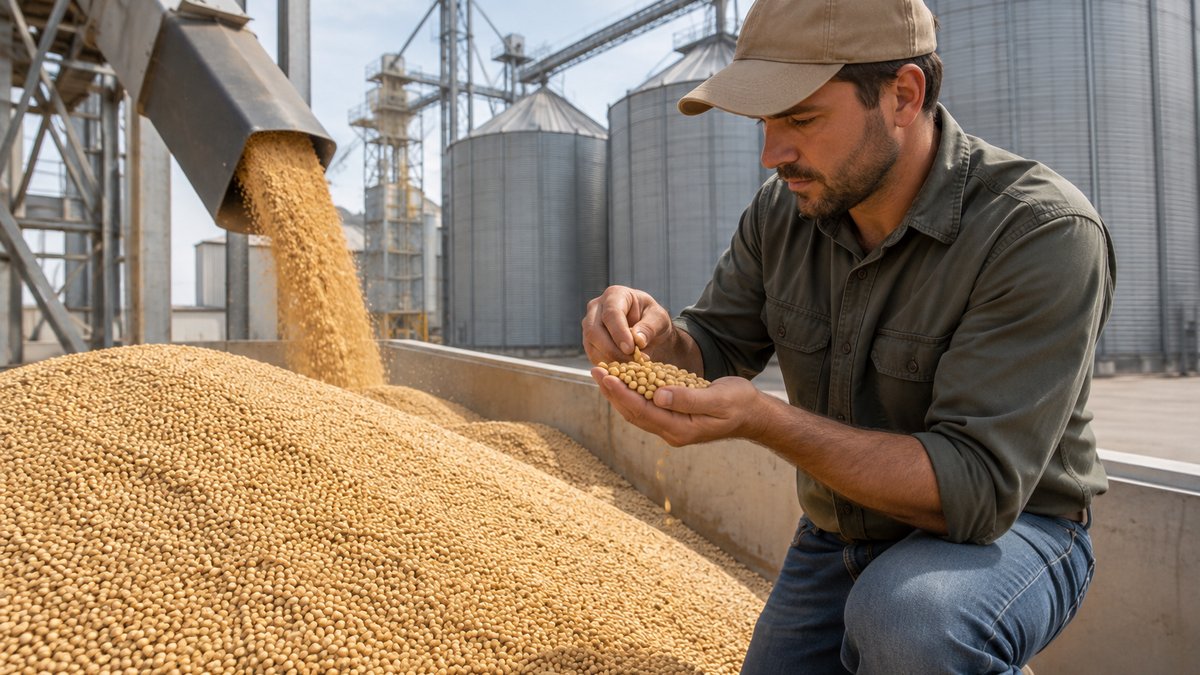
A test is evidence about the sample tested, not a substitute for supply-chain controls. Results depend on sample collection, laboratory method, target events and the test's detection or quantification limit. The European Commission's Joint Research Centre describes GMO analysis as detection of known DNA sequences, including methods used to identify particular events. Ask the laboratory report to state the method, sample identity, result and limit.
The EU's traceability and labelling rules provide one example of why destination matters. The European Commission says the 0.9% exception for presence of authorized GM material applies when that presence is adventitious or technically unavoidable. It is not a universal definition of “non-GMO,” and it does not make an unauthorized GMO acceptable. Importers should confirm the current rules for the specific product and intended use.
Keep quality specifications separate from GMO status. State the soybean grade or applicable quality parameters, moisture basis, foreign material limits, crop year, packaging or bulk condition, quantity, delivery term and destination. These terms let suppliers quote comparable lots and prevent a non-GMO claim from obscuring other product requirements.
Looking to Source Soybean?
Connect with verified suppliers, discover matching products, and explore sourcing opportunities from global markets.
3. An EU-bound shipment needs both lot evidence and destination checks
Consider an importer buying bulk soybeans for a food ingredient customer in the European Union. The customer asks for non-GMO material, and the importer wants to compare two offers. One supplier provides a lot-specific laboratory report and records showing how the crop was segregated; another provides only a general statement that its soybeans are non-GMO.
The importer should first ask both suppliers what definition and acceptance limit they use. For the tested lot, the importer can request the sample identification, sampling date, laboratory method, target events, result and detection or quantification limit. The importer should also ask whether the sample represents the shipped lot and who collected it.
Next, review records linking the stated crop or lot to storage and shipment. Relevant evidence may include supplier declarations, crop or origin records, silo and loading records, cleaning procedures, certificates or audit documents, and a bill of lading. The required documents depend on the contract and destination. A certificate should be checked for its issuer, scope, validity and covered product; the word “certified” by itself does not explain what was verified.
Before acceptance, confirm the destination's current GMO authorization, traceability and labelling requirements for the commodity's intended use. The EU's 0.9% threshold is conditional on adventitious or technically unavoidable presence of authorized GM material. A buyer who needs a stricter commercial limit must write that separate limit into the contract and agree on how the sample will be tested.
Illustrative soybean inquiry:
Product: Bulk soybeans, non-GMO claim defined in the contract
Quantity and delivery: State volume, shipment period, destination and delivery term
Acceptance criteria: Name the applicable threshold, test method and sampling protocol
Evidence requested: Lot-specific test report, segregation records and relevant certificates
Quality: State grade and agreed quality parameters separately from GMO status
This is an illustrative inquiry format. Confirm the applicable specification and import rules for the actual product, destination and end use.
Compare the two offers using the same shipment basis and evidence requirements. A supplier with fewer documents may still be able to provide them before shipment, while a report without traceability may not satisfy the buyer's contract. Resolve those gaps before agreeing the price or loading date.
4. Choose the soybean type that fits the market and contract
Choose GMO soybeans when the destination permits the relevant variety and the buyer's product, feed or processing specification accepts it. Confirm that the particular event is authorized for the intended use in the destination market; authorization and disclosure rules can differ between countries and between food and feed applications.
Choose non-GMO soybeans when a customer specification, market program or downstream production process requires the claim. Before paying a premium, establish the exact definition, accepted certification or verification scheme, threshold, test method and required records. A claim that lacks agreed verification terms can leave buyer and seller with different expectations at delivery.
For a premium comparison, request offers on the same basis: grade, crop year, quantity, origin, shipment window, port or delivery point, freight term, payment terms and evidence package. USDA Agricultural Marketing Service publishes a National Weekly Non-GMO/GE Grain Report with price information. Use a dated report as a market reference, then confirm the supplier's actual offer and whether it covers the same delivery and quality conditions.
- Identify the destination country, intended use and buyer's written GMO requirement.
- Define what non-GMO means for the transaction, including any threshold and how it will be measured.
- Agree on the sampling plan, test method, laboratory, timing and responsibility for test costs.
- Specify the segregation, identity-preservation and traceability records the supplier must provide.
- Check the destination's current authorizations, disclosure duties and import documentation requirements.
- Compare quotations only after the product grade, shipment terms and verification package match.
If the buyer's requirement is specifically organic, request the applicable organic certificate and check that its scope covers the product, operator and shipment. USDA organic rules prohibit genetic engineering, but organic certification also verifies requirements beyond GMO status. If the buyer requires non-GMO without an organic claim, use the contract's stated standard instead.
Buying consideration: Before accepting a lot, make the supplier's claim, the evidence required, the test protocol and the consequence of a failed result explicit in the purchase contract.
5. Use official resources to verify claims and find soybean trade counterparts
Start with the importing authority's rules for the destination and product use. The European Commission's traceability and labelling guidance explains EU requirements, while USDA Agricultural Marketing Service materials cover the United States' bioengineered food disclosure standard, organic rules and voluntary identity-preservation services. These resources address different legal and commercial questions, so select the one that applies to the shipment.
For laboratory questions, the European Union Reference Laboratory for Genetically Modified Food and Feed publishes method and event-specific information. For price context in the United States, USDA AMS's weekly Non-GMO/GE grain report gives dated market information; its figures should be compared by delivery basis and period before being used to assess a premium.
Importers comparing supply options can also review soybean suppliers on Freshdi. Confirm each supplier's current product description, documentation and commercial terms for the specific shipment.
- European Commission, Traceability and labelling of GMOs: EU rules for traceability and disclosure.
- USDA Agricultural Marketing Service, National Bioengineered Food Disclosure Standard: U.S. disclosure scope and recordkeeping.
- USDA Agricultural Marketing Service, Identity Preservation Program: voluntary audit services for identification, segregation and traceability.
- USDA Agricultural Marketing Service, Organic labeling: production and handling requirements for USDA organic claims.
- European Union Reference Laboratory for Genetically Modified Food and Feed: GMO detection methods and event information.
- USDA Agricultural Marketing Service, National Weekly Non-GMO/GE Grain Report: dated U.S. grain market price information.
References
1. USDA Agricultural Marketing Service – National Bioengineered Food Disclosure Standard, Accessed 2026-11-16.
2. European Commission – Traceability and labelling, Accessed 2026-11-16.
3. USDA Agricultural Marketing Service – Identity Preservation Program, Accessed 2026-11-16.
4. USDA Agricultural Marketing Service – Labeling Organic Products, Accessed 2026-11-16.
5. European Union Reference Laboratory for Genetically Modified Food and Feed – Unauthorised GM soybean (incl. event HB4), 2026-06-05.
6. USDA Agricultural Marketing Service – National Weekly Non-GMO/GE Grain Report, Latest release displayed 2026-10-09; accessed 2026-11-16.
Disclaimer: This article is compiled from platform data, public sources and information provided by third parties, for general informational purposes only. We do not guarantee its accuracy or completeness. Please conduct your own due diligence before making business decisions.