
Introduction
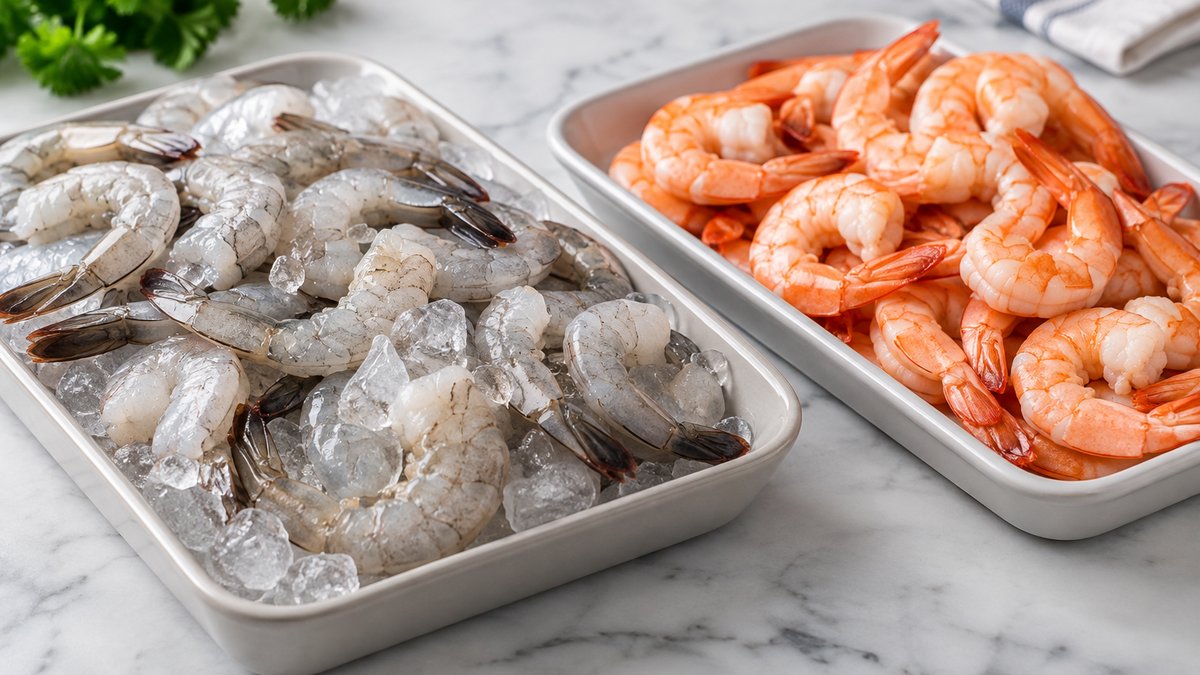
Raw frozen shrimp and cooked frozen shrimp differ in the processing step before freezing. Raw shrimp still needs a cooking step before consumption; cooked shrimp has already received heat treatment. Both can be sold in different presentations, including shell-on, peeled, individually quick frozen or block frozen.
For importers, the choice affects the product’s intended use, handling controls and specification. Glazing and frozen storage matter for both types. The Codex shrimp standard, FAO’s fishery products code and relevant official guidance were checked on 16 November 2026. Destination-country rules and the product label still need to be checked for each shipment.
1. How Raw Frozen Shrimp Differs from Cooked Frozen Shrimp
The defining difference is whether the shrimp has been cooked before freezing. Raw frozen shrimp has not undergone that cooking step; cooked frozen shrimp has. Freezing preserves the product in a frozen state, but it does not make raw shrimp cooked or establish that a cooked product can be handled without further controls.
Raw shrimp may be supplied head-on, shell-on (HOSO), headless, shell-on (HLSO), or peeled and deveined (PD). Those terms describe presentation or processing, not whether the shrimp is cooked. A peeled, deveined product can still be raw. Buyers should state both the cooking status and the desired presentation in the product specification.
Cooked shrimp is often sold peeled, but cooking status and shell presentation are separate specification points. A buyer should confirm whether heads, shells and tails remain, whether the shrimp is deveined, and whether it is fully cooked or partially cooked. Codex’s Standard for Quick-Frozen Shrimps or Prawns calls for the product to be designated as raw, cooked or partially cooked, as appropriate, and for its presentation to be described clearly.
The processing route also changes the controls a buyer should examine. FAO’s Code of Practice for Fish and Fishery Products calls for rapid cooling of cooked shrimp, separation of raw and cooked product, and freezing as soon as possible after cooling and draining. These steps limit opportunities for bacterial growth, toxin formation and cross-contamination during processing. For raw shrimp, the buyer should review the supplier’s controls for the raw material and the intended cooking instructions.
The word “cooked” does not by itself settle how a shipment should be used. The product’s label, processing records and destination rules determine whether it is intended to be eaten without another cooking step or used as an ingredient for further preparation. Importers should not infer ready-to-eat status from the word alone.
2. Raw and Cooked Frozen Shrimp Compared by Specification
Compare the two products against the same commercial and handling details. Cooking status is only one part of the specification; presentation, freezing method, glaze, net weight, pack format and intended use can differ independently.
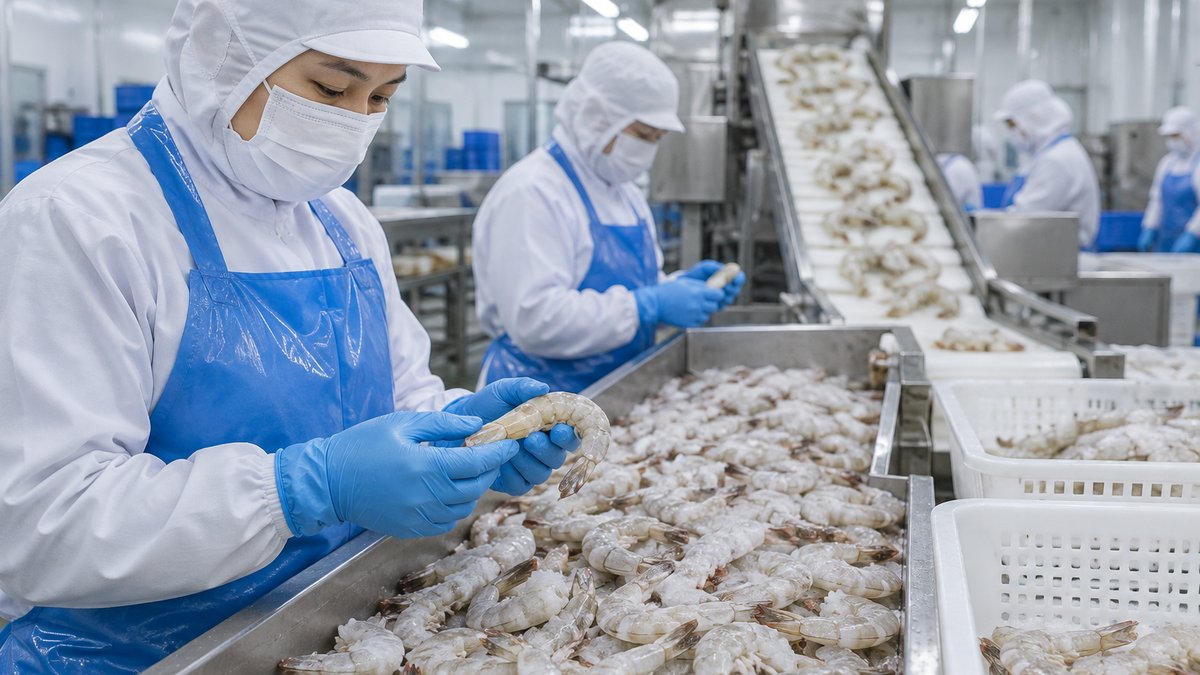
The storage temperature in the table reflects the Codex Standard for Quick-Frozen Shrimps or Prawns, which says labels should indicate storage at -18°C or colder. That is a Codex standard, not a substitute for checking the applicable law in the importing country. Codex also specifies that declared net contents for glazed product exclude the glaze. The European Commission likewise states that EU health certificates and common entry documents for glazed seafood should report net weight exclusive of glaze.
Glazing is a protective ice coating used to reduce surface dehydration during frozen storage and distribution. FAO’s fishery products code notes that too little or too much glaze, spot welding and incorrect labelling can be defects. Request the declared net weight, glaze percentage or measurement method, and whether the quoted weight is deglazed. Compare quotations on the same basis so ice does not distort the apparent product weight.
The term “frozen” does not establish a guaranteed shelf life. Shelf life depends on the product, packaging, processing and storage conditions, so the importer should obtain the supplier’s dated production information, stated shelf life and storage instructions. The Codex storage recommendation does not itself give every product a single shelf-life period.
Raw and cooked shrimp both require a controlled frozen chain. Ask how the supplier monitors storage and shipment temperatures, what records are available, and how the product is protected if a delay occurs. FAO advises suitable frozen storage with minimal temperature fluctuation and temperature monitoring. Inspect the shipping specification, packaging condition and receiving procedure rather than assuming the frozen state alone demonstrates that quality was maintained.
Looking to Source Frozen Shrimp?
Connect with verified suppliers, discover matching products, and explore sourcing opportunities from global markets.
3. A Sourcing Scenario: Choosing Shrimp for a Foodservice Operation
A foodservice importer deciding between raw HLSO shrimp and cooked peeled shrimp should start with the kitchen’s process. If the operation has the equipment and staff to cook shrimp, raw HLSO may fit a menu that needs shell-on product before preparation. If the kitchen needs shrimp that has already been cooked for an intended application, cooked peeled product may reduce preparation work. Neither choice can be made from the product name alone.
The importer should first confirm the cooking status and presentation. For the raw option, specify HLSO and state whether deveining is required; HLSO alone does not say whether shrimp is deveined. For the cooked option, confirm whether tails remain, whether the shrimp is fully or partially cooked, and whether the label permits the intended use. The importer should also state species, size or count basis, freezing method, packaging format and any required tolerances.
Next, compare the product weight and protection. If either option is glazed, ask for glaze information and confirm the net-weight basis. If the buyer’s portioning or production plan relies on pieces separating individually, specify the required freezing format and check for clumping at inspection. FAO’s code notes that slow freezing can affect texture and cause shrimp pieces to freeze together.
The receiving plan should reflect the product’s processing history. For cooked shrimp, request records relevant to the cooking and cooling process, as well as controls against contact with raw product after cooking. FDA guidance for the United States explains that cooking is ordinarily treated as a critical control point for cooked, ready-to-eat seafood when no later heat treatment is applied. It also notes the importance of controls against contamination during significant handling after cooking. These are U.S. regulatory considerations; importers selling elsewhere must check the destination’s requirements.
Illustrative inquiry format:
Product: Raw or cooked frozen shrimp; state HOSO, HLSO or peeled presentation
Specification: Species, size or count basis, deveining and tail status
Freezing and glaze: Freezing format, glaze details and declared net-weight basis
Handling: Storage temperature, temperature records and stated shelf life
Compliance: Destination market and applicable documentation or food-safety requirements
This is an illustrative inquiry format, not a universal product specification or a substitute for destination-country requirements.
4. When to Choose Raw or Cooked Frozen Shrimp
Choose raw frozen shrimp when the buyer’s process includes cooking and the raw presentation fits the recipe, processing line or customer specification. Raw HOSO can suit a product sold with the head and shell intact; HLSO retains the shell after head removal; PD provides a peeled and deveined presentation. These labels do not set species, size, quality grade or freezing method, so each needs a separate specification.
A processor buying raw shrimp should assess the yield after cooking and any further preparation, and should state the required size basis and defect tolerances. A foodservice buyer should confirm that staff and equipment can handle the required cooking step. If the product will be incorporated into another food, specify whether the shrimp arrives raw or cooked and where the next heat treatment occurs.
Choose cooked frozen shrimp when the buyer’s process specifically needs shrimp cooked before delivery. This can fit applications where cooked shrimp is an ingredient or where the buyer’s workflow calls for less on-site cooking. The product still needs suitable handling after cooking, and any claim that it is ready to eat should be supported by the label and the supplier’s documentation. For products handled after cooking, FDA guidance identifies recontamination and temperature control as matters to address in the applicable U.S. seafood HACCP analysis.
Certification and regulatory requirements depend on the destination, product and process. Do not treat a general certificate or a supplier’s quality claim as proof that every market requirement is met. For the United States, FDA says processors must conduct a hazard analysis for each location, process and kind of product; a HACCP plan is needed when the analysis identifies food-safety hazards reasonably likely to occur. The buyer should also check whether the supplier’s records cover the exact product and processing site.
Before accepting either type, ask for the product name and presentation as it will appear on the label, the cooking status, species, size or count basis, freezing format, glazing details, packaging and storage instructions. Confirm the net weight basis and the stated shelf life. Set the temperature requirements and records in the purchase specification, then check the destination’s labelling, establishment approval and food-safety documentation rules for the shipment.
5. Related Frozen Shrimp Sourcing Resources
Use a written specification to request comparable offers for raw or cooked frozen shrimp. State the product form, cooking status, size, freezing method, glaze and net-weight basis, packaging, destination and delivery terms. Ask suppliers to identify any specification they cannot meet rather than accepting an offer that leaves the product form unclear.
For a product comparison, check whether the quotes use the same species, size, presentation, glaze basis and delivery terms. A per-kilogram price for glazed product should not be compared with a deglazed net-weight price without reconciling the stated weight basis. If the shelf-life period or storage condition differs, record that difference rather than assuming the products are equivalent.
Importers can review frozen shrimp buying requests on Freshdi and related frozen shrimp suppliers as sourcing resources. Treat listing information as a starting point and verify each product’s specifications, documentation and commercial terms before placing an order.

References
1. Codex Alimentarius Commission – Standard for Quick-Frozen Shrimps or Prawns (CXS 92-1981), 1981, amended 2024.
2. Food and Agriculture Organization of the United Nations – Code of Practice for Fish and Fishery Products (CAC/RCP 52-2003), 2003.
3. U.S. Food and Drug Administration – Fish and Fishery Products Hazards and Controls Guidance, June 2022 Edition, 2022.
4. U.S. Food and Drug Administration – Guidance for Industry: Questions and Answers on HACCP Regulation for Fish and Fishery Products, 1997.
5. European Commission – FAQs on Certification: Net Weight on Health Certificates and CHEDs for Glazed Seafood, Accessed 16 November 2026.
Disclaimer: This article is compiled from platform data, public sources and information provided by third parties, for general informational purposes only. We do not guarantee its accuracy or completeness. Please conduct your own due diligence before making business decisions.