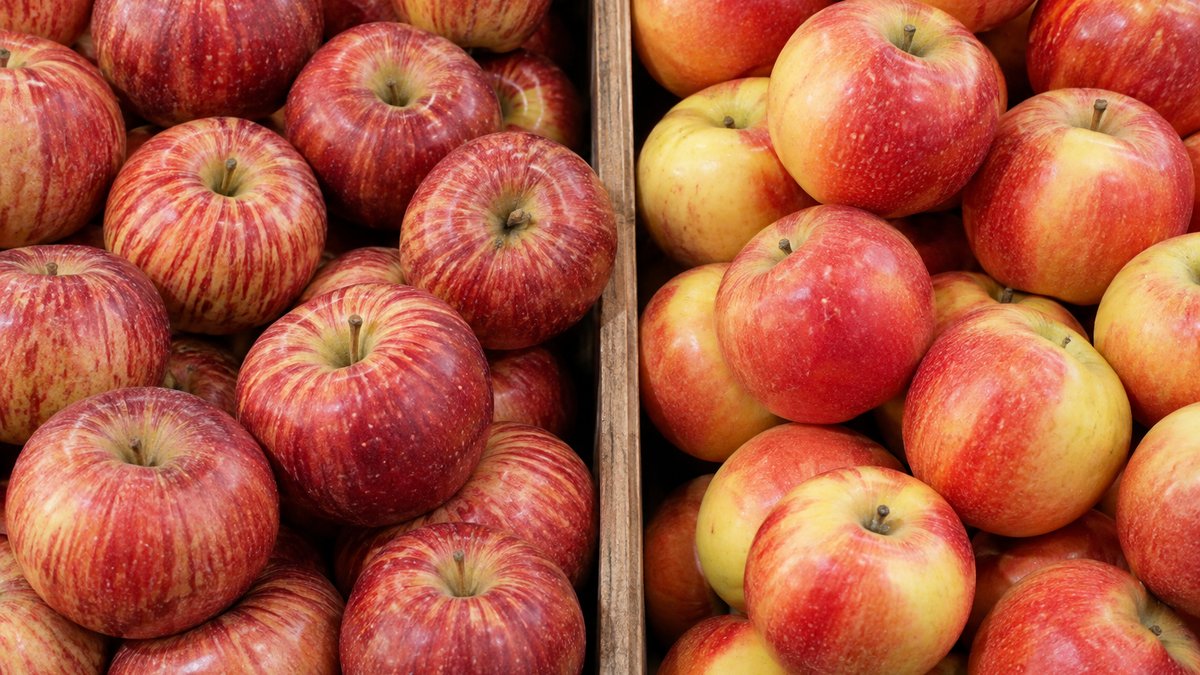

1. Fuji and Gala differ most in eating profile and typical season
Fuji and Gala are dessert apple cultivars sold fresh, but they suit different buyer preferences. Fuji is generally firm, crisp, juicy and predominantly sweet. Gala is also sweet and crisp, with a milder eating profile. Those descriptions are useful starting points, not guarantees for every shipment: cultivar strain, growing conditions, harvest maturity and storage affect the fruit a buyer receives.
The cultivars also tend to enter harvest at different points in many growing regions. The University of Maryland Extension describes Fuji as a late-ripening cultivar and notes that some Fuji strains ripen earlier. Penn State Extension describes Gala as an early-season retail variety. Harvest calendars depend on origin and local conditions, so importers should ask for the specific origin, strain and expected shipping window rather than treating either label as a calendar date.
For commercial buying, the cultivar name answers only one part of the specification. Buyers still need to define size, color expectations, grade or quality criteria, pack style, maturity, condition on arrival and destination requirements. A Fuji label does not by itself establish a sweetness level, firmness reading, storage history or uniform appearance.
2. Fuji vs Gala comparison for fresh apple buyers
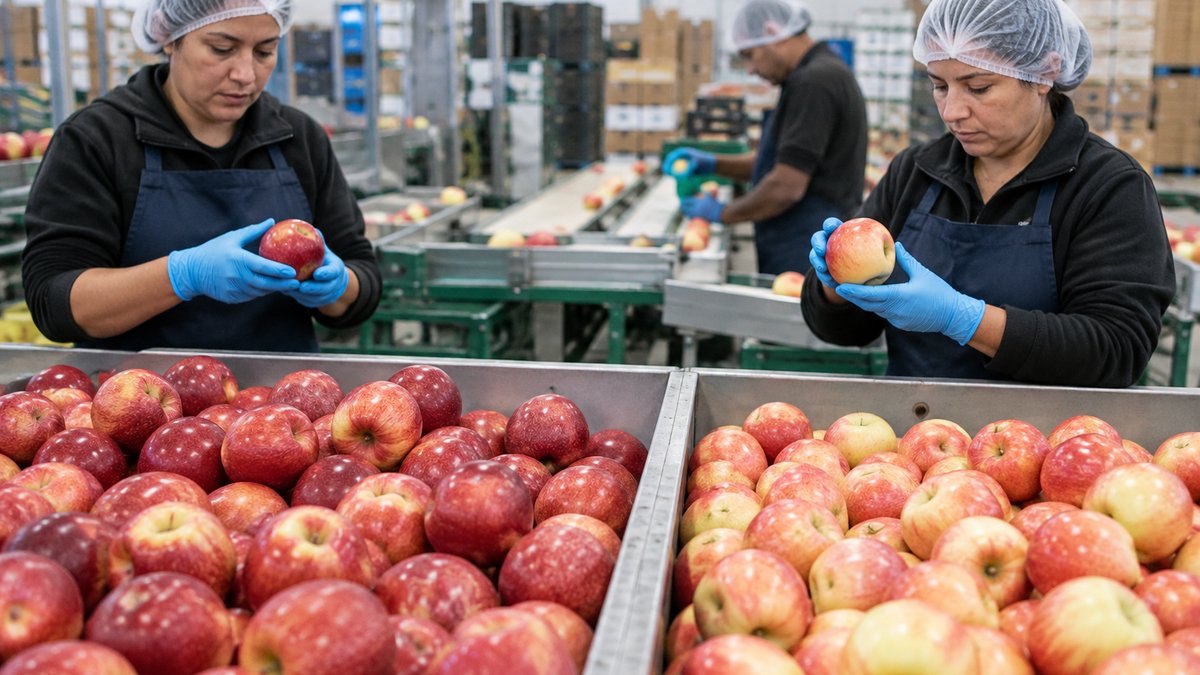
The flavor and texture descriptions summarize cultivar tendencies reported by university extension sources. They are not lot specifications. An importer comparing two offers should request the same measurable details from each supplier, such as count or size range, packing format, stated grade, harvest or packing period, and inspection or condition criteria.
Appearance alone is an unreliable basis for comparing the cultivars. Fuji color can vary widely, and Gala color also depends on strain and growing conditions. If a retail program requires a minimum red coverage, ground color or other appearance standard, write that requirement into the purchase specification and agree how the parties will assess it.
A grade and a cultivar name describe different things. For example, USDA apple grades describe quality and condition criteria; they do not make Fuji and Gala the same product. USDA says its fruit grade standards are voluntary and provide uniform language for describing quality and condition in the marketplace. Buyers should confirm which standard, if any, applies to the transaction and destination.
3. A sourcing scenario: choosing apples for a retail program
Consider an importer planning two fresh apple listings for a retail program. One listing is aimed at shoppers who prefer a firm, distinctly sweet apple; the other is intended for shoppers who want a mild, familiar sweet flavor. Fuji may fit the first positioning and Gala the second, subject to the importer’s own tasting and the actual lot specification.
The importer should ask suppliers for comparable offers. A useful comparison records the cultivar and strain if known, country and growing region, size or count range, grade or agreed defect tolerances, pack and net weight, harvest or packing timing, storage history, and the delivery term and destination. The buyer can then compare two lots on like terms instead of treating the cultivar names as a complete description.
Illustrative fresh apple inquiry:
Product: Fresh Fuji apples
Origin: Country and growing region to be confirmed
Size and pack: Buyer to specify count or size range and packing format
Quality: State applicable grade or agreed condition and defect criteria
Delivery: State destination, requested delivery term and target shipping window
This is an illustrative inquiry format, not a universal specification. Buyers should fill in values that match their market and handling needs.
For a Gala offer, the importer should use the same comparison fields and state any distinct color or retail presentation requirement. If the buyer expects fruit from a particular harvest window, the supplier should confirm the origin-specific timing and available lot. A supplier’s general cultivar description cannot confirm that a specific shipment meets the buyer’s requirements.
Before committing, buyers should agree how product condition will be assessed, when inspection occurs and how a claim will be documented. These terms matter for both cultivars because transit and storage can affect firmness and visible condition. The contract should identify the agreed product and acceptance criteria in language both parties can apply to the shipment.
Looking to Source Fresh Apple?
Connect with verified suppliers, discover matching products, and explore sourcing opportunities from global markets.
4. Choose Fuji or Gala by the buyer’s product brief
Choose Fuji when the target customer or product brief calls for a firm, crisp apple with a predominantly sweet flavor. University of Maryland Extension describes Fuji as crisp, firm and juicy, with a predominantly sweet taste. Importers should still check the lot’s maturity and condition, because the cultivar description cannot establish the eating quality of fruit picked or stored under different conditions.
Choose Gala when the program calls for a mild, sweet apple and its anticipated harvest window fits the supply plan. Penn State Extension lists Gala among early-season retail cultivars. Since harvest timing varies by origin and strain, confirm the available shipping period with the supplier and avoid planning from a general calendar alone.
For a mixed assortment, the decision can be made by market segment rather than choosing one cultivar for every buyer. A retailer may list both and position them by flavor and texture, while a wholesaler may choose based on the customers’ preferences, supply availability, pack requirements and expected selling period. These are commercial choices to validate with the importer’s own buyers; they are not fixed preferences for an entire country or market.
Do not use the cultivar name as a substitute for product grading. State the desired size, appearance, maturity, defect tolerances, packaging and delivery requirements separately. In the United States, USDA’s U.S. apple grades include U.S. Extra Fancy, U.S. Fancy and U.S. No. 1, among others. Those are voluntary grade standards, and the parties should confirm whether they are suitable for the contract and destination.
A practical selection rule is to start with the desired eating profile, then test representative fruit and compare offers using matched specifications. If firmness, sweetness, color or storage performance is central to the program, agree on how the trait will be checked and recorded. That gives the buyer a usable basis for comparing Fuji and Gala lots without assuming that every shipment carrying the same cultivar name will perform identically.
5. Related resources for fresh apple sourcing
Cultivar profiles help buyers frame a product brief, while official grade standards provide a separate vocabulary for describing apple quality and condition. For U.S. grading, consult the USDA Agricultural Marketing Service apple grades and standards information and confirm whether the standards apply to the transaction. For cultivar characteristics, university extension references can help explain common eating and harvest traits, but they do not replace inspection of the specific lot.
Importers preparing a request can review Fresh Apple buying requests on Freshdi and Fresh Apple supplier listings on Freshdi. Confirm each listing’s current details and verify product specifications and commercial terms before proceeding.
References
1. University of Maryland Extension – Important Apple Cultivars in the Mid-Atlantic Region, 2023.
2. Penn State Extension – Apple Cultivars for the Retail Market, 2019.
3. USDA Agricultural Marketing Service – Apple Grades & Standards, 2026.
Disclaimer: This article is compiled from platform data, public sources and information provided by third parties, for general informational purposes only. We do not guarantee its accuracy or completeness. Please conduct your own due diligence before making business decisions.