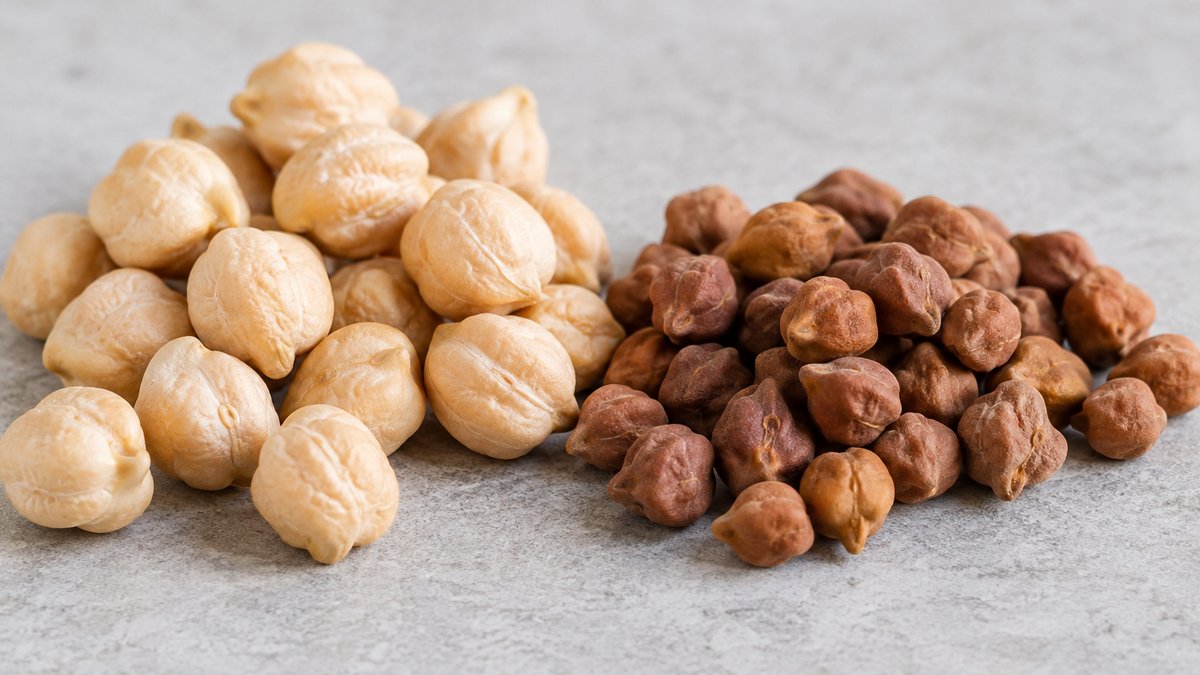

1. Kabuli and Desi Chickpeas Differ in Seed Appearance and Processing
Kabuli and Desi are the two main commercial classes of chickpea. Kabuli seeds are usually larger and pale, with a thin coat; Desi seeds are usually smaller, darker and more angular, with a thicker coat. The class helps describe the seed, while the buyer's processing needs and contract specification determine whether a lot is suitable.
The Canadian Grain Commission classifies chickpeas as Kabuli or Desi using seed size and color. Its Official Grain Grading Guide also shows that class can appear in a grade name, such as “Chickpeas, No. 1 CW Kabuli.” The exact grading rules and grade names depend on the grading system being used, so importers should identify the applicable standard in the contract.
For buyers, the visible difference is a useful first check, not a complete specification. Seed size, color, shape and coat traits vary among varieties and lots. The Canadian Food Inspection Agency describes Desi seed coats as pigmented, from tan to black, and thick. It describes Kabuli coats as thin and white to cream, with seed sizes ranging from small to large.
Processing often separates the two classes in commercial use. The Government of Saskatchewan describes Desi chickpeas as a type commonly split or milled into food products, while Kabuli chickpeas are used mainly in salads and vegetable mixes. ICRISAT's chickpea manual identifies dal and besan flour as products made from Desi chickpeas. These are common use patterns, not restrictions: a buyer should specify the intended product and processing method rather than rely on the class name alone.
A quotation for “chickpeas” leaves unanswered whether the buyer wants pale whole seeds, darker seeds for splitting or milling, a particular size, or a defined grade. State Kabuli or Desi, then add the physical and processing attributes that the end use requires.
2. Compare Kabuli and Desi Chickpeas by the Attributes Buyers Specify
The most useful comparison for procurement is the one that connects each class to observable seed traits and the buyer's processing plan. The table summarizes common differences; it does not replace a destination market's grading rules or a contract specification.
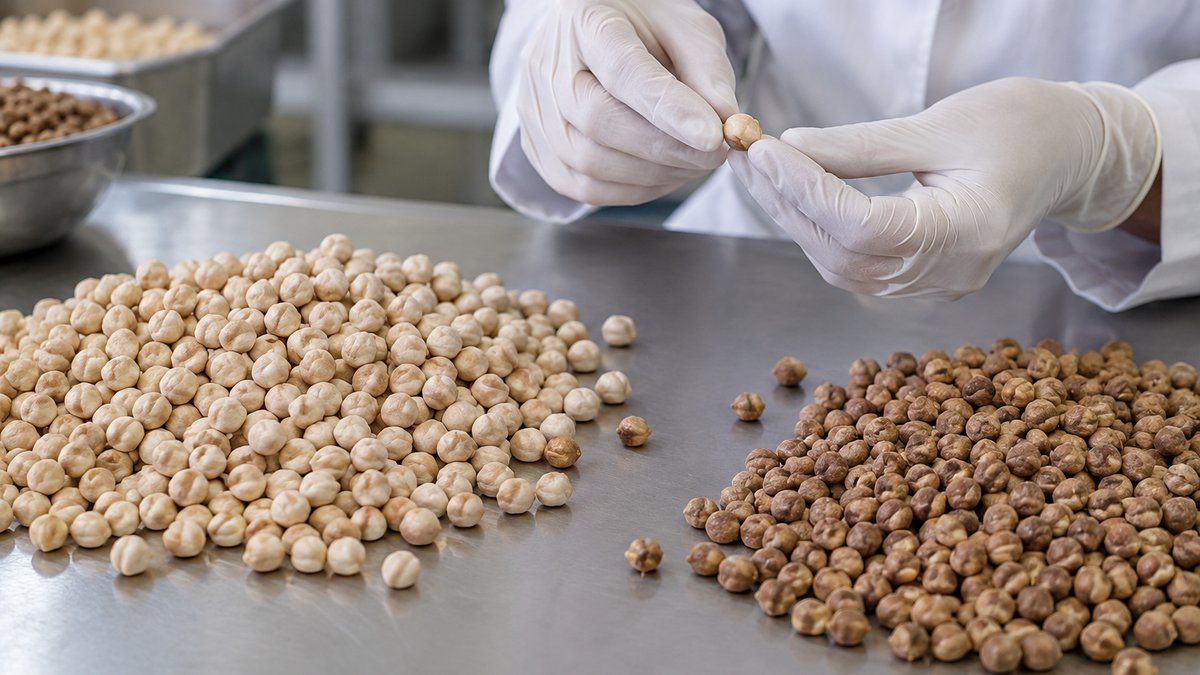
Size descriptions need a stated measurement basis. The CFIA gives an example of Kabuli sizing by seed count per 30 grams: a small class has more than 100 seeds per 30 grams, while a large class has fewer than 50. Those examples come from Canadian seed inspection guidance. They are not a universal commercial grade schedule, and buyers should not assume a supplier uses the same size bands.
Color also needs careful wording. Pale Kabuli and brown Desi are typical appearances, not rules that cover every variety. The Canadian Grain Commission notes that some Kabuli varieties can be black or green. A buyer sourcing a particular color should describe it in the specification and confirm acceptable variation with the supplier.
The class does not tell the buyer whether the chickpeas are raw, split, dehulled, milled, cleaned to a particular level or packed for retail. It also does not establish a pesticide residue limit, food safety requirement, certificate or country of origin. Those details depend on the product and destination market and should be checked separately.
Buying consideration: Before comparing offers, ask suppliers to state the class, variety if known, size measurement and tolerance, grade standard, physical condition, crop year if required, packaging and shipment basis. Request a representative sample or inspection procedure when appearance and whole-seed condition affect acceptance.
3. A Sourcing Scenario Shows Why the End Use Comes First
An importer buying whole chickpeas for a pack or foodservice line and a processor buying chickpeas for splitting or flour may need different products. The first buyer may prioritize the appearance and size of intact seeds. The processor may prioritize how the lot performs in its process and whether the delivered form suits its equipment.
Illustrative sourcing scenario:
Whole seed product: Specify Kabuli or Desi, the required color, seed size basis, acceptable size variation and whole-seed condition.
Split or milled product: Specify Desi if that matches the intended process, then state whether the purchase is whole seed for processing or already split or milled.
Offer comparison: Compare lots against the same grade, size basis, processing condition, packaging and delivery terms.
This is an illustrative procurement format, not a universal grade or a guarantee of processing performance.
A class name alone cannot settle whether the product will work on a production line. The buyer should give the supplier the intended form and ask for details that matter to that operation, such as seed size distribution, foreign material limits under the agreed standard and the condition in which the product will arrive. The buyer's own quality team can then confirm the acceptance method before contracting.
If a buyer requests whole Kabuli chickpeas for a product where pale, intact seeds are important, a Desi offer is not automatically an equivalent substitute just because both are chickpeas. The buyer would need to assess whether the color, size, coat and processing fit the finished product. If a buyer's process is set up for splitting or milling, a whole seed offer also needs evaluation against the process and final product requirements.
These distinctions matter when suppliers describe products with local trade names or abbreviated descriptions. Ask for a product specification and a clear photograph or sample when terminology does not answer whether the offer is whole, split, dehulled or milled. Use the physical description and contract grade to resolve ambiguity.
Looking to Source Chickpea?
Connect with verified suppliers, discover matching products, and explore sourcing opportunities from global markets.
4. Choose Kabuli or Desi According to the Product You Need
Choose Kabuli when the purchase calls for its typical pale, relatively large whole seed, and choose Desi when the buyer's product or process calls for its typical smaller, pigmented seed. The final choice should follow the required finished product, not a general assumption that one class is better.
4.1 When Kabuli fits the specification
Kabuli is a practical starting point for buyers seeking whole chickpeas with a light appearance. The Government of Saskatchewan lists salads and vegetable mixes as common uses. Other uses may also suit a buyer's formulation, but the class name alone does not guarantee a particular cooking result, texture or quality.
For a Kabuli inquiry, state the required size range and how size is measured. A seed count per weight, a screen size or another agreed method can describe the lot more clearly than “large.” Add a color description, whole-seed condition, grade reference and limits for defects or foreign material according to the contract. Ask the supplier to identify any size or color variation that could affect the buyer's finished pack.
A buyer sourcing Kabuli for retail or foodservice should also distinguish bulk raw material from a finished consumer pack. The purchase may require different cleaning, sorting, packaging and labeling arrangements. Those requirements belong in the inquiry and contract; they are not conveyed by the word Kabuli.
4.2 When Desi fits the specification
Desi is a suitable starting point when the buyer's process calls for smaller, pigmented chickpeas or for products commonly made by splitting or milling. ICRISAT's chickpea manual describes Desi chickpeas as the source of dal and besan flour. The Government of Saskatchewan likewise notes splitting and milling as common uses.
For Desi, the buyer should name the required color or color range and say whether the supplier should deliver whole seed or a processed product. If the buyer will dehull, split or mill after arrival, request the raw material specification and agree how acceptance will be assessed. If the buyer wants dal or flour already prepared, describe the product form and any required particle or processing attributes separately.
Desi is not a single uniform appearance. Color can vary, and seed size and shape are not identical across all varieties. Where the finished product depends on color, seed size or processing yield, the buyer should review a sample and state allowable variation before shipment.
4.3 When either class might be considered
Some purchasing decisions allow more than one class, but substitution should be explicit. A buyer considering both Kabuli and Desi should compare each offer against the intended recipe, customer expectation, processing equipment and agreed quality criteria. A lower quoted price per unit would not by itself show that the alternatives provide the same usable product.
Commercial claims about a price premium should also be treated carefully. ICRISAT's manual reports that Kabuli generally received higher market prices in the context it describes, with price varying by seed size. That older general observation is not a current quotation or a universal price rule. Buyers should compare current offers for equivalent size, grade, origin, crop year, packaging and delivery conditions.
The buyer should also check destination market rules independently. A commodity class does not establish whether the lot meets import requirements, residue limits, labeling rules or documentation requirements. Confirm those requirements for the specific product and destination before finalizing a purchase.
5. Use Clear Chickpea Specifications and Related Sourcing Resources
A clear inquiry lets suppliers respond to the same product definition. Begin with Kabuli or Desi, then describe the physical product, intended use and commercial conditions. Keep the grade standard and measurement basis explicit, especially when buyers and suppliers use different local size terminology.
- Name the class: Kabuli or Desi. Include the variety or local trade name if known, and ask the supplier to confirm what it means.
- Describe size using an agreed method, such as seed count per stated weight or a specified screen size. Include tolerance where it affects acceptance.
- State color, whole-seed condition and any required limits for defects, foreign material or damaged seeds, with the applicable grading method.
- Specify product condition: whole, split, dehulled or milled. Say whether the supplier is expected to perform processing.
- Set packaging, net weight, labeling and shipment quantity, along with the destination and delivery term.
- Identify the documents, certificates and import requirements that apply to the product and destination, then confirm them with the relevant authority or qualified adviser.
Ask suppliers to quote against the same specification. If an offer leaves the grade, size basis or processing condition unstated, request clarification before comparing it with another offer. Written tolerances and an agreed sampling or inspection method reduce disputes about whether the delivered lot matches the contract.
For reference, the Canadian Grain Commission's Official Grain Grading Guide describes Canadian chickpea classes and grading, while the Canadian Food Inspection Agency's pulse crop inspection procedures describe seed traits used to distinguish Kabuli and Desi. The Government of Saskatchewan's crop guidance summarizes common commercial uses. These sources explain classification and examples; they do not set the import requirements for every destination.
Importers and exporters can also review relevant Chickpea buying requests on Freshdi or Chickpea suppliers on Freshdi as a starting point for sourcing discussions. Check each listing's stated product details and confirm specifications, documents and commercial terms directly before proceeding.
References
1. Canadian Grain Commission – Official Grain Grading Guide: Chickpeas, Classes, Types and Varieties, 2026.
2. Canadian Food Inspection Agency – Specific Work Instructions (SWI 142.1.2-3): Pulse Seed Crop Inspection Procedures, 2025.
3. Government of Saskatchewan – Chickpea, n.d..
4. International Crops Research Institute for the Semi-Arid Tropics – Chickpea: A Manual for Researchers, 2009.
Disclaimer: This article is compiled from platform data, public sources and information provided by third parties, for general informational purposes only. We do not guarantee its accuracy or completeness. Please conduct your own due diligence before making business decisions.