
1. In-Shell Macadamia Nuts and Macadamia Kernels Have Different Trade Specifications
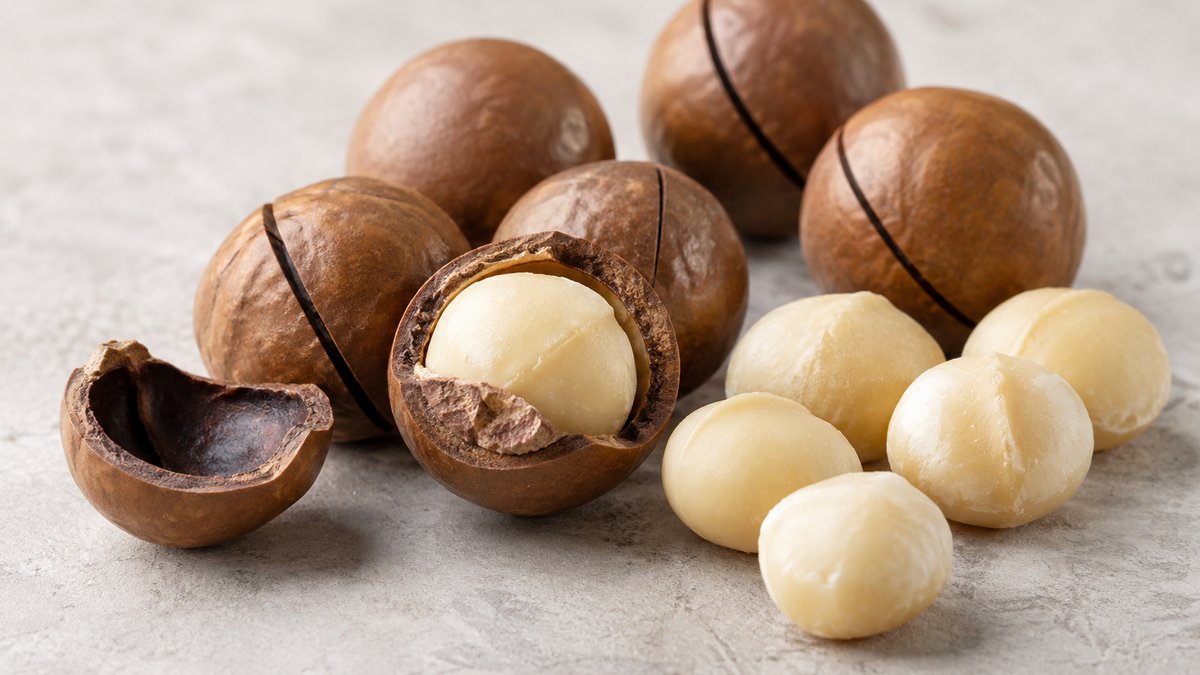
In-shell macadamia nuts are whole nuts shipped with the kernel inside its hard shell. Macadamia kernels are the edible nuts after shelling, sorted and sold in forms such as whole kernels, halves or pieces. Importers choose between them based on the next processing step, the product they need to sell, and how they will assess quality and usable yield.
The United Nations Economic Commission for Europe (UNECE) maintains separate commercial quality standards for in-shell macadamia nuts and macadamia kernels: DDP-22 and DDP-23. The standards address different products and inspection points. They are commercial quality standards, not a substitute for destination-country food rules or the specifications agreed in a sales contract.
The commercial distinction begins with what the shipment contains. An in-shell lot includes both shell and kernel, so its gross weight does not equal the amount of kernel an importer can sell or use. A kernel lot has already passed through shelling and sorting, but buyers still need to specify kernel form, grade, size and defect tolerances.
For in-shell nuts, the buyer assesses the shell and the kernel within it. UNECE DDP-22 covers characteristics such as shell condition and cleanliness, alongside kernel development and condition. For kernel shipments, DDP-23 covers the kernel itself and allows presentations including whole kernels, a mixture of whole kernels and pieces, or pieces. Its scope excludes kernels that are salted, sugared, flavoured or roasted, and those intended for industrial processing.
A product name alone does not settle the inspection basis. The contract should identify whether the goods are in-shell or shelled and name the applicable quality specification. It should also state whether the shipment is raw or processed, the intended use, the quality class and the agreed tolerances. Importers should check destination-market requirements separately, since the commercial standard does not establish every legal requirement for every country.
2. Compare Macadamia Nuts by Form, Yield and Inspection Basis
The clearest difference is how each form is bought and assessed. In-shell macadamias are purchased as nuts with the shell intact; kernels are purchased after shelling and sorting. This changes what the shipment weighs, which quality attributes the parties inspect, and who arranges or performs shelling.
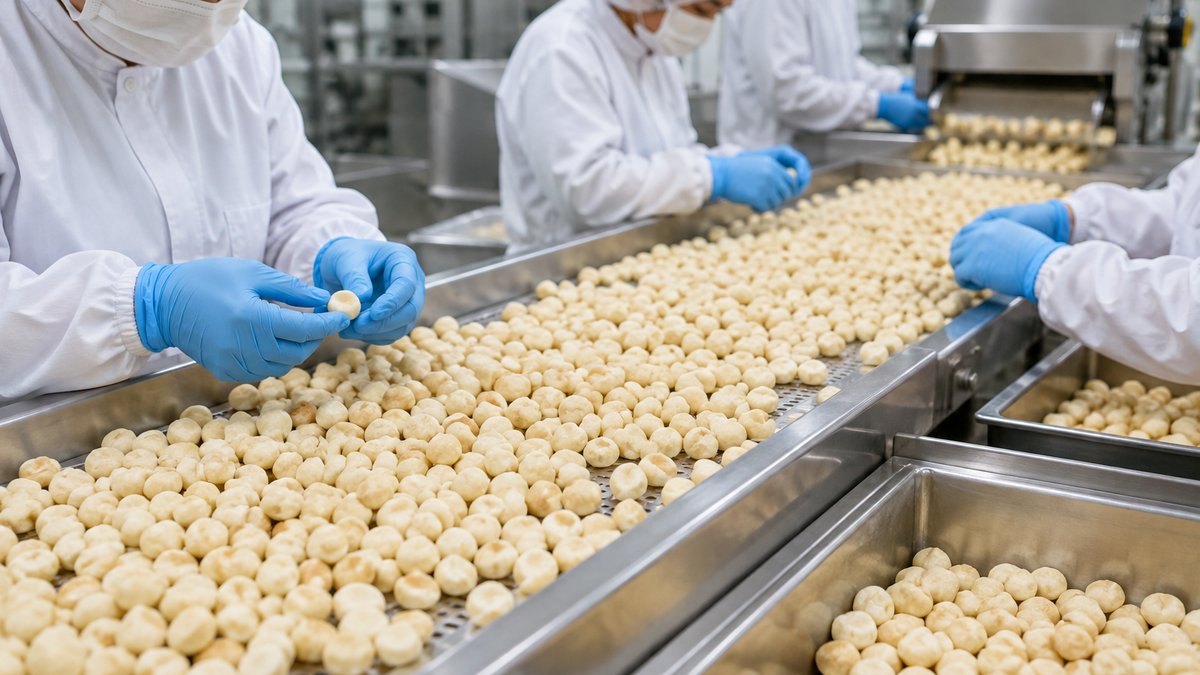
Kernel recovery is a central comparison for an in-shell purchase. It means the proportion of kernel recovered from nut-in-shell weight. The New South Wales Department of Primary Industries distinguishes total kernel recovery from saleable kernel recovery, which excludes reject kernel. Buyers comparing in-shell offers should therefore agree on the recovery calculation, sampling procedure, defect categories and treatment of unsound kernels.
A kernel offer removes much of the uncertainty about shell-to-kernel yield because the product has already been shelled. The buyer still needs to assess how much of the lot fits the intended grade. Whole-kernel percentage, size, colour and defects may affect whether the lot suits retail snacks, confectionery, bakery ingredients or another use.
Prices for the two forms cannot be compared by kilogram alone. In-shell weight includes shell, while kernel weight does not. To compare total cost, buyers need the in-shell lot's expected saleable recovery, shelling and sorting costs, handling costs, losses, and the value of any usable pieces or lower-grade kernels. The kernel quotation should also match the intended style and quality.
The UNECE standards provide a shared commercial reference for quality descriptions, but they do not prove that a particular lot meets a grade. Buyers should agree on inspection and sampling terms and obtain lot-specific evidence. Where the contract adopts a standard, name its number and version and state any additional buyer requirements.
3. A Shipment Scenario Shows How to Compare the Two Forms
Consider an importer supplying a confectionery plant that needs a defined share of whole macadamia kernels. The importer receives one offer for in-shell nuts and another for kernels. The lower quoted price per kilogram does not show which shipment costs less for the plant's actual requirement.
For the in-shell offer, the importer needs a representative sample and an agreed shelling and grading assessment. The supplier and buyer should define how they will calculate saleable kernel recovery, how they will classify premium, commercial and reject material, and who pays for the shelling and sorting. The buyer should also check whether recovered kernels meet the plant's whole-kernel and size requirements.
For the kernel offer, the importer should confirm the share of whole kernels, the permitted amount of pieces and defects, size range, moisture specification, packing and lot identification. If the product will be further processed, the buyer should state the application and whether the kernels are raw or already roasted, salted or otherwise treated. Those processing details can change which standard applies and what further checks are needed.
The buyer can then compare the cost of delivering the required quantity and style of usable kernel. The in-shell calculation includes shelling, sorting and the agreed saleable recovery. The kernel calculation uses the delivered grade and any sorting or processing still required. No universal recovery percentage or cost difference should be assumed for a particular origin or lot.
Illustrative inquiry format:
Product form: In-shell macadamia nuts or macadamia kernels
Intended use: Confectionery, retail snack or another stated application
Kernel specification: For kernels, state style, whole-kernel share, size and defect limits
Recovery assessment: For in-shell nuts, state the agreed saleable recovery method and sampling basis
Condition and processing: State raw, roasted, salted or other processing condition
Commercial terms: Quantity, packaging, destination, delivery term and inspection arrangements
This is an illustrative inquiry format, not a universal product specification. Buyers should set requirements for their own market and intended use.
This comparison also helps prevent a common quotation mismatch: one supplier may quote by nut-in-shell weight while another quotes by kernel weight. Ask both suppliers to identify the commercial unit and the quality basis before comparing prices.
Looking to Source Macadamia Nut?
Connect with verified suppliers, discover matching products, and explore sourcing opportunities from global markets.
4. Choose In-Shell Macadamias or Kernels Based on Your Operation
Choose in-shell macadamias when your operation can shell and sort the nuts, or when your product is sold in-shell. The purchase may suit an importer with suitable processing access and the ability to evaluate recovery. The buyer takes responsibility for understanding the shell-to-kernel yield and the quality of the kernels recovered.
Before choosing in-shell product, confirm that the shelling line can handle the nut size and condition, and that the buyer can sample the lot fairly. Agree how to assess saleable recovery and kernel defects before shipment or as part of the receiving inspection. A recovery figure should be tied to its method and lot; a seller's general estimate is not a guarantee of the shipment's result.
Choose kernels when your business needs a defined edible product and does not want to perform shelling. This form can suit food manufacturers, ingredient distributors and retailers that need whole kernels, halves or pieces. The buyer still needs to check whether the offered style, size and grade fit the end use.
A snack pack may require visually consistent whole kernels, while a bakery or confectionery line may be able to use halves or pieces. Those are product-specific decisions, not fixed rules for every buyer in either sector. Tell suppliers the application and the required form so that quotations refer to comparable goods.
Handling requirements also differ. In-shell shipments require equipment and labour for shelling, followed by sorting if the kernels will be sold or processed separately. Kernel shipments avoid that step for the importer, but the buyer should still check packaging, storage conditions, shelf-life information and handling instructions against the product and destination requirements.
For either form, agree the inspection point, sampling plan, test methods, tolerances and process for resolving a quality dispute. Name the applicable standard when using UNECE DDP-22 or DDP-23, then add any contract terms that the standard does not cover. Confirm certificates and import documentation according to the destination and product condition.
Buying consideration: Before signing, calculate the cost of the product you can actually sell or use. For in-shell nuts, base that calculation on an agreed saleable recovery assessment; for kernels, base it on the delivered style and the share that meets your specification.
5. Related Standards and Sourcing Resources
UNECE DDP-22 covers the commercial quality and inspection of in-shell macadamia nuts. UNECE DDP-23 covers macadamia kernels and their permitted presentations within the standard's product scope. Both standards help parties use consistent quality language, but the sales contract and destination rules determine the requirements for a specific shipment.
The New South Wales Department of Primary Industries explains nut-in-shell weight, kernel recovery and saleable kernel recovery in its macadamia grower's guide. That distinction is useful when an importer evaluates an in-shell purchase, but a guide's definitions do not replace the buyer's lot-specific sampling and inspection terms.
For product sourcing, Freshdi has category pages for macadamia buying requests and macadamia suppliers. Review each listing's stated product form and specifications, then verify the commercial details and required documentation with the prospective business partner.
References
1. United Nations Economic Commission for Europe – UNECE Standard DDP-22 concerning the marketing and commercial quality control of inshell macadamia nuts, 2010.
2. United Nations Economic Commission for Europe – UNECE Standard DDP-23 concerning the marketing and commercial quality control of macadamia kernels, 2011.
3. New South Wales Department of Primary Industries – Macadamia Grower's Guide: Cultivars, 2024.
Disclaimer: This article is compiled from platform data, public sources and information provided by third parties, for general informational purposes only. We do not guarantee its accuracy or completeness. Please conduct your own due diligence before making business decisions.