
Introduction
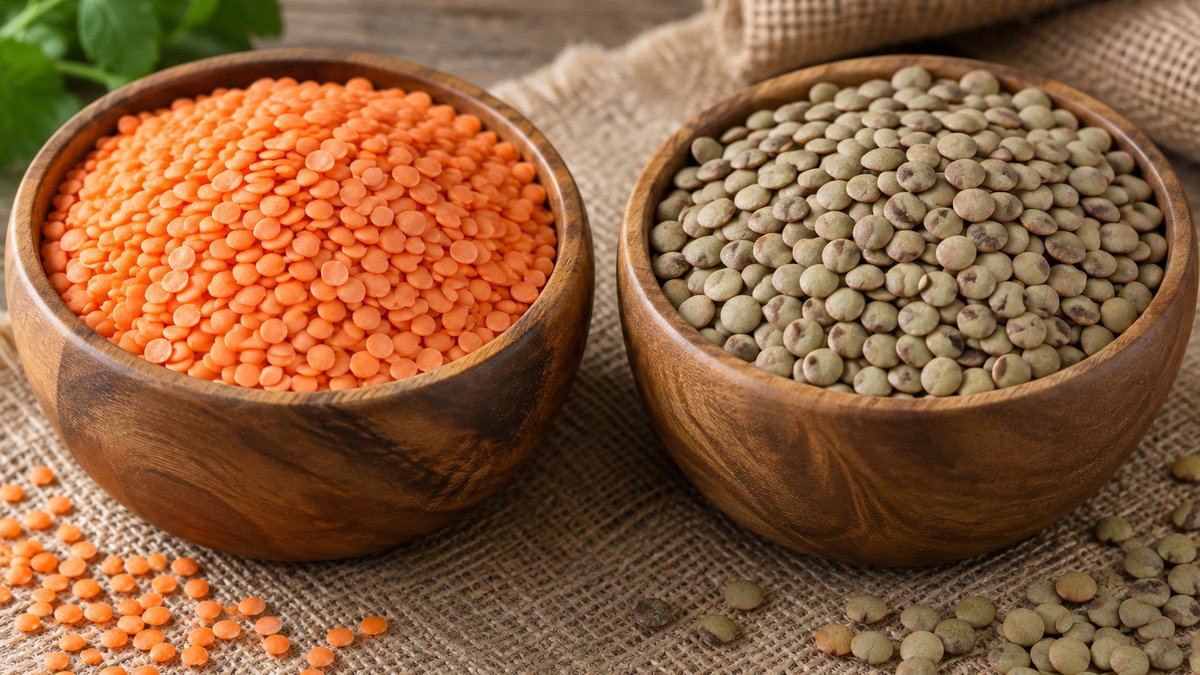
Red and green lentils differ in the seed characteristics used to classify them, their common commercial forms and how they behave in cooking. For importers, the color name alone does not specify whether a lot is whole or split, hulled or unhulled, or suitable for a particular food application.
The distinction also depends on the grading system. The Canadian Grain Commission classifies lentils as Red or Other than Red using cotyledon color, while USDA standards set grade factors for lentils and define a special Green designation. Buyers should name the required class or type, processing form and quality limits in the contract.
1. Red and Green Lentils Differ by Cotyledon, Type and Common Trade Form
Red and green lentils are names buyers use for different lentil types, but the name does not describe every visible or processing feature. The Canadian Grain Commission identifies lentil classes by cotyledon color, the inner part of the seed exposed when it is cut. Lentil seed coats can have different colors from the cotyledons, so a red lentil variety may have a green seed coat.
In Canada’s grading system, the two classes are Lentils, Red and Lentils, other than Red. The Commission says inspectors may need to cut seeds to determine cotyledon color. Lentil types can also be distinguished by seed-coat characteristics, such as a speckled green appearance. These official categories are specific to the Canadian system; buyers should not assume a grade name used in one country automatically applies to another origin.
In common commercial descriptions, red lentils are often sold split and hulled, while green lentils are often sold whole with the seed coat intact. Those are common forms, not definitions that apply to every lot. A buyer ordering red lentils should state whether the order is for whole or split product and whether the seed coat should remain. The same details matter for green lentils.
The cooking comparison is most reliable when the products are compared in the same form. Split lentils cook more quickly than whole lentils because they have been divided and the seed coat removed. A whole green lentil and a split red lentil therefore differ in both color type and processing. If a buyer compares them as though color were the only variable, cooking performance may not match expectations.
For importers, the practical distinction is the combination of type and form. Red and green lentils can each be supplied in different commercial presentations, and those presentations affect preparation and the finished texture. A purchasing description should separate the lentil’s color or class from whether it is whole, split, hulled or otherwise processed.
2. An Import Scenario Shows Why Color Alone Is Not a Complete Specification
Consider a food importer sourcing lentils for two product lines: one needs lentils that soften into a thick mixture, while the other needs lentils that remain visibly whole after cooking. A request for “red lentils” or “green lentils” alone leaves the supplier to interpret processing form and intended performance.
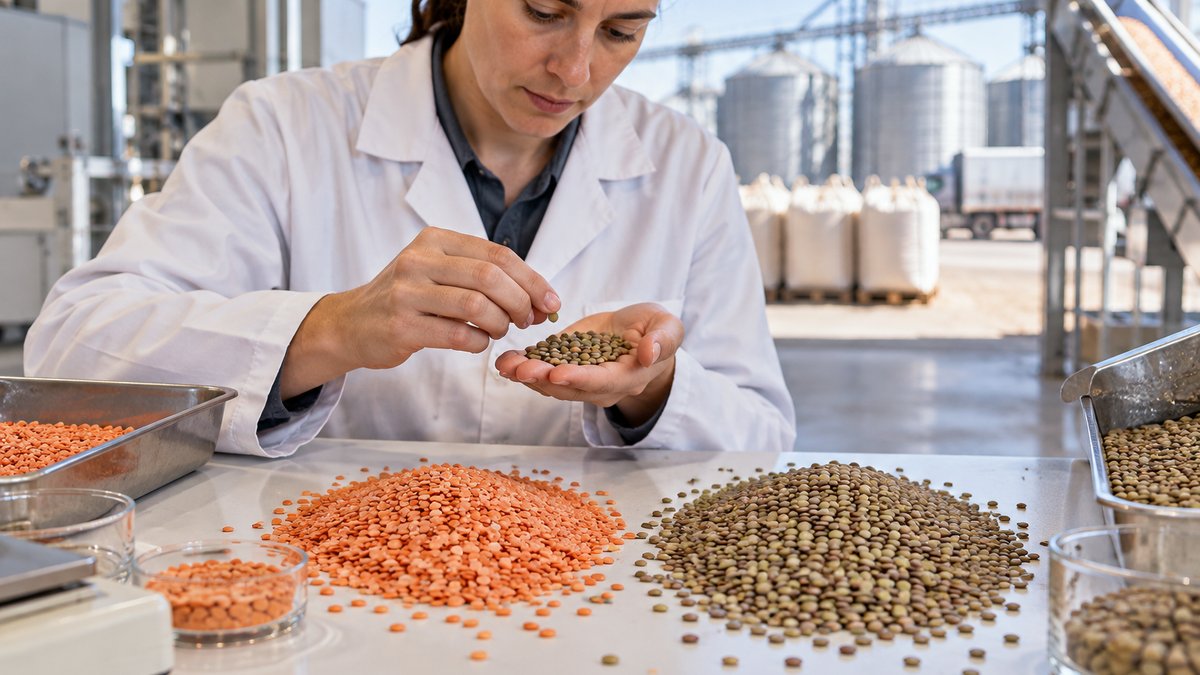
For the softer product, the importer can specify red lentils, split and hulled, and state the intended food application. For the product that needs distinct whole seeds, the buyer can specify whole green lentils with the required seed-coat appearance. These descriptions are starting points for discussion, not universal recipes or grades. The buyer and supplier still need to agree the applicable origin standard, quality tolerances and testing method.
This distinction matters during quotation review. A quotation for split red lentils should not be treated as directly equivalent to one for whole green lentils just because both are dry lentils sold by weight. The processing, acceptable appearance and intended use differ. If competing offers do not describe the same form and grade basis, a price comparison may conceal a product mismatch.
Grade terms also need a named authority. The Canadian Grain Commission’s export grading tables specify grades for Canadian lentils, including Red and Other than Red categories. USDA’s U.S. Standards for Lentils use U.S. grades and include factors such as color, damage, foreign material and splits. The exact grade limits and terminology are not interchangeable across these systems.
The USDA standard defines split lentils by the condition of the cotyledons and separately defines whole lentils. That distinction is useful in a contract because the percentage of splits can be a quality factor even when the product is sold as whole lentils. Buyers should name the governing standard and the permitted tolerance rather than relying on an undefined phrase such as “export quality.”
Illustrative inquiry format:
Product: Red lentils, with whole or split form stated
Processing: Hulled or unhulled, as required
Quality basis: Named origin grading standard and agreed tolerances
Use: State the food application or required cooked texture
This is an illustrative specification outline, not a universal grade or purchase requirement.
The importer should also settle how the lot will be sampled and inspected, which party arranges inspection, and what happens if the shipment falls outside agreed limits. Those contract terms are separate from the red or green name. They help both parties assess the same product against the same criteria.
Looking to Source Lentil?
Connect with verified suppliers, discover matching products, and explore sourcing opportunities from global markets.
3. Choose Red or Green Lentils by Processing Needs and Contract Requirements
Choose the lentil form that fits the buyer’s preparation process, then specify color or class and quality requirements independently. Split, hulled red lentils suit buyers seeking a product that softens readily; whole lentils are the more direct option when the finished dish requires distinct seeds. Green lentils are commonly traded whole, but the buyer should confirm the exact form and appearance with the supplier.
3.1 Choose split red lentils when the product should soften
Split, hulled red lentils are a practical choice for preparations where a soft texture is intended. The split form cooks faster than whole lentils and tends to break down more readily. Buyers sourcing for further processing should give suppliers the intended use and processing requirements, because the color name alone does not confirm whether the lentils are split or hulled.
If a buyer requires whole red lentils, the order should say so. Whole product may behave differently from the familiar split form, and an exporter should not assume that “red lentils” means split. Include seed-coat expectations where appearance matters, and request a representative sample if the buyer needs to assess cooking behavior before approving a lot.
3.2 Choose whole green lentils when the seed should retain its shape
Whole green lentils suit applications where the cooked lentil should remain distinct. Foodservice buyers, manufacturers and packers should agree the required size or type, appearance and defect tolerances rather than specify only “green.” Some market descriptions refer to particular green types or seed-coat patterns, but a buyer should use the exact trade name only when both sides understand it and the seller can document the offered product.
A buyer who needs green lentils for further milling or splitting should state that processing plan. The appropriate incoming lot may depend on the processor’s equipment and end-product requirements. The supplier should confirm what the product is, how it has been processed and which quality standard applies.
3.3 Set the comparison basis before evaluating offers
Before comparing offers, align the product form and quality basis. At minimum, the inquiry should identify the red or green type required, whole or split status, hulled or unhulled condition, applicable grade standard and agreed limits for relevant defects. Buyers can add size, moisture, packaging and shipment terms where these matter to the contract.
Ask for the grade certificate or inspection documents that match the named standard, and confirm whether the stated grade refers to the origin’s official system or a buyer-defined specification. If color or seed-coat appearance is commercially important, explain how it will be evaluated. A simple product name cannot replace a defined acceptance test.
Samples can help a buyer assess appearance, processing form and cooking behavior before approving a contract specification. The sample should represent the lot or production plan under discussion. Any sample approval should be connected to written terms for the shipment, including the agreed tolerances and inspection procedure.
Buyers and exporters comparing product listings or requests can use Freshdi’s lentil category to review relevant sourcing activity. The listing is a discovery resource; counterparties should confirm product identity, specifications and commercial terms for each transaction.
References
1. Canadian Grain Commission – Official Grain Grading Guide, Chapter 18: Lentils, August 1, 2025.
2. Canadian Grain Commission – Lentils: Primary and export grade determination tables, Current guide checked November 18, 2026.
3. U.S. Department of Agriculture, Agricultural Marketing Service – United States Standards for Lentils, July 2023.
4. U.S. Department of Agriculture, Agricultural Marketing Service – Pea and Lentil Handbook, Chapter 7: Dockage-Free Lentils, July 1, 2021.
5. Alberta Pulse Growers – Lentils: Consumption, Checked November 18, 2026.
Disclaimer: This article is compiled from platform data, public sources and information provided by third parties, for general informational purposes only. We do not guarantee its accuracy or completeness. Please conduct your own due diligence before making business decisions.