
Introduction
Whole fresh carrots and baby-cut carrots come from the same crop, but they arrive at different stages of preparation. Whole carrots retain their natural shape and may be unpeeled or topped and trimmed. Baby-cut carrots are peeled and cut to a shorter, more uniform form, so the buyer receives a product that has undergone additional processing.
For importers, processors, wholesalers, and food-service buyers, the choice changes what must be specified and checked. USDA procurement specification A-A-20191E describes whole carrots as a ready-to-use style and baby-cut carrots as a peeled style with a defined length and diameter options. That specification applies to its stated procurement context; it is not a universal rule for every market or contract.
1. How Whole Fresh Carrots and Baby-Cut Carrots Differ
The main difference is the product's physical form and the processing completed before delivery. Whole fresh carrots remain intact, while baby-cut carrots have been peeled and cut into short pieces. USDA Agricultural Marketing Service specification A-A-20191E lists baby-cut as a style of fresh, ready-to-eat or ready-to-use carrot, rather than as a separate carrot variety.
The phrase “baby carrot” can be used loosely in trade discussions. To make a purchase order precise, state the actual form: whole and unpeeled, whole and peeled, or peeled and cut to a specified length and diameter. The words alone do not tell a supplier the complete product specification.
For the Style D baby-cut product, A-A-20191E specifies a length of 5.08 cm, or 2 inches, and several diameter sizes. It lists diameters of 0.953 to 1.75 cm for Size 1, 1.43 to 2.06 cm for Size 2, and 1.59 to 2.22 cm for Size 3. Size 4 is to be specified by the purchaser. These are dimensions in that USDA specification, not default dimensions for every supplier's product.
Whole carrots need their own dimensional description. State whether the order is for topped or bunched carrots, then give the required size, trimming condition, and quality criteria. A grade name alone may not settle every point: USDA standards for topped and bunched carrots address different product forms, and a buyer should identify the standard and grade intended in the contract.
Processing also changes the purchasing comparison. A quotation for whole roots and a quotation for peeled, cut pieces cover different work before delivery. Compare the price alongside the expected usable quantity, preparation labor, packaging, and the buyer's intended use. The form with the lower price per unit may require more work or create a different amount of trim at the receiving facility.
Shelf-life figures also require context. In A-A-20191E, the minimum stated shelf life is 21 days for Type I, Style A whole carrots and 14 days for Type II peeled styles B through M. Those are requirements within that procurement specification, not a guarantee of remaining life for a particular shipment or a general shelf-life claim for all whole and baby-cut carrots. The purchase order should state the applicable specification, the shelf-life basis, and the required remaining life on delivery.
In the United States, FDA guidance defines fresh-cut produce as produce physically changed from its whole state, including by peeling or cutting, and distributed fresh without further processing such as cooking or freezing. For covered ready-to-eat fresh-cut processing operations, FDA's August 2026 guidance discusses measures under the Preventive Controls for Human Food rule. Its scope and applicability depend on the operation and relevant requirements; buyers should check the current rules for the destination and the businesses involved.
2. A Buyer Compares Two Carrot Orders
A useful comparison starts with the job the carrots must do after delivery. Consider two procurement needs: a distributor buying intact carrots for onward sale, and a food-service operation requiring peeled pieces for direct use in recipes. The first order needs to define the whole-root condition; the second needs to define the cut and processing condition.
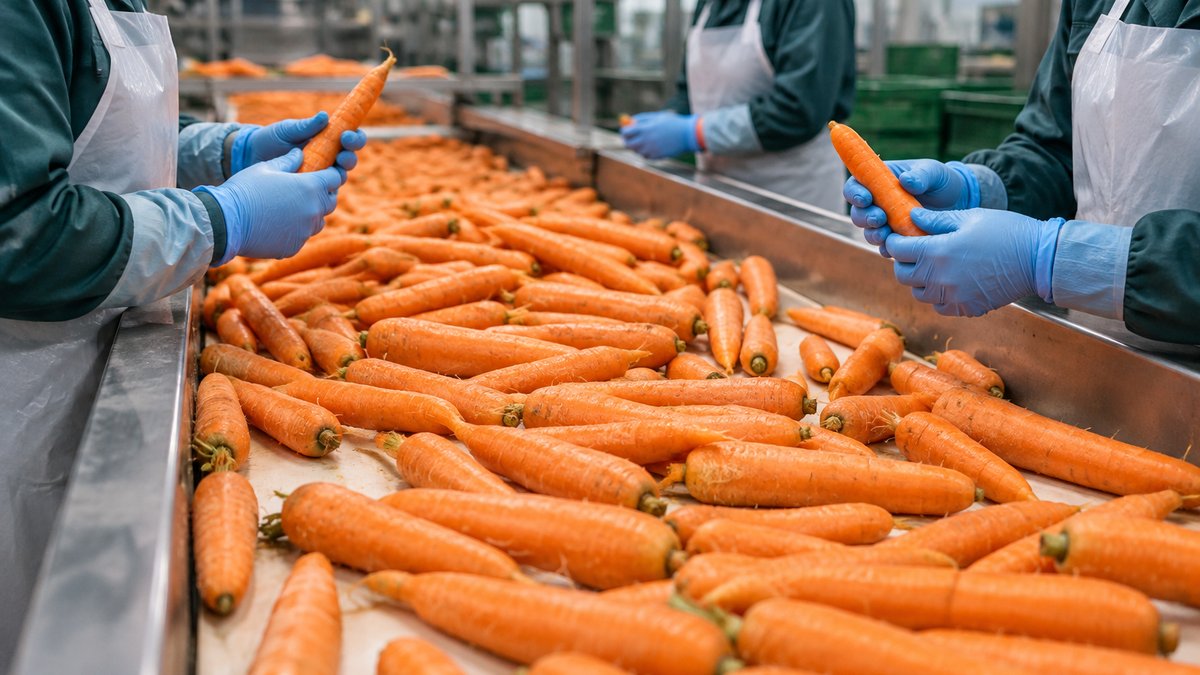
For the whole-carrot order, the buyer would specify whether carrots are unpeeled, topped, bunched, or otherwise trimmed. The order would also set the size basis, acceptable shape and defects, packaging, and any destination-market grade or inspection requirements. If the buyer intends to process the carrots further, the receiving team should confirm that the delivered form and size suit its equipment and planned yield.
For the baby-cut order, the buyer would state that the carrots are peeled and cut, then provide the target length and diameter range. The buyer should also say whether the product must be ready to use, whether it is washed, the packaging format, and the required storage and delivery conditions. If a recognized procurement specification is being used, name its edition and the applicable type and style rather than relying on the phrase “baby carrots.”
Illustrative specification choices:
Whole-carrot order: Whole, unpeeled carrots; state top and trim condition, size range, grade or quality criteria, packaging, and destination requirements.
Baby-cut order: Peeled, baby-cut carrots; state cut length, diameter range, wash or ready-to-use status, packaging, and destination requirements.
This is an illustrative specification outline, not a universal specification or a quotation request for a particular shipment.
The receiving checks should match the ordered form. For whole carrots, inspect the agreed size, trimming, cleanliness, firmness, and defects against the contract's criteria. For baby-cut carrots, check cut dimensions, appearance, package condition, label statements, and the required remaining shelf life. Record the inspection basis in the purchase documents so that the parties assess the same characteristics.
Food-safety documentation should follow the product and destination rather than assumptions about its name. Peeling and cutting make baby-cut carrots a fresh-cut product under the FDA definition, but that definition by itself does not establish every operation's legal obligations. Confirm which food-safety rules apply to the grower, packer, processor, importer, and destination market.
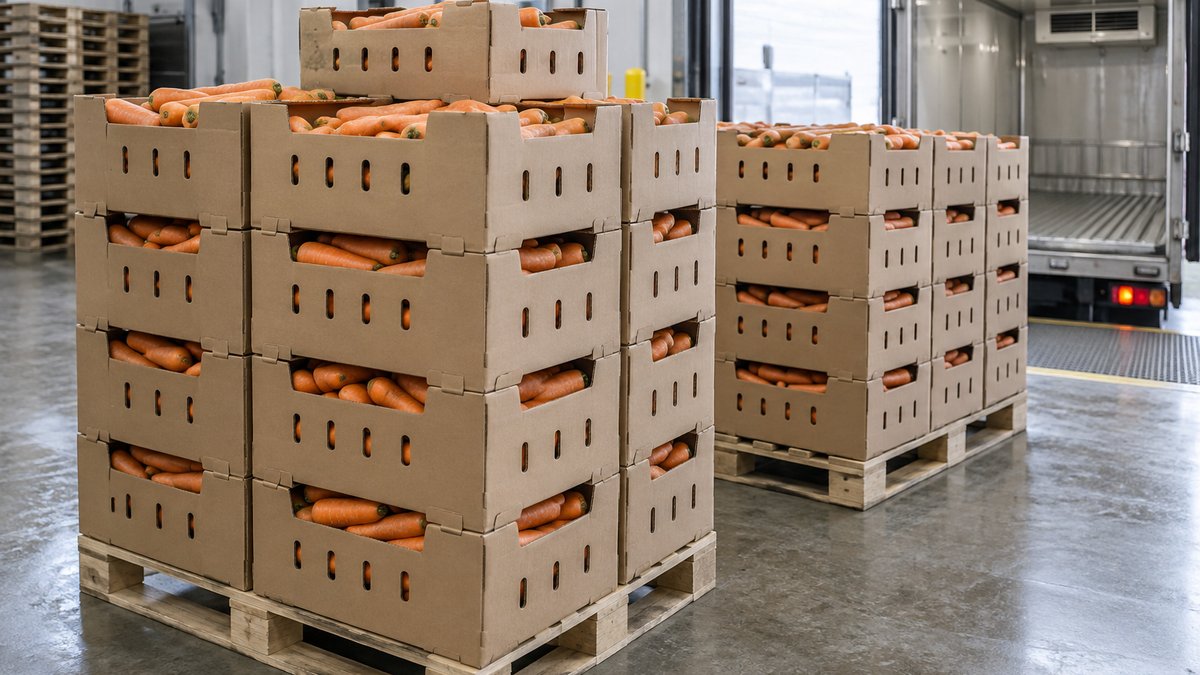
A buyer should also compare packaging and delivery conditions as part of the product specification. Whole roots and peeled pieces may use different pack formats and require different handling at the receiving site. State the required unit pack, case configuration, labeling, transport temperature, delivery window, and condition on arrival. If those items are left open, suppliers may quote products that are difficult to compare.
Do not treat a supplier's sample or catalogue description as a substitute for contract details. Ask the supplier to confirm the form, size basis, processing steps, packaging, and shelf-life terms in writing. For a processed item, clarify whether the quoted product has been washed and what the label says about further preparation. For whole carrots, clarify whether tops are present and whether trimming is included.
Looking to Source Fresh Carrot?
Connect with verified suppliers, discover matching products, and explore sourcing opportunities from global markets.
3. When Should Buyers Choose Whole or Baby-Cut Carrots?
Choose whole fresh carrots when the buyer needs intact roots, wants control over peeling or cutting, or sells carrots in a whole form. Whole roots can also suit a processor that has its own preparation line, provided the incoming size and condition fit that operation. The buyer should account for the labor and material lost during its own trimming and preparation.
Choose baby-cut carrots when the required product is peeled, portioned, and ready for a defined use, and the buyer's operation benefits from receiving that preparation in advance. Before committing, verify that the offered cut dimensions, wash status, label, packaging, and shelf-life terms match the buyer's needs. “Baby-cut” on its own does not specify every one of those attributes.
- For whole carrots, write down the root form, whether the product is peeled, the top and trim condition, the size basis, quality criteria, packaging, and delivery requirements.
- For baby-cut carrots, specify cut style, length, diameter, processing and wash status, packaging, label requirements, and remaining shelf life on arrival.
- For either form, identify the destination market and the standards or regulations that apply to the product and operation.
- Compare landed cost and usable product on the same basis, including preparation labor, expected trim, packaging, storage, and any handling needed after receipt.
A buyer deciding between the forms can ask suppliers to quote against the same end-use specification. That makes it possible to compare the cost of buying whole carrots and preparing them in-house with the cost of receiving peeled, cut carrots. The comparison should use the buyer's own labor, yield, and handling data rather than an assumed universal saving from either format.
For a purchase order, keep product identity separate from grade and process details. Name the carrot form first, then state the relevant size, condition, packaging, inspection criteria, and delivery terms. If a U.S. procurement specification is the reference, cite the applicable document and style; if the shipment is for another market, check that market's requirements instead of carrying over a U.S. specification by default.
Buyers comparing supply options can review Fresh Carrot suppliers on Freshdi and assess each listing against the product form and requirements in their order.
References
1. USDA Agricultural Marketing Service – Carrots, Fresh, Ready-to-Eat or Ready-to-Use, A-A-20191E, 2019.
2. USDA Agricultural Marketing Service – United States Standards for Grades of Topped Carrots, 2020.
3. U.S. Food and Drug Administration – Guidance for Industry: Guide to Minimize Biological Hazards in Ready-to-Eat Fresh-Cut Produce, 2026.
Disclaimer: This article is compiled from platform data, public sources and information provided by third parties, for general informational purposes only. We do not guarantee its accuracy or completeness. Please conduct your own due diligence before making business decisions.