
1. Medjool and Deglet Noor differ most in fruit type and handling needs
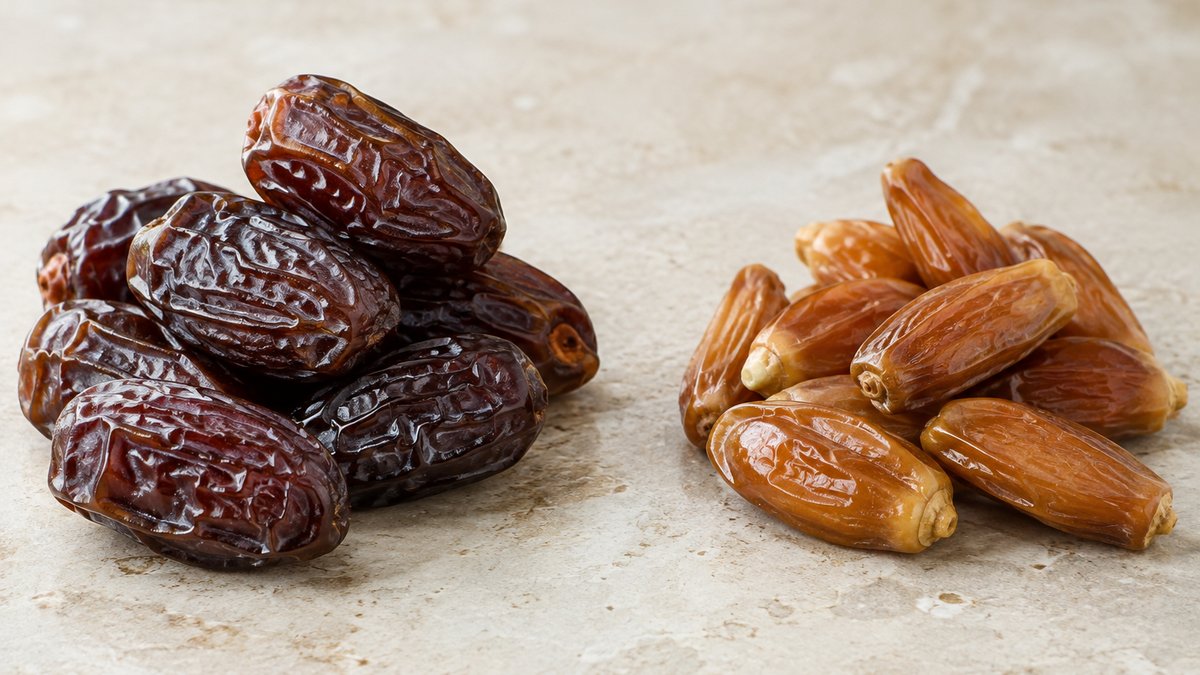
Medjool and Deglet Noor are distinct date cultivars with different commercial characteristics. The Australian Government’s 2019 review groups Medjool with soft-fruited cultivars and Deglet Noor with semi-dry cultivars. The Food and Agriculture Organization describes Medjool as a large, attractive fruit and notes that both Medjool and Deglet Noor can be marketed at the rutab stage, when dates are partly browned and more perishable than fully ripened tamar dates.
Those distinctions help buyers start a comparison, but the cultivar name alone does not complete a purchase specification. Harvest maturity, moisture, whether the dates are on branches, pitting, packing style and destination requirements can all affect how a lot should be assessed. Buyers should request those details before comparing offers. A cultivar name identifies the type of date being offered; it does not tell the buyer how the supplier has harvested, sorted or packed a particular consignment.
The maturity stage also affects the commercial conversation. Rutab dates have partly softened fibres and are perishable, while tamar dates have lower moisture and a texture that can range from soft and pliable to firm or hard. A buyer requesting dates for a specific retail or processing use should therefore state the required maturity and condition, rather than assuming that a cultivar name implies one standard texture.
The table uses broad cultivar characteristics, not a grade specification. Fruit from the same cultivar can be offered in different forms and conditions. A buyer comparing quotations should therefore match the harvest stage, product presentation, size basis, moisture and packaging before treating the offers as equivalent. When an offer leaves one of those points open, ask the supplier to clarify it in writing so that the comparison uses the same basis.
2. A comparison table is useful only when the product forms match
A varietal comparison can narrow a sourcing decision, but buyers should compare like with like. A loose, pitted Medjool lot and Deglet Noor dates sold on branches differ in more than cultivar. Their presentation, preparation and handling requirements are not equivalent. A price comparison between those lots would combine differences in cultivar with differences in preparation and packing, so the buyer should first decide which product form meets the intended use.
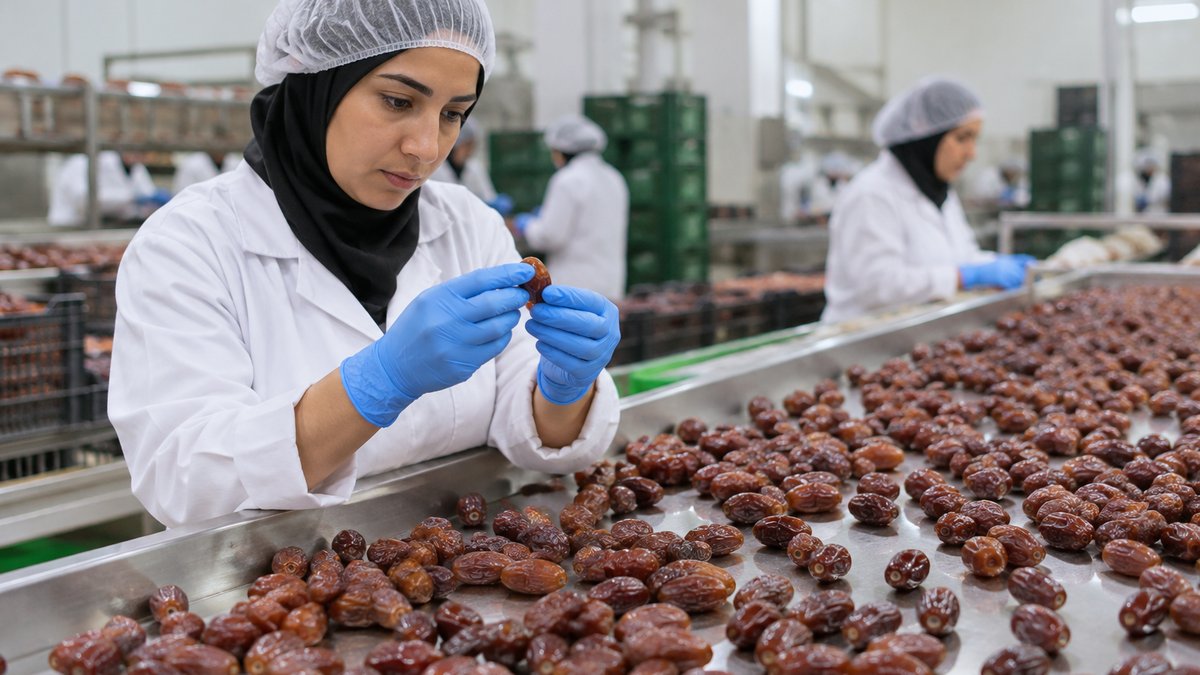
Codex’s Standard for Dates covers commercially prepared whole dates, pitted or unpitted, packed for direct consumption. The standard does not cover other forms such as date pieces or mashed dates intended for industrial use. It allows the food name to include the varietal type and a sub-style such as pressed or unpressed, as well as an optional size designation. That gives buyers a useful framework for describing the product, but the buyer still needs to confirm the actual lot specification and any destination-country rules.
2.1 Maturity stage and condition
Date maturity changes appearance, moisture and handling characteristics. FAO describes khalal fruit as firm and crisp, rutab fruit as partly browned with softened fibres, and tamar fruit as further reduced in moisture, with texture ranging from soft and pliable to firm or hard. These are maturity stages, not names for Medjool or Deglet Noor grades. A buyer should state the stage required and ask the supplier to confirm it for the offered lot.
This distinction is useful when an inquiry uses the word “fresh” without more detail. FAO describes dates as being traded at different stages, and the stage selected depends on varietal characteristics, climate and market demand. A supplier and buyer may use the same cultivar name while referring to fruit harvested at different stages. State the required condition and ask what the supplier’s description means for the lot being quoted.
2.2 Branch presentation and transit
Some Deglet Noor is marketed attached to branches. FAO notes that this presentation needs careful transport because shaking can cause fruit to fall from the branches. If a buyer wants branch-attached dates, the inquiry should identify that presentation clearly and ask how the fruit is packed and protected during handling. Loose fruit should not be treated as interchangeable with branch-attached product simply because both are Deglet Noor.
The branch format also changes what the buyer should examine when a shipment arrives. The supplier and buyer can agree on how branch condition, cleanliness and fruit loss will be assessed, and how the packages will be handled during loading and unloading. Those details should be settled before shipment, since the format’s transport sensitivity is part of the product requirement, not a detail that can be resolved by the cultivar name.
2.3 Size, pitting and packing style
The Codex standard makes varietal type, pitted or unpitted style, pressed or unpressed sub-style and size designation separate pieces of product information. Buyers can use those terms in a specification, then add the agreed size method, tolerance, pack weight and packaging material. If the supplier uses a different commercial size system, ask for its definition rather than assuming that “large” means the same count or dimensions across offers.
A useful comparison keeps these details explicit in both offers. For example, two quotations should not be treated as equivalent if one describes pitted dates and the other leaves pitting unstated. The same applies to pressed versus loose presentation or to size descriptions that use different measurement bases. A buyer can ask suppliers to quote against one written specification, or list deviations clearly so the purchasing team can judge them.
Buying consideration: Before comparing prices, record the cultivar, maturity stage, condition, branch status, pitting, size basis and pack format for each offer. Ask suppliers to confirm any item they have not stated.
3. A sourcing scenario shows why cultivar alone is not enough
Consider an importer assessing Medjool for a whole-fruit retail pack and Deglet Noor for a branch-attached presentation. The cultivar names point to different fruit characteristics, but they do not tell the importer whether either supplier can meet the intended format, packing method or condition on arrival. The buyer needs a specification that describes the saleable product as well as the cultivar.
For the Medjool offer, the importer should confirm the requested size basis, maturity stage, moisture specification, pitting status, permitted defects and pack configuration. The supplier should identify whether the dates are loose or compressed and state how the lot is protected from damage. FAO describes Medjool as large and attractive, but that general description does not certify the size or appearance of a particular shipment.
The importer should also distinguish a description of the cultivar from an acceptance criterion for the order. If appearance is part of the buyer’s requirement, the contract or agreed specification should explain how it will be assessed. If the order calls for a particular size, the parties should use a defined basis and tolerance. Those points let the supplier prepare a quotation and give the buyer a clear basis for checking the delivered lot.
For the branch-attached Deglet Noor offer, the importer should confirm that the branches are included, how the fruit is secured in the package and how the shipment will be handled to reduce fruit loss. FAO’s handling guidance specifically warns against shaking branch-marketed Deglet Noor during transport. The buyer should also confirm the maturity and condition of the fruit, rather than relying on the cultivar name to imply softness, colour or moisture.
The buyer can ask the supplier to describe the packing method and to state whether the product will be shipped loose or attached to branches. The shipment plan should be consistent with the chosen presentation. If an offer describes branch-attached Deglet Noor but gives no information on how the branches are protected, the importer should ask for that information before evaluating the offer against a loose-fruit alternative.
The comparison becomes commercially meaningful once both suppliers answer the same questions. If one quotation is for pitted loose dates and another is for unpitted dates on branches, the buyer should first decide whether those presentations serve the same sales channel. If they do not, the quotations are alternatives for different product requirements, not directly comparable offers. A buyer may still consider both, but should compare each against its own intended product use.
Illustrative inquiry format:
Cultivar: Medjool or Deglet Noor
Maturity and condition: State the required stage and lot condition
Presentation: Loose or branch-attached; pressed or unpressed
Product preparation: Pitted or unpitted
Size and packing: State the agreed size basis and package format
Destination requirements: State the destination and confirm applicable requirements
This is an illustrative inquiry structure, not a universal date specification.
Looking to Source Date?
Connect with verified suppliers, discover matching products, and explore sourcing opportunities from global markets.
4. Choose the cultivar and form that fit the buyer’s product requirement
Choose Medjool when the buyer’s brief calls for that cultivar and its large-fruit presentation is relevant to the product. The cultivar description can guide supplier screening, but the buyer should set size, maturity, condition and packing requirements separately. A Medjool label by itself does not establish a particular grade, moisture level or retail-pack suitability.
For a retail buyer, the relevant question is whether the supplier’s lot meets the agreed appearance, size and package requirements. For a processor, the buyer may have a different specification for preparation and incoming condition. The article does not establish one commercial use for every Medjool lot; the buyer should connect the cultivar selection to the actual product brief and confirm the offered lot against that brief.
Choose Deglet Noor when the buyer’s specification calls for that cultivar, including a branch-attached presentation where the supplier can handle and pack it accordingly. Ask whether the lot is sold loose or on branches; that distinction changes the packing and transport conversation. The semi-dry classification is a broad cultivar grouping, not a substitute for a moisture specification or an inspection of the offered lot.
A buyer who does not require branch-attached fruit should say so, rather than leaving the presentation open to interpretation. A buyer who does require it should discuss protection and handling with the supplier. In either case, the same cultivar can be offered in a form that does or does not meet the buyer’s intended use, so product presentation belongs in the inquiry alongside the variety name.
For either cultivar, the selection should follow the buyer’s actual use and product requirements. Buyers who need whole fruit for direct consumption can specify the relevant whole-date style. Buyers seeking pieces, paste or another ingredient form should identify the processed product precisely, because the Codex Standard for Dates does not cover pieces or mashed dates intended for industrial use. Requirements for a destination market must be checked for that product and shipment; the Codex standard is not a replacement for national import rules.
If the buyer is still deciding between cultivars, request product details that support a direct evaluation: the offered maturity stage, size basis, condition, presentation and packing. Where practical, the buyer can arrange an agreed inspection or sample evaluation before committing to a specification. Any assessment should use the same requirements that will appear in the order, so the chosen product and the delivered lot can be compared consistently.
- Set the product form first: whole dates, branch-attached fruit or a processed ingredient.
- Name the cultivar and maturity stage, then state the required lot condition.
- Specify pitted or unpitted style and pressed or unpressed presentation where relevant.
- Define size using an agreed measurement or count basis and state any tolerance.
- Confirm packaging, handling needs, inspection criteria and destination-market requirements before comparing final offers.
Buying consideration: Ask each supplier to quote against the same written specification. Where a detail is missing, request confirmation before treating the quotation as comparable.
5. Use standards and supplier details to complete the comparison
Codex provides a shared reference for describing whole dates, including varietal type, pitting, pressed or unpressed style and optional size designation. It also sets out product and labelling provisions within its scope. Buyers should read those provisions alongside applicable national rules, since the destination market determines which legal requirements apply to a shipment.
The standard’s scope matters when a buyer is sourcing something other than whole dates packed for direct consumption. If the requested product is pieces or mashed dates for industrial use, the buyer should describe that product and determine which other requirements apply. Using the whole-date standard as if it automatically covered every date ingredient would leave the specification unclear.
FAO’s date-palm guidance gives context on maturity stages, harvesting and handling, including the extra care needed for Deglet Noor marketed on branches. The Australian Government’s 2019 review provides a cultivar grouping that places Medjool among soft-fruited dates and Deglet Noor among semi-dry dates. These sources help frame questions for suppliers; they do not verify the quality, grade or compliance of a specific lot.
A buyer can use those sources to keep the discussion precise: ask what stage the dates were harvested at, how the product is presented and what specification the supplier can confirm. For a branch-attached order, ask about packing and handling. For either cultivar, agree on the lot characteristics that matter to the intended use and the applicable destination requirements before finalizing the order.
For a commercial comparison, keep the cultivar, maturity stage, presentation and agreed specifications together in the inquiry. Buyers can also review date buying requests on Freshdi when checking stated sourcing needs.
References
1. Food and Agriculture Organization of the United Nations – Date Palm Cultivation, Chapter I: Botanical and Systematic Description of the Date Palm, 2002.
2. Food and Agriculture Organization of the United Nations – Date Palm Cultivation, Chapter IX: Date Harvesting, Packinghouse Management and Marketing Aspects, 2002.
3. Codex Alimentarius Commission – Standard for Dates, CXS 143-1985, Revised 2019.
4. Australian Government Department of Agriculture and Water Resources – Final Report: Fresh Dates from the Middle East and North Africa Region, 2019.
Disclaimer: This article is compiled from platform data, public sources and information provided by third parties, for general informational purposes only. We do not guarantee its accuracy or completeness. Please conduct your own due diligence before making business decisions.