
Introduction
Finding an Indian sesame seed supplier starts with a precise product specification and a check of the supplier’s business and export documents. Buyers also need to confirm that the seed, processing, testing and shipment meet the destination country’s requirements.
This guide explains where importers can search, what to ask suppliers, and how to compare offers without treating a directory entry or verification indicator as proof of product quality.
Key Takeaways
- Search APEDA’s exporter directory, industry networks, trade events and B2B marketplaces, then verify each candidate independently.
- Specify seed type, processing, grade, test requirements, quantity, packaging, destination and delivery terms before requesting quotations.
- Check business identity and export eligibility through official records, and confirm documents with the issuing body where possible.
- Compare offers against the same product specification and shipment basis, including payment, inspection and delivery conditions.
- For shipments to the EU, check the current rules for Indian sesame seeds before contracting; EU controls have addressed ethylene oxide concerns.
1. India's sesame seed supply varies by crop and processing region
India produces sesame seed for domestic use and export, but national production figures do not tell a buyer how much export-grade stock a particular supplier can deliver. The Government of India’s 2023-24 first advance estimate recorded sesame production at 4.19 lakh tonnes. It was a preliminary estimate, not a measure of current export availability.
Production is spread across states, while cleaning, grading, hulling, storage and export operations may be located elsewhere. NITI Aayog’s 2024 analysis identifies Madhya Pradesh, Uttar Pradesh and Rajasthan among states with substantial sesame acreage, and West Bengal, Madhya Pradesh and Gujarat among leading producers in its historical state data. Treat those as starting points for supplier discovery, not as a current ranking or proof that a particular business sources locally.
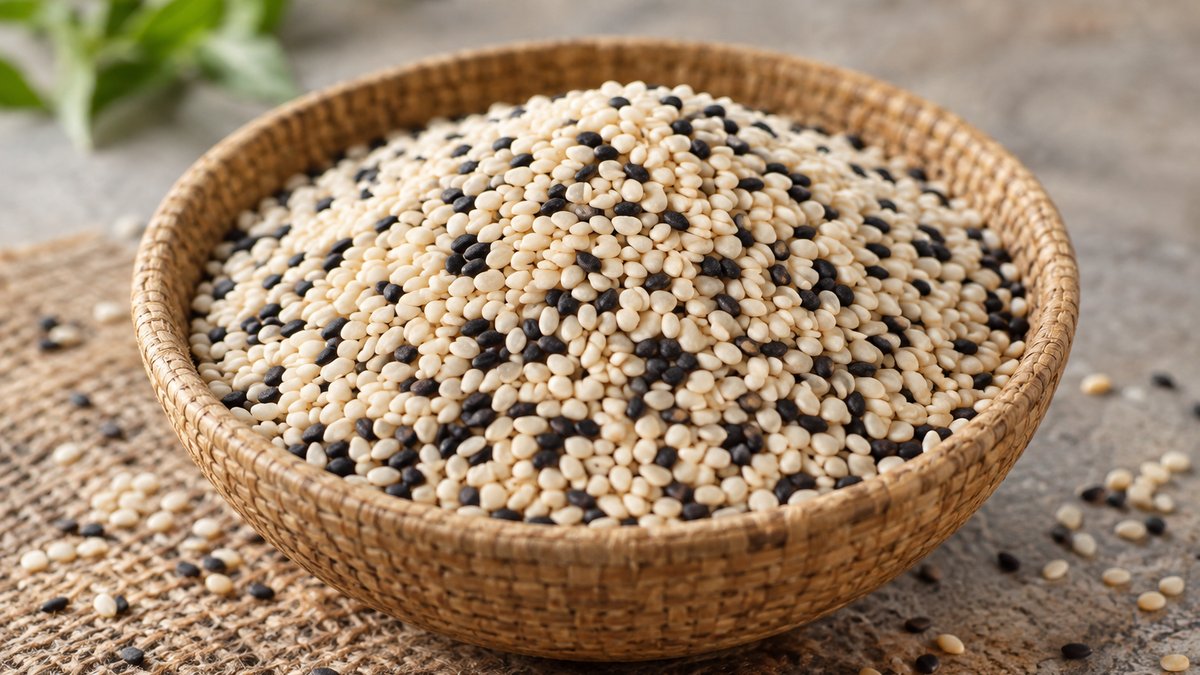
Ask each exporter where the offered lot was grown, where it was cleaned or processed, and where it will be loaded. Confirm whether the supplier sells natural or hulled sesame and the seed colour, grade, crop year, packing format and intended use. These distinctions affect the specification and testing plan.
Destination rules can change the documents and tests a shipment needs. The European Commission documented ethylene oxide detections in sesame seeds from India in 2020, and subsequent EU regulations applied enhanced official controls to Indian sesamum seeds. Buyers supplying the EU should check the current entry requirements and testing provisions with their importer and competent authority before agreeing shipment terms. Requirements in one destination should not be assumed to apply elsewhere.
India’s Foreign Trade Policy states that an Importer Exporter Code (IEC) is required for import or export, subject to applicable exemptions. The policy is a starting point for checking an exporter’s trade identity; it does not establish that a product lot meets the buyer’s specification or destination rules.
Looking to Source Sesame Seed?
Connect with verified suppliers, discover matching products, and explore sourcing opportunities from global markets.
2. How to Find Reliable Sesame Seed Suppliers in India
2.1 Define your sourcing requirements
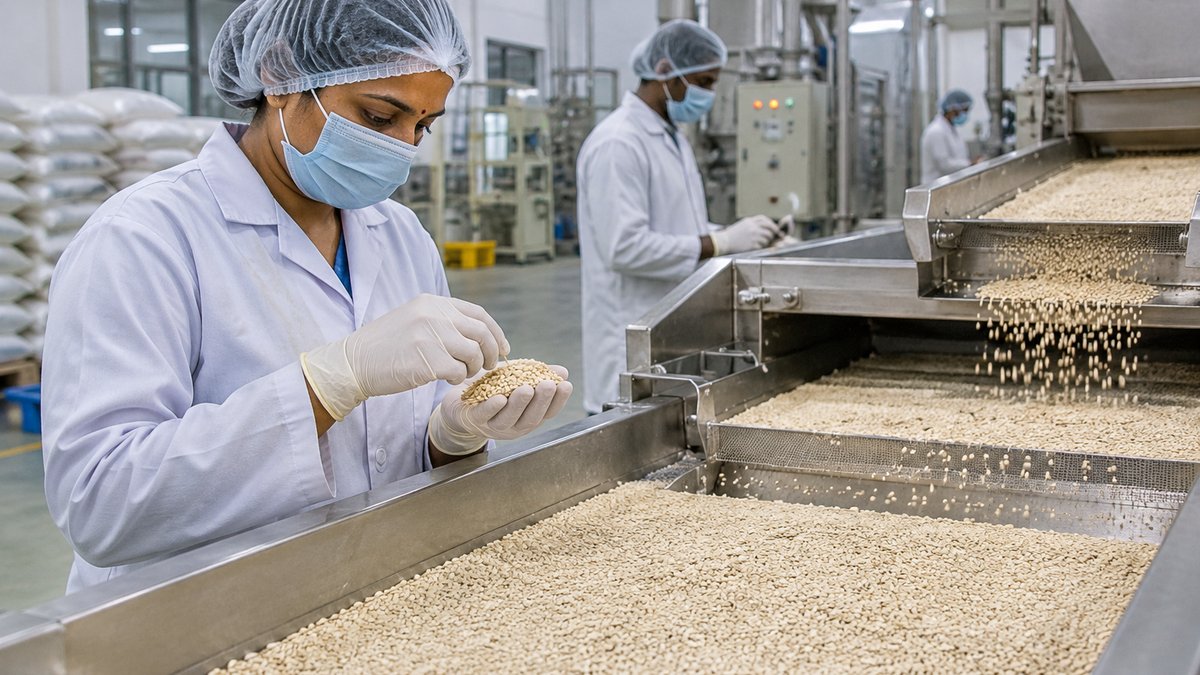
Write a sourcing brief before approaching suppliers. State the seed type, natural or hulled, colour, grade or agreed quality limits, intended use, crop-year preference and any required food-safety tests. If you require a certificate or laboratory report, specify the destination market and the standard or test method your buyer or regulator expects.
Set quantity for the first order and expected repeat volume separately. MOQ means minimum order quantity, the smallest order a supplier accepts. Ask whether the MOQ applies to one grade, one packing format or a mixed order; get the answer in writing and include the unit.
Specify packaging material, bag size, pallet requirements, container loading preferences and shipment destination. Add your required delivery window, preferred payment arrangement and quotation basis. FOB, CFR and CIF are Incoterms that allocate certain delivery costs, responsibilities and risks; use the current Incoterms edition and name the place or port precisely in the contract.
2.2 Where to find suppliers
Use several discovery channels so the shortlist is not limited to businesses with the strongest online presence. B2B marketplaces can help you identify profiles and product listings. Search by product form and location, then confirm every listing detail with the supplier.
APEDA’s exporter directory allows searches by exporter, state, exporter type and product. Its directory notes that the data source is export returns, but a listing remains a lead for follow-up, not a guarantee of current capacity or product compliance.
Industry associations and trade events provide another route to processors and exporters. The Indian Oilseeds and Produce Export Promotion Council (IOPEPC) publishes sesame-related industry information and a sesame seed and sesame seed oil panel. Check the association’s current event calendar and participation details; attendance or membership alone does not verify a supplier’s shipment claims.
Official directories can help cross-check business identity and export records. Freshdi supplier listings are another discovery channel. Treat every marketplace profile as an initial screening source and request current documents for the specific lot and shipment.
2.3 Verify supplier business information
Match the legal business name on the quotation, registration records, bank details and proposed contract. Ask for the registered address and identify the person authorized to sign. Check whether the business name and address match the documents the supplier provides.
For an Indian exporter, request the IEC details and check them using DGFT’s official IEC services. DGFT describes IEC as a business identification number used for import and export from India. If the supplier claims a separate registration, membership or certification, confirm its scope and current validity with the issuing organization.
Check the business’s operating role. A trader, processor, manufacturer and commission agent may offer different control over sourcing, cleaning and packing. Ask who owns the stock, who processes it, and which legal entity will appear as exporter and receive payment. Search public company information where available, then resolve differences directly before placing an order.
A website, address or verification mark can support an initial identity check, but none confirms that a shipment will match the contract. Independently verify the account receiving funds and avoid paying an unrelated beneficiary without documented explanation.
2.4 Evaluate product and supply capabilities
Ask for a written specification for the actual product being quoted. It should describe the seed form and grade, quality limits, packaging and lot identification. Request a current certificate of analysis where relevant, and check that the report identifies the product or lot, test date, laboratory and methods used.
Ask whether the supplier is quoting available stock or a future crop purchase. Confirm the quantity available, source region, processing location, production or cleaning capacity, expected lead time and ability to supply repeat lots. A general monthly capacity figure is less useful than confirmation of the quantity reserved for your order.
Request details for the proposed packing and storage conditions. If the buyer’s specification sets limits for moisture, foreign matter, residues or microbiological results, identify who will sample and test the lot, when sampling happens and what happens if results fall outside the agreed limits.
Review certificates by scope, product, site, issuing body and validity date. A certificate for a company or facility does not automatically cover every product or consignment. Ask the issuer to confirm authenticity when the document or claim affects your decision.
2.5 Compare quotations and commercial terms
Request quotations against one shared specification, quantity, packing plan and destination. Compare price, currency, validity period and unit, then check whether each offer includes the same costs and delivery point. Do not treat a quotation on one basis as directly comparable with an offer on another.
Under FOB, CFR and CIF, the named port and Incoterms edition matter. Ask who books freight, whether insurance is included where relevant, which charges are excluded, and when delivery and risk transfer under the chosen term. Confirm the agreed cost split in the contract rather than relying on a short term label.
Payment terms should identify the payment method, timing, beneficiary and documents required for each payment. Compare the shipment schedule, production lead time, inspection window and document handover date. Include any agreed tolerances, claims procedure and remedy for non-conforming goods in the written agreement.
2.6 Conduct due diligence before ordering
Where appropriate, arrange a representative sample and agree how it will be drawn, sealed and identified. A sample helps assess the submitted material, but it does not establish that a later bulk lot is identical. For larger orders, consider independent inspection and testing tied to the contract’s sampling plan.
Check certificates and shipment documents with the issuing authority or laboratory when possible. Ask your customs broker or importer to confirm the destination’s current document, labelling and import-control requirements for the product form and intended use. The required documents can depend on destination and shipment details.
Before signing, make sure the contract names the product specification, quantity and tolerance, packaging, price basis, shipment period, required documents, inspection procedure, payment schedule and process for claims. Confirm the company signing the contract and the bank beneficiary independently. Keep records of approved samples, test reports and agreed changes.
2.7 Common mistakes to avoid
A low price can reflect a different grade, packing format, quantity basis or delivery point. Compare like with like before treating one offer as cheaper. Ask for a revised quotation if the supplier has not priced the full specification.
A directory listing, association membership or marketplace indicator is not a substitute for checking a particular shipment. Verify the documents, payment beneficiary and product lot yourself. Also avoid accepting a generic sesame offer when you need a defined form, quality limit or destination-specific test.
Do not leave shipment documents or testing until after dispatch. Identify required documents and testing responsibilities before the supplier loads the goods, and check current destination rules with the importer or relevant authority. That reduces the chance of discovering a documentation gap after shipment.
3. Build a practical sesame supplier shortlist
Use the same screening questions for every candidate, then separate confirmed information from details that still need checking. A shortlist is a way to decide whom to question further, not a ranking of the best suppliers.
Mark each item as confirmed, supplier-stated but unchecked, or not provided. Missing information is a question to resolve, not proof of poor performance. Prioritize suppliers whose stated product and shipment conditions fit your requirements, then ask those suppliers for the same remaining details.
Keep the shortlist small enough for careful document and sample checks. Before selecting a supplier, compare the final responses against your written specification and destination requirements. Record why a candidate proceeds or is set aside so that price alone does not decide the result.
4. How Freshdi helps buyers find sesame seed suppliers
Freshdi’s Find Suppliers section gives buyers a place to discover supplier profiles and product listings by category. Use the sesame seed category as a starting point, then review each profile and request current details for the product and shipment you need.
Supplier profiles may help you identify information to compare, such as product descriptions, MOQ, packaging, trade terms, certificates, origin and loading port when those details are stated. Confirm any missing or time-sensitive information directly from current supplier documents. A listing is not a substitute for independent due diligence.
Buyers can browse sesame seed suppliers on Freshdi and use the sourcing brief from this guide when evaluating candidates.
When your specification is ready, browse supplier listings and compare the stated product and commercial details.
View Related Suppliers for This Product →
5. Conclusion
Finding sesame seed suppliers in India involves more than locating an exporter. Define the product and destination requirements, search directories and industry channels, check business identity, and compare quotations against the same specification. Verify certificates, test reports, payment details and shipment documents before committing.
Freshdi can be one channel for discovering sesame seed supplier profiles. Treat each profile as a lead, then confirm the details that matter for your contract and shipment independently.
Buyers ready to compare potential sources can use Freshdi’s Find Suppliers page to start their shortlist.
View Related Suppliers for This Product →
Frequently Asked Questions
Where can I find sesame seed suppliers in India?
Search APEDA’s exporter directory, relevant oilseed industry networks, trade events and B2B marketplaces. Use product and location terms to find candidates, then verify the business identity and ask for current lot specifications, availability and export documents.
How can I check whether an Indian sesame exporter is registered?
Request the legal business name and IEC details, then check the information through DGFT’s official IEC services. Match the exporter name across the quotation, contract and payment details. Registration supports an identity check but does not verify product quality or shipment performance.
What should I include in a sesame seed inquiry?
State whether you need natural or hulled seed, the colour and grade, agreed quality and testing limits, quantity, packing, destination and requested delivery window. Include the quotation basis and any destination-specific certificates or test reports your importer requires.
Which documents should I ask a sesame supplier to provide?
The documents depend on the destination, product and shipment. Ask for the supplier’s export identity details, product specification, relevant certificate of analysis and any certificates or shipping documents required by the destination authority and your contract. Check the scope and validity of certificates with their issuer.
Does a supplier verification badge guarantee reliable sesame seed?
No. A marketplace indicator can help with initial screening, but it does not establish that a particular lot meets your specification, that certificates are valid for your shipment, or that the supplier will meet contract terms. Verify the business, product and documents independently.
What should buyers importing Indian sesame seeds into the EU check?
Check the current EU entry rules and official controls for the product and shipment before contracting. EU authorities have documented ethylene oxide concerns involving sesame seeds from India, and controls have changed over time. Confirm current testing and documentation requirements with the importer and competent authority.
References
1. Government of India, Ministry of Commerce and Industry – Lok Sabha Unstarred Question No. 1471, Oilseed Production, 2024.
2. NITI Aayog – A Pathways and Strategy for Accelerating Growth in Edible Oil towards Goal of Atmanirbharta, 2024.
3. APEDA – Exporter’s Directory, Accessed 2026.
4. Indian Oilseeds and Produce Export Promotion Council – Sesame Seed and Sesame Seed Oil Panel, Accessed 2026.
5. Directorate General of Foreign Trade – Foreign Trade Policy 2023, Chapter 1: Legal Framework and Trade Facilitation, 2023.
6. European Union – Commission Implementing Regulation (EU) 2024/3153, 2024.
Disclaimer: This article is compiled from platform data, public sources and information provided by third parties, for general informational purposes only. We do not guarantee its accuracy or completeness. Mentions and rankings of suppliers do not constitute an endorsement or guarantee, and strategies and examples are illustrative; results may vary. Please conduct your own due diligence before making business decisions.