
Introduction
Japan’s latest product-specific price data puts the average wood pellet import unit value at ¥32,369 per tonne in September 2026. The Forestry Agency reported that this was 2% above August and 11% above September 2025.
This update covers Japan’s imports under HS 4401.31 through September 2026, the latest month with a wood-pellet-specific price in the Forestry Agency’s published series. The figure is an average import unit value calculated from customs import value and volume. It describes recorded imports, not a current supplier offer or a like-for-like price for every grade and contract.
Key Takeaways
- Japan’s average wood pellet import unit value reached ¥32,369 per tonne in September 2026, up 2% month on month and 11% year on year, according to the Forestry Agency’s summary of Ministry of Finance trade statistics.
- September import volume was 822,000 tonnes, 1% above August and 9% above September 2025. January to September imports totaled 7.096 million tonnes, up 10% year on year.
- The September origin comparison showed ¥35,534 per tonne for Canadian pellets and ¥31,304 for Vietnamese pellets. These are customs-derived averages, not standardized supplier quotations.
- Vietnam supplied 64% of Japan’s wood pellet imports by volume in January to September 2026; Canada supplied 13%, the United States 9%, Malaysia 6% and Indonesia 6%.
- Buyers should compare the same product specification, shipment period, delivery basis and destination costs before treating an origin’s average import unit value as a usable benchmark.
1. Japan’s Wood Pellet Market and Import Position
Japan’s wood pellet market relies heavily on imported fuel. The Forestry Agency reported 8.638 million tonnes of imports in 2025, and Ministry of Finance data summarized by the agency show 7.096 million tonnes imported in January to September 2026, 10% more than in the same period of 2025.
Vietnam was the largest reported source in the first nine months of 2026, supplying 4.524 million tonnes, or 64% of Japan’s total. Canada supplied 893,000 tonnes, the United States 604,000 tonnes, Malaysia 419,000 tonnes and Indonesia 406,000 tonnes. Those five origins together accounted for nearly all the volume shown in the agency’s country breakdown.
The demand context includes Japan’s biomass power sector. A 2026 peer-reviewed study of Japan’s wood pellet imports describes the growth of imports under the country’s feed-in tariff scheme and reports that imports exceeded 6 million tonnes in 2024. That background helps explain the scale of the import market, but it does not establish a particular buyer’s current purchasing schedule or a forward price.
The available import data do not provide a comparable, current global production-and-consumption balance or a ranked table of the world’s importing countries. This update therefore uses Japan’s official import volumes and values rather than treating a partial country comparison as a global ranking.
Looking to Source Wood Pellet?
Connect with verified suppliers, discover matching products, and explore sourcing opportunities from global markets.
2. Latest Wood Pellet Prices in Japan
2.1 September 2026 import unit value
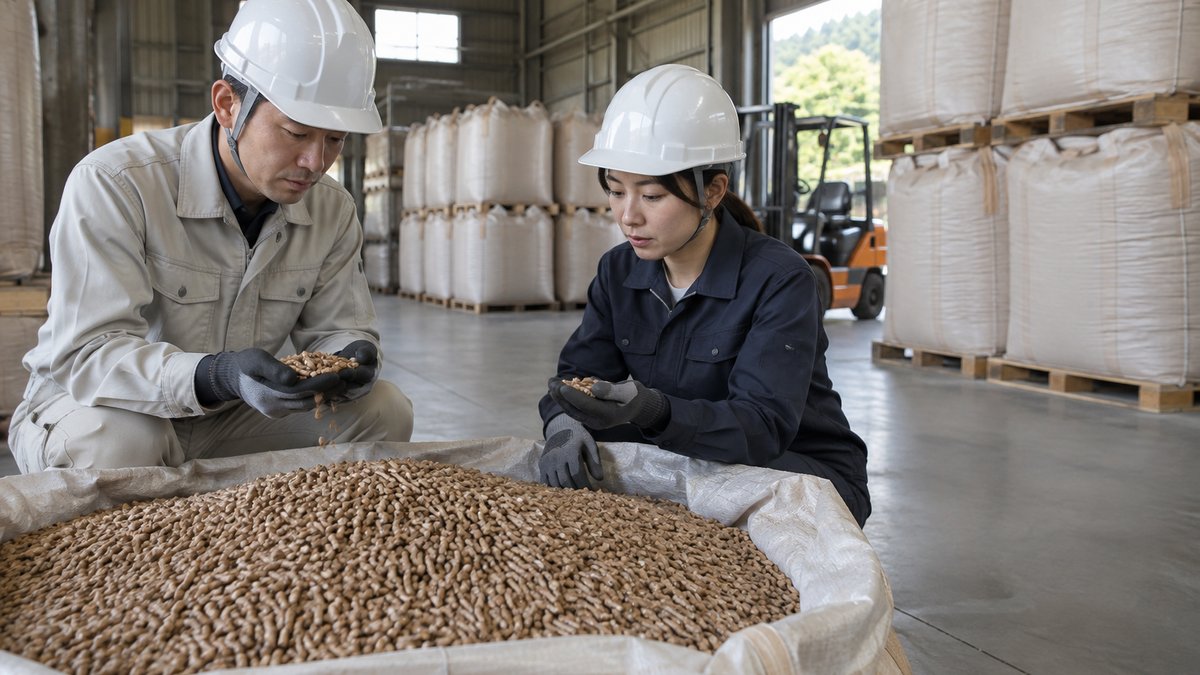
Japan’s average wood pellet import unit value was ¥32,369 per tonne in September 2026, according to the Forestry Agency’s summary of Ministry of Finance trade statistics. The agency reported a 2% increase from August 2026 and an 11% increase from September 2025. The latest product-specific price in that series is September; the figure should not be presented as a November spot quote.
The unit value is total recorded import value divided by recorded import quantity. It aggregates shipments with different origins, contract dates, specifications and shipment arrangements. It is useful for tracking the value of imports over time, but it does not tell a buyer what a supplier will quote for a particular cargo.
The Forestry Agency’s displayed September origin averages put Canada ¥4,230 per tonne above Vietnam, about 13.5% higher relative to Vietnam’s figure. That difference is an observation about customs unit values. The published comparison does not adjust for pellet grade, energy content, contract terms, port, or other shipment details, so it is not a direct offer comparison.
2.2 Comparison by exporting origin
The September series gives specific average unit values for Canada and Vietnam alongside the all-origin average. It does not provide a September unit value for every origin in the country-volume table. Avoid filling those gaps with estimates or treating the two available origin values as representative of every shipment from those countries.
The volume mix also changed by origin. In September 2026, Japan imported 469,000 tonnes from Vietnam and 63,000 tonnes from Canada. Compared with August, those amounts fell 18% and 48%, respectively. The United States supplied 126,000 tonnes in September, while Malaysia supplied 51,000 tonnes and Indonesia 53,000 tonnes. A monthly volume shift does not, by itself, explain the price difference between origins.
2.3 Price trend and comparison limits
The reported all-origin unit value was higher in September than in August and than a year earlier. The available summary does not provide a complete, exact month-by-month numerical series in its text, so this update does not calculate a longer-term percentage trend from chart readings. Buyers comparing several months should use one consistent customs series and retain the same unit and product code.
No verified, openly accessible, same-date set of FOB export quotations for equivalent wood pellet specifications across major origins was identified for this snapshot. Japan’s customs-derived import unit values are the more defensible comparison here, but they should not be relabelled as FOB prices or supplier quotations.
3. Factors Behind Japan’s Wood Pellet Price Movement
The September increase in Japan’s average import unit value coincided with higher year-on-year import volume. The official summary reports the movements, but it does not attribute the price change to a single cause. A buyer should not infer that higher demand alone caused the increase.
Origin mix can affect an all-origin average. Vietnam accounted for 64% of Japan’s January to September 2026 imports, while Canada accounted for 13%; monthly volumes from those origins also moved differently in September. A change in the share of shipments from each origin can change the aggregate unit value even when individual contract prices do not move by the same amount.
Specification and contract differences also limit interpretation. The customs series aggregates imported wood pellets under HS 4401.31. The reported average does not separate individual grades, heating values, moisture or ash limits, sustainability documentation, contract timing, or delivery arrangements. Those terms need checking before a buyer compares a shipment with a supplier’s offer.
Currency and logistics can affect the local-currency cost of imported fuel, but the September summary does not isolate their contributions to the reported change. Buyers should compare the quoted currency, exchange-rate assumption, loading and discharge locations, freight, insurance and any destination charges when assessing an actual purchase.
Harvest conditions, inventory and export policy can also affect availability in supplier countries. The official September release does not quantify a specific harvest or policy impact on Japan’s wood pellet prices. Treat any such explanation as unconfirmed unless a dated, relevant official source supports it.
4. Which Countries Import the Most Wood Pellets?
4.1 Japan’s import demand
Japan imported 7.096 million tonnes of wood pellets in January to September 2026, up 10% year on year. September alone accounted for 822,000 tonnes, up 9% from September 2025. These figures describe Japan’s imports, not the world’s importer ranking or a forecast of future purchases.
The Forestry Agency’s origin table shows Vietnam as Japan’s largest source by volume for January to September 2026, followed by Canada, the United States, Malaysia and Indonesia. Vietnam’s volume rose 7% year on year to 4.524 million tonnes; Canada’s fell 10% to 893,000 tonnes. The United States supplied 604,000 tonnes, up 20%, while Malaysia and Indonesia supplied 419,000 and 406,000 tonnes, respectively.
4.2 Japan’s leading supply origins
The first-nine-month shares were 64% for Vietnam, 13% for Canada, 9% for the United States, 6% for Malaysia and 6% for Indonesia. The figures are rounded in the official table. They show Japan’s sourcing concentration during that period, not a guarantee that a supplier in any listed country has available stock or can meet a particular specification.
The Forestry Agency’s figures do not identify confirmed future tenders or orders in destination markets. Import statistics record completed trade over a stated period; buyers and exporters should keep those historical flows separate from forecasts and live buying requests.
5. How Buyers Can Compare Wood Pellet Offers for Japan
Japan’s September import unit value is a reference for recorded imports, not a target price for a new purchase. To compare offers, request quotations against the same written specification and shipment window. A different grade, energy content, moisture limit, delivery basis or destination can make two headline prices commercially incomparable.
- Write down the required pellet specification, including the measurable quality parameters and any documentation required by the buyer or end user.
- Ask suppliers to state origin, available quantity, loading port, shipment window, packaging and quote validity.
- Compare quotations on the same delivery basis. FOB, CFR and CIF offers include different cost responsibilities, so confirm which costs are included and which remain payable at destination.
- Estimate landed cost using the actual freight, insurance and destination charges for the intended port. Do not substitute Japan’s customs unit value for a live freight or supplier quote.
- Check the supplier’s supporting product and shipment documents against the destination requirements before agreeing the purchase terms.
For example, a buyer comparing a Vietnam-origin offer with a Canada-origin offer should first confirm equivalent quality and shipment terms. The September customs averages show different recorded unit values, but they do not prove that a specific Vietnamese cargo will cost less than a Canadian cargo after freight, insurance and destination charges.
Buying consideration: Before placing an order, ask each supplier to quote the same specification, volume, shipment window and delivery basis, then compare the complete cost to the intended Japanese port.
6. What Does Wood Pellet Demand Look Like on Freshdi?
No dated Freshdi wood pellet buying-request snapshot is included in this market update, so it cannot report a request count, buyer count, requested quantity, destination pattern or prevailing trade term. Japan’s customs import totals above are national trade statistics and should not be described as Freshdi activity.
Buyers and suppliers can check the live Wood Pellet category for current listings and requests. A live listing or request is separate from the historical import statistics, and its specification and status should be reviewed directly before preparing a quotation.
7. What Buyers and Suppliers Should Do Next
7.1 For buyers and importers
- Use ¥32,369 per tonne as a dated September 2026 import unit value, not as a current fixed offer.
- Compare supplier quotations for the same pellet specification, quantity, shipment period and delivery basis.
- Check the origin, documentation, shipment schedule and destination costs that apply to the specific cargo.
- Revisit the official series when newer product-specific monthly data are published; do not assume the September average remains current.
7.2 For exporters and suppliers
- State the pellet specification, origin, available quantity, loading port, quote currency, delivery basis and validity period in each offer.
- Keep the price date clear and identify whether the quotation is FOB, CFR, CIF or another agreed basis.
- Provide current supporting documentation for the product and shipment, and confirm that it matches the buyer’s requirements.
- Review relevant buying requests and tailor a quotation only when the destination, specification and shipment terms fit the offer.
8. How Freshdi Helps Buyers and Suppliers Connect
Buyers can review potential wood pellet suppliers on Freshdi, while suppliers can review wood pellet buying requests. These discovery pages can help users find relevant listings; they do not verify current availability, replace due diligence or guarantee a transaction.
Once the specification and delivery basis are clear, buyers can review relevant supplier listings and suppliers can check current buying requests.
View Latest Energy Chemicals Buying Requests →View Potential Energy Chemicals Suppliers →
9. Japan Wood Pellet Market Outlook
The latest verified Japan-specific price in the Forestry Agency’s series is September 2026: ¥32,369 per tonne, 2% above August and 11% above September 2025. Import volume also increased year on year, while the origin-level figures show different unit values for Canadian and Vietnamese shipments.
The unit value is a backward-looking aggregate, not a forecast. Buyers should compare current offers on matched specifications and full landed cost; exporters should date their quotations and state the quality, quantity, port and delivery basis clearly.
Buyers and suppliers can use Freshdi’s Wood Pellet pages to review relevant listings and buying requests.
Businesses checking current sourcing options can review Freshdi’s related wood pellet supplier listings.
View Related Suppliers for This Product →
Frequently Asked Questions
What was Japan’s latest reported wood pellet import price?
The Forestry Agency reported an average import unit value of ¥32,369 per tonne for September 2026, based on Ministry of Finance trade statistics. It was up 2% from August and 11% from September 2025. This is an aggregate customs-derived figure, not a current supplier quotation.
How did Japanese wood pellet import prices compare by origin in September 2026?
The Forestry Agency’s September series showed an average import unit value of ¥35,534 per tonne for Canada-origin pellets and ¥31,304 per tonne for Vietnam-origin pellets. These customs-derived averages do not adjust for grade, contract date, port, delivery terms or other shipment differences.
Why did Japan’s wood pellet import unit value rise?
The official September summary reports that the average unit value rose 2% month on month and 11% year on year, but it does not attribute the change to one cause. Origin mix, specifications, contract timing, currency and logistics can affect comparisons, but their contribution to this specific monthly movement is not quantified in the cited summary.
Which countries supplied most of Japan’s wood pellets in 2026?
In January to September 2026, Vietnam supplied 4.524 million tonnes, or 64% of Japan’s imports. Canada supplied 893,000 tonnes, the United States 604,000 tonnes, Malaysia 419,000 tonnes and Indonesia 406,000 tonnes, according to the Forestry Agency’s summary of Ministry of Finance statistics.
Is Japan’s average import unit value the same as a supplier’s FOB price?
No. The Japanese figure is total recorded import value divided by imported volume. It is not a supplier’s FOB offer and does not represent a standardized grade or contract. Compare quotations only after confirming the specification, delivery basis, freight, insurance and destination costs.
How should buyers compare wood pellet quotations for Japan?
Ask suppliers to quote the same specification, quantity, shipment period and delivery basis. Confirm the loading port, quote currency, freight and insurance inclusions, destination charges and required documents, then compare the resulting cost for the intended Japanese port.
References
1. Forestry Agency, Ministry of Agriculture, Forestry and Fisheries of Japan – Wood import situation: monthly import volume and price, section 9, September 2026, 2026-11.
2. Forestry Agency, Ministry of Agriculture, Forestry and Fisheries of Japan – Wood import situation: wood pellet imports by origin, section 7, September 2026, 2026-11.
3. Forestry Agency, Ministry of Agriculture, Forestry and Fisheries of Japan – Information on wood imports, 2026-11.
4. BioResources and Bioproducts – Two-Tiered Demand Structure in Japan’s Biomass Energy Market: Evidence from Wood Pellet Imports Under the Feed-In Tariff Scheme, 2026.
Disclaimer: This article is compiled from platform data, public sources and information provided by third parties, for general informational purposes only. We do not guarantee its accuracy or completeness. Prices, volumes and forecasts are indicative, reflect conditions as of 2026-11-19 and may change without notice. This is not financial, investment or trading advice.