
1. The difference between 46% and 48% protein soybean meal
The stated difference is crude protein concentration: at the same reporting basis, 48% meal contains two percentage points more crude protein than 46% meal. A metric tonne would therefore contain 480 kg versus 460 kg of crude protein, a difference of 20 kg, if both figures use the same basis and the delivered meal meets its specification.
The percentage alone does not identify every quality characteristic. Soybean meal also varies in moisture, fiber, residual oil, processing, heat treatment and other nutritional measures. Buyers and sellers should confirm these details in the contract and certificate of analysis rather than treating “46%” or “48%” as a complete product description.
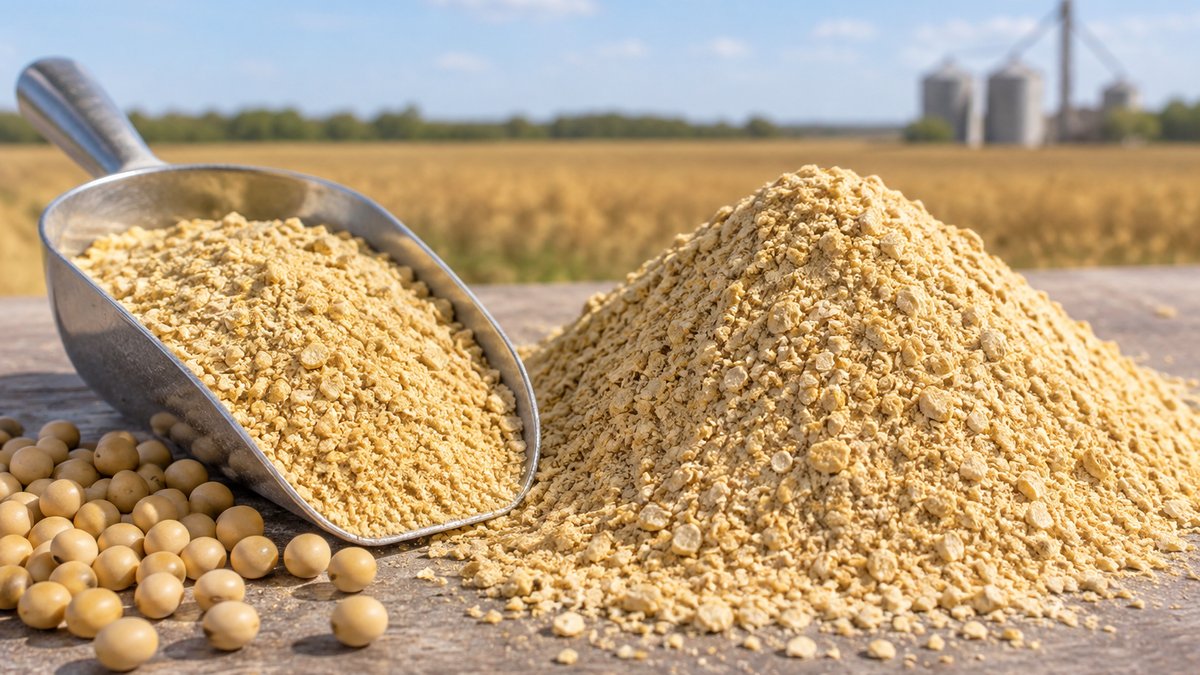
A 48% specification can be associated with dehulled meal, because removing hulls concentrates protein and reduces fiber. That relationship is common, but the label alone does not prove the processing method or fiber level of a particular lot. The Association of American Feed Control Officials (AAFCO) distinguishes soybean meal definitions by processing, including dehulled products, while the National Oilseed Processors Association (NOPA) gives a broad typical protein range of 44% to 49% in its soybean meal trading rules.
NOPA's rules also state that product specifications can be changed by agreement between buyer and seller. They are a transaction guide, not a universal rule that makes every product labeled 46% or 48% identical. The contract should say the minimum protein, the method and basis for reporting it, and the consequences if the shipment falls short.
A two-point difference can affect the amount of meal needed in a ration and the share of protein supplied by other ingredients. It does not establish which product is the better purchase. That decision depends on the feed's nutrient targets, the meal's full analysis, delivered price and handling requirements.
Buying consideration: Before comparing offers, ask whether each protein percentage is guaranteed or typical, whether it is reported as-fed or on a dry-matter basis, and what sampling and laboratory method will determine contract compliance.
2. Comparison of 46% and 48% protein soybean meal
The clearest distinction is crude protein concentration, provided both values use the same moisture basis. Other rows in the comparison require a written product specification because the protein label does not set them by itself.
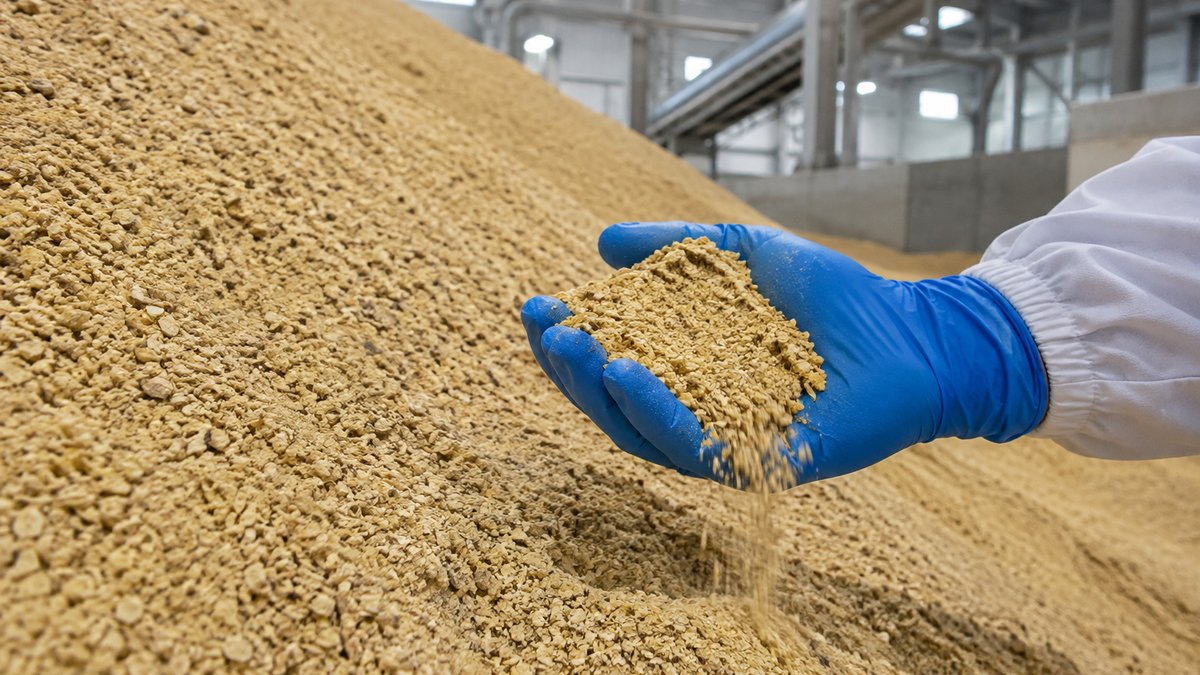
The 460 kg and 480 kg figures are arithmetic examples based on the stated percentages. They are meaningful only when both products are measured on the same basis and the percentage reflects the actual lot. If one seller reports protein on an as-fed basis and another on a dry-matter basis, their headline figures cannot be compared directly.
Moisture changes the concentration of nutrients in the delivered product. Dry-matter reporting removes water from the calculation; as-fed reporting includes it. The contract should specify which basis applies and whether the laboratory certificate reports both moisture and protein. Where a buyer requires a different basis, agree on the conversion method before comparing quotations.
Fiber is another useful point to check. Dehulling removes some of the seed coat, which is relatively high in fiber, and can raise the protein concentration of the remaining meal. AAFCO's feed ingredient definitions distinguish dehulled soybean meal and set a maximum crude-fiber level for that definition. Those definitions help identify the product, but a buyer still needs the lot's guaranteed analysis and contract terms.
Heat treatment and protein availability also matter to feed users. A crude-protein result does not by itself describe amino-acid availability or whether processing has been adequate. Buyers with strict nutritional or quality targets can specify additional analyses, such as amino-acid profile or an agreed processing-quality measure, and state the test method and acceptance limits.
NOPA's 2025/26 trading rules list typical soybean meal specifications, including a maximum 12% moisture level and a typical protein range of 44% to 49%. That publication covered October 1, 2025, to September 30, 2026, and should be read as a dated U.S. trading reference, not a current guarantee for every origin or transaction. Its stated approach supports a practical point: the parties need to set the specifications that govern their own sale.
Buying consideration: Put protein, moisture, fiber, fat, processing method and testing terms on the same specification sheet. Comparing complete analyses makes it easier to judge whether the extra protein concentration meets the feed's needs.
3. Examples of choosing between 46% and 48% meal
Consider a feed mill comparing two offers for a ration that needs a fixed amount of crude protein. The higher-protein meal supplies more crude protein per tonne, so the formulator may use less of it to meet that protein contribution. The ration still needs to be checked for energy, amino acids, fiber, minerals and other constraints before the ingredient change is accepted.
Illustrative protein-equivalent calculation:
Target crude protein: 480 kg
Meal at 48%: 1,000 kg at the stated basis
Meal at 46%: About 1,043 kg at the same basis
Illustrative arithmetic only. It assumes the stated protein percentages use the same basis and does not replace a complete ration formulation or verified laboratory results.
The calculation divides the target protein amount by each meal's protein fraction. It shows why a price per tonne alone can mislead: the 46% meal requires more product to supply the same crude-protein amount in this simplified comparison. The calculation does not account for differences in digestibility, amino-acid balance, energy, fiber, moisture, transport or storage.
A buyer can make a first-pass comparison by dividing the quoted price per tonne by the tonnes of crude protein supplied per tonne of meal. For example, a price per tonne divided by 0.46 or 0.48 gives a simple price per tonne of crude protein on the specified basis. That figure is a screening measure, not a delivered-feed cost or a measure of nutritional value. It should be calculated only after confirming that the protein figures and prices are comparable.
A second situation involves a mill that has a fiber ceiling in its formula. A 48% offer may be attractive if its analysis also meets the fiber limit and the delivered price works for the ration. But the protein percentage does not prove that the fiber requirement is met; the buyer needs a guaranteed maximum and an agreed test result. A 46% product could still fit a formulation if its full nutrient profile and price meet the mill's requirements.
A third situation is a quotation comparison across suppliers or origins. One offer may quote 48% protein on a dry-matter basis, while another states 46% as-fed. Treating those numbers as like-for-like can produce a false price ranking. Ask each supplier to provide protein and moisture on the same basis, with comparable delivery terms and quantity, before calculating cost per unit of protein.
The same discipline applies to contract settlement. A buyer and seller can agree on a minimum protein, a tolerance, sampling location, sample handling, a named analytical method and the procedure for resolving disputed results. NOPA's rules describe analysis under methods approved by the American Oil Chemists' Society for transactions using those rules. Other contracts may use different agreed methods, so the applicable procedure should be written down.
Looking to Source Soybean Meal?
Connect with verified suppliers, discover matching products, and explore sourcing opportunities from global markets.
4. When to choose 46% or 48% protein soybean meal
Choose between 46% and 48% by comparing the full delivered specification with the feed formulation, rather than by ranking the labels alone. A nutritionist or feed formulator can determine how each meal fits the intended animal, ration and production targets.
4.1 When 48% meal may fit
A 48% specification may suit a buyer seeking more crude protein per tonne, provided the figure is guaranteed on the required basis and the other nutrient limits are acceptable. Dehulled meal is often sold at higher protein concentrations, and lower fiber may suit some formulations. Confirm the lot's fiber, moisture, residual oil and processing data rather than assuming those characteristics from the protein number.
Calculate the value against the amount of meal the formula needs. If the 48% product costs more, compare its premium with the reduction in quantity required and with any difference in other nutrients or handling. The calculation should use delivered prices on matching terms, not one offer at an origin loading point and another delivered to the buyer's plant.
4.2 When 46% meal may fit
A 46% meal may fit a ration that does not need the higher protein concentration, especially where its complete analysis and delivered cost meet the buyer's limits. The lower percentage does not automatically mean the product is unsuitable or inferior. It means the formulator must account for the protein contribution and any associated differences in fiber or energy.
Check whether the 46% offer includes hulls or follows another processing specification. In some commercial systems, protein concentration reflects how much hull material remains in the meal. The exact relationship varies with the product and contract, so ask for the processing description and certificate rather than relying on a shorthand grade.
4.3 Questions to settle before ordering
- Is the protein percentage a minimum guarantee, a typical value or a target?
- Is crude protein reported as-fed or on a dry-matter basis, and what moisture limit applies?
- What are the guaranteed maximums for fiber and moisture, and the minimum for residual fat?
- Is the meal dehulled, solvent extracted or produced by another method?
- Which laboratory method, sampling point and dispute procedure determine compliance?
- Do the quoted price, quantity, delivery point and trade terms allow a fair comparison?
- Does the complete analysis meet the formulation's amino-acid, energy and processing-quality targets?
The purchase specification should state the product name, protein basis, guaranteed analysis, quantity, packaging or bulk form, delivery terms and inspection procedure. If a buyer accepts a range rather than a fixed minimum, the contract should say how a shortfall affects acceptance or settlement. Clear terms reduce disagreements about whether a delivered lot matches the quotation.
Buyers comparing available products can review Soybean Meal supplier listings on Freshdi, then confirm each supplier's current specifications, documentation and commercial terms directly through the transaction process.
5. Related resources for soybean meal specifications
Use a feed ingredient definition to identify what a product name covers, a trading rule to understand a commercial framework, and a laboratory certificate to assess the actual lot. These documents answer different questions and should not be substituted for one another.
AAFCO's 2025 Official Publication provides feed ingredient definitions, including entries that distinguish soybean meal by extraction method and whether it is dehulled. The definition is useful when checking ingredient identity and fiber-related criteria; buyers still need a contract specification for the protein concentration and other lot requirements.
NOPA's soybean meal trading rules describe a U.S. commercial framework, typical specifications and analysis provisions for parties that adopt those rules. The version cited here is for the 2025/26 marketing year, which ended September 30, 2026. Check the date and applicability of any rule before incorporating it into a transaction.
The Iowa State University Extension and Outreach feed ingredient composition resource gives reference values for soybean meal used in swine diets. Such tables support feed-formulation work, but reference composition is not a substitute for a supplier's current certificate of analysis or for a nutritionist's evaluation of a specific ration.
For a purchase inquiry, provide the required protein minimum and basis, moisture and fiber limits, extraction and dehulling description, quantity, delivery point and required analysis. Ask the supplier to confirm which values are guaranteed and which are typical. This gives both parties a common basis for comparing offers and evaluating the shipment.
References
1. Association of American Feed Control Officials – Official Names and Definitions of Feed Ingredients, 2025 Official Publication, Chapter 6, 2025.
2. National Oilseed Processors Association – Trading Rules for the Purchase and Sale of Soybean Meal, MY 2025/26, 2025.
3. Iowa State University Extension and Outreach Pork Information Gateway – Composition and Usage Rate of Feed Ingredients for Swine Diets, n.d..
Disclaimer: This article is compiled from platform data, public sources and information provided by third parties, for general informational purposes only. We do not guarantee its accuracy or completeness. Please conduct your own due diligence before making business decisions.