
1. Whole round squid and squid tubes differ in how much processing they have received
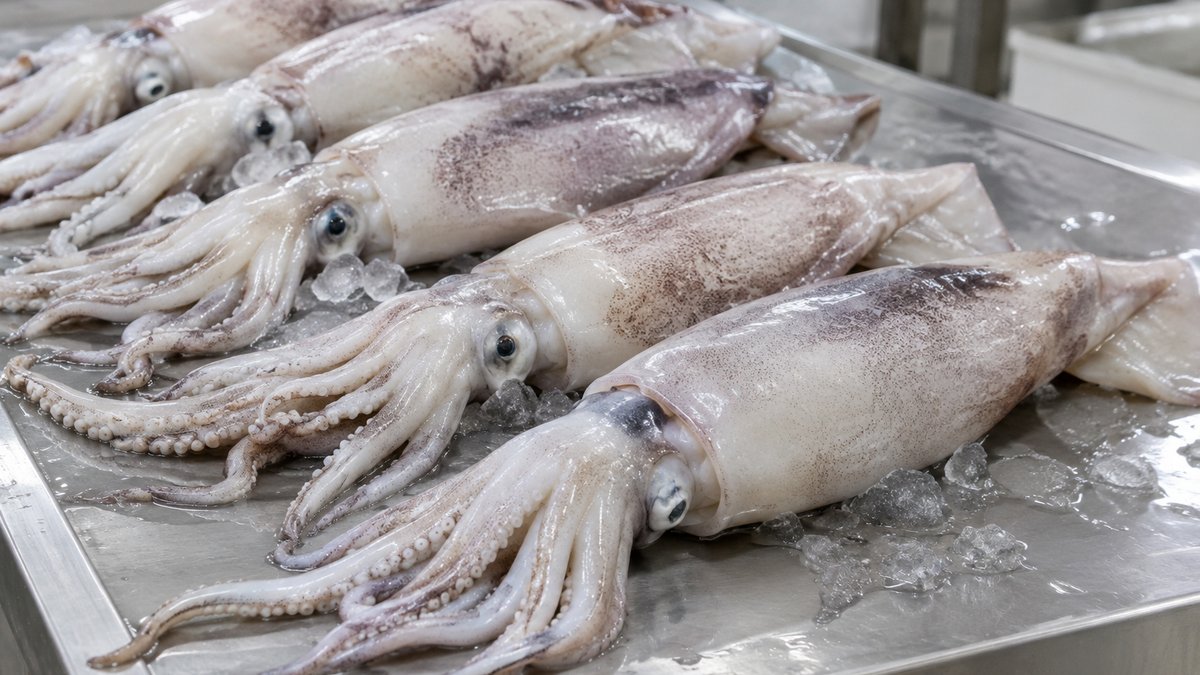
Whole round squid is the intact squid, with its organs still present. A squid tube is the cleaned mantle, with the head, internal organs and supporting pen removed. The tube may be supplied with or without its fins, so the word “tube” alone does not settle every detail of the specification.
The Philippine National Standard for fresh chilled and frozen cephalopods defines whole round as squid with complete organs. It defines a tube as squid without skin, internal organs, head or gladius, with fins either present or removed. The Bureau of Agriculture and Fisheries Standards lists a 2023 edition of that product standard; buyers should check the current standard and destination rules when a contract depends on a formal product definition.
For a buyer, the practical difference is the starting condition at the processing plant or kitchen. Whole round arrives with cleaning still to be done. Tubes have had the main body cleaned and separated from the head and organs, but may still need trimming, slicing or other preparation for the buyer’s product.
Neither product name specifies species, size, freezing method, glazing, packaging or whether the tubes retain fins. Those details can change the product a supplier quotes. State them separately when comparing offers, and confirm whether the stated weight is net of glaze.
2. Compare the forms by included parts and work remaining
The biggest specification difference is which squid parts remain in the pack. Whole round includes the complete animal; tubes are the cleaned mantle. The Philippines’ product standard also makes clear that tube fins can be present or absent.
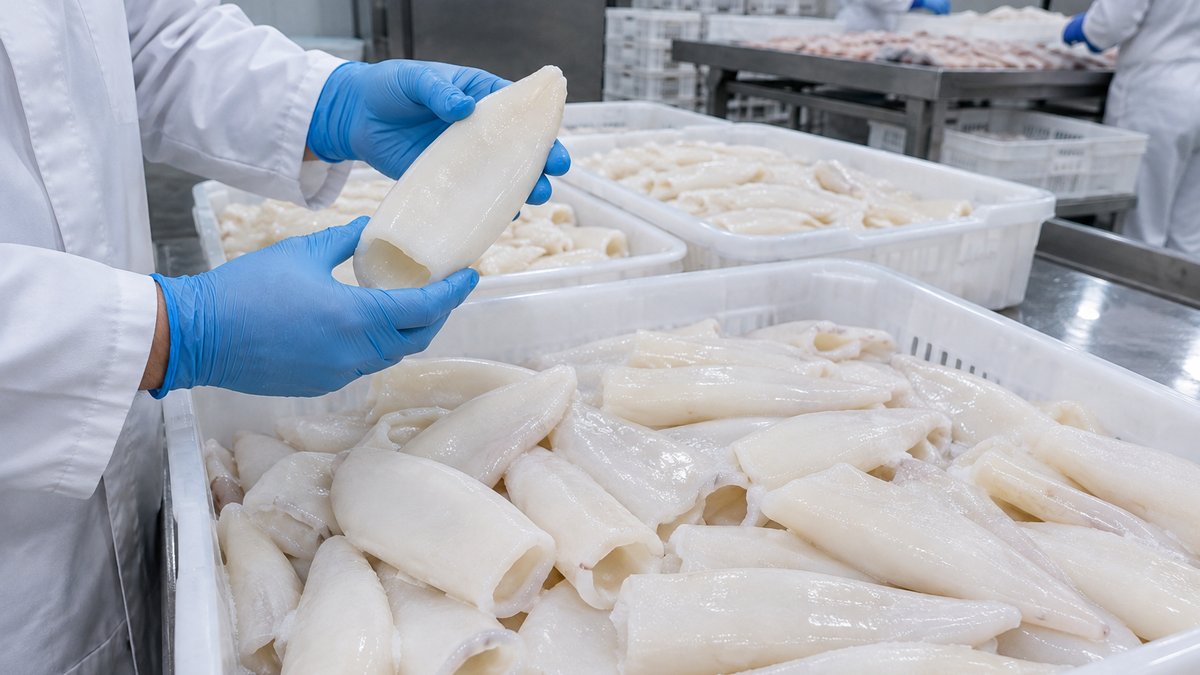
The format names do not establish the species or grade. Two lots of tubes can differ in species, mantle size, skinning, fin status and freezing format. Likewise, two whole-round lots may differ in size and condition even though both are intact. Match those attributes before comparing price or usable output.
Specify whether the tube is whole or split, whether fins and skin remain, and whether heads or tentacles are included elsewhere in the pack. For whole round, state whether the product must remain ungutted and intact. The Codex draft standard for quick-frozen squid lists several distinct presentations, including ungutted whole squid and tubes with or without fins and skin; it also treats rings as a separate cut made from tubes. That list is useful terminology context, not a substitute for checking the applicable current standard or contract.
Freezing and packing are separate choices from the cut. A buyer may need to state individually quick frozen (IQF) or block frozen, the carton and inner-pack format, declared net weight, glaze, and storage conditions. A tube order does not automatically mean IQF or skinless product unless the specification says so.
3. A processor and a foodservice buyer may need different squid forms
Consider a processor making frozen calamari rings. Tubes provide the mantle to cut into rings, while whole-round squid requires the processor to clean and separate the mantle first. The two offers are comparable only after the buyer accounts for labor, yield, and the remaining specifications.
A foodservice buyer preparing stuffed squid may choose tubes because a cleaned mantle is ready for filling, subject to the agreed size and fin presentation. A buyer selling whole-squid dishes may instead need whole round, where the intact presentation and access to the other parts fit the preparation plan. These are sourcing examples; the exact product form and preparation depend on the recipe and operating setup.
A further-processing plant may buy whole round when it has the equipment, staff and quality controls to perform cleaning itself. That route gives the plant control over how it separates and uses the parts. The buyer must also plan for the edible output after cleaning rather than treating the incoming whole weight as equivalent to the weight of cleaned mantle.
A distributor supplying kitchens with limited preparation capacity may prefer tubes to reduce cleaning work at the customer’s site. The supplier’s tube specification still needs to state skin and fin status, size, freezing format and whether heads or tentacles are packed separately. If the customer needs rings, the buyer should compare a tube offer with a ring offer only after checking cut dimensions, raw or cooked condition and pack details.
The Philippine standard’s definitions distinguish whole round from tubes by product form. FAO’s squid processing guidance describes the cleaning steps involved in preparing the mantle, including removing the head, pen and guts. Those sources help explain the work involved, but they do not establish a universal yield, labor saving or price difference for every species and shipment.
Looking to Source Frozen Squid?
Connect with verified suppliers, discover matching products, and explore sourcing opportunities from global markets.
4. Choose the form that fits the work you will do after delivery
Choose whole round when your operation needs the complete squid and can handle cleaning, separation and any required portioning. Choose tubes when the cleaned mantle is the product you need and the supplier’s stated skin, fin and size details match your next step.
4.1 Choose whole round when you need the intact animal
- Your process requires whole squid or you intend to clean and separate the parts in-house.
- You have a specific use for the head, tentacles, ink sac or other parts, and the supplier confirms which parts remain in the shipment.
- Your plant can manage the cleaning steps and evaluate the usable output from the incoming whole weight.
- Your product plan calls for whole presentation, and the species and size are suitable for that use.
4.2 Choose tubes when the cleaned mantle fits your product
- Your next operation is stuffing, grilling, slicing or cutting the mantle into rings or strips.
- You want the supplier to perform the main cleaning step before shipment.
- You can specify whether the tube must be skinned and whether fins should remain.
- Your production plan uses mantle dimensions or piece counts that the supplier can state and verify.
Before asking for a quotation, write a complete product line. Include the species or accepted species range, whole-round or tube form, size basis, skin and fin status, raw or cooked condition, freezing format, glaze and net-weight basis, inner and outer packaging, quantity, destination and delivery term. Add any inspection, labeling or market requirements that apply to the destination.
Illustrative inquiry format:
Product: Frozen squid tubes, named species
Preparation: Skinned, fins removed; confirm whether tubes are split
Size: State tube length or agreed count basis
Freezing and pack: State IQF or block, pack size, glaze and net weight
Order and delivery: State quantity, destination port and requested delivery term
This is an illustrative sourcing format, not a universal specification. Set the details to match the product and destination requirements.
Buying consideration: Compare quotations only when both offers describe the same species, preparation, size basis, freezing format, glaze and delivery conditions. For whole round and tubes, also account for the cleaning work and usable output your operation expects.
5. Use standards and product records to confirm the specification
The standards and technical references below explain the product-form terminology and squid handling. They do not replace a contract specification or the importing market’s current rules. Freshdi’s frozen squid pages can help buyers and suppliers find related buying requests or supplier listings; confirm product details and commercial terms with the relevant business before placing an order.

References
1. Bureau of Agriculture and Fisheries Standards, Philippines – Approved Philippine National Standards: Fresh Chilled and Frozen Cephalopods, Product Standard (PNS BAFS 136-2023), 2023.
2. Bureau of Agriculture and Fisheries Standards, Philippines – Fresh Chilled and Frozen Cephalopods, Product Standard (PNS BAFS 136:2014), 2014.
3. Food and Agriculture Organization of the United Nations – Squid: Handling and Processing, 1991.
4. Codex Alimentarius Commission – Proposed Draft Standard for Quick Frozen Squid, ALINORM 89/18, Appendix IX, 1989.
Disclaimer: This article is compiled from platform data, public sources and information provided by third parties, for general informational purposes only. We do not guarantee its accuracy or completeness. Please conduct your own due diligence before making business decisions.