
1. Coconut Shell Charcoal and Hardwood Charcoal Differ by Feedstock and Processing
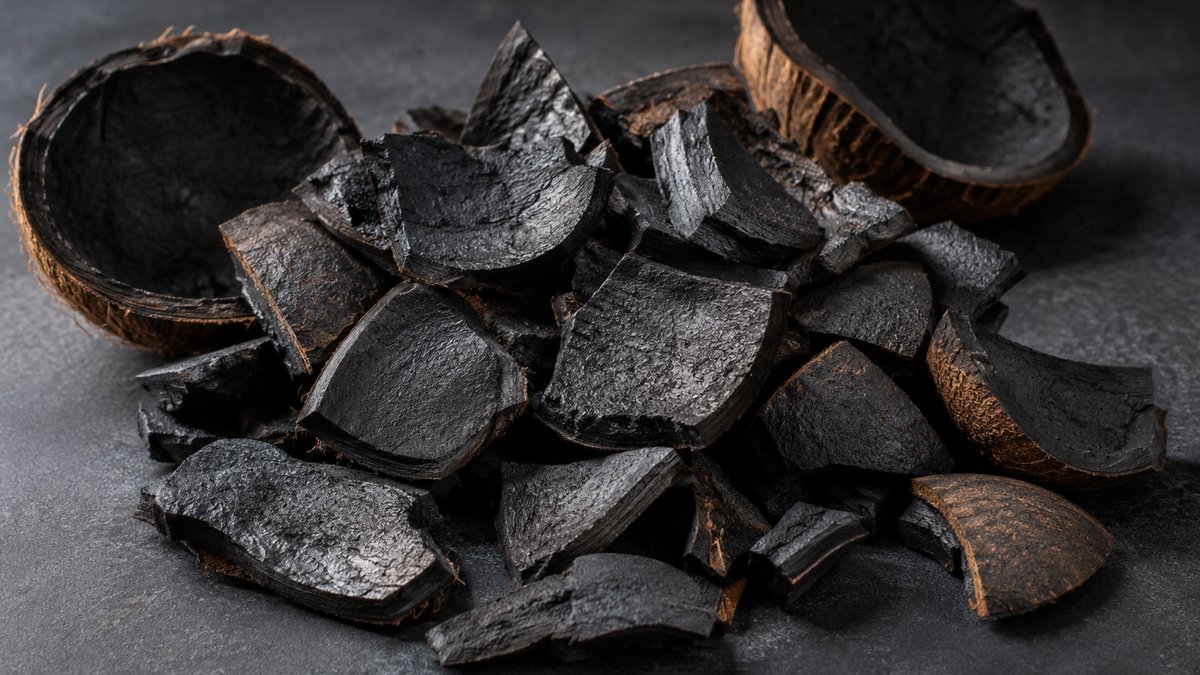
Coconut shell charcoal is made by carbonizing coconut shells; hardwood charcoal comes from hardwood such as oak, acacia or other dense wood species. The names identify the raw material, but neither one guarantees a particular heating value, burn time, ash content or grade. Carbonization conditions, screening, moisture, contamination and whether the charcoal is sold as lump, powder or briquette also affect the finished product.
Coconut shells are an agricultural by-product that can be converted into charcoal. Hardwood is a broad category, so a hardwood offer should identify the species or mixture when that information is available. Density and structure vary among wood species, and charcoal made from different woods can have different physical properties.
The distinction matters when a buyer compares a product for a specific process. For example, a buyer needing carbon feedstock for further processing may prioritize measured carbon and ash values, while a cooking-fuel buyer may care more about piece size, ignition behavior, smoke, breakage and the consistency of a shipment. The feedstock name alone cannot answer those questions.
The Food and Agriculture Organization (FAO) describes fixed carbon, volatile matter, moisture and ash as separate properties used to assess charcoal for different applications. Fixed carbon is the portion remaining after volatile substances are driven off in a specified test; volatile matter affects how the fuel ignites and burns. Moisture adds weight that does not provide heat during combustion, while ash is the mineral residue left after burning.
A reported laboratory comparison can illustrate possible differences, but it cannot establish a universal ranking. In a charcoal composition table, FAO reported one coconut-shell sample at 4.0% moisture, 1.5% ash, 13.5% volatile matter and 83.0% fixed carbon. A mixed tropical hardwood sample in the same table had 5.4% moisture, 8.9% ash, 17.1% volatile matter and 68.6% fixed carbon. The figures describe those particular samples and production conditions, not every coconut-shell or hardwood charcoal on the market.
Form also changes what a buyer receives. Lump charcoal retains pieces of the carbonized feedstock; briquettes are formed by compressing charcoal particles and may contain a binder. A coconut-shell briquette and a hardwood lump are therefore different product forms as well as different feedstocks. Compare like forms and confirm any binder, particle size and product specification before drawing conclusions.
Buying consideration: Use the feedstock name to identify what the charcoal is made from, then use a dated specification or laboratory report to judge whether the shipment suits the intended process.
2. Compare the Charcoal by Specification, Not by Name Alone
A useful comparison starts with the product form and test basis. Ask whether each offer is lump charcoal, powder or a briquette, and whether analytical results are reported on an as-received or dry basis. The basis matters because moisture changes the percentage values and the weight of fuel delivered.
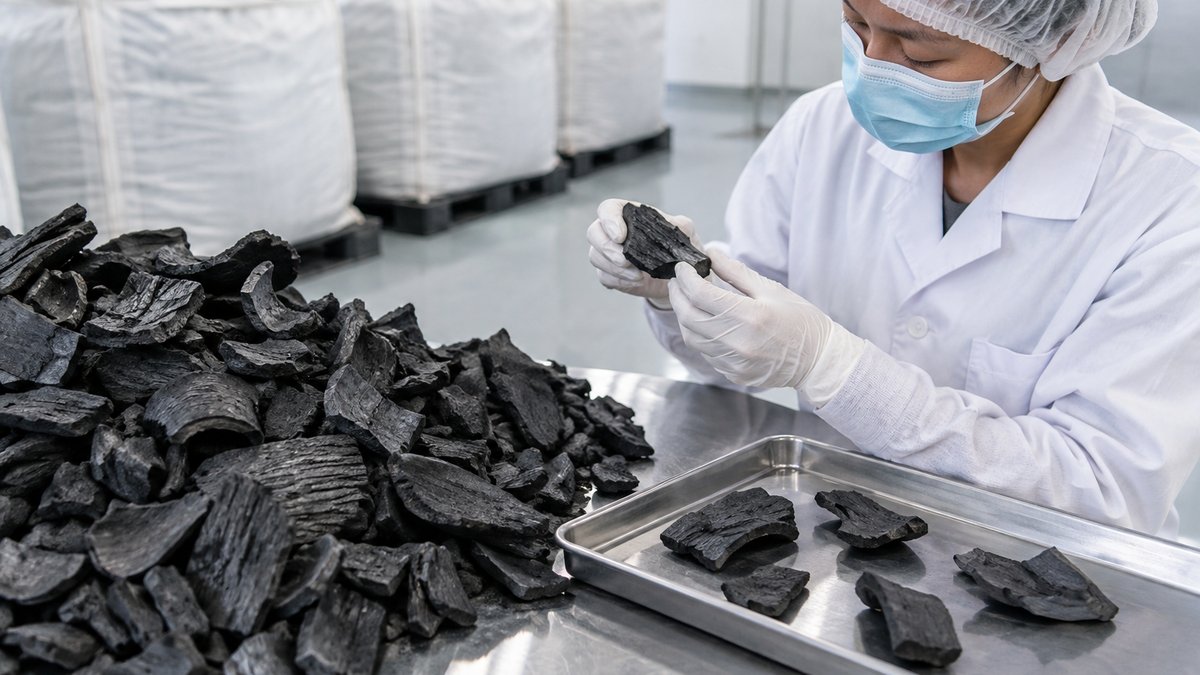
The sample figures in the table come from FAO’s charcoal analysis table in its wood-carbonization material. They are a reference example, not a current market specification or a head-to-head commercial test of all products. A buyer should request results for the actual lot and confirm the laboratory method, reporting basis and sampling date.
Calorific value, also called heating value, estimates the heat released by combustion under a stated test method. It should be compared using the same unit and basis. For example, a dry-basis value should not be compared directly with an as-received value if moisture differs. Test results for moisture, ash and fixed carbon also need matching methods and bases before they support a meaningful grade comparison.
The 2025 study “Physical and Combustion Properties of Charcoal Briquettes Produced from Mangrove Wood and Coconut Shell Waste” tested briquettes made from different proportions of those materials. It reported that the mixtures’ gross calorific values ranged from 5,897 to 6,886 kcal/kg, with moisture between 4.211% and 4.887%. Those results apply to the study’s briquette recipes, dimensions, binder and test conditions. They are not a direct specification for pure hardwood lump charcoal or for every coconut-shell product.
Burn duration is also a test result, not a property that can be read from the feedstock name. Piece size, density, airflow, stove or furnace design, moisture and operating practice can all change observed performance. If burn time matters to the buyer, agree on a test setup and define the measured endpoint, such as time to a specified temperature or time until the fuel reaches ash.
Buying consideration: When reviewing quotations, compare the same product form, test basis and target use. Request a lot-specific analysis and a sample where the result will affect production or fuel consumption.
3. A Buyer Comparing Two Charcoal Offers Should Check the Test Conditions
Suppose a buyer needs charcoal for an industrial heating process and receives one offer for coconut-shell briquettes and another for hardwood lump charcoal. Comparing the quoted price per tonne would leave several differences unresolved: one offer is briquetted, the other is in pieces, and neither feedstock name establishes the usable heat, ash load or consumption rate in the buyer’s equipment.
The buyer first defines the required product form. If the equipment uses a controlled particle size, the buyer can state the acceptable size range and tolerance. If a briquette is acceptable, the request should state whether a binder is permitted and ask the supplier to identify it. If lump is required, the buyer can specify piece-size limits and the maximum amount of fines.
Next, the buyer requests the same analytical fields from both suppliers: moisture, ash, volatile matter, fixed carbon and calorific value. The request should name the method or agreed standard, the reporting basis, and whether the calorific value is gross or net. If the supplier cannot provide every result, the missing item should be marked as unavailable rather than inferred from the feedstock.
The buyer then tests representative samples under the operating conditions that matter. For fuel use, the test can record ignition time, temperature profile, fuel consumption, residue and any handling problems. A production trial can reveal whether a briquette’s dimensions feed reliably or whether lump size varies too much for the buyer’s furnace. These results are specific to the tested equipment and operating procedure.
A commercial comparison should also include quantity, packaging, delivery point and shipment terms. For example, a buyer may compare the delivered cost per usable unit of heat after assessing moisture, measured calorific value and process performance. The calculation should use comparable test results and the actual delivery basis; a lower price per tonne alone does not show which offer costs less in operation.
The buyer records the specification and acceptance criteria in the purchase contract. The contract can state the permitted ranges for moisture, ash and size, the analysis method, sampling procedure, consequences of a failed result and who pays for an independent retest. Where a production test is important, the parties can agree in advance how the sample will be prepared and how performance will be measured.
This process avoids treating a single published study as a purchasing guarantee. Research can identify properties worth testing, but the buyer’s production line, fuel equipment and operating conditions determine whether a particular lot performs adequately.
Illustrative charcoal inquiry:
Product: Coconut shell charcoal briquettes or hardwood charcoal, with feedstock and form stated
Quantity and delivery: Required volume, destination and requested delivery term
Product limits: Moisture, ash, particle or briquette dimensions, fines limit and binder requirements
Test results: Fixed carbon, volatile matter and calorific value, including method and reporting basis
Sample and acceptance: Representative sample, inspection procedure and agreed acceptance criteria
This is an illustrative inquiry format. The buyer should set limits to match the equipment, process and destination requirements.
Buying consideration: Before awarding a contract, use one agreed specification and test procedure for both offers, then confirm that the supplier can meet it consistently across the shipment.
Looking to Source Coconut Shell Charcoal?
Connect with verified suppliers, discover matching products, and explore sourcing opportunities from global markets.
4. Choose the Charcoal That Fits the Process and Verified Specification
4.1 When coconut shell charcoal may fit
Coconut shell charcoal may suit buyers who specifically need a shell-derived feedstock, a stated briquette format or material intended for further processing. Its suitability depends on the delivered grade and the buyer’s use. A research result for one shell-charcoal batch can help identify likely test fields, but the supplier’s actual product still needs to meet the purchase specification.
For briquettes, confirm the recipe and binder because the finished fuel includes compressed particles and may include added material. For granular or powdered charcoal intended for conversion into another product, ask about particle size, ash, moisture and any contamination limits relevant to the next processing step. Do not assume a fuel-grade product meets a separate industrial or chemical-processing specification.
4.2 When hardwood charcoal may fit
Hardwood charcoal may fit a buyer who needs a specific wood species, established piece form or performance validated in the buyer’s process. The broad term “hardwood” is insufficient for a precise comparison where species, density or origin affect the contract. Ask the supplier to identify the species or mix and describe the carbonization and screening process.
For applications where the buyer values intact pieces and resistance to breakage, inspect piece strength, fines and packing condition. FAO’s charcoal guidance notes that charcoal properties vary with raw material and carbonization, and that hardwoods can produce dense charcoal. That general observation does not replace a test of the offered species, grade and shipment.
4.3 When either feedstock could work
If both products can meet the same performance requirements, compare verified results and total delivered cost. Buyers can also assess batch consistency, available volume, packaging, lead time and the supplier’s ability to provide the agreed documentation. Those commercial details should be confirmed for the transaction rather than assumed from the product category.
For cooking or heating, the buyer should test the charcoal in the relevant equipment and check smoke, ignition, heat output, ash and handling. For industrial use, the buyer should match the specification to the process, including any limits for ash or volatile matter. For further processing, confirm the required particle size and chemistry. The intended use determines which performance measures deserve the most weight.
A “best” choice therefore cannot be assigned from the two feedstock names alone. Coconut-shell charcoal is a clear option when the buyer needs shell-derived material and the measured lot satisfies the specification. Hardwood charcoal is a clear option when the buyer needs the named wood feedstock and the measured lot meets the same performance criteria. If either product falls short, the buyer should evaluate another grade or supplier.
Buying consideration: Write the product form, feedstock, test basis and acceptance limits into the inquiry and contract so each supplier quotes against the same requirement.
5. Related Resources for Charcoal Buyers
FAO’s guidance on wood carbonization explains how charcoal properties are measured and why results vary with the feedstock and production system. Its reference table reports separate values for moisture, ash, volatile matter and fixed carbon, which buyers can use as a starting point when building a product specification. The examples are reference data, not a substitute for a current lot analysis.
The 2025 briquette study provides a further example of how material proportions and briquette production conditions affect laboratory and combustion results. It tested mangrove wood and coconut-shell waste mixtures, so its results should be read as a study of those formulations rather than a general comparison of all hardwood and coconut-shell charcoal.
Research checked 17 November 2026. Buyers can use Freshdi to review coconut shell charcoal buying requests or potential coconut shell charcoal suppliers, then compare each listing’s stated product details with the specification required for their application.
References
1. Food and Agriculture Organization of the United Nations – Wood Carbonisation and the Products It Yields, 1985.
2. Rajamangala University of Technology Phra Nakhon Research Journal of Science and Technology – Physical and Combustion Properties of Charcoal Briquettes Produced from Mangrove Wood and Coconut Shell Waste, 2026.
3. Food and Agriculture Organization of the United Nations – Charcoal and Its Consumers, 1990.
Disclaimer: This article is compiled from platform data, public sources and information provided by third parties, for general informational purposes only. We do not guarantee its accuracy or completeness. Please conduct your own due diligence before making business decisions.